
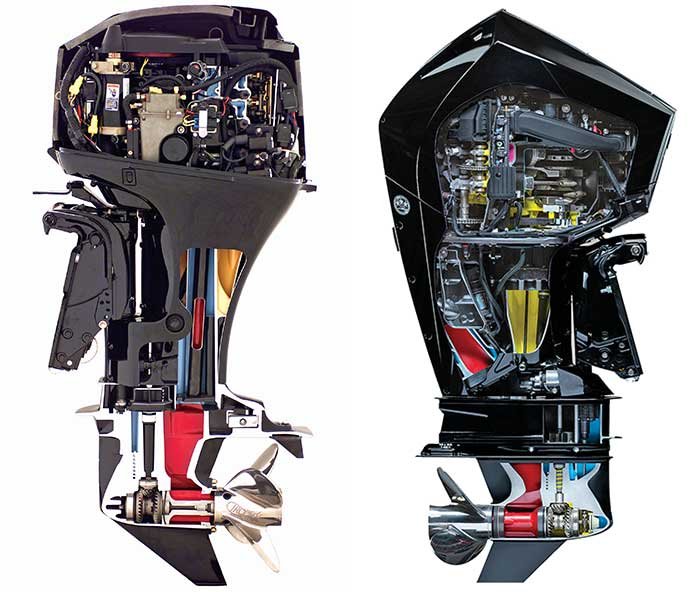
Boat Motors Online: A No-Nonsense Buying Guide

There was a time when buying a boat motor meant driving to a dealer, kicking tires for an afternoon, and hoping the salesperson actually knew the inventory. These days most of that has moved online, and for good reason — you can compare horsepower, brand, and price across a dozen options before lunch. But boat motors online shopping has its own pitfalls, and they’re different from the ones you’d run into at a physical dealership.
We sell new and used outboards across most of the major brands, and the questions we field from online buyers tend to repeat. Here’s what actually matters before you click “order.”
New or used: the real trade-offs
New motors come with a full factory warranty, the latest emissions and fuel-injection technology, and zero unknown history. You’re paying for certainty. A used outboard can save thirty to fifty percent of that cost, but you’re relying on someone else’s maintenance habits, and on accurate hour-meter and compression information from whoever is selling it.
If you’re buying a used motor online rather than in person, ask for the serial number, the hour count if it has a meter, and photos of the powerhead, lower unit, and prop before you commit. A reputable seller won’t hesitate to provide all three. We list detailed condition notes on every used outboard engine for exactly this reason.
Horsepower and the plate you probably haven’t looked at
Every boat built since the 1970s should have an NMMA capacity plate near the helm or on the transom, and it lists the maximum horsepower the hull is rated for. Buying an engine that exceeds that rating isn’t just a bad idea, it can void insurance coverage if something goes wrong. Buying one well under it leaves performance on the table and can make the boat harder to handle at low speed because it doesn’t have enough thrust to push through a wake.
Match horsepower to that plate first, then start narrowing brands.
Shaft length is the spec people get wrong most often when ordering online
This is the one mistake that’s expensive to fix after the fact. Shaft length has to match your transom height, not just your boat’s overall size. The common lengths are roughly 15 inches (short), 20 inches (long), and 25 inches (extra-long), and a motor with the wrong shaft length will either sit too high — causing cavitation and a rooster-tail spray — or sit too low, dragging the cavitation plate and adding drag.
Measure your existing transom from the top edge straight down to the bottom of the hull before ordering. If you’re replacing an existing outboard rather than rigging a new boat, the easiest check is simply matching the shaft length of the motor you’re removing.
Two-stroke versus four-stroke, in plain terms
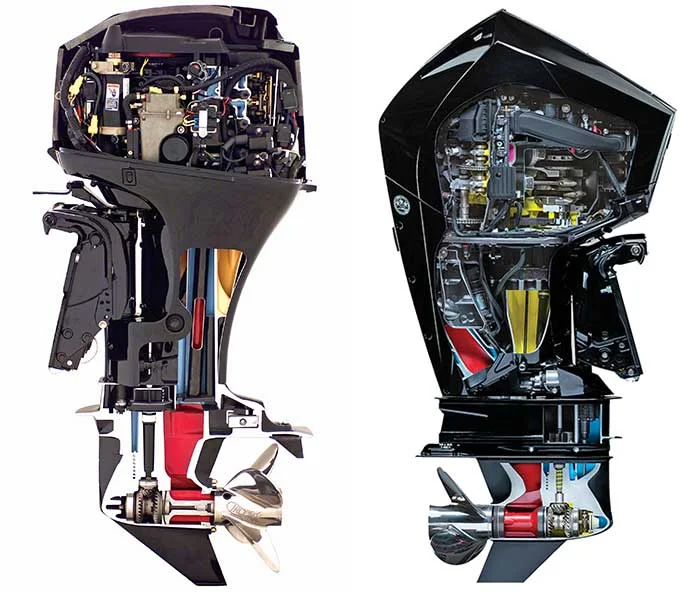
Most new outboards sold today are four-stroke. They’re quieter, burn less fuel, idle smoother, and don’t require mixing oil into the gas. Modern direct-injection two-strokes still exist and remain popular for their power-to-weight ratio, especially in racing and high-performance applications, but for the average buyer shopping boat motors online for a family boat or fishing skiff, four-stroke is the easier choice and the one we’d point most people toward.
Brand differences that actually matter day to day
We carry Yamaha, Suzuki, Honda, Mercury, Evinrude, Tohatsu, and Nissan, plus the Torqeedo electric lineup for anyone moving away from gas entirely. None of these brands make a bad engine at this point — the differences come down to dealer network density in your region, parts availability, and small ergonomic choices in the controls. If you already own one brand and have a relationship with a local mechanic who knows it well, that’s often a better reason to stick with it than any spec sheet difference.
For sheer top-end power, Yamaha’s flagship V8 lineup tops out north of 400 horsepower for offshore center consoles, while the bulk of recreational buyers are shopping in the 9.9 to 150 horsepower range for fishing boats, pontoons, and runabouts.
What shipping actually looks like
This is the part that surprises first-time online buyers. Outboards over roughly 25 horsepower usually ship on a pallet via freight carrier rather than a standard parcel service, which means a delivery appointment rather than a driver just leaving it on your porch. Smaller portable motors under that weight class typically ship via standard ground or air courier in a factory box.
Inspect the crate or box for visible damage before signing for delivery, and photograph anything that looks off before you open it. That documentation matters if a freight claim ever needs to be filed. We ship worldwide and handle the freight paperwork and export documentation on our end, so the buyer mainly needs to be home — or have someone available — for the delivery window.
Paperwork to ask for
Whether new or used, you want a bill of sale, the serial number documented in writing, and for new motors, the registration card or warranty start documentation from the manufacturer. For used motors, ask whether the engine has ever been submerged, what fuel it’s run on, and when the lower unit oil and impeller were last changed. These three questions filter out a surprising number of problem engines before money changes hands.
A few common questions
Is it safe to buy an outboard motor online without seeing it in person?
It’s standard practice at this point, as long as the seller provides serial numbers, real photos, and a clear return or warranty policy. Ask questions before paying — a seller who answers fully and quickly is usually a safe bet.
How long does international shipping take?
It varies by destination and customs processing, but most international freight shipments move in two to six weeks door to door once the engine leaves our warehouse. We can give you a firmer estimate for your specific country before you order.
Can I get a motor re-rigged for a different boat than it was originally on?
In most cases yes, as long as the shaft length and horsepower are appropriate for the new hull. A local marine mechanic can usually handle the rigging once the motor arrives.
Quick spec comparison
| Use case | Typical horsepower range | Common shaft length |
|---|---|---|
| Small jon boats, dinghies, tenders | 2.5 – 9.9 HP | Short (15″) |
| Fishing boats, pontoons | 40 – 150 HP | Long (20″) |
| Center consoles, offshore boats | 150 – 425+ HP | Extra-long (25″) |
For a deeper breakdown of how outboards compare to inboard and sterndrive setups, Discover Boating’s buyer’s guide from the National Marine Manufacturers Association is a solid, brand-neutral resource.
Buying boat motors online, the short version
Check the NMMA plate for max horsepower, measure shaft length against your existing transom, decide new versus used based on budget and risk tolerance, and buy from a seller who’ll actually answer questions about serial numbers and history. We carry new and used inventory across all the major brands and ship worldwide — if you already know what you’re after, browse the listings, and if you don’t, send us your boat’s make, model, and current horsepower and we’ll point you toward a few good options. For accessories to go with a new engine, our outboard motor accessories guide covers props, fuel systems, and mounting hardware in more detail. If you’re shopping a specific use case, our guides on portable outboard motors, fishing boat motors, and inflatable boat motors go deeper into each one.
Posts Widget
- 1
- 2

- 3

- 4


S.H Continental Marine
USA HERALD MAGAZINE INC
Our team is dedicated to providing exceptional customer service.
Email: info@shcontinentalmarine.com
Choose S.H Continental Marine
for your outboard engine needs and enjoy superior quality, exceptional customer service, and unbeatable prices.
