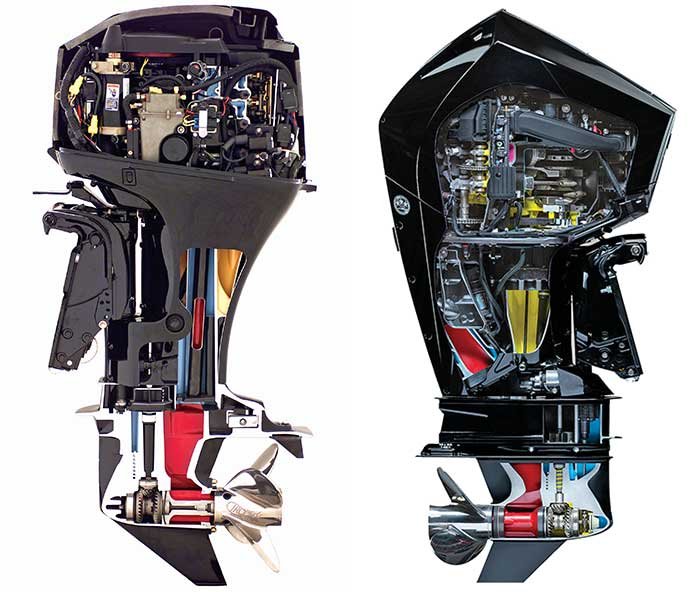
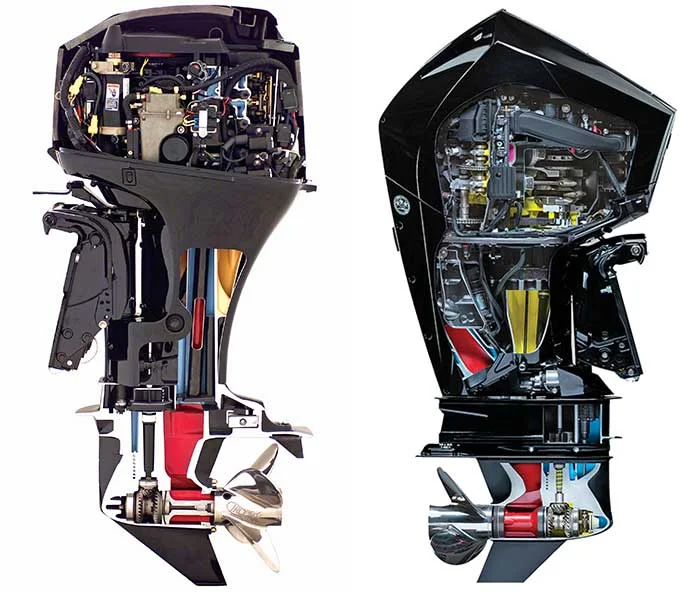
Marine Motors For Sale: New & Reconditioned Yamaha, Suzuki, Mercury

Search “marine motors for sale” and you’ll get flooded with results — dealer sites, classifieds, marketplaces, auction listings. Most of them don’t tell you what you actually need to know before spending real money on an engine. This guide is written from the seller’s side of that transaction, after inspecting and pricing thousands of outboards, and it’s meant to help you shop smarter, whether you’re buying your first 9.9 HP tender motor or repowering a 24-foot center console with something in the 250-300 HP range.
We keep a rotating inventory of new and reconditioned outboards — Yamaha, Suzuki, Mercury, and Tohatsu — and this article covers how to evaluate a listing, what specs actually matter, and how pricing works across horsepower classes and condition levels.
Understanding What You’re Actually Shopping For
“Marine motor” covers a lot of ground — outboards, inboards, sterndrives, and even electric trolling systems all technically qualify. Most of what moves through a marketplace like ours is outboards, because they’re the most common propulsion type on boats under 35 feet and the easiest to buy, ship, and install without a haul-out. If you’re specifically shopping outboards, the rest of this guide is built for you. If you’re looking at inboard or sterndrive replacement, the buying logic is similar but the installation is a bigger job that usually needs a marine mechanic regardless of where you source the engine.
What Drives Price in the Marine Motor Market
When you’re browsing marine motors for sale, price differences between similar-looking listings usually come down to a handful of factors:
- Condition category — new, reconditioned/serviced, or as-is used, in that order of price.
- Hours and documented history — a 300-hour engine with full service records often outprices a 150-hour engine with no history, because the buyer knows exactly what they’re getting.
- Brand and model popularity — engines with strong parts availability and resale demand (Yamaha and Suzuki, notably) tend to hold value better than less common brands, even when the mechanical quality is comparable.
- Shaft length and control configuration — a common 20″ remote-control engine sells faster and often for more than an unusual 30″ tiller unit, simply because more boats can use it.
- Fuel system — EFI models generally command a premium over carbureted models of the same era due to easier starting and better fuel economy.
- Year and technology generation — engine designs get revised over model years, and a later generation of the same horsepower class often has meaningful mechanical improvements even if the outside look is similar.
Specifications to Check on Every Listing
Before you commit to any listing under the “marine motors for sale” umbrella, work through this list:
- Horsepower rating against your boat’s capacity plate maximum — never buy above it.
- Displacement in cc or liters, which tells you how much engine is actually producing that horsepower number.
- Dry weight, especially important on smaller boats where a few extra pounds on the transom changes handling.
- Shaft length — measure your transom before you shop, not after.
- Cylinder count and configuration — inline engines are lighter and simpler; V6/V8 configurations are smoother at higher horsepower but heavier.
- Cooling system type and whether a fresh water flush kit is included or needs to be added.
- Prop included or not — a surprising number of listings sell the powerhead without a prop, and props aren’t universal across brands.
A good example of a clearly specced listing is our Yamaha 60 HP F60LB — displacement, weight, shaft length, and control type are all listed up front rather than buried in a spec sheet you have to request separately.
New vs. Reconditioned vs. As-Is: What You’re Really Paying For
The gap between a new engine and a reconditioned one isn’t just about wear — it’s about certainty. New engines carry full manufacturer warranty and zero unknowns. Reconditioned engines like our Yamaha 75 HP F75LB have been inspected, serviced, and documented, which removes most of the guesswork at a meaningfully lower price than new. As-is listings — common on classified sites and private sales — carry the most risk because you’re relying entirely on the seller’s word, with no inspection standard behind the listing.
If you’re mechanically inclined and comfortable doing your own compression test and teardown before committing, as-is listings can be a genuine bargain. If you’re not, the modest premium for a documented reconditioned engine is usually worth it, because a bad used engine can easily cost more in repairs than the difference in purchase price.
Horsepower Guidance by Boat Type
If you’re not sure what horsepower you’re even shopping for, here’s a starting point — always cross-check against your specific boat’s capacity plate before buying:
- Inflatables and dinghies under 10 ft: 2.5–9.9 HP
- Jon boats and small skiffs, 10–14 ft: 9.9–25 HP
- Aluminum fishing boats, 14–17 ft: 40–90 HP
- Pontoons, 18–24 ft: 60–150 HP depending on load and passenger count
- Bay boats and center consoles, 18–24 ft: 115–250 HP
- Offshore center consoles, 24 ft+: 250–425 HP, frequently twin-rigged above 28 ft
Our powerful boat motors guide goes deeper into the higher end of this range if you’re shopping for offshore or performance applications specifically, and our lightweight outboard motors guide covers the opposite end for buyers prioritizing minimal weight on smaller hulls.
Typical Weight and Displacement by Horsepower Class
Since weight and displacement are two of the most overlooked specs on marine motor listings, here’s a general reference table for four-stroke outboards. Treat this as a sanity check against any specific listing, not a substitute for the exact spec sheet:
| Horsepower Class | Displacement Range | Dry Weight Range | Typical Cylinders |
|---|---|---|---|
| 2.5–6 HP | 85–150cc | 26–58 lbs | 1 |
| 8–20 HP | 200–430cc | 77–112 lbs | 2 |
| 25–60 HP | 430–1000cc | 121–230 lbs | 2–4 |
| 70–115 HP | 1000–1800cc | 340–410 lbs | 4 |
| 150–250 HP | 2600–4200cc | 480–650 lbs | V6 |
| 300–425 HP | 4200–5600cc | 620–750 lbs | V6/V8 |
Financing and Bulk Purchases
Not every marine motor purchase is a single engine for a single boat. We regularly work with fishing cooperatives, charter fleets, and marine repair shops sourcing multiple units at once, sometimes matched sets for twin or triple installations where prop rotation (standard vs counter-rotating) has to be specified correctly at the time of order. Bulk buyers typically get better per-unit freight pricing since multiple engines can share crating and container space, which is worth asking about directly rather than assuming single-unit pricing is the only option available.
For individual buyers, some sellers offer financing arrangements or can point you toward marine equipment lenders who work with direct purchases rather than only traditional dealership floor financing. It’s worth asking before assuming a purchase has to be paid in full up front.
Common Reasons Engines Get Returned or Disputed
Understanding what goes wrong in marine motor transactions helps you avoid the same mistakes. The most frequent issues we see reported across the industry:
- Buyer assumed shaft length without measuring their own transom first
- Engine advertised as “low hours” with no way to verify the claim after the fact
- Freight damage not documented at time of delivery, making a claim difficult to process later
- Mismatch between the control type ordered (tiller vs remote) and what the boat is actually rigged for
- Buyer skipped the break-in procedure on what was represented as a freshly rebuilt powerhead, causing early wear
Every one of these is avoidable with a few minutes of measuring and asking the right questions before you pay, which is really the theme running through this entire guide.
Reading Between the Lines of a Listing Description
Written descriptions on marine motor listings tend to fall into patterns worth recognizing. Phrases like “runs strong” or “ready to go” without any supporting data (compression numbers, hour readings, service history) are marketing language, not documentation — they might be entirely true, but there’s no way to verify them from the listing alone. Contrast that with a description that states the actual compression readings across cylinders, the documented hour count, and what service was performed before listing. The second type of listing gives you something to actually evaluate; the first is asking you to trust the seller’s word with no way to check it. Neither approach automatically means a good or bad engine, but the second is a much lower-risk purchase, and it’s reasonable to weight your shopping toward sellers who provide that level of detail as standard practice rather than only when asked.
Inspecting Before You Buy — Even Remotely
You don’t need to physically stand next to an engine to do a reasonable inspection if the seller is willing to work with you. Ask for:
- A compression test reading for every cylinder, ideally on video or with a timestamped photo
- Close-up photos of the lower unit skeg and prop shaft for corrosion or impact damage
- A water test video if possible — running in a test tank showing the engine starting, idling, and shifting cleanly through forward, neutral, and reverse
- Photos of the powerhead with covers removed, showing the general cleanliness and condition of wiring and hoses
- Confirmation of hour meter reading, ideally photographed directly off the gauge or ECU
A seller who resists providing this information on a motor priced in the thousands of dollars is telling you something. A seller who provides it proactively, without being asked twice, is the one worth doing business with.
Where to Actually Find Reliable Marine Motors For Sale
The honest answer is that reliability comes from the seller’s process, not the platform. A specialist marketplace that inspects every unit, documents hours and compression, and photographs the actual engine rather than a stock catalog image will consistently beat a general classifieds site on trust, even if the classifieds listing looks cheaper at first glance. General marketplaces and classifieds sites can absolutely have good deals — private sellers sometimes price fairly and disclose honestly — but there’s no inspection standard enforced across the board, so due diligence falls entirely on you as the buyer.
A dedicated marine engine seller, on the other hand, has a reputation riding on every transaction and a repeat-customer business model that only works if engines arrive as described. That accountability is worth factoring into your decision even when the sticker price is a few hundred dollars higher than an unverified private listing.
Regional Availability and International Shipping
A meaningful share of buyers searching “marine motors for sale” today aren’t shopping locally at all — they’re comparing prices and availability across borders because local dealer networks in their region are thin, expensive, or simply don’t stock the brand and horsepower they need. Selling and shipping internationally means handling export documentation, meeting crating standards for ocean or air freight, and giving buyers a realistic landed-cost estimate before they commit, rather than a surprise bill once the engine reaches port.
If you’re buying from outside the country where the inventory is warehoused, ask specifically about typical transit times to your region, whether the seller has shipped there before, and what happens if customs holds the shipment for additional documentation — these are the practical details that separate a smooth international purchase from a stressful one.
Shipping a Purchased Engine
Once you’ve settled on a listing, shipping is the next thing to get right. Engines are crated on pallets for freight, with oil drained to safe shipping levels and battery cables disconnected. Sea freight is the standard for most international buyers due to cost, typically running three to eight weeks depending on origin and destination port. Air freight cuts that down substantially but only makes financial sense on smaller engines where the weight-based air freight cost doesn’t dwarf the price of the motor itself. Our shipping guide covers crating specs and customs paperwork in more detail if this is new territory for you.
Frequently Asked Questions
What’s a fair price range for a used outboard in good condition?
It varies enormously by horsepower, brand, and hours, but as a rough rule, a well-documented reconditioned engine typically runs 30-50% below equivalent new pricing, with older or higher-hour units priced further below that.
Should I buy a marine motor without seeing it run first?
If the seller provides a documented compression test and ideally a start-up video, this is standard practice and low-risk. Buying with zero documentation and no ability to verify condition is a different risk profile entirely.
Is it worth buying new instead of used?
If budget allows and you want zero unknowns plus full manufacturer warranty, yes. If budget is a bigger constraint and you’re comfortable with the modest added risk, a well-documented reconditioned engine offers real value.
Do marine motors hold their value?
Well-maintained four-stroke outboards from major brands, particularly Yamaha and Suzuki, tend to hold resale value reasonably well compared to most mechanical equipment, provided service records exist.
For general background on how outboard motors are engineered and classified, the Wikipedia article on outboard motors is a useful neutral starting point.
Final Word
Shopping marine motors for sale gets a lot less stressful once you know what questions to ask and what specs actually matter versus what’s just marketing noise. Browse our current stock across Yamaha, Suzuki, Mercury, and Tohatsu, check the documented condition on any listing that interests you, and reach out if you want a straight answer on whether a particular engine is the right fit for your boat before you commit.
Expert Tips
A used outboard is only as good as its history. Service records, a clean gearcase oil sample and even compression readings tell you far more than the engine’s appearance. Be cautious of engines with no paperwork, recently painted lower units or a reluctance from the seller to allow a test run.
Budget for an initial service after any used purchase. Fresh oils, filters, plugs and, where the history is unknown, a new water pump impeller give you a known starting point and peace of mind for the season ahead.
Key Points to Remember
- Engine hours and maintenance history matter more than age alone.
- Ask for compression readings; they should be even across all cylinders.
- Check the gearcase oil for water or metal particles.
- Look for corrosion around the lower unit, clamps and electrical connections.
- A test run in the water shows how the engine starts, idles, shifts and cools.
- Plan a full service after purchase if the history is incomplete.
Practical Checklist
Use this quick checklist to put the advice in this article into practice:
- Engine hours and service records
- Compression test results
- Gearcase oil condition
- Corrosion, cracks or repairs on the lower unit and bracket
- Strong tell-tale stream and steady idle on a test run
- Smooth shifting into forward and reverse
More Questions Answered
How many hours is too many on a used outboard?
It depends on the engine and how it was maintained. A well-serviced four-stroke with higher hours can be a better buy than a neglected engine with few hours.
What should I replace after buying a used engine?
Oils, filters, spark plugs and, if its history is unknown, the water pump impeller are sensible first jobs.
Is a used engine worth it?
It can be if the price reflects its condition and you can verify its history. Otherwise, a new engine gives more certainty.
Suzuki Outboards to Consider
If you are shopping for an engine after reading this guide, these models are a good place to start. Each listing has full specifications, the model code explained and buying advice.
- Yamaha E75BMHL
- Used Yamaha 25hp Long Shaft
- Used Yamaha 2.5hp Long Shaft
- Used Parsun 9.8hp Long Shaft
- Used Mercury 225hp Optimax XL Shaft
- Used Mariner 15hp Long Shaft
Related Guides
- Yamaha vs Suzuki Outboards
- Suzuki Outboards for Sale: What to Know Before Buying
- Used Suzuki Outboard Motors For Sale: Specs, Prices & Buying Guide
- Used vs New Suzuki Outboards: What’s Worth Your Money?
- Suzuki vs Yamaha Outboards: Which is Better? – Suzuki vs Yamaha outboards
- Suzuki Marine Engine History: From Bikes to Boats
Next Steps
Browse Used Outboard Engines, Suzuki range or the full outboard shop. Read our shipping policy for delivery details, and contact us if you would like help choosing the right engine for your boat.
Posts Widget
-
1
-
2

-
3

-
4


S.H Continental Marine
USA HERALD MAGAZINE INC
Our team is dedicated to providing exceptional customer service.
Email: info@shcontinentalmarine.com
Choose S.H Continental Marine
for your outboard engine needs and enjoy superior quality, exceptional customer service, and unbeatable prices.