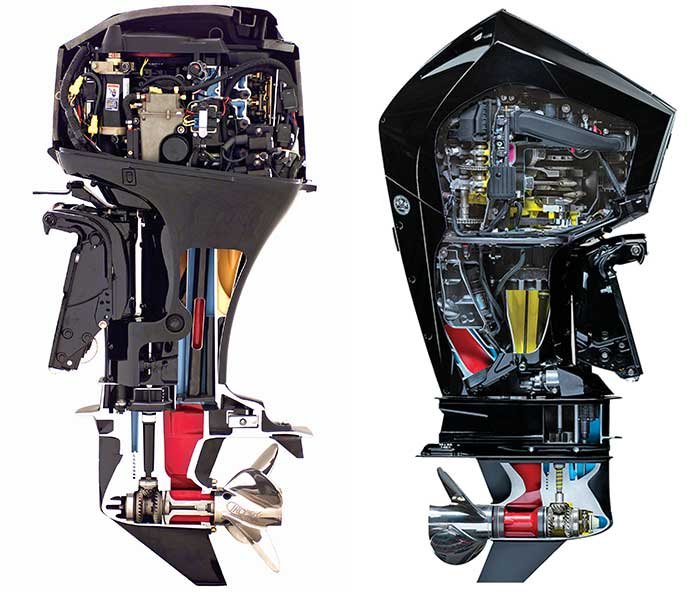
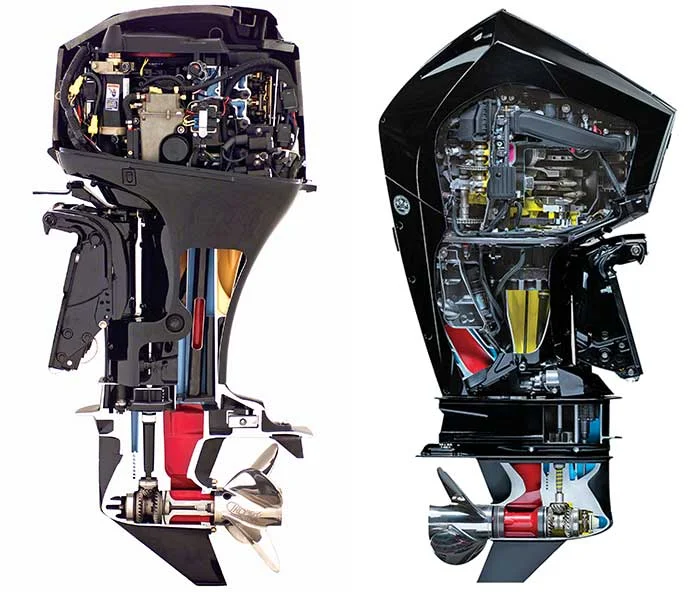
Boat Engine Replacement: Repair vs. Rebuild vs. Repower, and What It Costs
At some point almost every boat owner ends up staring at an old engine wondering whether it’s worth fixing one more time or whether it’s finally time for a real boat engine replacement. It’s rarely an easy call. Nobody wants to spend money on a new engine if the old one has a few good seasons left, and nobody wants to keep dumping cash into a motor that’s circling the drain either.
We talk to boat owners going through exactly this decision every week, so here’s the honest version of how to think about it — not the version that just tells you to buy a new motor because that’s what we sell.
Signs Your Engine Is Actually Done
A few red flags tend to show up together when an engine has reached the end of the road rather than just needing a repair:
- The block is cracked, or there’s corrosion eating into structural components rather than just surface rust on fittings.
- Parts are discontinued or take weeks to source, which is common once an engine passes the 15-20 year mark.
- Compression is low and uneven across cylinders, especially if it’s paired with visible smoke or oil in the coolant.
- The engine has logged well beyond its expected service life — gasoline outboards and sterndrives typically run somewhere around 1,500 hours before major work is needed, while diesels can go two to three times that if they’ve been maintained.
- You’re looking at a repair estimate that keeps growing every time the mechanic opens something else up.
None of these alone is a guaranteed reason to replace. Together, they usually are.
Repair, Rebuild, or Full Boat Engine Replacement?
There are really three paths once an engine starts giving you trouble, and they lead to very different outcomes.
Repair makes sense when the problem is isolated — a water pump, a fuel pump, an alternator — and the rest of the engine is sound. This is usually the cheapest option and the right first move for anything under, say, 10 years old with a clean maintenance history.
Rebuild means tearing the engine down and replacing internal wear components — pistons, rings, bearings, gaskets — while keeping the original block. A lot of shops price this at roughly 25-50% of what a full replacement would cost. The catch is that a rebuild only fixes what you rebuild. If the block itself has corrosion damage, or if peripheral systems like the wiring harness, exhaust, and cooling components are also aging out, those costs get tacked on separately and can push the total a lot closer to replacement cost than the original quote suggested.
Full replacement (repowering) is the most expensive option upfront but comes with the fewest unknowns. You get a factory warranty, current fuel-injection and ignition technology, and — this matters more than people expect — a real bump in fuel efficiency. A modern four-stroke outboard can run 20-40% more efficiently than a motor from 15 years ago, which quietly pays some of that upfront cost back over a few seasons on the water.
What Boat Engine Replacement Actually Costs
Pricing varies a lot by engine type and boat size, but here’s a realistic range based on what shops across the industry are quoting:
| Engine Type | Typical Replacement Cost Range |
|---|---|
| Outboard motor, small-to-mid horsepower | $1,500 – $12,000 |
| Outboard motor, large V6/V8 offshore | $15,000 – $30,000+ |
| Sterndrive / inboard gas engine | $12,000 – $22,000 (installed) |
| Diesel inboard | $20,000 – $70,000+ |
| Engine rebuild (vs. replacement) | Roughly 25-50% of full replacement cost |
Two things that regularly get left out of DIY budget estimates: labor, and everything that isn’t the engine itself. A transom that wasn’t built for the weight of a modern four-stroke may need reinforcement. Wiring, control cables, gauges, exhaust components, and fuel lines often need updating to match the new motor. It’s worth getting a full quote rather than pricing just the engine and assuming the rest is minor.
Why Outboards Make This Decision Easier
If you’re running an outboard rather than an inboard or sterndrive, you’re in a better spot than most boat owners facing this decision. Outboards bolt to the transom rather than being built into the hull, which means replacement is faster, cheaper, and far less invasive than a sterndrive or inboard repower. There’s no engine bed to modify, no shaft alignment to fight, and in a lot of cases a compatible replacement can be installed in a day or two rather than the weeks a full inboard repower can take.
This is where we come in. We carry outboard motors across the full horsepower range — small 4 HP and 6 HP portables for tenders and jon boats, mid-range 40-90 HP four-strokes for the boats most people actually own, and serious 425 HP V8 offshore engines for center consoles that need real power. If your current outboard has reached the end of its useful life, browsing our outboard motors for sale is a reasonable place to start figuring out what a real replacement would cost for your specific boat.
A few models worth a look depending on your boat: the Yamaha 40 HP F40LA and 50 HP F50LB cover most mid-size runabouts and pontoons, while the 90 HP F90XB and 425 HP V8 handle heavier center consoles and offshore rigs.
Don’t Forget the Propeller
One thing that trips up a lot of DIY repowers: swapping in a new engine without checking whether the existing propeller is still the right match. Horsepower, gear ratio, and shaft rotation can all differ between an old motor and its replacement, even within the same brand. We cover this in detail in our guide to outboard motor propellers, and it’s worth a read before you finalize your new engine order — a mismatched prop can make a brand-new motor feel underwhelming.
If you’re weighing an inboard or sterndrive repower instead, the process and cost structure look a bit different — take a look at our marine engine replacement guide for that side of things.
Frequently Asked Questions
How long does a boat engine replacement take?
An outboard swap can often be done in a day or two once the new motor is on hand. Inboard and sterndrive repowers typically take one to three weeks depending on how much of the surrounding rigging needs updating.
Is it cheaper to rebuild or replace a boat engine?
Rebuilding is usually cheaper upfront, often 25-50% of a full replacement. But a rebuild doesn’t touch the block, the wiring, or aging peripheral systems, and if the boat has saltwater corrosion in the block, a rebuild can end up costing nearly as much as replacement while leaving you with an out-of-warranty engine.
What’s the average lifespan of a boat engine before replacement?
Gasoline engines typically last around 1,500 hours of run time with good maintenance, while diesels often go two to three times longer. Calendar age matters too — parts availability drops off sharply once an engine passes 15-20 years old.
Do I need to replace anything besides the engine itself?
Often, yes. Depending on the age of the boat, you may need updated wiring, control cables, gauges, fuel lines, or exhaust components to properly match a new engine, especially if you’re moving from an older two-stroke to a modern four-stroke.
The Bottom Line
A boat engine replacement is a real investment, but it’s one that comes with a warranty, better fuel economy, and the peace of mind of not gambling on a 15-year-old block every time you leave the dock. If your current engine is showing more than one or two of the warning signs above, it’s worth getting a straight answer on replacement cost before you sink more money into repairs. Our team can walk you through which outboard fits your boat, your budget, and how you actually use it.
For general background on how outboard configurations differ from inboard and sterndrive setups, the Wikipedia entry on outboard motors is a useful starting reference.
Posts Widget
-
1

-
2

-
3

-
4


S.H Continental Marine
USA HERALD MAGAZINE INC
Our team is dedicated to providing exceptional customer service.
Email: info@shcontinentalmarine.com
Choose S.H Continental Marine
for your outboard engine needs and enjoy superior quality, exceptional customer service, and unbeatable prices.