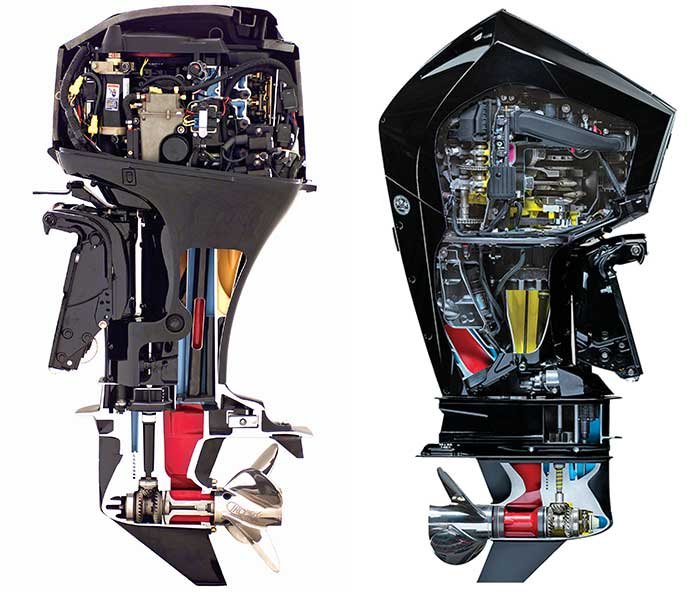
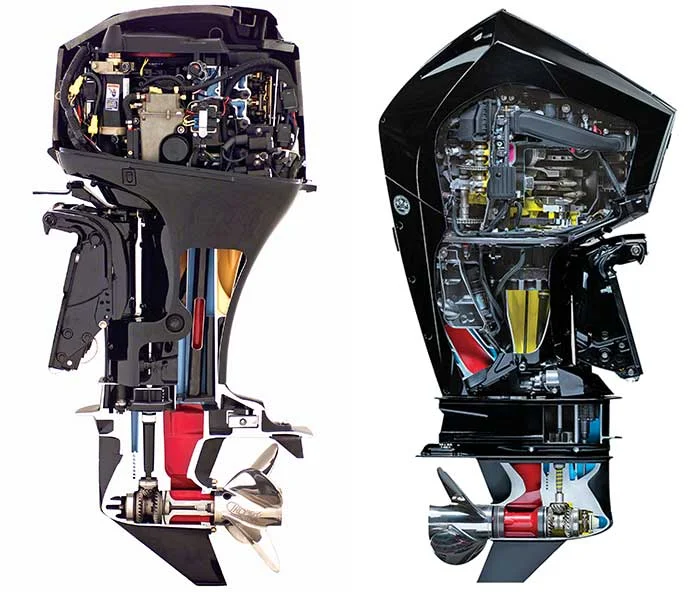
Suzuki vs Yamaha Outboards: Which is Better? – Suzuki vs Yamaha outboards

Suzuki vs Yamaha Outboards: What’s Best?
If you are purchasing a top-of-the-line outboard motor for your vessel, the two names that you will be hearing contested wherever you travel across the globe are Suzuki and Yamaha. Suzuki vs Yamaha outboards
In this global survey we will pit the two rivals against each other, compare actual specifications, examine the advantages and disadvantages of each, and guide you to make an intelligent buying decision.
Because we sell these motors all over the world, it doesn’t matter that you know which one is better, but which one is better for you.
Why These Two Brands Stand Out At The Top
Suzuki
Suzuki has grown rapidly in the marine outboard market by emphasising fuel efficiency, modern technology, and value. For example, Suzuki’s “Big Block” inline-4 models bring high output in a lighter, simpler package. Their features include lean-burn fuel control, variable valve timing, anti-corrosion finishes, and a user-friendly design.
Yamaha
Yamaha is perhaps the most prestigious offshore nameplate in the world. It offers an extensive model range (from small portable motors to high-horsepower offshores), strong dealer and support infrastructures, and cutting-edge technology including variable cam timing, digital fuel injection, and higher resale values.
Key Comparison Criteria
Here are the main areas Suzuki and Yamaha differ — and how to spot it when purchasing.
Power & Model Range
Yamaha’s offering is very broad: from small four-stroke engines to hundreds-of-horsepower V8s.
Suzuki also has a fair line-up, but they are known for solid value per horsepower, particularly in inline-4 and mid-range engines.
Take-away: For very high power (300 hp+), look at individual model lines in your market.
Fuel Efficiency & Running Costs
Suzuki engines focus heavily on fuel economy, i.e., lean-burn control systems and induction tuning.
Yamaha also makes tech-focused and efficient engines, but top-of-range models may be more expensive to own.
Take-away: Suzuki might be the better option to offer maximum cruising range and minimum running cost.
Initial Cost & Value
Suzuki models typically are value for money — good specifications at a reasonable price.
Yamaha commands a premium, in part due to brand reputation, technology, and a worldwide support base.
Take-away: If you want quality but have a tight budget, Suzuki is a bargain.
Features & Technology
Both companies equip modern outboards with electronic fuel injection, DOHC or high-performance valve timing, tilt/trim systems, and remote throttle controls.
Yamaha adds more premium technology: variable cam timing (VCT), digital network compatibility, and luxurious finishes. Suzuki counters with subtle engineering and cost efficiency.
Take-away: If you like “state-of-the-art” equipment and are willing to spend more, Yamaha is likely the champion. If you prefer solid performance with fewer frills, Suzuki is equally good.
Reliability, Service & Resale
Yamaha’s international dealer and service network is unmatched, which improves parts availability, ease of service, and resale value.
Suzuki is also highly reliable, but in certain regions, its dealer and parts availability may be less comprehensive than Yamaha’s.
Take-away: When buying in a distant or less-served region, confirm the local dealership and support first.
Operation, User Experience & Environment
Both provide quiet, smooth operation. Yamaha’s high-end models emphasize refined shifting, minimal vibration, and premium finish.
Suzuki emphasizes ruggedness, low complexity, and reduced maintenance costs.
Take-away: In commercial or heavy use, support and maintainability are as important as performance.
Saltwater and Harsh Conditions
Harsh marine environments (offshore, saltwater) demand strong corrosion protection, sealing, and support networks.
Suzuki offers heavy-duty anti-corrosion coatings on most models, while Yamaha has a long-standing reputation in commercial, offshore, and severe-duty conditions.
Bottom Line: If operating overseas, in saltwater, or under heavy use, choose the brand with greater national support and proven durability.
Sample Specifications for Each Brand
Some example models of each brand to use for comparison to actual values are listed below.
Suzuki Example: DF 115
- Cylinders: DOHC 4-cylinder, 16-valve
- Displacement: 2 044 cc (124.7 in³)
- Bore × Stroke: 86 × 88 mm (3.40 × 3.50 in)
- Maximum Output: 115 hp; wide-open throttle RPM range 5 000 – 6 000 rpm
- Features: Multi-point sequential electronic fuel injection, weight ~ 414 – 423 lbs depending on shaft length
- Gear Ratio: approx 2.59 : 1
These are the figures that give you a high-performance mid-power motor with modern 4-stroke efficiency.
Suzuki Example (More Power): DF 200 T
- Engine Type: V6, 24-valve, DOHC
- Displacement: 3 614 cc (220.5 in³)
- Bore × Stroke: 95 × 85 mm (3.74 × 3.35 in)
- Maximum Output: 200 hp; operating range 5 000 – 6 000 rpm
- Weight: approx 582 lbs (for L-shaft version)
- Features: Can-Bus system for rigging, keyless start, multi-stage induction, variable valve timing, tilt-limit switch
This engine shows Suzuki’s higher-end offering with modern performance technology.
Yamaha Example: F115B / FL115B
- Engine Type: 4-stroke, DOHC, 16-valve, inline 4
- Displacement: 1 832 cc
- Bore × Stroke: 81.0 × 88.9 mm
- Maximum Output: 115 hp (~84.6 kW) @ ~ 5 800 rpm
- Dry Weight: ~ 175 – 185 kg (385 – 408 lbs)
- Features: Fuel injection, tiller or remote control depending on model, power trim & tilt
Yamaha Example (More Power): F200 (Inline 4)
- Displacement: ~ 2.8 L (2 785 cc)
- Bore × Stroke: 96.0 × 96.2 mm
- Maximum Output: 200 hp @ 5 500 rpm
- Features: Variable cam timing (VCT), digital electronic control, lightweight design for its class
These specs illustrate Yamaha’s depth of engineering and wide reach.
Which One To Choose?
Based on comparison and specifications, here’s how you should decide depending on your usage scenario.
Choose Suzuki If:
- You desire great value for the power you receive.
- You’re looking for lower operating costs and superior fuel economy.
- You’ll be using the outboard for leisure or recreational purposes where a reliable dealer network is available.
- You appreciate solid local support with an affordable product.
- You want a well-built mid-range unit with great features for the price.
Select Yamaha If:
- You require maximum global service support, brand recognition, and resale value.
- You’re boating for commercial, offshore, or heavy-duty purposes.
- You’ll be running the boat for hundreds of hours and need long-term reliability.
- You’re willing to invest more upfront for high performance and peace-of-mind.
- You plan to resell or trade the engine in the future and need premium resale value.
Final Thoughts & Our Take
As a global distributor of Suzuki and Yamaha outboards, here’s our bottom line:
- Both are exceptional brands — you truly can’t go wrong.
- Match the motor to your boat, considering your profile, budget, and local support environment.
- If economy and cost-effectiveness are your top priorities, go with Suzuki.
- If service availability, spare parts access, and technical support matter most, choose Yamaha.
- Always check local availability, warranty information, shaft length, and rigging compatibility for your region.
We can provide up-to-date prices, stock, and worldwide shipping for both Suzuki and Yamaha models.
Would you like us to pull real-time quotes for both manufacturers’ mid-power and high-power outboards so you can compare live global offers?
Yamaha 300HP Outboard Review: Built for Speed and Strength – Yamaha 300HP outboard for sale
Electric vs Gas Outboard Motors: Pros, Cons & Which is Right for You
Posts Widget
-
1

-
2

-
3

-
4


S.H Continental Marine
USA: B.L Business LLC
Thailand: Dethai Products 1989 Co.,ltd
Our team is dedicated to providing exceptional customer service.
Email: info@shcontinentalmarine.com
Choose S.H Continental Marine (Dethai Products 1989 Co.,ltd)
for your outboard engine needs and enjoy superior quality, exceptional customer service, and unbeatable prices.