
Outboard Motor Maintenance: 7 Essential Tasks That Keep Engines Running
Ask ten boat owners what “outboard motor maintenance” actually means and you will get ten different answers. Some think it is just changing the oil once a year. Others assume a modern four-stroke does not need much attention at all, right up until it strands them a mile offshore. After years of selling and servicing outboards of every size, from a 2.5 HP tiller motor to a 425 HP V8, we can tell you the truth is boring but simple: engines that get real maintenance last twice as long as engines that do not, and they hold their resale value a lot better too.
This guide is written the way we would explain it to someone standing at our counter, not the way a manufacturer writes a warranty booklet. We will go through what outboard motor maintenance actually covers, how the schedule changes depending on horsepower, what breaks when owners skip steps, and where the specs of your engine change how much work it needs.
What Outboard Motor Maintenance Actually Covers
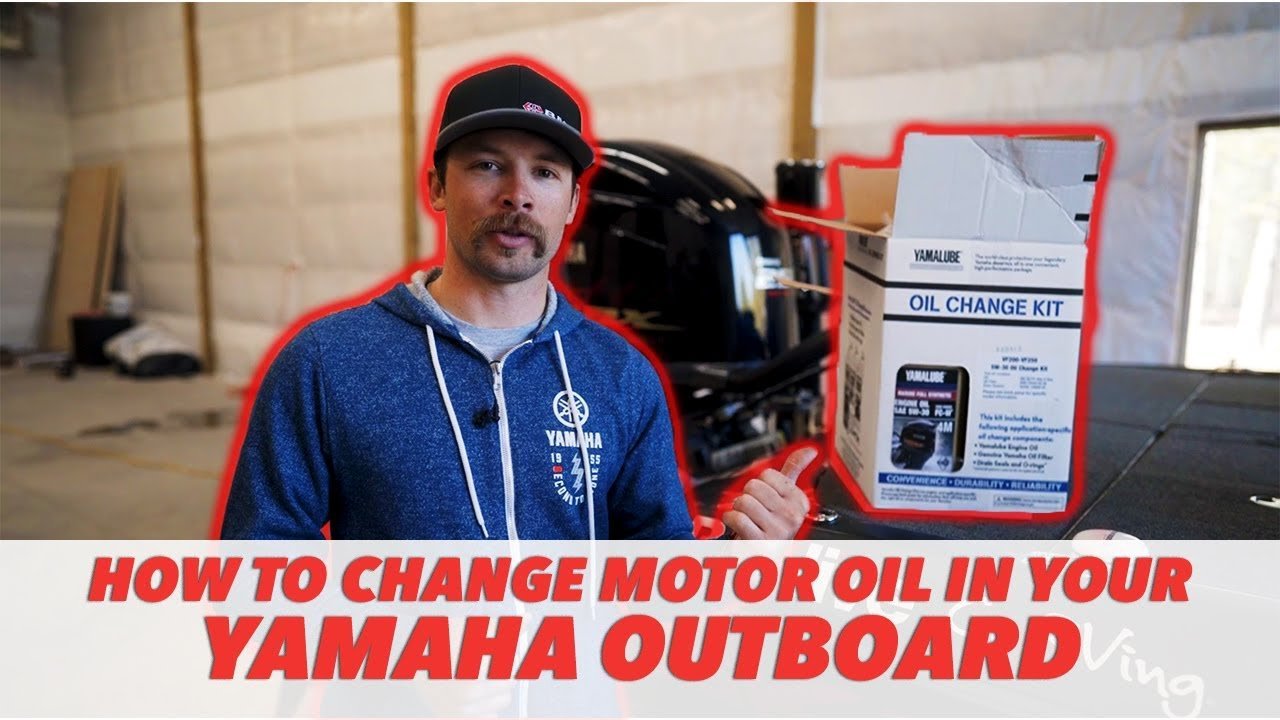
Outboard motor maintenance is not one task. It is a stack of small, mostly cheap jobs that, done on schedule, prevent the handful of expensive failures that actually sink a boating season. The core jobs are the same whether you run a Yamaha 6 HP on a jon boat or a 90 HP on a center console:
- Engine oil and filter changes on four-strokes, or fresh fuel-oil mix ratios on two-strokes
- Lower unit gear oil changes, checked for water contamination (a milky look means a seal is failing)
- Water pump impeller replacement, usually every 100 hours or every two to three seasons
- Spark plug inspection and replacement
- Fuel system checks, including fuel-water separators and old ethanol-blended gas
- Anodes (sacrificial zinc, aluminum or magnesium) that protect the engine from corrosion
- Propeller and prop shaft inspection for fishing line, dings and seal damage
- Fresh water flushing after every saltwater run
None of these jobs is complicated on its own. What trips people up is that outboard motor maintenance runs on hours and calendar time together, not just miles like a car. A motor that only ran 20 hours this year still needs fresh gear oil and a fuel system check, because ethanol gas breaks down and moisture still gets into the lower unit whether the boat moved or not.
A Maintenance Schedule You Will Actually Follow
Manufacturer manuals list intervals down to the hour, which is accurate but not how most owners think. Here is the schedule we give customers when they buy a motor from us, broken into what matters and when.
| Interval | Task | Why it matters |
|---|---|---|
| Every outing | Visual check of oil level, fuel lines, prop for fishing line | Catches small problems before they become breakdowns |
| After every saltwater trip | Fresh water flush through the muffs or built-in flush port | Salt residue eats water passages and corrodes internals fast |
| Every 20-25 hours or monthly | Grease fittings, check battery terminals, inspect anodes | Keeps steering and tilt mechanisms from seizing |
| Every 100 hours or annually | Oil and filter change, gear oil change, spark plugs, fuel filter | Standard service interval on most four-stroke outboards |
| Every 3 years or 300 hours | Water pump impeller replacement | A worn impeller causes overheating, which is the number one cause of engine damage |
| Before winter storage | Fogging oil, fuel stabilizer, full drain, gear oil change | Prevents corrosion and fuel varnish over the off season |
If you only remember one line from this section, make it the impeller. Overheating from a worn water pump is the single most common reason we see outboards come in with cracked heads or seized powerheads, and it is completely avoidable.
How Engine Specs Change Your Maintenance Load
Outboard motor maintenance is not the same job on a 2.5 HP portable as it is on a 425 HP offshore V8. Bigger engines have more cylinders, bigger cooling systems, alternators pushing more current, and in many cases power trim and tilt systems that add hydraulic fluid to the checklist. Here is a rough comparison across the range we stock, using Yamaha outboards as the reference since that is what most of our customers run.
| Engine class | Typical weight | Cylinders | Oil capacity (approx.) | Maintenance load |
|---|---|---|---|---|
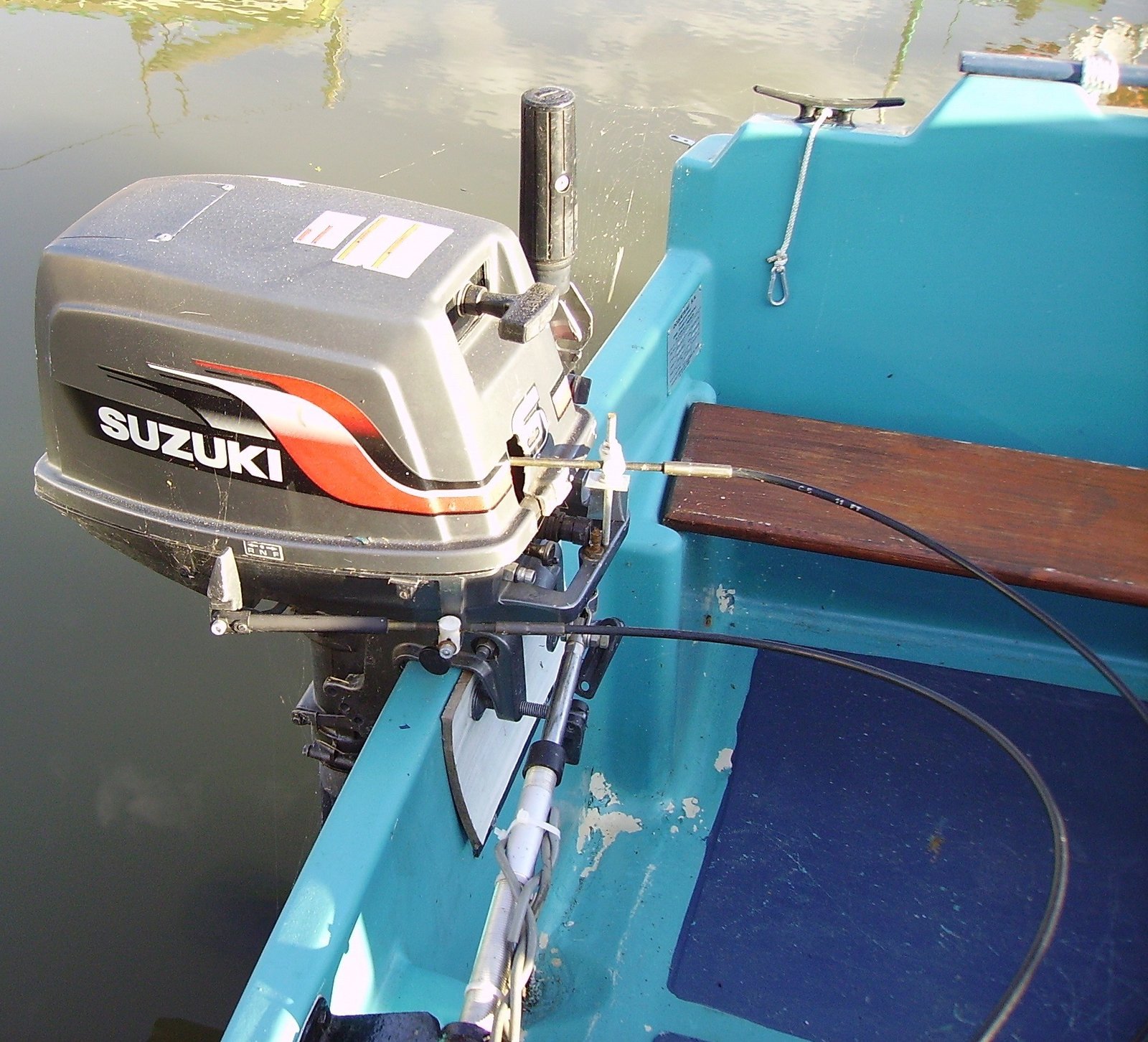
| 2.5-6 HP portable | 27-60 lbs | 1 | 0.35-0.6 qt | Light. Simple carbureted or small fuel-injected single, few accessories to service. |
| 9.9-30 HP mid-range | 90-165 lbs | 2 | 1.0-1.7 qt | Moderate. Add power trim on some models, more electrical to check. |
| 40-90 HP | 190-410 lbs | 3-4 | 2.6-4.5 qt | Standard four-stroke service, power trim and tilt fluid, larger cooling system. |
| 115-250 HP | 410-560 lbs | 4 (in-line) | 5.3-6.9 qt | Higher oil volume, more thorough fuel injection checks, bigger alternator output to maintain. |
| 300-425 HP V8 | 560-670 lbs | 8 | 8-10.6 qt | Full service list plus dual battery charging systems and integrated hydraulic steering. |
This is one reason we walk buyers through the horsepower decision carefully rather than just selling the biggest engine available. A 9.9 HP outboard that matches your boat will cost far less to maintain over ten years than an oversized engine that never runs at an efficient load.
Two-Stroke vs Four-Stroke: The Maintenance Actually Differs
A lot of the confusion around outboard motor maintenance comes from mixing advice between two-stroke and four-stroke engines. They are not the same job.
Two-stroke outboards mix oil with the fuel (either pre-mixed or through an oil injection system), so there is no separate oil change, but you have to keep the mix ratio correct and the oil reservoir topped off if it is injected. Their maintenance is lighter overall but less forgiving of cheap oil, since the oil is burned along with the fuel and lubricates the piston and rings directly.
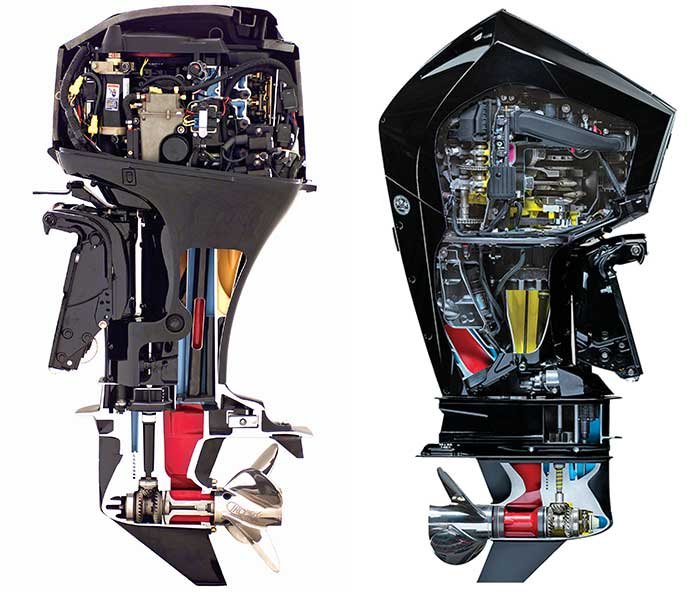
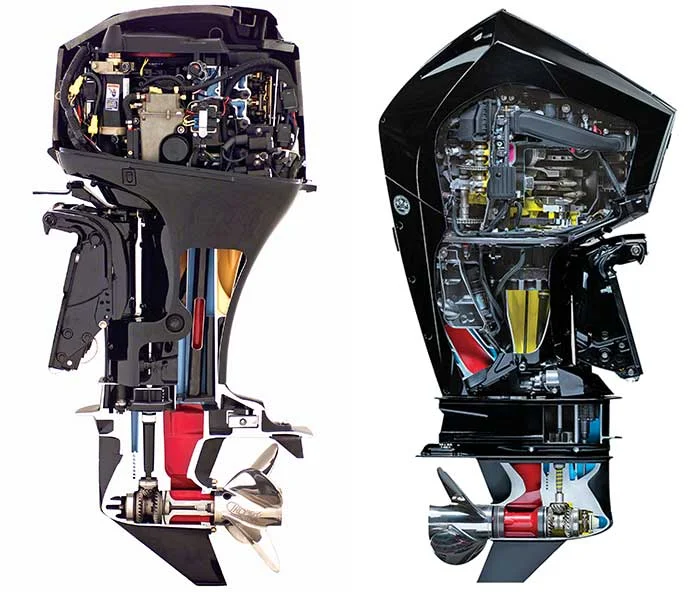
Four-stroke outboards run like a car engine, with a dedicated oil sump, oil filter, and a full annual oil change. They are heavier and mechanically more complex, but the trade-off is quieter running, better fuel economy, and lower emissions. Almost everything we sell today is four-stroke, since it is what the market has moved to and what most marinas and rental fleets now require.
If you own an older two-stroke, the maintenance basics of impellers, anodes, and fuel system care are identical to a four-stroke. The main difference is you are managing oil-to-fuel ratio instead of an oil sump, and two-strokes tend to foul spark plugs faster if the ratio is off or the engine idles too much.
Saltwater Use Changes the Whole Schedule
If you run in saltwater, outboard motor maintenance needs to happen more often, full stop. Salt accelerates corrosion on anodes, aluminum housings, electrical connectors, and fasteners. A few adjustments we recommend for saltwater owners:
- Flush with fresh water after every single trip, not just the ones that “felt salty”
- Check anodes monthly instead of seasonally, since saltwater eats them faster
- Rinse the outside of the engine and trailer, including electrical connectors, and dry them before storage
- Use marine-grade anti-corrosion spray on fittings, hinges, and the powerhead exterior
- Consider a higher-output anode kit if you keep the boat in the water full time (a slip-kept boat corrodes faster than a trailered one)
Freshwater use is easier on engines, but do not skip maintenance just because corrosion risk is lower. Lake water still carries silt and debris that wears water pump components, and fuel still goes stale sitting in a tank over winter.
DIY Maintenance vs Taking It to a Shop
Most of the routine items on the schedule above are within reach for an owner with basic tools: oil changes, spark plugs, greasing fittings, checking anodes, and flushing. A Saturday morning and a service manual for your specific model will get you through those without trouble.
Jobs we generally recommend leaving to a shop unless you are mechanically confident: water pump impeller replacement (it is easy to install one backwards or tear the housing gasket), fuel injection diagnostics on electronic fuel-injected models, and anything involving the powerhead itself. A botched impeller job that leaks water into the exhaust can cause more damage than the worn impeller ever would have.
A middle ground a lot of our customers use: do the simple stuff yourself through the season, and bring the engine in once a year for a full service that covers the impeller, gear oil, compression check, and a look at anything that is starting to wear. It keeps costs down without gambling on the harder jobs.
What Maintenance Actually Costs Per Year
| Item | Typical annual cost (mid-range 40-90 HP engine) |
|---|---|
| Oil and filter change | $40-$80 in parts, or $120-$200 including labor |
| Gear oil change | $20-$35 in parts |
| Spark plugs (set) | $25-$60 depending on engine size |
| Water pump impeller kit (every 2-3 years) | $40-$90 in parts, $150-$300 with labor |
| Anodes (2-4 per engine) | $30-$70 |
| Fuel filter/water separator | $15-$30 |
| Full annual shop service | $250-$500 depending on engine size and region |
Compare that to a powerhead rebuild, which routinely runs $2,000 to $6,000 depending on horsepower, or a full engine replacement, and outboard motor maintenance is clearly the cheaper path every single time.

Mistakes We See Constantly
Running on old ethanol gas. Gasoline sitting in a tank for six months absorbs moisture and separates. It gums up carburetors and injectors and is one of the most preventable causes of no-start complaints. A stabilizer added before storage costs a few dollars and saves hundreds in cleaning.
Skipping the impeller because “it still pumps water.” A weak stream out of the tell-tale does not mean the impeller is fine, it means it is failing. By the time you notice reduced flow, the vanes are already cracking.
Running the motor out of water, even briefly. Thirty seconds without cooling water can score a cylinder wall. If you need to run it dry for a quick test, use a flush attachment, not a garden hose and a bucket.
Ignoring anodes because they “look fine.” Anodes are supposed to corrode, that is their job. Once one is more than half eaten away, replace it, or corrosion moves to the aluminum housing and gearcase next.
Storing the motor tilted down. Trapped water in the lower unit freezes and cracks the housing in cold climates, and encourages corrosion everywhere else.
When Maintenance Stops Making Financial Sense
Good outboard motor maintenance extends life, but every engine reaches a point where repair costs exceed replacement value. If a powerhead rebuild is quoted north of 50% of what a comparable used or new motor costs, or you are looking at your second major repair inside eighteen months, it is worth pricing a replacement instead of pouring more money into an aging block. We see this most often on engines past 1,500-2,000 hours that were not maintained on schedule for the first half of their life.
This is where having a dealer who also sells engines pays off. We can look at your maintenance history, tell you honestly whether a repair is worth it, and if not, get you into a properly specced replacement without the guesswork. Our lineup runs from a compact 2.5 HP outboard for dinghies and tenders up through a 425 HP V8 for serious offshore rigs, and everything in between, including 40 HP and 90 HP models that cover most family boats.
What We Recommend Keeping On Hand
- A spare impeller kit matched to your exact model
- Manufacturer-spec engine oil and a filter for your horsepower class
- Marine grease and a grease gun for fittings
- A spare fuel-water separator filter
- The correct spark plugs, gapped and ready
- Fuel stabilizer for anything sitting more than 30 days
None of this is expensive compared to a tow bill or a rebuild. Most of it fits in a small tote bag under a console seat.
Frequently Asked Questions
How often does an outboard actually need servicing? Most manufacturers recommend a full service every 100 hours or once a year, whichever comes first, with lighter checks (oil level, anodes, prop) done more frequently.
Can I do outboard motor maintenance myself without a mechanic? Yes, for oil changes, spark plugs, greasing, and flushing. Impeller replacement and anything involving fuel injection is better left to a shop unless you have direct experience with your model.
How do I know if my lower unit oil needs changing? Drain a small amount into a clear container. If it looks milky or has metal flakes, it needs changing and the seals should be inspected.
Does a low-hour engine still need maintenance? Yes. Fuel, oil, and gear lubricant all degrade with time, not just running hours, so a boat that sat all season still needs its annual service.
Buy From People Who Actually Service These Engines
We are not just moving boxes. Every outboard motor we sell, from a small portable to a full offshore V8, gets checked by people who do this maintenance work daily and can tell you exactly what to expect from the model you are looking at. Standards from the American Boat and Yacht Council (abycinc.org) and the EPA’s guidance on marine engine emissions and fuel systems (epa.gov) back up most of what is in this guide, if you want the technical detail behind it.
If you are shopping for a new or used engine, browse our range of outboard motors for sale, or read our companion guide on outboard engine repair if something has already gone wrong. We ship worldwide and every motor is ready to run when it lands.
Posts Widget
- 1

- 2
- 3
- 4


S.H Continental Marine
USA HERALD MAGAZINE INC
Our team is dedicated to providing exceptional customer service.
Email: info@shcontinentalmarine.com
Choose S.H Continental Marine
for your outboard engine needs and enjoy superior quality, exceptional customer service, and unbeatable prices.
