
Commercial Outboard Motors: What Fleet Buyers Need to Know Before They Order

Commercial Outboard Motors: What Actually Matters When the Engine Runs Every Day
If you’re buying for a fleet, a charter operation, a ferry route, or a patrol boat, you’re not shopping the same way a weekend angler shops. A weekend boat might run 40 hours a year. A commercial outboard motor on a working boat can rack up that many hours in a month, sometimes a week. That changes everything about what “the right engine” means. It’s not about top speed on a Saturday afternoon — it’s about whether the motor starts every single time, holds its power curve after 800 hours, and doesn’t leave you stranded with a boat full of paying passengers or a hold full of catch.
We sell commercial outboard motors to operators who can’t afford downtime — water taxi companies, dive charter operators, aquaculture farms, harbor patrol units, ferry services, and commercial fishing crews. Below is what we’ve learned matters most when an engine has to earn its keep, plus the specs and options we actually stock.
Duty Cycle Is the First Question, Not the Last
A lot of buyers start with horsepower and work backward. We’d rather start with duty cycle. How many hours a day is this motor running? Is it wide open throttle for long stretches, or idling and trolling most of the time? Saltwater or fresh? Is the boat planing with a light load, or pushing a heavy hull with gear and passengers aboard? Commercial outboard motors get selected differently depending on the answers — a 9.9 HP high-thrust unit pushing a loaded workboat at low RPM all day wears differently than a 90 HP unit doing short high-speed runs between docks.
Four-stroke engines dominate the commercial space now for good reason: lower fuel burn per hour, quieter operation (which matters if you’re running tours or ferrying passengers who’d rather not shout over the engine), and cleaner exhaust that keeps you compliant with EPA and CARB emissions standards in most ports. Every commercial outboard motor we carry is four-stroke.
Specifications That Matter for Fleet Buyers
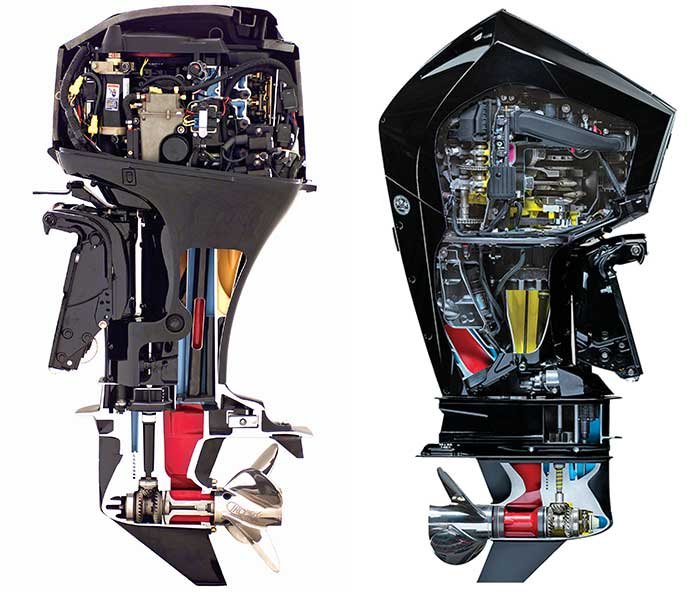
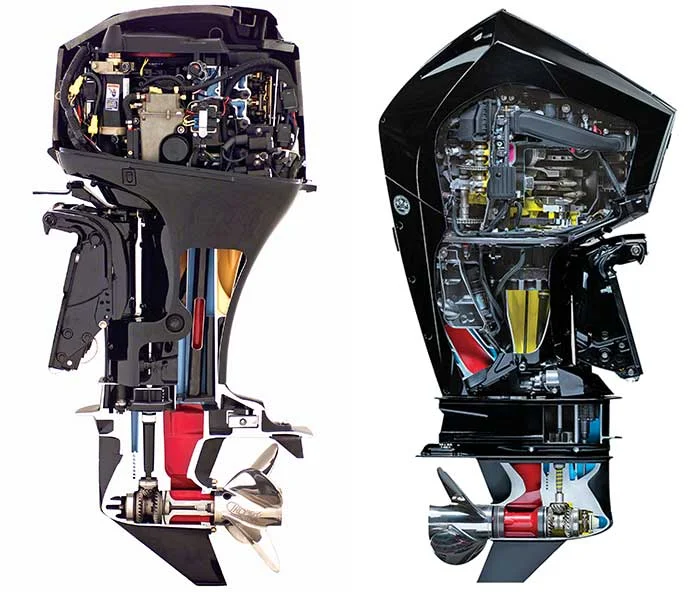
Here’s a representative spec sheet pulled from one of our commercial-duty models, the kind of mid-range four-stroke that ends up on a lot of workboats and patrol hulls:
- Engine type: Inline 4-cylinder, 16-valve, DOHC, four-stroke
- Displacement: 1.8L (1,832cc)
- Rated output: 90 HP @ 5,500 RPM
- Fuel delivery: Electronic Fuel Injection (EFI)
- Ignition: TCI microcomputer
- Alternator output: 35 amps — enough headroom for radios, nav lights, chartplotters, and bilge pumps running continuously
- Starting system: Electric
- Shaft length options: 20" or 25"
- Weight: approximately 353 lbs
- Gear ratio: 2.15:1
- Steering: Remote mechanical or hydraulic-compatible
For heavier commercial applications — pontoon-based tour boats, larger patrol vessels, or twin-engine setups — we also carry commercial-grade 90 HP outboards at the higher end of this range, and for light utility craft, dinghies, and tenders that need a dependable secondary motor, our 9.9 HP high-thrust models cover that end of the fleet.
Corrosion Protection Isn’t Optional in Commercial Service
A recreational boater who flushes the motor twice a season can get away with average corrosion protection. A commercial operator running in saltwater five or six days a week cannot. Every commercial outboard motor we sell uses a multi-layer anti-corrosion coating on the powerhead and a sacrificial anode system on the lower unit, and we strongly recommend a freshwater flush port be used after every saltwater run — it takes two minutes and adds years to the motor’s working life.
Where Commercial Outboard Motors Actually Get Used
- Water taxis and passenger ferries — quiet running and reliable electric start matter more here than raw horsepower
- Dive and snorkel charter boats — need enough power to plane with a full boat of gear and divers, plus a motor that won’t quit mid-trip
- Commercial fishing and aquaculture — long duty cycles, often at trolling speed, favor high-thrust props and larger displacement
- Harbor patrol and pilot boats — need fast acceleration and dependable cold starts, since these boats get called out at all hours
- Tour operators — fuel economy adds up fast across dozens of daily trips, so efficiency is a real line item, not a nice-to-have
Buying Commercial Outboard Motors From Us
Every motor we sell ships brand new from Yamaha or an authorized distributor — no grey-market units, no rebuilt cores sold as new. Fleet buyers get full factory warranty on every new unit, volume pricing for multi-engine and repower orders, maintenance kits and OEM filters stocked and ready to ship alongside the engine, and rigging support for control cables, wiring harnesses, and mounting hardware sized to your hull.
If you’re comparing a Yamaha F90XB against a VF90LA V MAX SHO for a fleet order, or trying to decide between a high-thrust unit and a standard prop setup for a tender fleet, that’s exactly the kind of question our team fields daily — reach out and we’ll walk through the numbers with you.
Maintenance Schedules That Keep Fleets Running
Commercial hours pile up fast, so we set fleet customers up on an hour-based schedule rather than a calendar-based one: oil and filter change every 100 hours, fuel filter inspection every 100 hours with replacement every 200, impeller replacement every 300 hours or annually on saltwater duty, full lower unit gear oil change every 100 hours, spark plug inspection every 100 hours, and corrosion anode inspection monthly on high-use saltwater boats.
None of this is unusual for a working engine — it’s the same logic a fleet manager applies to a delivery van. The difference between a fleet that gets five good years out of its motors and one that’s constantly repowering usually comes down to whether someone’s actually following a schedule like this one.
A Note on Emissions and Port Compliance
If your routes run through ports with strict emissions rules, four-stroke EFI outboards with a 3-star or better CARB rating clear most requirements without issue. According to the EPA’s marine engine emissions program, newer four-stroke outboards produce a fraction of the hydrocarbon emissions of older two-stroke designs, which is one more reason commercial fleets have largely moved away from two-strokes over the past decade.
Ready to Spec Out a Fleet Order?
Whether you need one commercial outboard motor or ten, we’ll help you land on the right horsepower, shaft length, and rigging package for the actual job the boat does — not just the biggest number on the spec sheet. We ship worldwide, and volume orders get priority handling. Get in touch and tell us about your boats, your routes, and your duty cycle, and we’ll put together a quote that actually fits.
See also our guides to outboard motors for commercial boats, marine engines for cargo boats, and fishing vessel engines for application-specific specs.
Posts Widget
- 1

- 2
- 3
- 4


S.H Continental Marine
USA HERALD MAGAZINE INC
Our team is dedicated to providing exceptional customer service.
Email: info@shcontinentalmarine.com
Choose S.H Continental Marine
for your outboard engine needs and enjoy superior quality, exceptional customer service, and unbeatable prices.
