
Outboard Motors for Yachts: The Complete Buying Guide for Offshore Power

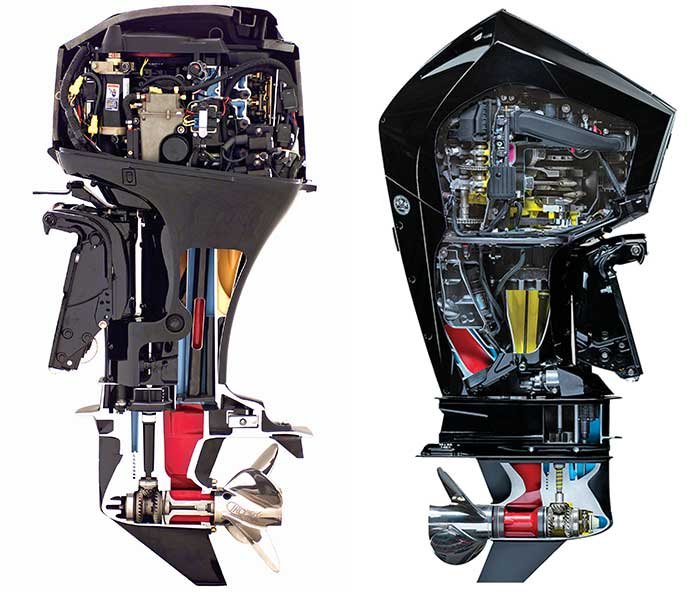
Outboard motors for yachts have gone from a niche choice to the default option for a huge slice of the 35-to-60-foot market, and if you’ve been out of the game for a decade or two, the shift can be surprising. Twenty years ago, if you owned anything over 30 feet, you had an inboard diesel and that was that. Now walk any marina and you’ll see 40, 50, even 60-foot center consoles and flybridge yachts running triple or quad outboards instead. The shift happened for good reasons: outboards free up interior space that used to be eaten by an engine room, they’re easier to service because the whole powerhead sits above the waterline, and modern V8 and V6 four-strokes put out enough horsepower to actually move a heavy hull.
If you’re shopping for outboard motors for yachts right now, the range of options can be a lot to sort through. This guide walks through what actually separates a yacht-grade outboard from a mid-range recreational one, how to think about horsepower and shaft length for a heavier hull, what a proper rigging job involves, and what to expect once you’re ready to buy.
What Makes an Outboard Motor Suitable for a Yacht
A 20-foot bay boat and a 45-foot sportfish yacht are not looking for the same engine, even if both technically run "outboards." Yacht-grade outboards need to deliver serious displacement, corrosion protection built for extended saltwater exposure, and electronic steering and throttle systems that can be synced across multiple engines. When you’re running twin, triple, or quad setups, the engines also need to talk to each other so the helm can control them as one system instead of four separate throttles fighting for attention.
Take the Yamaha XF425ESA2, a 425 HP V8 outboard built specifically for this segment. It runs a 5.6-liter displacement, direct injection fuel delivery, and a 35-inch shaft meant for boats with a deep transom. That shaft length matters more than people expect — on a yacht-sized hull sitting higher in the water, a standard 20 or 25-inch shaft would leave the propeller running too shallow, causing cavitation and killing your top-end performance.
Specifications Worth Comparing
| Spec | Typical Yacht Outboard (425 HP class) |
|---|---|
| Engine type | V8, 4-stroke, DOHC 32-valve |
| Displacement | 5.6L (5,559cc) |
| Shaft length | 25″ to 35″ depending on transom height |
| Fuel delivery | Direct injection EFI |
| Steering | Digital electric (no hydraulic lines) |
| Weight | Approx. 900–980 lbs per engine |
| Alternator output | 85–90 amps |
| Gear ratio | 1.79:1 |
| Cooling | Water-cooled |
The XF425ESA7 is the sibling model to the ESA2, built on the same V8 block but sold unpainted for rigging shops that want to color-match a fleet. Both share the same integrated digital electric steering, which removes hydraulic pumps and lines from the transom entirely — a real advantage when you’re rigging three or four engines side by side and don’t want a tangle of hoses back there.
Twin, Triple, and Quad Configurations Compared
How many engines you run isn’t just a horsepower question — it changes how the boat handles, how much redundancy you have if one engine fails offshore, and how the whole rigging job is priced. Here’s a rough breakdown of how the configurations tend to play out in practice.
| Configuration | Typical hull length | Advantages | Tradeoffs |
|---|---|---|---|
| Twin | 32–42 ft | Simpler rigging, lower maintenance cost, still get-home redundancy | Less top end than triple/quad on the same hull |
| Triple | 38–50 ft | Balances power and redundancy, common on center console yachts | Middle engine complicates prop shaft alignment and service access |
| Quad | 45–60+ ft | Maximum top end and acceleration, best redundancy if one fails | Highest fuel burn and maintenance overhead, needs a wide transom |
Redundancy is a real factor here, not just a marketing point. If you’re running offshore 40–80 miles out, losing one engine out of four still gets you home at reduced speed. Losing one out of two on a twin setup is a bigger hit to your speed and handling, though it’s still generally survivable in most conditions. Single-engine yacht setups exist but are rare at this size specifically because of that redundancy question.
How Many Engines, and How Much Horsepower
There’s no single formula, but the rough rule most riggers use is somewhere between 1.5 and 2 lbs of boat weight per horsepower for a yacht that wants real cruising speed, not just enough power to get on plane. A 20,000 lb hull is going to want somewhere in the 800–1,000 combined HP range to cruise comfortably rather than struggle. That’s typically where you land on twin 425s or triple 300s, depending on the transom width and how the rigger wants to balance the load.
Smaller flybridge yachts in the 35–40 foot range, especially ones that already carry some payload for fuel and water, often do well on twin setups in the 300–350 HP range rather than going straight to the top of the horsepower chart. It’s worth talking through your specific hull and typical loadout before locking in a number, because over-powering a yacht wastes money on fuel burn without much real-world speed gain.
Fuel Range and Consumption at Cruise
Fuel burn is one of the most common questions we get on multi-engine yacht outboards, and the honest answer is that it depends heavily on how you run the boat, not just the horsepower on the transom. A quad-425 setup at wide-open throttle burns significantly more per hour than the same rig at a fast cruise around 4,000–4,500 RPM. Most owners find their real-world sweet spot somewhere in that mid-cruise range, where the boat is still covering serious ground but the fuel curve hasn’t gone exponential yet.
As a rough planning number, a 425 HP V8 at a fast cruise burns somewhere in the range of 20–28 gallons per hour depending on load and trim, so a quad setup at cruise is burning noticeably more than that combined. This is exactly why fuel capacity and range planning need to happen at the same time as the engine decision — a boat with huge horsepower and a small fuel tank doesn’t actually give you the range those specs imply on paper.
Rigging and Installation Considerations
Multi-engine yacht rigging isn’t a weekend DIY project. Digital electric steering, synced throttle-by-wire controls, and the wiring harnesses that tie four engines into one helm display all need to be done by someone who’s rigged outboards at this scale before. Get the transom bracket spacing wrong and you’ll fight prop wash and cavitation between engines for the life of the boat. Most buyers at this level work with a certified rigger who handles the mechanical install while the dealer handles the engine sale and warranty paperwork.
Prop selection also gets more involved with multiple engines, since outer engines on a quad setup often run a slightly different pitch than the inner pair to account for how water flows differently across the transom width. This is one of those details that’s easy to miss if you’re not working with a rigger who’s done this specific configuration before, and it’s worth asking directly about during the quoting process.
Repower vs. New Build
If you’re replacing tired diesel inboards on an existing hull, a repower to outboards is a bigger structural project than simply bolting new engines to an old transom — the transom itself often needs reinforcement or a full swim-platform-and-bracket rebuild to handle the different weight distribution and mounting loads. Buyers coming from twin diesel inboards are often surprised by how much interior volume they get back, since the engine room space becomes usable cabin or storage, but that gain comes with a real engineering project to get there safely.
New builds designed around outboard power from the start don’t have this problem, since the transom, fuel system, and wiring are all engineered around the outboard package from day one. If you’re in the market for a new yacht rather than a repower, ask your builder directly what outboard package they’re speccing and whether it matches the horsepower-to-weight guidance above.
Maintenance on a Yacht-Class Outboard
The maintenance routine isn’t dramatically different from a smaller outboard — oil changes on a set interval, fresh water flush after every saltwater run, and periodic checks on anodes and the lower unit gear oil. What changes is the scale: four V8 outboards mean four oil changes, four sets of spark plugs, four water pump impellers on the service schedule. Budget for that when you’re comparing outboard power against a single big diesel inboard, because the maintenance cost is spread across more units even if each service is straightforward.
Most yacht owners running quad or triple setups keep a maintenance log per engine rather than treating the package as one unit, since engines can wear slightly differently even in an identical configuration depending on which position they’re mounted and how the load is distributed. A good rigger or service center will set this up for you as part of the initial installation.
Noise and Vibration at the Helm
One thing that surprises first-time outboard yacht owners is how much quieter and smoother multi-engine outboard setups can be compared to old diesel inboards, especially at cruise. Modern V8 four-strokes are engineered specifically to reduce vibration transfer into the hull, and with the engines mounted well aft on the transom rather than amidships under the cabin sole, a lot of the noise and vibration that used to fill an inboard yacht’s saloon simply isn’t there anymore. It’s a real quality-of-life upgrade that doesn’t show up on a spec sheet but matters a lot on longer trips.
Buying Outboard Motors for Yachts
We carry Yamaha V8 outboards in the 425 HP class in stock, ready to ship, along with the full lineup down through 90 HP for tenders and smaller craft. Every engine we sell is brand new with full manufacturer warranty coverage — no gray market imports. If you’re specing a repower or a new build, our team can talk through engine count, shaft length, and rigging before you commit to an order. Reach out to our sales team with your hull length, weight, and current setup, and we’ll help you land on the right configuration.
We ship worldwide and can work with your preferred rigger or refer you to one if you don’t already have a relationship with an installer in your area. For technical reference on hull-to-horsepower ratios and safe power limits, the National Marine Manufacturers Association publishes guidance that’s worth reading before you finalize a repower plan, and Yamaha’s own official outboard site has full spec sheets for every model in their V8 line.
Frequently Asked Questions
Can outboards really replace inboard diesels on a yacht?
For a lot of hulls under 60 feet, yes. You gain interior space and easier servicing, though very large yachts still often favor diesel inboards for range and torque at low RPM.
What shaft length do I need?
It depends on your transom height. Most yacht applications run 25″ or 35″ shafts — measure your transom before ordering, since the wrong shaft length is the most common rigging mistake.
Do these come with a warranty?
Yes, full manufacturer warranty on every new engine we sell, with extended coverage options available.
How long does a quad-engine repower take?
Depending on the scope of transom work involved, a full quad repower typically runs anywhere from two to six weeks between structural work, rigging, and sea trials.
What happens if one engine fails offshore?
On a properly rigged multi-engine setup, the remaining engines can get you home, though at reduced speed. This redundancy is one of the main reasons buyers choose triple or quad configurations over a single large engine.
Do I need matching engines across all positions?
Yes, for a synced digital control system to work properly, all engines in the package need to be the same model and typically the same production year.
Can I finance a multi-engine outboard package?
Financing options are available for qualified buyers — contact our sales team for current terms.
If you’re ready to move forward, browse our current inventory of Yamaha outboard motors or contact us directly for a quote on a multi-engine yacht package.
Posts Widget
- 1

- 2
- 3
- 4


S.H Continental Marine
USA HERALD MAGAZINE INC
Our team is dedicated to providing exceptional customer service.
Email: info@shcontinentalmarine.com
Choose S.H Continental Marine
for your outboard engine needs and enjoy superior quality, exceptional customer service, and unbeatable prices.
