
Twin Outboard Motor Setup: What Actually Matters Before You Rig One
Anyone who has stood behind the wheel of a boat with two engines on the back knows the feeling. You bump the throttles up, both props bite at the same time, and the boat squats and goes instead of wallowing. A twin outboard motor setup is not just “two engines instead of one.” It changes how a boat handles, how it docks, how safe you are twenty miles offshore, and yes, how much you pay at the fuel dock. If you are weighing a twin rig against a single big engine, this is the real breakdown, specs included, not just marketing talk.
We sell and rig outboard motors for boats of every size, and a good chunk of what we ship is destined for twin installs. Here is what actually matters when you are putting together a twin outboard motor setup, and which engines from our stock make sense for it.
In this guide:
What a Twin Outboard Motor Setup Actually Is
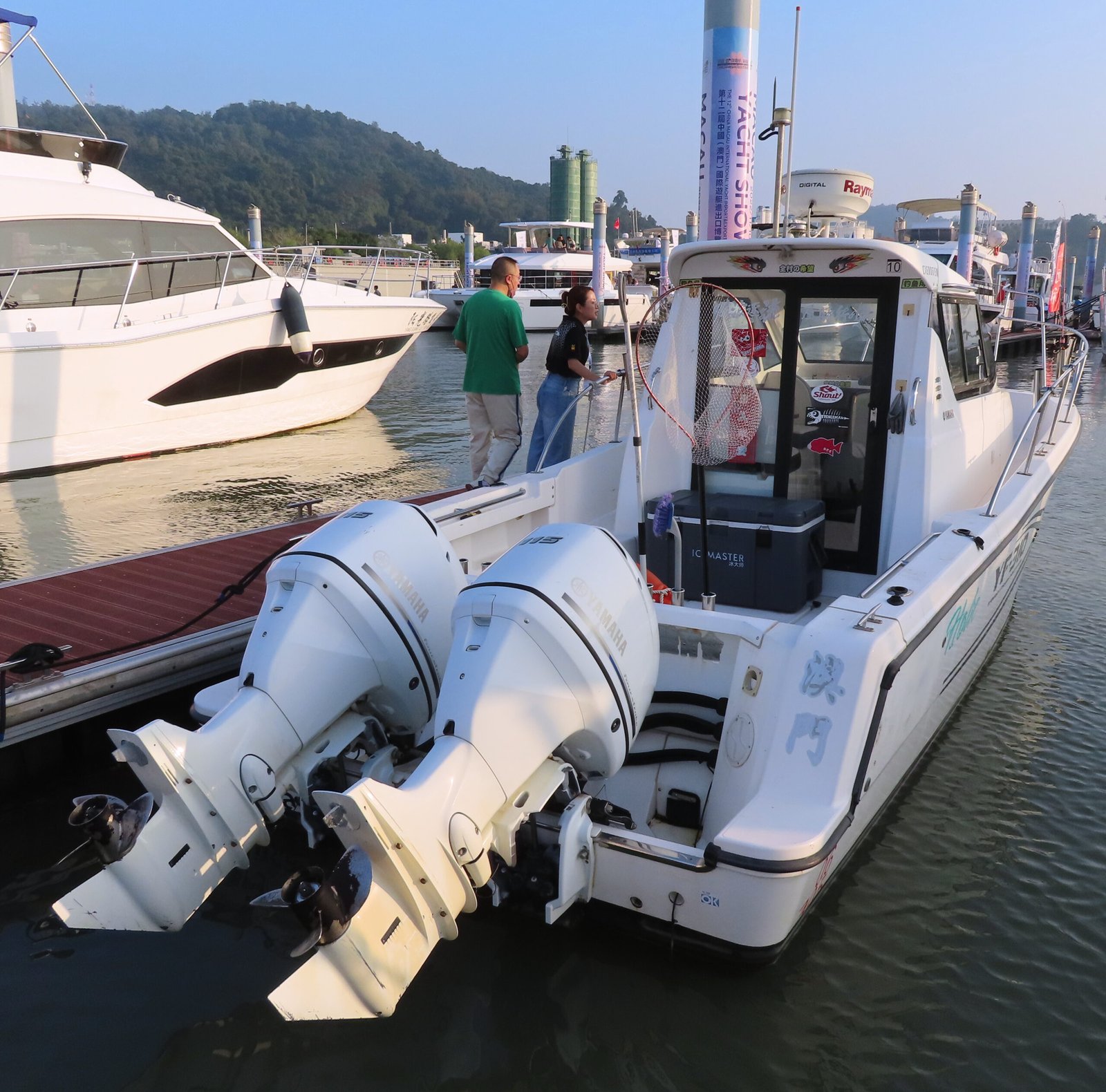
A twin outboard motor setup means two separate outboard engines mounted side by side on the transom, each with its own lower unit, its own prop, and usually its own fuel supply or a shared manifold feeding both. They are almost always matched — same brand, same horsepower, same model year if you can manage it — because mismatched engines fight each other under load and wear unevenly.
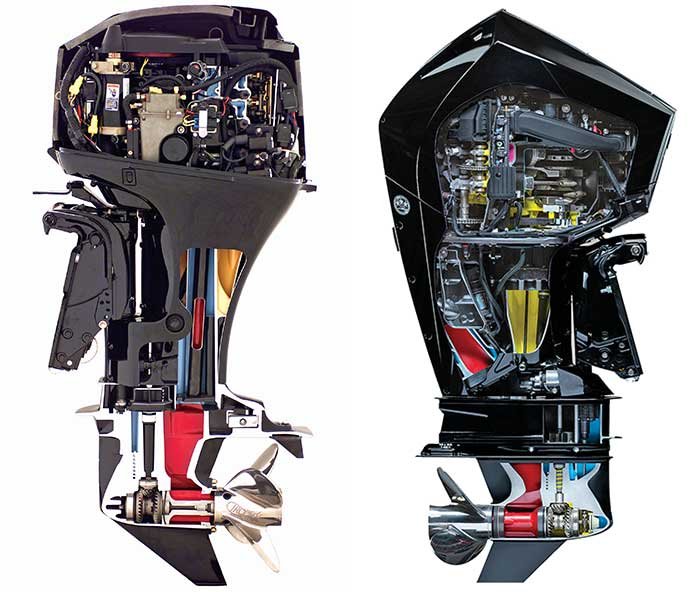
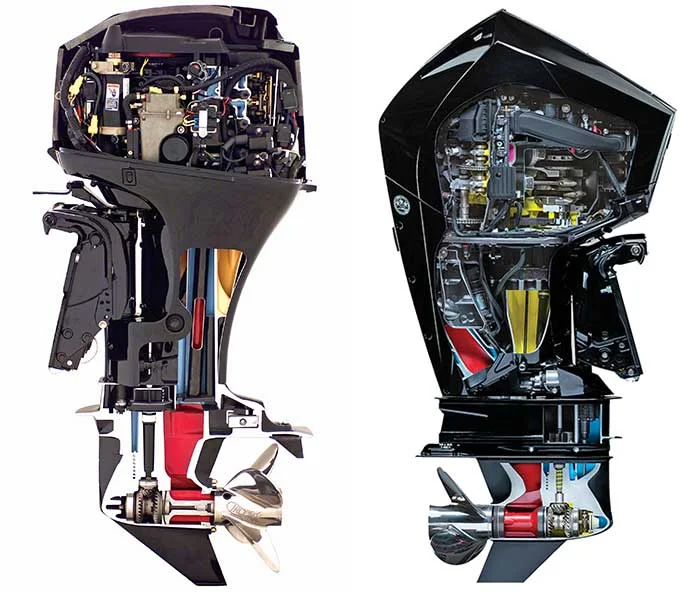
This is different from a single high-horsepower engine with dual contra-rotating propellers on one lower unit, like the Suzuki 350 HP DF350ATXX2, which uses two propellers spinning opposite directions off a single powerhead. That solves the torque-steer problem in a different way. A true twin engine rig is two complete engines, and it solves handling, redundancy, and load-sharing all at once.
Why Boaters Choose a Twin Outboard Motor Setup
Redundancy offshore. This is the number one reason serious offshore anglers and charter operators run twins. If one engine quits forty miles out, the other one gets you home. A single engine failure with one motor means you are calling for a tow, or worse.
Better hole shot and top end. Two mid-range engines, say a pair of 90 HP units, can often out-accelerate a single big block of similar combined horsepower because the load and the prop area are split. You get two smaller props biting instead of one large one struggling to find grip.
Docking control. This is the one people underestimate until they try it. Running one engine forward and one in reverse lets you spin a boat almost in its own length. Anyone who has backed a single-engine boat into a tight slip in a crosswind will understand why twins are worth the extra cost the first time they pivot a 28-footer with almost no drama.
Weight distribution on wide transoms. Center consoles and catamarans with wide transoms are often designed around two smaller engines rather than one enormous one, both for handling balance and because a single engine that size may not exist or may be needlessly heavy for the hull.
Counter-Rotation: The Part People Get Wrong

Here is where a lot of first-time twin buyers trip up. In a proper twin outboard motor setup, the two engines usually do not spin the same direction. One prop turns clockwise (viewed from behind), the other counter-clockwise. This is called opposite or counter-rotating props, and it cancels out prop torque so the boat tracks straight instead of pulling to one side under acceleration.
Manufacturers build this into the model number. A standard right-hand rotation engine and a left-hand (counter-rotating) engine of the same horsepower are mechanically different — different gearcase, different prop shaft rotation. You cannot just bolt two identical right-hand engines side by side and call it a twin setup; you will fight torque steer every time you get on plane. When you order a matched pair, always specify one standard rotation and one counter-rotating unit, or buy a factory-matched twin pair.
Engines We Stock That Work Well in a Twin Outboard Motor Setup
Not every engine in a lineup gets a counter-rotating version, so it pays to check before you commit to a horsepower class. Here is what we currently have in stock that is well suited to a twin rig, with real specifications.
| Engine | HP | Type | Weight | Notes |
|---|---|---|---|---|
| Yamaha 90 HP VF90LA V MAX SHO | 90 HP | 4-stroke, inline 4 | Approx. 359 lbs | High-output performance model, strong hole shot for twin rigging on lighter hulls |
| Yamaha 90 HP F90XB | 90 HP | 4-stroke | Approx. 359 lbs | Standard rigging, extra-long shaft option |
| Yamaha 90 HP F90JB | 90 HP | 4-stroke | Approx. 359 lbs | Commonly paired with the F90LB for matched twin sets |
| Yamaha 90 HP F90LB | 90 HP | 4-stroke | Approx. 359 lbs | Long shaft, pairs cleanly with the F90JB |
| Suzuki 350 HP DF350ATXX2 | 350 HP | 4-stroke V6 | Approx. 727 lbs | Rigs as a true twin outboard motor setup for large offshore center consoles and sport fishers |
| Suzuki 350 HP DF350ATX2 | 350 HP | 4-stroke V6 | Approx. 727 lbs | Matched counterpart for the DF350ATXX2 in a twin engine room |
| Mercury 225 HP OptiMax XL | 225 HP | 2-stroke DFI V6 | Approx. 475 lbs | Popular for twin repowers on offshore center consoles, XL shaft for deep transoms |
The 90 HP Yamaha pair above is one of the most common twin engine pairings we ship, mostly to buyers repowering pontoon boats, tritoons, and mid-size center consoles that were originally sold with a single 200 HP engine. Two 90s at a combined 180 HP move the boat almost as well, add redundancy, and are noticeably cheaper to service one side at a time.
Matching Engines Correctly
A twin rig only works well when the pair is genuinely matched. That means:
Same horsepower. Mismatched HP means the boat pulls toward the weaker side and the stronger engine works harder to compensate, which shortens its life.
Same or close engine hours. If you are buying used, try to pair engines with similar hour counts. An engine with 200 hours next to one with 1,800 hours is a maintenance headache waiting to happen, even if both run fine today.
Matched gear ratio and prop pitch. Both engines need to be turning the same rpm at wide-open throttle for balanced load sharing. If the gear ratios differ even slightly between the two units, one will lug while the other overspins.
Compatible control systems. Digital fly-by-wire controls need to talk to both engines through the same network. Mixing a digital throttle engine with a mechanical cable engine in one twin engine rig is a rigging nightmare and, in most cases, simply is not supported by the manufacturer.
Rigging and Spacing
Transom width and engine spacing matter more than most first-time buyers expect. Mount the engines too close together and you risk the props interfering with each other’s water flow at speed, called prop wash interference, which shows up as vibration and lost efficiency. Mount them too far apart and the boat can feel unstable at rest with weight pushed to the outer edges.
Manufacturers publish minimum centerline spacing for each engine family, usually somewhere between 26 and 32 inches depending on horsepower and gearcase width. We can pull the correct spacing spec for whichever pair you are ordering — send us your transom width and target horsepower and we will confirm fitment before anything ships.
Binnacle controls, whether mechanical cable or digital, need to be rated for twin-engine operation from the factory. Do not try to retrofit a single-engine control head to run two engines; the synchronization simply is not built in.
Fuel Consumption on a Twin Rig
This is the honest answer people want and rarely get: two smaller engines burn roughly the same fuel at cruise as one larger engine of equivalent combined horsepower, sometimes slightly more because of the extra frictional losses in a second lower unit and a second water pump running. At wide-open throttle the difference narrows further. Where twins lose a little ground is idle and low-speed fuel burn, since you are running two idling engines instead of one.
What you gain back is the ability to run on a single engine at trolling or slow-cruise speeds, shutting the second one down completely, which many charter captains and long-range cruisers do specifically to stretch range on extended trips.
Maintenance on Two Engines Instead of One
Yes, you are servicing two water pumps, two sets of plugs, two oil changes instead of one. That is the honest tradeoff. But most owners running twin engines will tell you the maintenance cost per hour of use is not double, because you are frequently running on one engine at low speed, which spreads hours more evenly and extends service intervals on each individual unit relative to a single engine doing all the work.
Keep both logs separate. Track hours, oil changes, and impeller replacements per engine, not as a combined total. It is the only way to catch a developing problem on one side before it becomes a breakdown.
When a Twin Outboard Motor Setup Makes Sense (and When It Doesn’t)
Twins make sense for offshore fishing boats running well outside the reach of a quick tow, for charter and commercial operators who cannot afford downtime, for wide-transom catamarans and pontoons that handle better with split weight, and for anyone who values docking control in tight marinas.
A single engine still makes more sense for smaller boats where the extra weight and cost of a second lower unit is not justified, for freshwater lake use close to shore, and for budget-conscious buyers who would rather put the difference toward a larger single engine with more raw top end.
Common Mistakes We See
Buying two engines from different model years without checking if the control systems are compatible. Ordering same-rotation engines instead of a proper counter-rotating pair. Skipping the transom spacing check and finding out after delivery that the gearcases interfere with each other. Ignoring shaft length and ending up with one engine mounted higher than the other on an uneven transom. Every one of these is avoidable with a five-minute conversation before you order.
FAQs — Twin Outboard Motor Setup
Do I need counter-rotating engines for a twin setup? For most applications, yes. It cancels torque steer and gives you balanced handling. Some smaller twin installs on light boats run same-rotation pairs, but it is not the standard recommendation.
Can I mix brands in a twin outboard motor setup? Technically the engines will run, but rigging, digital controls, and gauge integration are almost always brand-specific. We strongly recommend matching brand and model family for a clean install.
How much does a twin outboard motor setup cost compared to a single engine? Expect to pay roughly what you would for a single engine of the combined horsepower, plus rigging costs for the second control run, second battery, and second set of gauges.
Do you sell matched counter-rotating pairs? Yes. Tell us your target horsepower and boat type and we will confirm a matched pair from current stock, including standard and counter-rotating units where the model line offers both.
Order Your Twin Outboard Motor Setup
We carry the Yamaha 90 HP and Suzuki 350 HP lines shown above in stock, along with the Mercury 225 HP OptiMax, all suitable for a properly matched twin outboard motor setup. Every engine ships with full specifications, and we will confirm rotation, shaft length, and control compatibility before your order goes out.
Browse our full outboard motor inventory or reach out through our contact page with your boat’s transom width and horsepower target, and we will put together a matched twin package with worldwide shipping.
For general standards on recreational boat rigging and engine installation, the American Boat and Yacht Council publishes technical guidelines used across the industry. For independent buyer’s-side coverage of twin-engine boat handling, BoatUS has published owner guides worth reading before you rig.
Electrical and Battery Setup for a Twin Outboard Motor Setup
Each engine in a twin outboard motor setup needs its own cranking battery, full stop. Sharing a single battery between two starters is asking for trouble the one time you actually need both engines to fire at once, like backing off a sandbar in a hurry. Most rigging shops wire each engine to a dedicated cranking battery and then add a separate house battery bank for electronics, livewells, and lighting, isolated through a battery switch so a dead house bank never leaves you without a way to start either engine.
Digital engines add another layer: each unit typically needs its own dedicated power feed for the engine control module, separate from the cranking circuit, plus a shared data network (usually a twisted-pair CAN bus) that lets both engines talk to a single set of gauges and the binnacle control. Get this wiring wrong and you will see phantom fault codes or engines that refuse to synchronize in gear. If you are not confident wiring a twin rig yourself, budget for a certified installer — it is not a place to save money.
Choosing Propellers for Each Side
Propeller selection on a twin rig is not simply “buy two of the same prop.” Because the engines counter-rotate, you need a matched pair of propellers — one right-hand, one left-hand — in the same pitch and diameter. Using a same-rotation prop on a counter-rotating gearcase will either not thread onto the shaft correctly or will spin the wrong direction entirely, which shows up immediately as a boat that wants to walk sideways under throttle.
Pitch selection follows the same rules as a single-engine boat: you want each engine reaching its rated wide-open-throttle rpm range with the boat loaded for a typical day, not empty at the dock. Because load is split across two engines, some owners find they can run slightly more pitch on a twin rig than the combined horsepower alone would suggest, since each prop only has to move half the boat’s resistance. We can help match pitch to your hull once you know your target cruise rpm.
Twin Outboard Motor Setup vs a Single High-Horsepower Engine: The Real Numbers
Boaters shopping a repower always end up comparing two 150 HP engines against one 300 HP engine, or two 90s against a single 175. Here is how that comparison typically plays out in the real world, not in a brochure.
| Factor | Twin Outboard Setup | Single Large Engine |
|---|---|---|
| Purchase cost | Roughly comparable, sometimes slightly higher due to double rigging | Roughly comparable, simpler rigging |
| Weight on transom | Spread across two mounts, often better balanced on wide transoms | Concentrated at centerline, can be lighter overall |
| Redundancy | Get-home capability on one engine if the other fails | No backup if the engine fails |
| Low-speed docking control | Excellent — forward on one side, reverse on the other | Standard single-engine handling, more thruster-dependent |
| Idle and low-speed fuel burn | Slightly higher, two engines idling | Lower, one engine idling |
| Maintenance items | Double the service points, but hours often split unevenly in your favor | Single set of service points, more hours concentrated on one unit |
| Top speed | Often comparable or better due to reduced individual prop loading | Depends heavily on hull and prop selection |
Neither option is objectively better across the board. A twin outboard motor setup earns its keep on redundancy and low-speed handling. A single big engine wins on simplicity and, in many cases, on upfront weight. Offshore anglers and commercial operators lean twin. Lake and bay boaters running close to shore often stick with one engine and put the savings toward electronics or a bigger fuel tank.
Real-World Scenarios Where Twins Make the Difference
A charter captain running twenty-five miles offshore daily cannot afford a single-engine failure to end the trip and strand paying customers. A second engine means the day continues, slower, but it continues, and the boat gets home under its own power.
A tritoon owner backing into a narrow finger slip between two other boats benefits every single time from the ability to pivot the boat using opposing throttle, something a single engine simply cannot replicate without a bow thruster.
A dive operator running a wide-beam center console appreciates the balanced weight distribution twins provide, keeping the boat level at rest with divers and gear loaded near the stern.
None of these buyers are chasing twin engines for bragging rights. They are solving a specific operational problem, and in each case, the second engine earns its cost back the first time it matters.
Posts Widget
- 1

- 2
- 3
- 4


S.H Continental Marine
USA HERALD MAGAZINE INC
Our team is dedicated to providing exceptional customer service.
Email: info@shcontinentalmarine.com
Choose S.H Continental Marine
for your outboard engine needs and enjoy superior quality, exceptional customer service, and unbeatable prices.

One thought on “Twin Outboard Motor Setup: What Actually Matters Before You Rig One”
Pingback: Electric Start vs Manual Start Outboard Motors: The Complete Buying Guide - S.H Continental Marine