
Marine Engine Diagnostics: The Complete Guide to Finding Out What’s Actually Wrong (2026)

Marine Engine Diagnostics: The Complete Guide to Finding Out What’s Actually Wrong
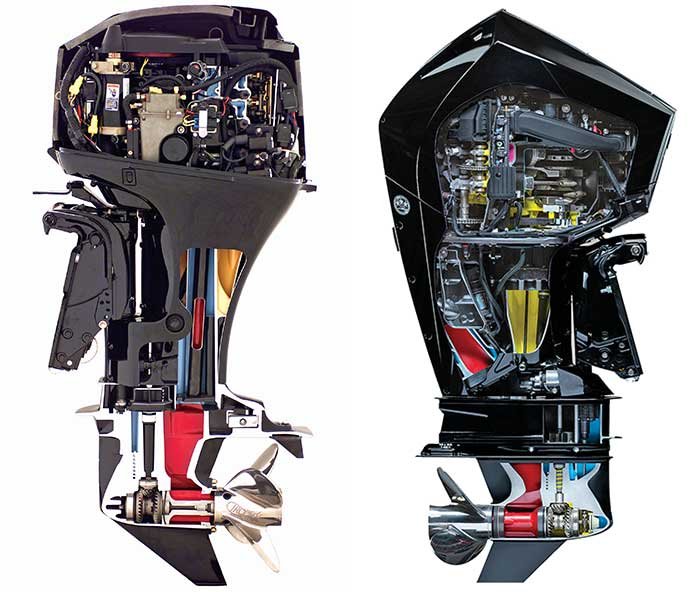
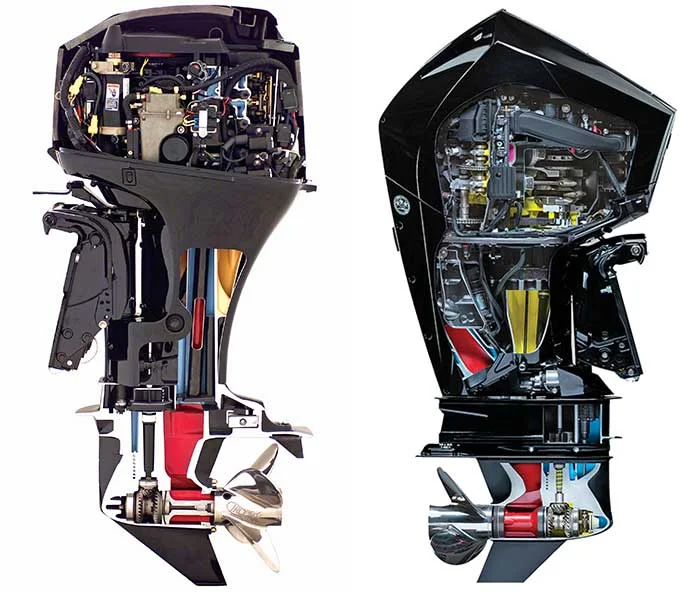
Most outboard problems don’t announce themselves clearly. The engine cranks but won’t catch, it runs fine at idle and dies the second you push the throttle forward, or it just feels a little off in a way that’s hard to put into words until you’re three hours from the dock wondering if you’re going to make it back under power. Real marine engine diagnostics is the process of turning that vague feeling into an actual answer, and it’s a completely different skill from guessing and swapping parts until something works.
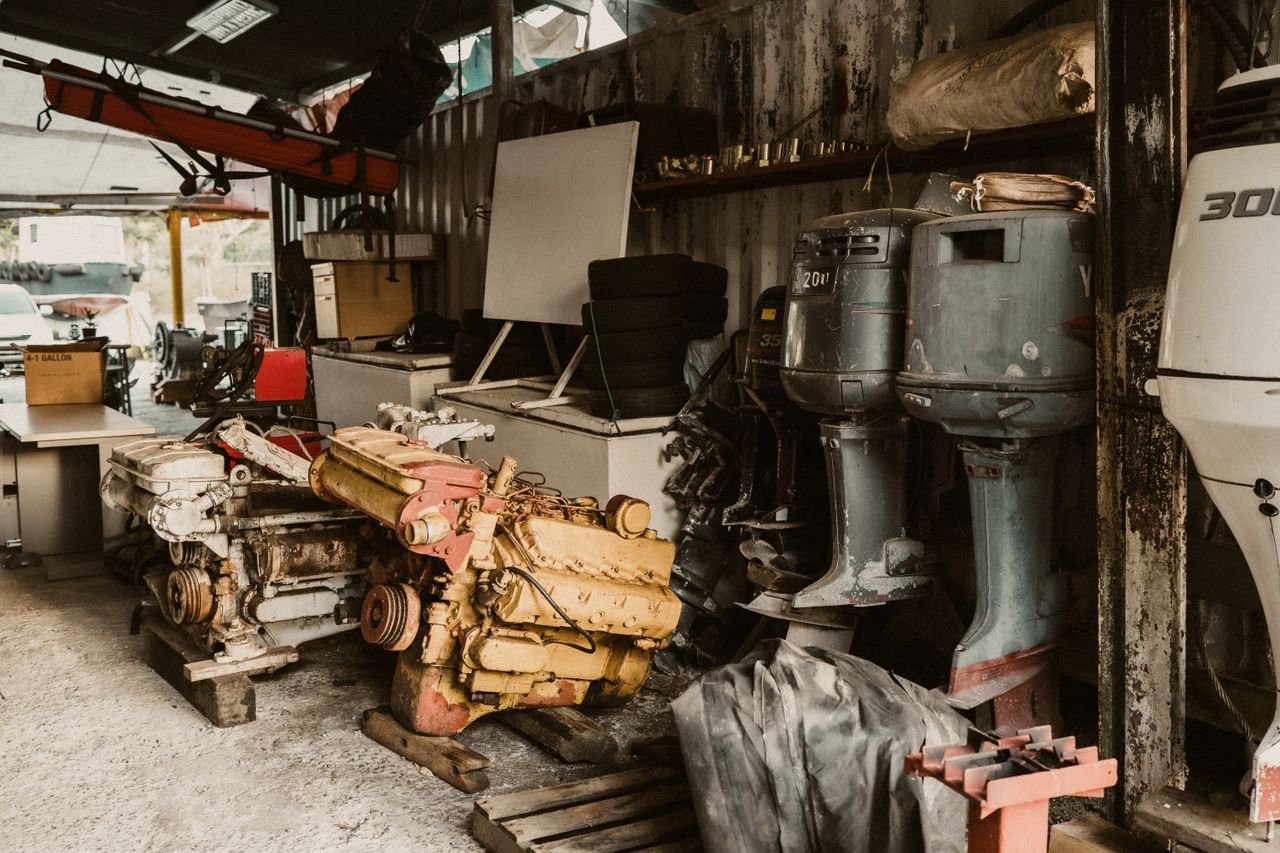
We work through this process on every engine that comes across our bench, whether it’s a trade-in we’re evaluating, a used motor we’re preparing for resale, or a customer’s engine sent in for a second opinion before they spend money on a repair somewhere else. Every outboard we sell has already been through a full diagnostic pass, not a visual check and a test start. That distinction matters more than most buyers realize until they’ve owned an engine that was sold to them “running good” and turned out to have a problem nobody bothered to look for.
What marine engine diagnostics actually means, versus what it usually gets reduced to
A lot of what passes for diagnostics at a busy shop is really just symptom matching: the engine won’t idle, so replace the idle air passage parts and hope. That approach fixes things some of the time and wastes money and time the rest of the time. Proper marine engine diagnostics starts from the four things every internal combustion engine needs to run at all, fuel, spark, compression, and air, and works through each one with an actual measurement rather than an assumption. If a technician can’t tell you the compression numbers on all cylinders or the fuel pressure at the rail, they haven’t diagnosed anything yet. They’ve made an educated guess and are hoping it’s right.
The three-legged stool of marine engine diagnostics: fuel, spark, and compression
Every no-start or rough-running complaint traces back to one or more of these three systems being out of spec, and checking them in order is faster than jumping around. Compression tells you whether the engine can physically seal and build pressure, which is the foundation everything else depends on. Spark tells you whether the ignition system is delivering a clean, correctly timed charge to fire the mixture. Fuel tells you whether the right amount of gasoline, at the right pressure, is actually reaching the cylinder. Skip any one of these and you’re diagnosing blind, no matter how experienced the person doing the work is.
| System | What’s Measured | Typical Healthy Range |
|---|---|---|
| Compression | PSI per cylinder, cranking | 90–160 PSI depending on displacement, within 10% cylinder to cylinder |
| Fuel pressure | PSI at the rail, key on/running | Roughly 35–45 PSI on most EFI four-strokes, lower on carbureted models |
| Spark | Coil resistance, spark gap output | Coil primary resistance typically 0.1–1.0 ohm, secondary in the low kilohm range |
| Idle air/vacuum | Manifold vacuum at idle | Steady reading with no fluctuation; wandering vacuum points to an air leak |
Numbers vary by make, model, and displacement, and a technician doing real marine engine diagnostics checks the specific spec for the engine in front of them rather than working off memory. What matters more than the exact figure is consistency: cylinder-to-cylinder compression that’s within about 10% of itself is healthy even if the absolute number is on the lower end of the range. A single cylinder that’s 20% lower than the others is the finding that actually points somewhere useful.
Reading what the engine is already telling you through its computer
Modern four-stroke outboards from every major manufacturer run an engine control module that logs fault codes the same way a car does, even though there’s no dashboard warning light on most consumer boats. Yamaha, Suzuki, Mercury, and Honda each use their own proprietary diagnostic software and cable to pull these codes, and increasingly, engines that are networked over NMEA 2000, the marine electronics data standard, can surface some of this information right on a compatible multifunction display at the helm. A stored code narrows the search dramatically. An engine throwing a knock sensor code doesn’t need a full top-to-bottom diagnostic session; it needs someone looking specifically at detonation causes, which is a much shorter list.
The catch is that fault codes tell you what the computer noticed, not necessarily the root cause. A code for a lean fuel condition could mean a failing fuel pump, a clogged filter, an intake air leak, or a bad oxygen sensor reading. The code is a starting point for marine engine diagnostics, not the finish line, and treating it as a straight part-swap instruction is exactly how diagnostic budgets get wasted on parts that were never the problem.
Compression testing: the single most useful fifteen minutes you can spend
If we had to pick one test to run on any engine of unknown history, it’s a full compression check across every cylinder. It’s fast, it requires nothing more than a gauge and a set of adapters, and it immediately tells you whether you’re dealing with a healthy engine, a tired one, or something with a genuine mechanical problem worth walking away from. Low compression on one cylinder usually points to a valve, a ring, or a head gasket. Low compression across every cylinder evenly is more often a sign of a genuinely worn engine that’s simply reached the end of its useful life, rather than something with an isolated fix.
We run this test on every used engine before it’s listed for sale, and the numbers go into the documentation that ships with the motor. A buyer looking at a used outboard should always ask for compression numbers, and if a seller can’t produce them, that’s worth treating as information in itself.
Fuel system diagnostics: pressure, delivery, and the ethanol problem nobody warns you about
Fuel-related no-starts and rough running are the most common complaint we see, and ethanol-blended pump gas is behind a large share of them. Ethanol attracts moisture, and in a fuel system that sits for weeks between uses, that moisture separates out and settles at the bottom of the tank, where it gets picked up first. Beyond that, ethanol is a solvent that breaks down old rubber fuel lines and gaskets that were never designed for it, sending debris downstream into injectors and carburetor jets.
Testing fuel delivery properly, a core part of marine engine diagnostics, means checking pressure at the rail against spec, not just confirming that fuel is present. A pump that’s weakening will often still deliver fuel at idle, where demand is low, and only reveal the problem under load at higher RPM, which is exactly the situation where an owner is least able to diagnose it themselves on the water. This is why bench testing under simulated load is part of any real diagnostic process rather than a quick check at idle in the driveway.
Ignition and electrical diagnostics
Weak or intermittent spark shows up as hard starting, missing under load, or backfiring, and it’s one of the trickier things to diagnose because a coil or stator can test fine cold and fail once it heats up. A thorough round of marine engine diagnostics on the ignition side includes resistance testing on the stator and coils against the manufacturer’s spec, inspecting the spark plugs for the story they tell (a plug that’s oily points to a different problem than one that’s white and lean-looking), and checking the charging system output, since a failing rectifier or stator can starve the battery even while the engine seems to run fine.
| Symptom | Likely System | What Gets Checked |
|---|---|---|
| Cranks, won’t start | Fuel or spark | Fuel pressure, spark presence and timing, kill switch/lanyard circuit |
| Starts, dies immediately | Fuel delivery or idle air | Fuel filter, primer bulb, idle air passage, choke circuit |
| Rough idle, smooths out at speed | Idle circuit or vacuum leak | Intake gaskets, idle air/fuel mixture, vacuum hoses |
| Misses or stumbles under load | Ignition or fuel pressure under demand | Coil resistance, fuel pump output at load, injector balance |
| Overheat alarm | Cooling system | Water pump impeller, thermostat, cooling passages for blockage |
| Won’t shift or grinds into gear | Lower unit/shift linkage | Shift cable adjustment, shift shaft, gear engagement |
Cooling system checks that get skipped more than they should
The telltale stream, that little jet of water out the back of the engine, gets treated as proof the cooling system is fine, and it isn’t. It confirms the pump is moving some water. It doesn’t confirm the impeller is at full capacity, that the thermostat is opening at the correct temperature, or that internal passages aren’t partially blocked with salt or mineral scale. An engine that’s running hot but still showing a telltale stream is a common enough scenario that “but it’s peeing water fine” shouldn’t end the conversation. Real marine engine diagnostics on a suspected cooling issue means checking actual operating temperature against spec, not just confirming flow is present at some reduced rate.
Lower unit and gearcase diagnostics
Problems in the lower unit rarely show up as obviously as a fuel or ignition fault, which is exactly why they get missed until they’re expensive. A gearcase that’s slowly losing lubricant through a worn seal won’t throw a code or make unusual noise until the damage is already underway. Checking gear lube color and consistency as part of marine engine diagnostics (milky lube means water intrusion, metal flakes mean something is wearing internally), confirming the vent and fill plug seals aren’t compromised, and listening for whine or clunk in and out of gear are all part of a full diagnostic pass, not an afterthought tacked onto the top-end checks.
When the diagnosis is “this engine has reached the end of its economic life”
Not every diagnostic session ends with a repair recommendation, and a shop that’s honest with you will tell you when that’s the case. An engine with even compression loss across all cylinders, a cracked block, or a gearcase that needs a full rebuild on top of an aging power head is often a case where the repair cost approaches or exceeds what a replacement engine costs, especially once labor is factored in. That’s the point where diagnostics stops being about fixing what’s there and starts being a conversation about what to replace it with.
We carry a wide inventory of outboards across the major brands, new and used, and every one that leaves our shop has already been through the same diagnostic process described above, with the results documented and handed over with the engine. A sample of current stock:
| Motor | HP | Configuration | Approx. Price (USD) |
|---|---|---|---|
| Yamaha F6SMHA | 6 HP | Single-cyl, portable | $1,670 |
| Yamaha F9.9SMHB | 9.9 HP | 2-cyl, tiller | $1,590 |
| Tohatsu MFS60D | 60 HP | 956cc, 4-cyl EFI | $5,450 |
| Yamaha F75LB | 75 HP | 4-cyl, remote control | $5,650 |
| Yamaha VF90LA V MAX SHO | 90 HP | 4-cyl, high-output | $5,950 |
| Yamaha LXF425ESA V8 | 425 HP | V8, 35″ shaft | $24,800 |
Browse the full lineup by brand if you’re comparing options: Yamaha outboards, Suzuki outboards, Mercury outboards, and Tohatsu outboards are all in stock across a wide horsepower range.
Mistakes we see owners make when they skip proper marine engine diagnostics
Replacing spark plugs first because they’re cheap and easy, regardless of whether the symptom actually points to ignition. Assuming fresh fuel solves anything fuel-related without checking whether the old fuel was actually the problem. Chasing a rough idle by adjusting the idle screw when the real issue is a vacuum leak that adjustment can’t fix. And probably the most expensive mistake: replacing an expensive part like a fuel pump or a stator based on a guess, when a fifteen-minute test would have confirmed or ruled it out before spending the money. Marine engine diagnostics done properly is usually cheaper than the parts-cannon approach, even though it can feel slower in the moment.
Documentation matters as much as the marine engine diagnostics themselves
A diagnostic session that isn’t written down is only half useful. Compression numbers, fuel pressure readings, any codes pulled, and the conclusion reached should all be recorded, both so the current problem is actually solved and so there’s a baseline for comparison the next time something comes up. This is standard practice on every engine we service or prepare for sale, and it’s part of what a buyer is paying for when they buy a used engine from a shop that does this properly instead of one that just wipes it down and lists it.
That paperwork also has resale value of its own, even though people rarely think about it that way when they’re the one holding the wrench in the moment. A used outboard with a stack of dated compression readings, fuel pressure checks, and any codes that were cleared is a different sale than the same engine with no history behind it, and buyers who know what they’re looking at will pay more for the difference. It’s the same reason a car with full service records commands a better price than an identical one with a blank history. If you’re planning to sell an engine down the road, keeping your own diagnostic records now is one of the cheapest things you can do to protect what it’s worth later.
The tools that actually separate real marine engine diagnostics from a guess
You don’t need a shop full of specialty equipment to do useful marine engine diagnostics, but a handful of tools make the difference between a measured answer and a hunch. A compression gauge with the correct spark plug thread adapter for your engine is the single most useful purchase, followed by a fuel pressure gauge that connects to the engine’s test port (most EFI outboards have one built in specifically for this). A basic multimeter covers stator and coil resistance checks, battery voltage under load, and ground continuity, which together catch a large share of electrical gremlins before they’re ever misdiagnosed as something mechanical.
Beyond hand tools, the manufacturer-specific diagnostic cable and software are worth the investment if you’re working on your own engine long-term, since they’re the only way to read stored fault codes directly rather than working around them. Independent shops that service multiple brands typically carry all four major diagnostic interfaces for exactly this reason. A shop that only owns one brand’s tool is going to lean toward guessing on everything else, whether they admit it or not.
Seasonal and regional patterns in marine engine diagnostics worth knowing about
Diagnostic patterns shift with climate and how a boat actually gets used. Engines in hot, humid coastal regions see more corrosion-related electrical faults and cooling system scale buildup, since mineral content in the water accelerates over time in warm conditions. Engines that sit through a cold off-season without proper fogging or fuel stabilization tend to show up in spring with fuel-related no-starts, since ethanol-blended fuel left sitting for months is one of the most reliable ways to create a gummed-up carburetor or clogged injector.
Knowing which pattern is more likely for a given engine’s history narrows the diagnostic starting point before a single tool comes out, and it’s part of why we ask about usage history and location before quoting a repair or evaluating a trade-in.
Buying marine engine diagnostics and engines worldwide
We ship complete, fully diagnosed outboards to customers around the world, and every engine’s diagnostic and service history travels with it rather than staying in a filing cabinet at our shop. If you’re evaluating a used engine you’re considering buying elsewhere, or trying to figure out whether a problem you’re having is worth repairing, send us the make, model, and symptoms and we’ll walk through what it likely is before you spend money guessing. Climate matters here too: an engine that’s been run consistently in a hot, humid coastal environment carries a different wear pattern than one that saw occasional freshwater lake use, and a proper diagnostic read accounts for that history rather than treating every engine the same.
Frequently asked questions
Can I run compression and fuel pressure tests myself without a shop?
Yes, with basic tools. A compression gauge with the right adapter and a fuel pressure gauge that fits your engine’s test port are both inexpensive and widely available. The harder part is knowing what the numbers mean once you have them, which is where experience matters more than the tools themselves.
Why did my engine pass a compression test but still run rough?
Compression rules out one system but not the other two. Good compression with rough running usually points to fuel delivery or ignition rather than a mechanical problem inside the engine.
Do fault codes mean the same thing across different brands?
No. Each manufacturer uses its own proprietary code set and diagnostic software, so a code from a Yamaha ECU doesn’t translate directly to a Suzuki or Mercury system, even for a similar underlying problem.
How much does marine engine diagnostics usually cost compared to just guessing and replacing parts?
It varies by shop, but a proper diagnostic session is almost always cheaper than two or three unnecessary parts replacements, and it gets you to the actual fix faster.
Is it worth buying a used engine without seeing marine engine diagnostics results?
We’d say no. At minimum, ask for compression numbers and a description of what was actually tested, not just “runs great” from the seller.
Can a bad ground cause symptoms that look like a fuel or ignition problem?
Yes, and it’s one of the most commonly missed causes. A corroded or loose engine ground can produce intermittent electrical symptoms that mimic a failing coil or sensor, which is why checking grounds early in the process saves time later.
The bottom line
Real marine engine diagnostics means measuring, not guessing, working through fuel, spark, and compression in order, and reading what the engine’s computer and gearcase are actually telling you before any parts get replaced. Every engine we sell has already been through this process, documented and included with the sale, so you’re not the one left guessing about what you actually bought. Browse our current inventory, or if you’ve got a problem engine and want a second opinion before spending money on repairs, send us the details and we’ll help you figure out whether it’s worth fixing.
For more on what regular upkeep looks like once an engine is running right, see our guide to outboard motor servicing, and if a problem turns out to be more than a repair can fix, check our current marine engine discounts. Engines networked over NMEA 2000 make a lot of this diagnostic information easier to reach from the helm, and the American Boat and Yacht Council is the body that sets the technical bar most of this guide is measured against.
Posts Widget
- 1

- 2

- 3
- 4


S.H Continental Marine
USA HERALD MAGAZINE INC
Our team is dedicated to providing exceptional customer service.
Email: info@shcontinentalmarine.com
Choose S.H Continental Marine
for your outboard engine needs and enjoy superior quality, exceptional customer service, and unbeatable prices.
