
Outboard Motor Servicing: The Essential Guide to What Needs to Happen and How Often (2026)

Outboard Motor Servicing: The Essential Guide to What Needs to Happen and How Often
Most engine failures that end up costing real money didn’t happen suddenly. They built up over a season or two of skipped or shortened service intervals until something that should have been a routine part swap turned into a much bigger repair. Consistent outboard motor servicing is the single biggest factor in how long an engine actually lasts, more than brand, more than horsepower, more than almost anything else within an owner’s control.
We sell complete outboard motors across most major brands, and every one leaves our shop fully serviced with a documented record of exactly what was done. That record matters twice: once for your peace of mind on day one, and again down the road if you ever go to sell the boat and need to show a buyer the engine was actually cared for rather than just cosmetically clean.
What a complete service interval actually includes
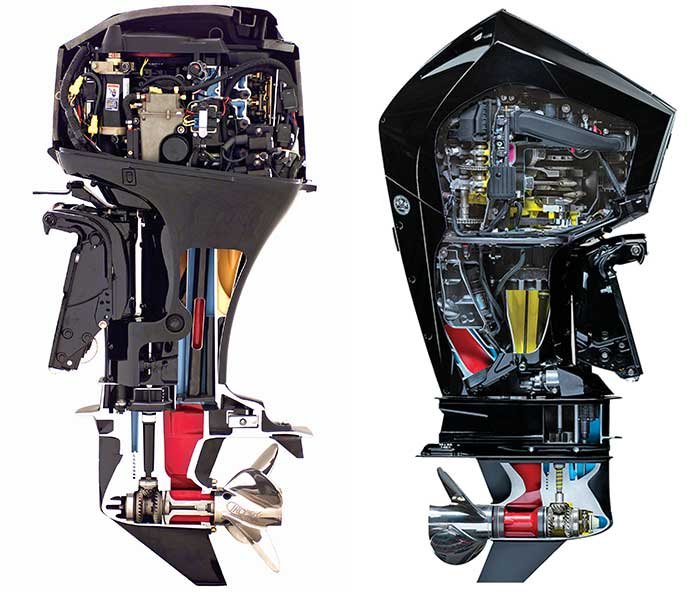
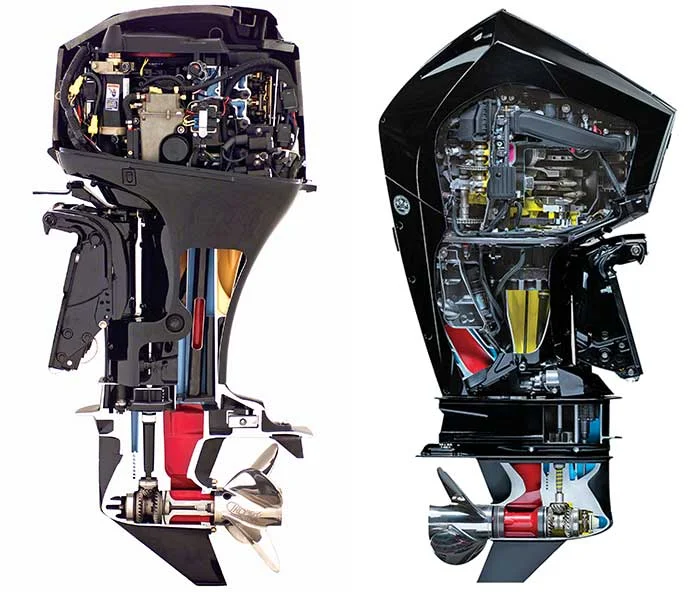
A proper service isn’t just an oil change. It covers crankcase oil and filter, gearcase oil (checked for contamination, not just topped off), spark plugs, fuel filter, water pump impeller inspection, all grease points, and a visual inspection of belts, hoses, and mounting hardware. Skipping any single one of these doesn’t cause an immediate problem, which is exactly why it’s easy to let slide, but each one is quietly doing a job that matters over the full life of the engine.
| Service Item | Typical Interval | Why It Matters |
|---|---|---|
| Crankcase oil and filter | 100 hours or annually | Prevents wear from breakdown and contamination |
| Gearcase oil | 100 hours or annually | Catches water intrusion before gear damage |
| Spark plugs | 100 hours or annually | Maintains clean, consistent combustion |
| Water pump impeller | Every 2-3 years or per manufacturer spec | Prevents overheating from a worn pump |
| Fuel filter | Annually or when restricted | Protects injectors and carburetor from debris |
| Grease points | Seasonally, more often in saltwater | Prevents corrosion seizure at pivot points |
Hours versus calendar time: which one actually governs your schedule
Manufacturers publish intervals as hours or a calendar period, whichever comes first, and that “whichever comes first” detail trips up a lot of owners who fixate on hour count alone. A boat that only runs 40 hours a year still needs annual outboard motor servicing, because oil degrades from moisture and oxidation even sitting unused, fuel breaks down in the tank, and grease dries out regardless of whether the engine ever turned over. Low-hour boats are actually at higher relative risk of neglect precisely because owners assume light use means the engine needs less attention, when time-based degradation doesn’t care how many hours are on the clock.
Break-in service: the one interval that matters most
The first service, typically scheduled around 20 hours on a new or freshly rebuilt engine, exists because break-in generates more metal particulate in the oil than any subsequent interval will. Skipping or delaying this first service leaves that particulate circulating through bearings and clearances longer than it should, and it’s one of the cheapest, most consequential services an engine ever gets. Every new engine we sell comes with this interval clearly documented, and we’d rather an owner bring it in a little early than let it slide past the recommended point.
Saltwater service versus freshwater service
Saltwater use compresses every interval on this list. Corrosion moves faster, grease washes out faster, and the cooling system is more prone to salt buildup restricting flow over time, which is why manufacturers often publish a separate, shorter saltwater interval schedule. A rule of thumb that holds up well in practice: if you run saltwater regularly, treat every interval as roughly a third shorter than the standard published schedule, especially for grease points and gearcase oil.
Self-servicing versus professional servicing
Oil changes, plug replacement, and grease service are within reach of most owners with basic tools and patience. Impeller replacement is moderately involved but doable with a service manual for your specific model. Fuel system work on EFI engines, timing-related adjustments, and anything involving powerhead disassembly is better left to a shop with the right diagnostic tools, since a mistake in these areas tends to cost far more to fix than the labor would have cost to do it right the first time. Knowing where that line sits for your own comfort level and tools is part of responsible ownership, not an admission of inadequacy.
What happens when servicing gets skipped for a season
One missed service interval rarely causes catastrophic failure on its own; engines are built with some margin. But margin isn’t infinite, and it compounds. Old oil left in over an extra season means more accumulated acid and moisture attacking bearing surfaces. A gearcase that goes two years without an oil check instead of one has twice the window for a slow seal leak to go unnoticed and do real damage. Deferred outboard motor servicing is rarely the single dramatic cause of an engine failure; it’s usually one contributing factor among several that, stacked together over a couple of skipped seasons, add up to a much bigger bill than staying current would have cost.
Engines that arrive already on a documented service schedule
Every outboard we sell ships with its service history documented, and new engines come with the manufacturer’s recommended schedule clearly laid out so there’s no guesswork about what’s due and when. A sample of current inventory, all fully serviced:
| Motor | HP | Approx. Price (USD) |
|---|---|---|
| Yamaha F2.5SMHB | 2.5 HP | $980 |
| Yamaha F6SMHA | 6 HP | $1,670 |
| Yamaha T9.9XWHB | 9.9 HP | $1,980 |
| Yamaha F15LPHA | 15 HP | $2,180 |
| Yamaha F60JB | 60 HP | $5,180 |
A season-by-season servicing rhythm
Spring, before the first trip: oil and filter if due, check gearcase oil condition, inspect and grease all pivot points, verify the tell-tale stream flows properly, and check the battery under load rather than just at rest. Mid-season: a quick visual check for leaks, unusual noise, or performance changes, plus a grease touch-up on saltwater boats. Fall, before storage: full oil change (not a top-off), gearcase oil change, fuel stabilization or fogging as appropriate for your engine type, and a complete grease service so the motor sits through winter clean rather than coated in months-old residue. This rhythm turns outboard motor servicing into three predictable sessions a year instead of a vague sense that something should probably be done eventually.
What separates good outboard motor servicing from a rushed job
Not all “full service” line items on an invoice mean the same thing in practice. A rushed service might change the crankcase oil and call it done. A thorough one checks gearcase oil condition rather than just topping it off, inspects the impeller rather than assuming it’s fine because the engine isn’t currently overheating, and actually tests the engine under load rather than just at a dockside idle before calling the job complete. When comparing quotes between shops, ask specifically what’s included rather than assuming “full service” means the same checklist everywhere. The price difference between a rushed job and a thorough one is often smaller than owners expect, but the difference in what actually gets caught is significant.
Mobile servicing: convenience with a few trade-offs
Mobile marine mechanics who come to your dock or storage yard have become increasingly common, and for routine outboard motor servicing, oil changes, plug replacement, grease service, they’re a genuine convenience that saves hauling the boat to a shop. The trade-off is that mobile setups typically carry less diagnostic equipment than a fully equipped shop bay, so more involved work, EFI diagnostics or gearcase rebuilds, often still needs to go to a shop regardless. For routine, predictable service work, mobile is a reasonable choice; for anything diagnostic or involving disassembly beyond routine parts replacement, a properly equipped shop is usually the better call.
Cost comparison: doing it yourself versus paying for service
DIY oil changes, plug replacement, and grease service typically cost the price of parts and fluids alone, a fraction of shop labor rates, and are realistic for an owner willing to invest a few hours and follow a manual. The trade-off isn’t just money, though. A shop brings a second set of eyes that might catch a developing issue, a worn hose, a corroding fitting, that an owner focused only on the specific task at hand could miss. A reasonable middle ground many owners land on: DIY the routine intervals yourself, and bring the engine in for a full professional inspection once a year even if nothing specific seems wrong, treating that annual visit as a safety net rather than the only time the engine gets attention.
Building a service log that actually gets used
The most reliable log is the simplest one: date, hour meter reading, and exactly what was done, kept somewhere you’ll actually see it, taped inside the console or saved in a phone note tied to the boat. Elaborate spreadsheets that require sitting down at a computer tend to fall out of habit within a season. A log that takes fifteen seconds to update right after the work is done is the one that survives past the first year, and it’s the single document that makes future outboard motor servicing decisions easier, since you’re working from actual history instead of a guess at when something was last touched.
Servicing across different engine sizes
A 2.5 HP portable kicker and a 425 HP V8 both need the same categories of attention, oil, gearcase, plugs, grease, but the scale and complexity differ enormously. A small portable is often simple enough for an owner to fully service in under an hour with minimal tools, while a large V8 outboard involves multiple cylinder banks, more complex EFI systems, and enough weight and complexity that most owners hand the bulk of the work to a shop even if they’re comfortable doing basic maintenance on smaller engines. Neither approach is wrong; matching your own comfort level and available tools to the specific engine you own, rather than assuming one universal DIY-versus-shop rule applies across every horsepower range, is the more practical way to think about outboard motor servicing as your engine size changes.
What a service session before a long trip should specifically cover
Before an extended trip, offshore fishing, an island crossing, a multi-day charter, service priorities shift slightly from routine maintenance toward reliability assurance. Confirm the water pump impeller is within its replacement window rather than close to due, check fuel filter condition since a marginal filter that’s fine for short local trips can restrict flow enough to cause problems under sustained load, and verify the battery holds voltage under actual cranking load, not just at rest. These checks take an extra hour beyond routine outboard motor servicing but they’re the difference between routine maintenance and trip-specific reliability confidence when you’re going to be well away from easy help if something goes wrong.
What a service record is worth at resale
A documented service history is one of the strongest things a used engine can offer a buyer, often worth more in negotiating leverage than a few extra hours of cosmetic detailing. A buyer looking at two otherwise similar used engines will consistently favor the one with dated, itemized service records over one with a seller’s verbal assurance that “it’s always been well maintained.” If you’re planning to sell a boat eventually, even years down the road, keeping records from day one is one of the lowest-effort ways to protect the engine’s resale value.
Common excuses that lead to deferred servicing
“It’s still running fine” ignores that servicing is preventive, not reactive; waiting for a symptom means you’re already behind. “I don’t have time this weekend” is understandable but turns a two-hour job into a bigger one the longer oil and grease sit past due. “I’ll do it before the next trip” is the single most common way a service interval quietly slips by an entire season, since the next trip has a way of arriving faster than expected and the service gets pushed again. None of these are unreasonable in the moment, but they’re worth recognizing for what they are: the exact pattern that leads to the deferred maintenance problems described above.
Worldwide servicing support and parts
We ship complete engines and service parts worldwide, and we document every service item on engines we sell so owners anywhere can maintain the same standard going forward, regardless of where they’re located relative to our shop. If you’re trying to find a qualified local shop for hands-on outboard motor servicing and aren’t sure what to look for, we’re happy to walk through what a proper service should include so you can evaluate a quote or a completed job with confidence.
Frequently asked questions
Do I really need annual service if my boat barely gets used?
Yes. Time-based degradation from moisture, oxidation, and grease drying out happens regardless of hours run, which is why manufacturers specify a calendar interval alongside an hour-based one.
What’s the most commonly skipped service item?
Gearcase oil, by a wide margin. It’s out of sight below the waterline and doesn’t have the visible dipstick reminder that crankcase oil does.
How much does a full outboard motor servicing typically cost?
It varies significantly by engine size and whether parts like an impeller are due, but budgeting for oil, filters, plugs, and labor is far less expensive than the repairs that come from deferring it.
Should saltwater engines really be serviced more often?
Yes. Corrosion and grease washout happen faster in saltwater, and shortening intervals by roughly a third compared to freshwater use is a reasonable practice.
Do you provide a service schedule with new engines?
Yes, every new engine we sell comes with the manufacturer’s recommended service schedule clearly documented from the start.
Is mobile outboard motor servicing as thorough as taking it to a shop?
For routine items like oil, plugs, and grease, yes. For diagnostic or disassembly work, a fully equipped shop is usually still the better option due to available tooling.
What should I ask for on an invoice to confirm the service was thorough?
Ask for an itemized list showing gearcase oil condition, impeller inspection, and confirmation the engine was tested under load, not just idled at the dock.
The bottom line
Consistent outboard motor servicing is the single most controllable factor in how long an engine lasts and how much it’s worth when you eventually sell it. It’s not complicated: stick to the published intervals, don’t let calendar time slide just because hour count is low, and keep a simple log. Every engine in our current inventory ships fully serviced and documented, so browse what’s in stock or reach out if you need help building a service plan for an engine you already own. For sourcing the parts a service calls for, see our guide to outboard motor spare parts, and for current pricing across brands, check our outboard motor clearance sale. For the industry maintenance standards referenced by professional shops, see the ABYC standards library.
Posts Widget
- 1

- 2

- 3

- 4


S.H Continental Marine
USA HERALD MAGAZINE INC
Our team is dedicated to providing exceptional customer service.
Email: info@shcontinentalmarine.com
Choose S.H Continental Marine
for your outboard engine needs and enjoy superior quality, exceptional customer service, and unbeatable prices.

4 thoughts on “Outboard Motor Servicing: The Essential Guide to What Needs to Happen and How Often (2026)”
Pingback: Marine Engine Diagnostics: The Complete Guide to Finding Out What's Actually Wrong (2026) - S.H Continental Marine
Pingback: Boat Motor Installation Service: What Correct Installation Actually Involves (2026) - S.H Continental Marine
Pingback: Marine Engine Performance: What Actually Makes One Outboard Faster and Stronger Than Another (2026) - S.H Continental Marine
Pingback: Outboard Motor Upgrades: When to Repower, What to Add First, and What Actually Pays Off (2026) - S.H Continental Marine