
Kicker Motor Buying Guide: 5 Best 9.9 HP Kickers for Trolling (2026)
A kicker motor is a small second outboard, usually 9.9 or 15 HP, mounted on the transom next to your main engine. You use it to troll slowly and precisely, and to get home if the big motor quits. We sell new kicker motors from Mercury, Yamaha, Suzuki, Honda and Tohatsu, with prices listed on every model and shipping worldwide. This guide covers what to look for, which models make the best kickers, what they cost, and how to fit one properly.

If you already know what you want, skip ahead to the models we recommend or the price table. If you are still deciding whether a kicker motor makes sense for your boat, start at the top.
What is a kicker motor?
A kicker motor is any small outboard that runs alongside a bigger main engine on the same boat. The word “kicker” comes from fishing, where anglers “kick” the small motor on to troll and leave the main engine tilted up or idling. Some people call it an auxiliary outboard, a trolling outboard or a get-home motor. They all mean the same thing.
Do not confuse a kicker motor with an electric trolling motor. An electric trolling motor usually sits on the bow and runs off deep-cycle batteries. A kicker motor is a gas four-stroke outboard on the stern. It has far more push, it handles wind and current better, and it can get a loaded boat back to the ramp. Plenty of fishing boats carry both.
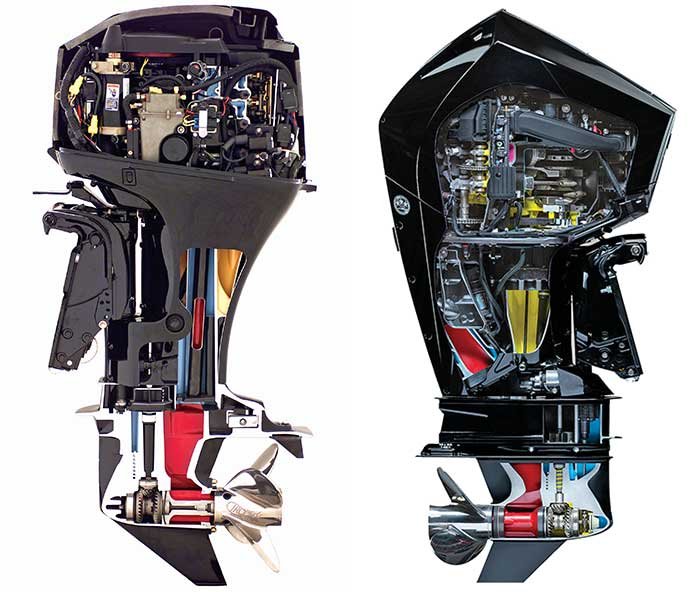
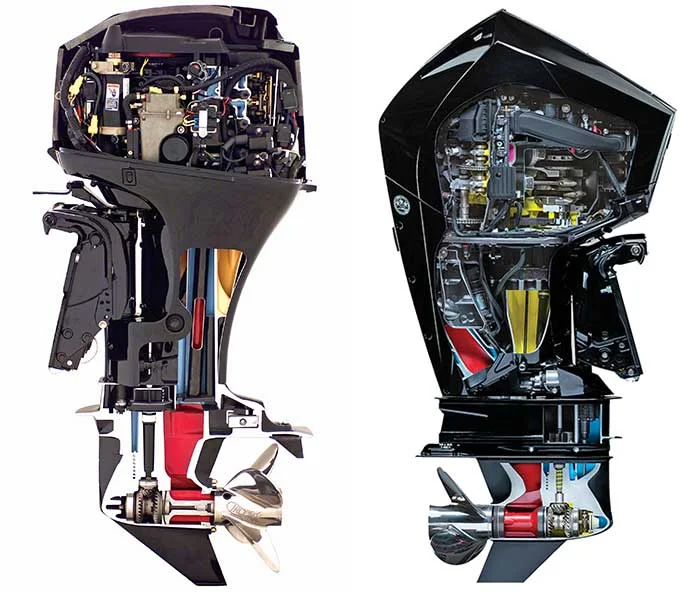
Almost any small outboard can be used as a kicker. A few are designed for the job from the start. Those have a gearcase and propeller built for low-speed thrust, power tilt so you can lift the motor out of the water from the helm, and a charging system that keeps your batteries topped up while you troll. Those details are what this guide is mostly about.
Why fishing boats run a kicker motor
People buy a kicker motor for three reasons. Most buyers want at least two of them.
1. Slow, steady trolling speeds
Walleye, salmon, trout and many offshore species are caught by trolling at a set speed, often somewhere around 1 to 3 mph. A 150 HP or 250 HP outboard is not built to idle at that speed for six hours. Even at idle, a big motor often pushes the boat too fast, and you end up dragging buckets or bags to slow down.
A small kicker turns a big prop slowly. You can dial in a speed, hold it, and change it by a tenth of a mile an hour. When the bite comes at a certain speed, being able to repeat it matters more than anything else. Mercury says its ProKicker is “precision tuned to help you lock in and repeat exact trolling speeds” (Mercury 9.9hp EFI ProKicker product page).
2. Saving hours on your main engine
Every hour you troll on the big motor is an hour on its service clock. Oil changes, impellers and spark plugs on a large outboard cost more than on a 9.9. Idling a big four-stroke for long periods is also not what it was built to do. Running the kicker for the slow work keeps hours off the expensive engine. We cannot give you a dollar figure for this, because it depends on your motor and how often you troll. If you troll more than a handful of days a season, though, the savings add up quickly.
3. A way home if the main engine fails
This is the reason a lot of single-engine owners give. If the main motor stops with a fuel problem, a bad sensor or a spun prop, the kicker will get you back at a slow but steady pace. It will not plane a 22 foot boat, but it does not have to. It just has to beat waiting for a tow. Boating Magazine’s guide to auxiliary outboards describes the same two jobs: a kicker for trolling, or “the redundant safety of a get-home motor.”
If you are weighing a single big motor against twins, our post on twin outboard motor setups covers that decision. For most fishing boats under about 24 feet, one main engine plus a kicker motor is the cheaper and lighter way to get a backup.

What size kicker motor do you need?
For most boats the answer is 9.9 HP. Some heavier boats are better off with 15 HP. Boating Magazine puts it simply: “most engines in auxiliary service are 9.9 or 15 hp” (Boating Magazine). That matches what we sell. The vast majority of kicker motor orders we get are 9.9s.
Here is a rough guide based on boat type. Treat it as a starting point, not a rule:
- 14 to 17 foot aluminum fishing boats: an 8 HP or 9.9 HP kicker motor is plenty. Lighter is better here, because weight on the back corner of a small boat changes how it sits.
- 17 to 20 foot deep-V walleye and multi-species boats: 9.9 HP is the standard choice. A high-thrust or ProKicker style gearcase helps when you troll into wind.
- 20 to 24 foot fiberglass offshore and Great Lakes boats: a 9.9 HP high-thrust model or a 15 HP kicker motor. The extra power helps when you are pushing a heavy boat home against a chop.
- Over 24 feet: 15 HP or more, or a twin main engine setup instead.
Weight matters more than horsepower
A kicker motor hangs off one back corner of the boat. On a small hull, 100 pounds or more out there can make the boat list, sit lower at the stern and drain poorly. Boating Magazine warns that “too heavy a motor can make a small boat unsafe or cause listing and drainage problems aboard larger boats,” and suggests testing with sandbags or water jugs at the mounting spot before you buy (Boating Magazine). It is a cheap test and worth doing.
Weights vary more than you might expect. The lightest Tohatsu MFS9.9E is listed at 95 lb (Tohatsu MFS9.9E specifications). The Yamaha T9.9 runs 102 to 114 lb depending on shaft length (Yamaha High Thrust specifications). Long-shaft, electric-start and power-tilt versions are heavier than the bare tiller models.
Check your capacity plate
In the United States, monohull boats under 20 feet that are built for outboards must carry a capacity plate showing a maximum horsepower. That rating is worked out with a formula set in federal rules (33 CFR 183.53, Maximum horsepower capacity). Other countries have their own rules. Before you add a kicker motor, check how your boat’s plate, your local regulations and your insurer treat combined horsepower. If your main engine is already at the maximum on the plate, ask before you add anything.
Kicker motor features that actually matter
Most 9.9 HP outboards look similar on paper. These are the differences you will notice once the motor is on the boat.
A gearcase and prop built for thrust
This is the big one. A standard 9.9 is geared to push a light boat fast. A kicker motor needs to push a heavy boat slowly. The fix is a lower gear ratio and a bigger-diameter prop with more blade area. Each brand has its own name for it:
- Mercury ProKicker and Command Thrust: an oversized gearcase with a lower gear ratio and a larger, high-thrust four-blade prop (Mercury).
- Yamaha High Thrust: a 2.92:1 gear ratio on the T9.9 and a Dual Thrust prop. Yamaha says the High Thrust line gives up to 60% more forward thrust and up to 70% more in reverse than standard outboards of the same horsepower (Yamaha).
- Honda Power Thrust (BFP models): a larger prop setup. Honda claims 15% more forward thrust and 60% more reverse thrust than the standard model (Honda BF8 and BF9.9 specifications).
- Tohatsu: power tilt models of the MFS9.9E come with a 4-blade high-thrust prop as standard (Tohatsu).
Those thrust percentages are the manufacturers’ own figures. They were measured under each maker’s test conditions, so compare them with care. What they tell you is that a high-thrust kicker motor holds speed better into wind and current, and stops and backs the boat far more easily, than a regular 9.9.
Power tilt
When you run on the main engine, the kicker motor has to come up out of the water. Reaching over a transom in a swell to lift a 100 lb motor gets old fast. Power tilt does it at the push of a button. Mercury’s new 9.9 EFI ProKicker has a hydraulic vertical lift as standard. Mercury’s Jim Hergert describes it this way: “Simply press the button, and the motor lifts effortlessly when you’re ready to switch to your main engine” (BoatNews report on the Mercury EFI launch). If you only buy one upgrade on your kicker motor, make it power tilt.
Electric start and charging
A kicker motor with electric start can share the boat’s battery and charge it while you troll. That matters, because a long trolling day runs fish finders, downriggers and livewells while the main engine is not charging. Charging output is small on these motors, so check the numbers. Honda lists 12 A on electric-start models of its 8 and 9.9 HP range, and says the charging system works at trolling speeds (Honda). Tohatsu lists 12 A on electric-start MFS9.9E models (Tohatsu). Yamaha lists 6 A on the T9.9 (Yamaha).
Fuel injection
Kicker motors often sit for days and then have to start first pull on a cold morning. Electronic fuel injection helps a lot. Suzuki’s DF9.9B, Tohatsu’s MFS9.9E and Mercury’s new 9.9 EFI all use battery-less EFI. That means they can be pull-started without a battery and there is no choke to fiddle with (Suzuki DF9.9B, Tohatsu). Mercury says its new EFI 8 and 9.9 HP motors use up to 27% less fuel than its older carbureted models (BoatNews). The Yamaha T9.9 and Honda BF9.9 are still carbureted (Yamaha, Honda). Plenty of owners run carbureted kickers for years with no trouble, as long as the fuel stays fresh.
Shaft length
Get this right or nothing else matters. Most kicker motors mount on a bracket, and the shaft length has to suit the height of that bracket and the transom where the motor sits, not the center of the boat. Boating Magazine notes that on a V-hull, a kicker motor mounted beside the main engine “will need a shaft length that matches the transom height at the mounting location” (Boating Magazine). For most fiberglass boats with a bracket that ends up being a 20 inch (long) or 25 inch (extra long) shaft. Our long shaft vs short shaft guide explains how to measure.
Tiller or remote, and steering
Most kicker motors are tiller models. They are cheaper, simpler and easy to steer while you stand at the stern and watch the rods. The downside is that you have to be at the back corner of the boat. A remote setup puts throttle and shift at the helm, and you steer either by linking the kicker motor to the main engine with a tie bar or by using the main engine as a rudder (Boating Magazine). Many owners start with a tiller and add a link kit later.

The best kicker motor options we sell
These are the models we recommend most often as a kicker motor, with short specs and current prices. Every one of them is new and listed with its price in our shop, and we ship them worldwide. Specs come from each manufacturer unless we say otherwise.
Mercury 9.9 EFI ProKicker: the purpose-built choice
If you want a motor designed from day one as a kicker, this is it. The ProKicker takes Mercury’s 9.9 EFI FourStroke and adds a Command Thrust gearcase, a high-thrust four-blade prop and standard power tilt. Mercury launched the EFI version in June 2024. It is lighter than the carbureted ProKicker it replaced, and Mercury says it burns up to 27% less fuel than its older carbureted motors (BoatNews).
- Power: 9.9 HP, 2-cylinder four-stroke
- Fuel: EFI, starts without a battery on manual-start models
- Gearcase: Command Thrust, lower gear ratio, larger prop
- Prop: four-blade high-thrust
- Tilt and start: power tilt, electric start with manual backup
- Shafts: 20 inch and 25 inch
Buy it here: Mercury 9.9ELHPT-CT-PK, 20 inch shaft or Mercury 9.9EXLHPT-CT-PK, 25 inch shaft. If you need more push for a heavier boat, the Mercury 15 HP 15ELHPT-CT-PK ProKicker and 15EXLHPT-CT-PK carry the same idea up to 15 HP.
Not sure you need the ProKicker extras? The Mercury 9.9ELH-CT Command Thrust gives you the thrust gearcase without power tilt, for less money. Browse every Mercury 9.9 in our Mercury 9.9 HP range.

Yamaha T9.9 High Thrust: the low-gear workhorse
Yamaha calls the T9.9 the “perfect kicker for flats and multi-species boats” (Yamaha High Thrust). Its 2.92:1 gear ratio is the lowest of the motors in this guide, and the Dual Thrust prop is built to grip at low speed and in reverse. It is carbureted, which some owners actually prefer because it is simple to work on.
- Power: 9.9 HP at 5,500 rpm, 2-cylinder, 212 cc
- Gear ratio: 2.92:1
- Weight: 102 to 114 lb depending on shaft
- Charging: 6 A
- Prop: Dual Thrust
- Shafts: 20 inch and 25 inch
- Fuel: 87 octane, maximum 10% ethanol
Buy it here: Yamaha T9.9LPB, Yamaha T9.9XPB, Yamaha T9.9XPHB, Yamaha T9.9LPHB, Yamaha T9.9LWHB or Yamaha T9.9XWHB. L models have a 20 inch shaft and X models a 25 inch. Each listing shows the start and tilt type. All of them are in our Yamaha 9.9 HP range.
Suzuki DF9.9B: light, quiet and fuel injected
The DF9.9B is a 2-cylinder, roughly 328 cc four-stroke with battery-less EFI and Suzuki’s Lean Burn system, which adjusts the fuel mixture to running conditions to save fuel (Suzuki DF9.9B). Boating Magazine notes the DF9.9B is “often used as a trolling motor or kicker” and lists the 20 inch model at 108 lb and the 25 inch at 120 lb (Boating Magazine Suzuki DF9.9B review). It does not have a dedicated high-thrust gearcase like the ProKicker or T9.9, so it works best on light-to-medium boats.
- Power: 9.9 HP, 2-cylinder SOHC four-stroke
- Fuel: battery-less EFI with Lean Burn
- Weight: about 108 lb (20 inch) to 120 lb (25 inch) for the models reviewed
- Warnings: low oil, overheat and over-rev alerts
- Shafts: 15, 20 and 25 inch
Buy it here: Suzuki DF9.9BTL5, Suzuki DF9.9BTX5, Suzuki DF9.9BTHL5 or Suzuki DF9.9BTHX5. See the whole Suzuki 9.9 HP range for white and short-shaft versions.

Honda BFP10 Power Thrust: smooth and well-charged
Honda’s BFP models are the Power Thrust versions of the 9.9. They use a larger prop setup that Honda says gives 15% more forward thrust and 60% more reverse thrust than the standard model (Honda). Honda also lists a 12 A charging system on electric-start models that keeps working at trolling speeds. That is a real plus if you run a lot of electronics.
- Power: 9.9 HP, 2-cylinder SOHC, 222 cc
- Gear ratio: 2.33:1
- Weight: 93 lb (15 inch) to 107 lb (25 inch) for the BF9.9
- Charging: 12 A on electric-start models
- Trim: 5-stage, with shallow water drive
- Shafts: 20 inch and 25 inch on Power Thrust models
Buy it here: Honda BFP10D3LHT, Honda BFP10D3XHT, Honda BFP10D3XHS or Honda BFP10D3XH. See every option in our Honda 9.9 HP range.
Tohatsu MFS9.9E: the lightest of the group
Tohatsu’s MFS9.9E is a 333 cc, 2-cylinder EFI four-stroke. The lightest version is listed at 95 lb, which makes it one of the lightest 9.9 HP kicker motors you can buy (Tohatsu MFS9.9E). Power tilt models come with a 4-blade high-thrust prop as standard. If weight on the back corner of your boat is a concern, start here.
- Power: 9.9 HP, 2-cylinder, 333 cc
- Fuel: battery-less EFI
- Gear ratio: 2.15:1
- Weight: from 95 lb
- Charging: 12 A on electric-start models
- Prop: 4-blade high-thrust on power tilt models
- Shafts: 15, 20 and 25 inch
Buy it here: Tohatsu MFS9.9EEFTL (20 inch, power tilt) or Tohatsu MFS9.9EEFTUL (25 inch, power tilt). The MFS9.9EEFL is a lower-cost option without power tilt. See the full Tohatsu 9.9 HP range.

Kicker motor comparison at a glance
This table puts the five main kicker motor options side by side. A dash means the maker does not publish that figure on the page we used.
| Model | Fuel system | Displacement | Gear ratio | Lightest weight | Thrust feature |
|---|---|---|---|---|---|
| Mercury 9.9 EFI ProKicker | EFI | – | Lower than standard | about 88 lb (40 kg) for the EFI family | Command Thrust, 4-blade prop |
| Yamaha T9.9 High Thrust | Carburetor | 212 cc | 2.92:1 | 102 lb | Dual Thrust prop |
| Suzuki DF9.9B | EFI, Lean Burn | about 328 cc | – | about 108 lb (20 in) | Standard gearcase |
| Honda BFP10 Power Thrust | Carburetor | 222 cc | 2.33:1 | 93 lb (BF9.9, 15 in) | Power Thrust prop |
| Tohatsu MFS9.9E | EFI | 333 cc | 2.15:1 | 95 lb | 4-blade high-thrust prop |
Weights for the Mercury come from Mercury’s launch figure for its EFI 8 and 9.9 family (BoatNews). The ProKicker version with power lift will weigh more. The Suzuki weight comes from Boating Magazine’s review. All other figures come from the makers’ own spec pages listed at the end of this article.
So which one should you buy?
Here is our honest take, based on the specs above and what owners usually tell us they want:
- You troll a lot, often in wind or current, on a 17 to 22 foot boat: the Mercury ProKicker or the Yamaha T9.9. Both are built for thrust first.
- You want the lightest motor for a smaller boat: the Tohatsu MFS9.9E.
- You run lots of electronics while trolling: the Honda BFP10 or the Tohatsu, both with 12 A charging on electric-start models.
- You want EFI and easy cold starts on a budget: the Suzuki DF9.9B or the Tohatsu MFS9.9E.
- Your boat is over about 21 feet or very heavy: step up to a 15 HP kicker motor like the Mercury 15 ProKicker.
Brand matching helps too. If your main engine is a Yamaha, a Yamaha kicker uses the same dealers, fuel filters and often the same gauges. The same goes for the other brands. It is not essential, but it makes servicing simpler.
What does a kicker motor cost?
These are our current prices for the most popular kicker motor models. Prices are for the motor only. Brackets, steering links, props and freight are separate. Click any model to see the full listing.
| Model | Shaft | Our price |
|---|---|---|
| Mercury 9.9ELHPT-CT-PK ProKicker | 20 in | $3,665 |
| Mercury 9.9EXLHPT-CT-PK ProKicker | 25 in | $3,745 |
| Mercury 15ELHPT-CT-PK ProKicker | 20 in | $4,070 |
| Mercury 9.9ELH-CT Command Thrust | 20 in | $3,300 |
| Yamaha T9.9LPB High Thrust | 20 in | $3,400 |
| Yamaha T9.9XPB High Thrust | 25 in | $3,435 |
| Suzuki DF9.9BTL5 | 20 in | $3,115 |
| Suzuki DF9.9BTX5 | 25 in | $3,145 |
| Honda BFP10D3LHT Power Thrust | 20 in | $3,385 |
| Honda BFP10D3XHT Power Thrust | 25 in | $3,328 |
| Tohatsu MFS9.9EEFTL | 20 in | $3,295 |
| Tohatsu MFS9.9EEFTUL | 25 in | $3,400 |
On top of the motor, plan for a few extras. A good kicker bracket rated for a four-stroke 9.9 to 15 HP. Stainless mounting bolts and sealant. A steering link kit if you want to steer from the helm. Possibly a second fuel tank or a fuel line tee. Our post on hidden costs when buying an outboard motor covers the extras people forget.
Is a used kicker worth it?
Sometimes. A used 9.9 with a known history can be a good buy for a small boat. Check compression, the water pump and the lower unit oil before you hand over money. We list the occasional used motor in our used outboard engines section, such as the used Parsun 9.8 HP long shaft. For a kicker motor you will rely on to get home, though, we would buy new. It is the motor you need to start when everything else has gone wrong.

How to mount a kicker motor
You can clamp a small outboard straight onto the transom, but a kicker motor on a fishing boat almost always goes on a bracket. These are the points that matter. If you are not comfortable drilling a transom, have a marine shop do it.
Choose the right bracket
Most kicker brackets are spring-loaded, which makes it easier to raise and lower the motor (Boating Magazine). Make sure the bracket’s weight and horsepower rating covers your motor. In Boating Magazine’s install walkthrough, the bracket used was rated for motors up to 175 lb and 25 HP, and it had four vertical running positions to suit load and sea conditions (Boating Magazine install guide). Do not buy a light-duty bracket made for older two-stroke motors and hang a modern four-stroke on it.
Pick the mounting spot
Mount the bracket far enough to one side that the kicker and its prop cannot hit the main engine when both are turned. The same install guide mounts on the starboard side, which makes tiller steering easier (Boating Magazine). Check inside the transom for hoses, wires and drain fittings before you drill.
Get the height right
The anti-ventilation plate on the kicker should sit roughly level with the bottom of the hull at the mounting point (Boating Magazine). Too high and the prop sucks air in a chop. Too low and it drags and throws spray. A bracket with several height positions lets you fine-tune this on the water.
Through-bolt, seal and secure
Through-bolt the bracket with stainless bolts, large fender washers and lock nuts, and bed everything in marine sealant. Clamp screws on small outboards can vibrate loose over time, and you can lose the motor. Boating Magazine recommends through-bolting the motor to the bracket too (Boating Magazine). If you do clamp it, add a safety cable. Bracket makers often advise against trailering with the motor on the bracket, so check yours.
For the general steps of fitting an outboard, see our outboard engine installation guide.
Steering link and controls
A link bar between the kicker and the main engine lets you steer it from the helm wheel. That is a big comfort upgrade on long trolling days. Some boats use remote throttle and shift cables for the kicker as well, so the whole thing is run from the console. Whatever setup you choose, wear the kill-switch lanyard whenever the kicker is running, the same as with the main engine (Boating Magazine).
Running and caring for a kicker motor
A kicker motor works a different pattern from a main engine. It runs for long hours at low rpm, then sits tilted up for days. A few habits keep it reliable.
- Run it every trip, even briefly. The kicker that only gets started in an emergency is the one that will not start. Run it for a few minutes each outing.
- Keep the fuel fresh. Yamaha, for example, specifies 87 octane with no more than 10% ethanol for the T9.9 (Yamaha). Use a fuel stabilizer if the motor will sit, and a water-separating filter. Our post on outboard motor fuel efficiency has more on fuel habits.
- Check the cooling stream. At low rpm the tell-tale stream is weaker, so make a habit of checking it whenever you start the motor.
- Service by hours and by calendar. Trolling hours count. Change the oil, gear oil and impeller at the intervals in your owner’s manual, even if the hours seem low.
- Flush after saltwater. Most modern 9.9s have a flush fitting. Use it after every saltwater trip.
- Winterize properly. See our outboard winterizing guide before the off-season.
Trolling tips that get more from your kicker
A GPS speed readout on your fish finder is the most useful trolling tool you can have. It shows speed over ground, which is what the fish see. With a kicker you can change speed in tiny steps and watch the number. Once you find the speed that is catching fish, write down the rpm so you can repeat it.
Into the wind, a high-thrust prop holds speed much better than a standard one. Downwind you may need to slow right down or even make short shifts into neutral. Steering the kicker from the main helm through a link bar makes long trolling passes far less tiring. Our best outboard motors for trolling post covers more on choosing a trolling setup.
Using a high-thrust 9.9 on sailboats and other boats
The same high-thrust 9.9s that make a good kicker motor are also popular as the main engine on small sailboats, and as power for pontoons and work skiffs. A sailboat needs the long shaft and the thrust at low speed, not top speed. Honda’s Power Thrust models and Yamaha’s T9.9 are both used this way. Yamaha’s High Thrust page talks about sailboats and pontoons when describing the Dual Thrust prop (Yamaha). If that is your use, our guide to Yamaha outboards for sailboats and outboard motors for pontoons go into more detail.
For jon boats, a 9.9 used as the main motor is common too. See outboard motors for jon boats. In those cases you are not buying a kicker motor as such, but the same models fit.
Buying a kicker motor from us
Every kicker motor in this guide is listed in our shop with its price, so you can see what you will pay before you contact us. When you order, we confirm the exact model, shaft length, start type and tilt with you, because those details are easy to mix up on small outboards.
We ship worldwide. A 9.9 or 15 HP kicker motor is small enough to go by courier or as a crated freight shipment, depending on where you are. Freight, duties and taxes depend on your country, and we give you the full cost before you pay. Our worldwide shipping guide walks through the process, and our post on outboard motors with warranty explains what manufacturer cover usually includes.
If you are not sure which kicker motor suits your boat, send us the boat’s make, length, main engine and the transom height where the kicker will mount. We will suggest a model and shaft length. You can also browse all our small motors in the Mercury, Yamaha, Suzuki, Honda and Tohatsu 9.9 HP sections, or start from our main outboard engines for sale page.
Kicker motor FAQ
What is the best horsepower for a kicker motor?
For most boats, 9.9 HP. Most auxiliary outboards are 9.9 or 15 HP (Boating Magazine). Go to 15 HP if your boat is heavy, over about 21 feet, or you often troll into strong wind or current.
Is a kicker motor the same as a trolling motor?
Not quite. “Trolling motor” usually means an electric bow-mount motor that runs off batteries. A kicker motor is a small gas outboard on the transom. It has more power and range, and it can get you home.
Do I need a special model or will any 9.9 work?
Any 9.9 will work. A model built for thrust, like the Mercury ProKicker, Yamaha T9.9 or Honda Power Thrust, holds speed better into wind and backs up more easily. Power tilt is also worth having.
What shaft length do I need for a kicker motor?
It depends on your bracket and transom height at the mounting spot. On most fiberglass boats with a bracket it is 20 or 25 inches. Set the motor so the anti-ventilation plate sits about level with the bottom of the hull.
Can a kicker motor charge my batteries?
Yes, if it has electric start and an alternator. Output is modest: Honda and Tohatsu list 12 A on electric-start 9.9s, and Yamaha lists 6 A on the T9.9. Check the spec before you rely on it to run downriggers all day.
Can I steer the kicker motor from the helm?
Yes. A link bar connects the kicker to the main engine so the steering wheel turns both. Remote throttle and shift can be added as well.
How fast will a kicker motor push my boat home?
Slowly. On most fishing boats a 9.9 HP kicker gives displacement speed, not planing speed. That is still far better than drifting or waiting for a tow.
Do you ship kicker motors overseas?
Yes. We ship every kicker we sell worldwide and quote freight for your address before you pay.
Sources and References
- Mercury Marine: 9.9hp EFI ProKicker outboard product page
- BoatNews: Mercury Marine unveils FourStroke EFI 8 and 9.9 hp and ProKicker EFI 9.9 hp engines (June 2024)
- Yamaha Outboards: High Thrust outboard specifications
- Honda Marine: BF8 and BF9.9 portable outboard specifications
- Tohatsu: MFS9.9E four-stroke outboard specifications
- Suzuki Marine: DF9.9B portable outboard
- Boating Magazine: Suzuki DF9.9B review
- Boating Magazine: Choosing an auxiliary outboard motor
- Boating Magazine: How to install an auxiliary outboard engine
- U.S. Government Publishing Office: 33 CFR 183.53, maximum horsepower capacity
Posts Widget
- 1

- 2

- 3

- 4


S.H Continental Marine
USA HERALD MAGAZINE INC
Our team is dedicated to providing exceptional customer service.
Email: info@shcontinentalmarine.com
Choose S.H Continental Marine
for your outboard engine needs and enjoy superior quality, exceptional customer service, and unbeatable prices.
