
Mercury 250 HP Outboard: FourStroke vs Pro XS vs Verado, Best Prices (2026)
A Mercury 250 hp outboard today means a 4.6-litre V8. Mercury builds it in three versions: the FourStroke for general use, the Pro XS for bass and bay boats, and the Verado for big offshore boats and multi-engine rigs. All three share the same 4.6-litre block, which Mercury introduced in 2018 (Mercury Marine V8 launch announcement). They differ in weight, gearing, steering, charging output and price. We stock 33 versions, from $22,685 for a FourStroke to $28,500 for a white-cowl Verado, and we ship them worldwide.
This guide explains what separates the three, how to read the model codes, which boats each one suits and what to check before you buy. Skip to the full price list if you already know what you want, or browse the Mercury 250 HP category.
Table of Contents
Table of Contents

What You Get With a Mercury 250 HP Outboard
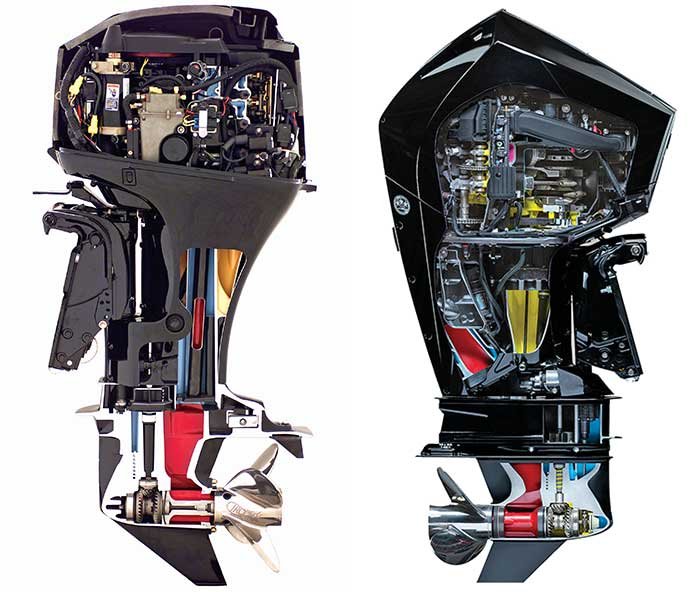
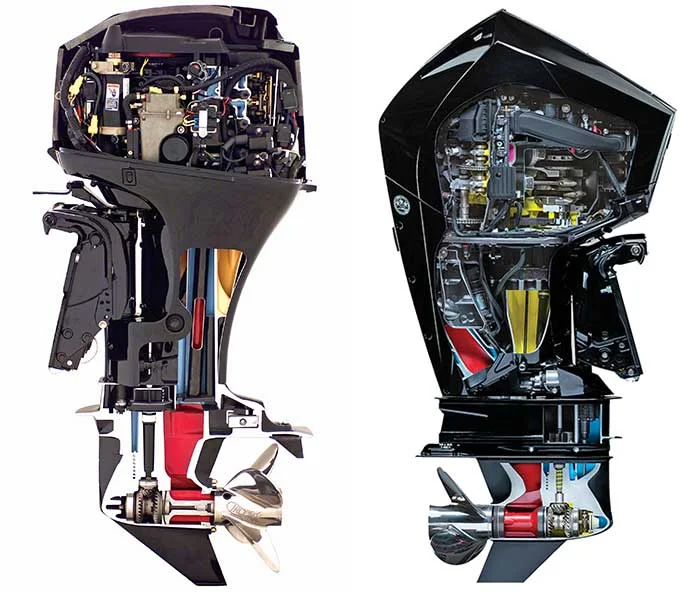
Every new Mercury 250 hp outboard is built around the same engine: a 4.6-litre (279 cubic inch) V8. Mercury pitched it as having more displacement than anything else in the class, and BoatTest noted it has “two more cylinders than all of its competitors in class” (BoatTest on the Mercury V8). The Yamaha, Suzuki and Honda 250s are all V6s.
Why does that matter on a Mercury 250 hp outboard? Big displacement means torque low in the rev range. You feel it when you push the throttle on a loaded centre console. The boat climbs onto the plane without the engine sounding like it’s working hard. Mercury’s launch release claimed the V8 FourStroke 300 delivers up to 9% more torque than its nearest competitor between 3,500 and 4,500 rpm. That’s a manufacturer claim about the 300, not the 250, but it shows the design goal.
The other things you get with every Mercury 250 hp outboard:
- Normal pump fuel. Mercury’s spec sheets list 87 octane minimum and fuel with up to 10% ethanol (Mercury FourStroke V6/V8 specification brochure). No premium needed.
- Strong charging. 85 amps on the FourStroke and Pro XS, 115 amps on the Verado.
- Low-voltage idle boost. Mercury says the engine raises idle speed when battery voltage drops, so the alternator puts more charge back while you’re trolling or idling with electronics running.
- SmartCraft diagnostics. A technician can plug in and read hours, fault codes and running history. Our marine engine diagnostics guide explains what that tells you.
FourStroke vs Pro XS vs Verado: The Three Mercury 250 HP Outboard Versions
Here are the published specs for each Mercury 250 hp outboard side by side. Figures come from Mercury’s specification brochures, except where noted.
| Specification | FourStroke 250 | Pro XS 250 | Verado 250 |
|---|---|---|---|
| Engine | 4.6 L V8 | 4.6 L V8 | 4.6 L V8 |
| Full-throttle rpm | 5,200–6,000 | 5,600–6,200 | 5,200–6,000 |
| Alternator | 85 A (1,071 W) | 85 A (1,071 W) | 115 A (1,449 W) |
| Gear ratio | 1.85:1 | 1.75:1 | 1.85:1 (1.75:1 option) |
| Lightest dry weight | 527 lb, 20-inch shaft (FishTalk) | 511 lb (232 kg) | 600 lb (272 kg) |
| Shaft lengths | 20, 25, 30 in | 20, 25 in | 20, 25, 30 in |
| Steering | Hydraulic, power or big tiller | Not listed in Pro XS brochure | Electro-hydraulic power steering built in |
| Our price range | $22,685–$25,255 | $23,830–$25,845 | $26,125–$28,500 |
The weights deserve a note. FishTalk reported the 250 and 300 FourStroke at 527 lb in the 20-inch shaft and the Verado at 600 lb (FishTalk on the V8 FourStroke, FishTalk on the V8 Verado). Mercury’s Pro XS brochure gives 511 lb and says that excludes oil, rigging and hardware (Mercury Pro XS specification brochure). Longer shafts weigh more. Treat these as starting points for any Mercury 250 hp outboard and check your hull’s transom rating against the real installed weight.
Mercury FourStroke 250: the all-rounder
This is the Mercury 250 hp outboard most people should look at first. It’s the cheapest of the three, it comes in every shaft length, and you can rig it with simple mechanical cables or with Digital Throttle and Shift. It suits centre consoles, bay boats, larger pontoons, walkarounds and workboats. If you don’t have a specific reason to pay for a Pro XS or Verado, the FourStroke does the job.
Good starting points are the Mercury 250HP L FourStroke (20-inch shaft) and the Mercury 250HP XL FourStroke (25-inch shaft), both at $22,685.
Mercury Pro XS 250: built for speed
The Pro XS is the performance Mercury 250 hp outboard. It revs higher (5,600 to 6,200 rpm at full throttle), uses a taller 1.75:1 gear ratio, and is the lightest of the three on paper. Mercury’s 2018 launch release claimed the Pro XS V8 250 gets up to 16% better fuel economy at cruise than the leading competitor. Again, that’s Mercury’s claim, from Mercury’s own testing.
Pro XS engines are what you’ll see on tournament bass boats, fast bay boats and multi-species boats. The Mercury 250L Pro XS TorqueMaster uses Mercury’s TorqueMaster gearcase, which bass boat owners like for running at a high mounting height. The 250XL Pro XS and 250XL Pro XS DTS suit 25-inch transoms.

Mercury Verado 250: the premium offshore choice
The Verado is the heaviest and most expensive Mercury 250 hp outboard, and you get things for the money. Power steering is built into the engine, so there’s no separate hydraulic pump to plumb in. The alternator is bigger (115 amps), which matters on boats with big electronics, livewells and multiple batteries. Joystick piloting is offered as an option, according to Mercury’s Verado brochure (Mercury Verado specification brochure). Verado also comes in several white finishes as well as black.
One thing to know if you’re shopping used: older Verado 250s, made before the V8 arrived, used a supercharged inline six. A new Verado 250 is the 4.6-litre V8. The two are different engines with different parts.
Our Verado 250 range starts with the Verado 250HP L at $26,125 and the Verado 250HP XL at $26,235. For a deeper look at the whole Verado family, read our guide to Mercury Verado outboard motors.

How to Read Mercury 250 HP Outboard Model Codes
The product names look like alphabet soup, but there are only a few letters to learn:
- L = 20-inch shaft.
- XL = 25-inch shaft. The most common size on centre consoles and bay boats.
- XXL = 30-inch shaft. For tall transoms, some catamarans and boats with deep engine wells.
- C in front (CXL, CXXL) = counter rotation. The prop spins the opposite way, for the second engine on a twin rig.
- DTS = Digital Throttle and Shift. Electronic controls instead of cables.
- WH = white cowling instead of black.
- TorqueMaster = Mercury’s performance gearcase on select Pro XS models.
So a “Mercury 250HP CXXL Four Stroke WH DTS” is a FourStroke 250 with a 30-inch shaft, counter rotation, white cowl and digital controls. Once you know the letters, choosing the right Mercury 250 hp outboard is mostly a question of measuring your transom and deciding on controls.
Every Mercury 250 HP Outboard We Sell
All engines below are new. Prices were correct when this guide was written; the product page always shows the current price.
FourStroke 250, mechanical controls
| Model | Shaft | Rotation | Price |
|---|---|---|---|
| 250 L FourStroke | 20 in | Standard | $22,685 |
| 250 XL FourStroke | 25 in | Standard | $22,685 |
| 250 XXL FourStroke | 30 in | Standard | $22,705 |
| 250 CXL FourStroke | 25 in | Counter | $22,895 |
| 250 CXXL FourStroke | 30 in | Counter | $23,145 |
FourStroke 250, DTS digital controls
| Model | Shaft | Rotation | Price |
|---|---|---|---|
| 250 L FourStroke DTS | 20 in | Standard | $22,780 |
| 250 XL FourStroke DTS | 25 in | Standard | $23,145 |
| 250 XXL FourStroke DTS | 30 in | Standard | $23,390 |
| 250 CXL FourStroke DTS | 25 in | Counter | $23,590 |
| 250 CXXL FourStroke DTS | 30 in | Counter | $23,830 |
FourStroke 250, white cowling
| Model | Shaft | Controls | Price |
|---|---|---|---|
| 250 XL WH | 25 in | Mechanical | $23,880 |
| 250 XXL WH | 30 in | Mechanical | $24,135 |
| 250 L WH | 20 in | Mechanical | $24,180 |
| 250 CXL WH | 25 in, counter | Mechanical | $24,325 |
| 250 CXXL WH | 30 in, counter | Mechanical | $24,565 |
| 250 L WH DTS | 20 in | DTS | $24,210 |
| 250 XL WH DTS | 25 in | DTS | $24,565 |
| 250 XXL WH DTS | 30 in | DTS | $24,820 |
| 250 CXL WH DTS | 25 in, counter | DTS | $25,010 |
| 250 CXXL WH DTS | 30 in, counter | DTS | $25,255 |
Pro XS 250
| Model | Shaft | Notes | Price |
|---|---|---|---|
| 250L Pro XS TorqueMaster | 20 in | TorqueMaster gearcase | $23,830 |
| 250XL Pro XS | 25 in | Mechanical controls | $24,800 |
| 250XL Pro XS DTS | 25 in | Digital controls | $25,845 |
Verado 250
| Model | Shaft | Colour / rotation | Price |
|---|---|---|---|
| Verado 250 L | 20 in | Black | $26,125 |
| Verado 250 XL | 25 in | Black | $26,235 |
| Verado 250 XXL | 30 in | Black | $26,500 |
| Verado 250 CXL | 25 in | Black, counter | $26,705 |
| Verado 250 CXXL | 30 in | Black, counter | $26,975 |
| Verado 250 L WH | 20 in | White | $27,500 |
| Verado 250 XL WH | 25 in | White | $27,765 |
| Verado 250 XXL WH | 30 in | White | $28,030 |
| Verado 250 CXL WH | 25 in | White, counter | $28,235 |
| Verado 250 CXXL WH | 30 in | White, counter | $28,500 |
A quick pattern you’ll notice: on the FourStroke, going from mechanical to DTS adds roughly $100 to $700 depending on the model, and a white cowl adds about $1,200 to $1,500. Counter rotation adds a couple of hundred dollars. If you’re on a budget, a black, mechanical, standard-rotation FourStroke is the cheapest new Mercury 250 hp outboard you can put on a boat.

How a Mercury 250 HP Outboard Performs on a Real Boat
Brochure specs are one thing. Here’s a published test of a Mercury 250 hp outboard from a boat builder. Sportsman Boats ran its 212 Open, a 20-foot 11-inch inshore centre console with a listed dry weight of 2,300 lb, on a single Mercury 250 V8 with a 1.75:1 gearcase and a 17-pitch stainless prop. The test was in choppy water at 80°F (Sportsman 212 Open performance report).
| RPM | MPH | Gallons/hour | MPG |
|---|---|---|---|
| 3,000 | 19.3 | 6.1 | 3.18 |
| 3,500 | 26.2 | 7.2 | 3.66 |
| 4,000 | 31.3 | 8.7 | 3.62 |
| 4,500 | 36.9 | 11.5 | 3.21 |
| 5,000 | 41.5 | 14.4 | 2.88 |
| 6,000 | 50.0 | 22.0 | 2.27 |
A few takeaways. Top speed was 50 mph. The sweet spot was 3,500 to 4,000 rpm, where the boat ran 26 to 31 mph at a little over 3.6 miles per gallon. The same report shows 0 to 30 mph in about 6 seconds. Fuel burn more than doubles between 4,000 rpm and wide open, which is normal for any big outboard and a good reason to cruise in the mid-range.
Your numbers will be different. Hull shape, load, prop and water conditions all change the result. But this gives you a realistic picture of what a single Mercury 250 hp outboard does on a 21-foot boat. For more on running costs, see our guide to fuel-efficient outboard motors.
Which Boats Suit a Mercury 250 HP Outboard?
Centre consoles from about 20 to 24 feet (single engine)
The classic match for a Mercury 250 hp outboard. A single FourStroke XL is the usual pick. Go DTS if you want smoother shifting and a cleaner helm. Our best outboard motors for saltwater use guide covers corrosion protection and flushing.
Bay boats and bass boats
This is Pro XS country. The higher rev range and 1.75:1 gearing suit light, fast hulls. Bass boats with jack plates often run the TorqueMaster model. For prop choice, read our outboard motor propellers guide and gear ratio explainer.
Large pontoons and tritoons
A heavy three-tube pontoon with a dozen people on board needs torque more than top speed, which is where a Mercury 250 hp outboard shines. The FourStroke’s 1.85:1 gearing helps here. See our page on outboard motors for pontoons.
Twin-engine boats from about 25 to 30 feet
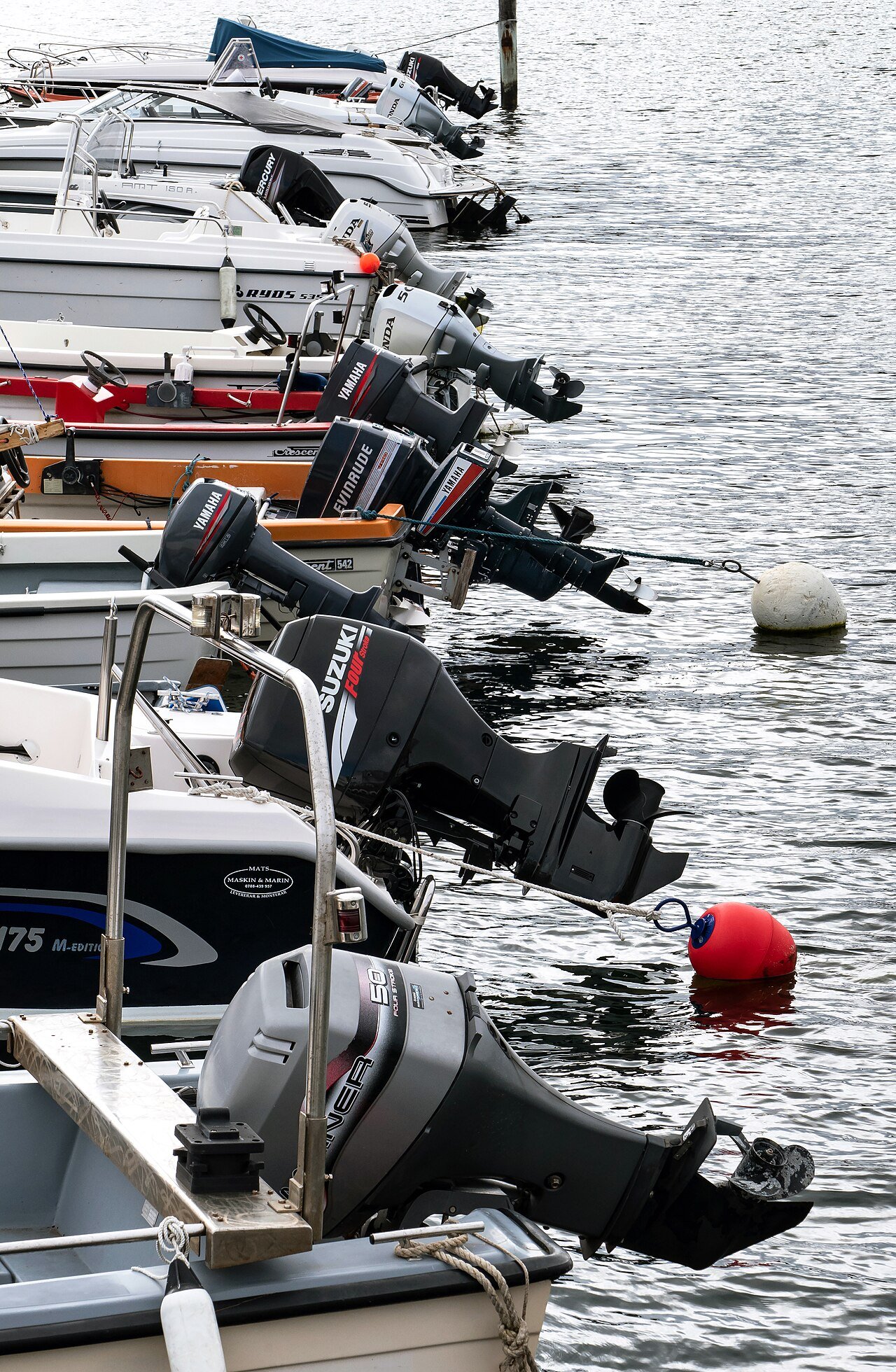
A pair of Mercury 250 hp outboard engines, one standard and one counter-rotating, is a very common offshore set-up. The counter-rotating engine cancels out the steering pull from the other prop. Verado’s built-in power steering and bigger alternator make it attractive here, though a pair of FourStrokes does the job for less money. Our twin outboard motor setup and counter-rotating outboard guides go into the details.

Before You Buy: Check Your Boat Can Take It
Horsepower rating
Look at the capacity plate near the helm. Discover Boating explains that it lists maximum weight, maximum persons and maximum horsepower, and that boaters are required by law to obey these limits (Discover Boating on capacity plates). In the US, the rules behind those plates sit in federal regulations at 33 CFR Part 183 (33 CFR Part 183, Boats and Associated Equipment). Other countries have their own rules, and your insurer may check the plate after a claim. If your boat is rated for 200 HP, a Mercury 250 hp outboard is the wrong engine.
Transom weight
A Mercury 250 hp outboard is heavier than the V6s it often replaces. FishTalk noted the 250 FourStroke is 52 lb heavier than Mercury’s own V6 FourStrokes. If you’re replacing an older, lighter 225 or 250, check that the transom and the boat’s trim can handle the extra weight at the stern. Our guide on how to select the correct horsepower for your boat covers the basics.
Shaft length
Measure from the top of the transom down to the bottom of the hull. About 20 inches means L, about 25 means XL, about 30 means XXL. Get this wrong and you’ll fight ventilation or drag for as long as you own the engine. Our shaft length guide and cavitation plate guide explain how to measure.
Steering
Mercury’s brochure lists hydraulic steering, power steering or a big tiller for the FourStroke. The Verado has power steering built in. For the Pro XS, confirm the steering spec with your installer. If your current boat has cable steering, budget for an upgrade. See our hydraulic steering guide.
Mechanical Controls or DTS?
You can order a Mercury 250 hp outboard with either type of control. Mechanical controls use push-pull cables from the binnacle to the engine. They’re simple, cheaper and easy to fix anywhere. If you’re repowering a boat that already has a good Mercury mechanical binnacle, you may be able to keep it.
DTS (Digital Throttle and Shift) sends electronic signals instead. Shifts are lighter and smoother, there’s no cable stretch to adjust, and on twin rigs you get features that sync the engines. It costs more up front and needs DTS-compatible controls at the helm. On a new single-engine boat either works. On twins, or if you’re spending Verado money anyway, DTS is the usual choice for a Mercury 250 hp outboard.

Mercury 250 HP Outboard vs Yamaha, Suzuki and Honda 250s
All four brands make a good 250, so why choose a Mercury 250 hp outboard? The main difference is the engine layout and price. Mercury uses a V8. The others use V6 engines. Here’s how our prices compare for the base versions in stock:
| Brand | Engine type | Our price range | Example |
|---|---|---|---|
| Mercury FourStroke 250 | 4.6 L V8 | $22,685–$25,255 | 250 XL FourStroke |
| Suzuki DF250 | V6 | About $17,935–$20,025 | Suzuki DF250TX5 |
| Honda BF250 | V6 | About $19,785–$23,320 | Honda BF250DXRA |
On our prices, a Mercury 250 hp outboard costs more than a Suzuki or Honda 250. What you get for that is the bigger V8 and its low-end torque, plus the Pro XS and Verado options that the other brands don’t have an exact match for. If price is the main thing, the Suzuki range is hard to beat. Our comparisons go deeper: Mercury vs Suzuki, Yamaha vs Mercury, Honda vs Mercury, plus single-model guides on the Yamaha 250, Suzuki DF200 vs DF250 and Honda 250.
The most practical tie-breaker is dealer support where you keep the boat. A great engine with no local technician is a headache. Check who services what at your marina before deciding.
Should You Step Down to 225 or Up to 300?
The Mercury 250 hp outboard uses the same 4.6-litre V8 family as Mercury’s 225 and 300 V8s, and FishTalk reported the 250 and 300 FourStroke at the same 527 lb. So stepping up or down doesn’t change the weight much. The choice comes down to your boat’s rating and your budget.
- Stay at 250 if your boat is rated for 250 and you want the best balance of price and performance.
- Look at 225 or 200 if your hull is rated lower, or you rarely run hard. See the Mercury 225 HP and Mercury 200 HP categories, the 225XL Pro XS, and our Mercury 200hp buying guide.
- Look at 300 if your boat is rated for it and you carry heavy loads offshore. Browse the Mercury 300 HP range, starting with the 300 XL FourStroke.
For an overview across brands, read high horsepower outboards and top high-horsepower outboard motors compared.
One Mercury 250 HP Outboard or Twin Smaller Engines?
On boats around 23 to 26 feet, people often ask whether one Mercury 250 hp outboard beats a pair of 150s. There’s no single right answer, but here’s how we see it.
Reasons to go single. One engine costs less to buy than two, and it’s usually lighter than a twin set-up of the same total power. There’s one set of rigging, one service bill and one prop to buy. A single V8 also leaves more room on the transom for a ladder or a swim platform. If you mostly fish inshore or within easy reach of help, a single is the sensible choice.
Reasons to go twin. Redundancy. If one engine stops 30 miles out, you can still get home on the other. Twins also make low-speed handling around a dock easier, because you can split the throttles. For serious offshore running, many owners won’t go out without two engines. In that case, two Mercury 250 hp outboard engines on a boat rated for 500 HP is a common and proven combination.
Middle ground. Some single-engine owners add a small kicker for emergencies and trolling. Something like the Mercury 9.9 Command Thrust ProKicker gives you a way home and a slow trolling speed without the cost of a second big engine. Our best outboard motors for trolling guide covers kickers in more detail.
Propping and Setting Up a Mercury 250 HP Outboard
The propeller decides whether your new Mercury 250 hp outboard feels great or feels flat. The rule is simple: with the boat at a normal load, the engine should reach its rated full-throttle range. For the FourStroke and Verado that’s 5,200 to 6,000 rpm. For the Pro XS it’s 5,600 to 6,200 rpm. Those figures come from Mercury’s brochures linked above.
- If the engine won’t reach the range, the prop has too much pitch. Drop down a size. Running “over-propped” strains the engine and makes the boat slow to get on the plane.
- If it revs past the top of the range, the prop has too little pitch. Go up a size.
- Stainless steel props are the norm at this horsepower. They flex less than aluminium and hold their shape at speed.
- Mounting height matters as much as the prop. Too low and you add drag. Too high and the prop ventilates in turns.
Most good installers will water-test a new Mercury 250 hp outboard after rigging and swap props until the numbers are right. Ask for that when you book the installation. For the theory behind it, read our propeller buyer’s guide and our page on trim and tilt.
Planning the Electrics
A Mercury 250 hp outboard puts out a lot of charging current, but only if your wiring can carry it. Modern centre consoles run chartplotters, radar, sonar, livewell pumps, lights and sometimes trolling motors. Here’s what to think about:
- Battery size and type. Use the cranking battery spec in Mercury’s installation manual as the minimum.
- House and start banks. Keep a separate start battery so a flat house bank never stops you starting the engine.
- Cable size. Long runs from the transom to a console battery need heavier cable. Your installer should size it.
- Which alternator. If you run heavy electronics all day, the Verado’s 115-amp alternator is a real advantage over the 85-amp FourStroke and Pro XS.
Common Mistakes When Buying a Mercury 250 HP Outboard
These are common, avoidable mistakes when ordering an engine this size:
- Wrong shaft length. Measure, don’t guess. A 25-inch engine on a 20-inch transom will drag. A 20-inch engine on a 25-inch transom will ventilate.
- Forgetting counter rotation on twins. Two standard-rotation engines will pull the boat to one side and make steering heavy.
- Mixing control types. A DTS engine needs DTS controls at the helm. A mechanical engine needs cables. Order the right one for the helm you have, or plan to replace the helm controls.
- Ignoring the horsepower rating. More power than the plate allows can affect insurance and resale, and it’s unsafe.
- Budgeting for the engine only. Props, gauges, steering, rigging and labour all add up.
- Buying on price alone. A cheaper engine with no local service support can cost more over its life.
Get those six right and a Mercury 250 hp outboard will give you years of easy, strong running.
Owning a Mercury 250 HP Outboard: Break-In and Upkeep
A Mercury 250 hp outboard is a low-fuss engine if you do the basics on time. Follow the maintenance schedule in Mercury’s owner’s manual for your exact model. The jobs that matter most:
- Break-in. Vary the throttle for the first hours and avoid long runs at full power. Our break-in guide explains why.
- Engine oil and filter at the intervals Mercury sets.
- Gearcase oil. Check for water or metal in the oil. See our lower unit oil guide.
- Water pump impeller inspection, especially if you run in sand or silt.
- Freshwater flush after every salt trip, and check the anodes.
- Trim and tilt fluid and function. See our power trim and tilt guide.
Our outboard motor maintenance checklist and winterizing guide have the full routine. If you’re ever buying a used one, a compression test is worth doing first. We also list used outboard engines, and our used Mercury buyer’s guide covers what to check.

Saltwater or Freshwater: Does It Change the Choice?
The engine itself is the same for both. What changes is how you look after it and a few set-up choices.
In salt water, corrosion is the enemy. Flush the cooling system with fresh water after every trip, wash the outside down, and check the sacrificial anodes often. Replace them before they’re half gone. Keep the battery terminals and the area under the cowl clean and dry. Salt build-up in the cooling passages is a common cause of overheating on neglected engines. A white cowl, offered on both the FourStroke and the Verado, also stays cooler to the touch in strong sun, which some owners in hot climates prefer.
In fresh water, the main risks are sand, silt and weed. Shallow lakes and rivers wear water pump impellers faster, so check the impeller more often. If you run in very shallow water, think about a jack plate or a hydraulic one so you can raise the engine without losing steering. Bass boat owners often pair the Pro XS TorqueMaster with a jack plate for exactly this reason.
Either way, keep the engine trimmed down in storage so water drains out of the gearcase housing, and follow the winter lay-up steps if your boat comes out for the cold months. Our guides to choosing an outboard for saltwater fishing and outboard motors for fishing have more on matching the set-up to your water.
What Happens After You Order
Buying a big outboard online can feel like a leap if you haven’t done it before. Here’s how it usually goes with us:
- You send us the details. Boat make and model, length, horsepower rating, transom height, and whether it’s a single or twin installation.
- We confirm the exact model. Shaft length, rotation, controls and colour. If something doesn’t add up, such as a 25-inch engine for a boat that measures 20 inches, we’ll tell you before you pay.
- We ship the engine. Our shipping policy covers the details: orders normally ship within 1 to 6 business days, delivery is free, and big outboards travel crated.
- You get a tracking number. A shipment confirmation email with tracking goes out once the crate leaves, and you can follow it on our order tracking page.
- You arrange installation. We recommend a qualified marine technician for rigging, propping and the first water test. Keep the paperwork for warranty purposes.
Import duties, taxes and customs rules vary by country. Check with your local customs office or a freight agent before you order, so you know what to expect when the crate arrives.
Repowering With a Mercury 250 HP Outboard: Checklist
Swapping an old engine for a new Mercury 250 hp outboard is one of the best upgrades you can make to a good hull. Run through this list first:
- Confirm the boat’s maximum horsepower rating on the capacity plate.
- Measure transom height to choose L, XL or XXL.
- Check the transom for rot or cracks around the mounting bolts.
- Decide on mechanical or DTS controls, and whether your current binnacle can stay.
- Check the steering system is rated for a V8 of this size.
- Plan the batteries and wiring for an 85 or 115-amp alternator.
- Pick a propeller. Most dealers will do a prop test on the water after installation.
- For twins, order one standard and one counter-rotating engine.
- Budget for rigging, gauges and installation labour, not just the engine. See our hidden costs guide.
Buying a Mercury 250 HP Outboard From Us
Every Mercury 250 hp outboard in this guide is new and ships worldwide. Each Mercury 250 hp outboard is crated for freight, and delivery is free. These pages explain how it works:
- Outboard motors worldwide shipping, step by step
- Cost of shipping an outboard motor internationally
- Outboard motors with warranty: what’s covered
- Can you finance an outboard motor?
- How to make sure you’re buying genuine Mercury engines
Our shipping policy, returns policy and order tracking pages have the details. Not sure which Mercury 250 hp outboard fits your boat? Contact us with the boat’s make, length, transom height and horsepower rating, and we’ll point you to the right model. You can also browse all Mercury outboard motors or the full shop, or read our general guide to buying Mercury outboards.
Mercury 250 HP Outboard FAQ
How much does a Mercury 250 hp outboard cost?
In our store, new prices run from $22,685 for a FourStroke L or XL to $28,500 for a Verado CXXL with white cowling. The Pro XS sits in between at $23,830 to $25,845. Rigging, controls, prop and installation are extra.
How much does a Mercury 250 hp outboard weigh?
The FourStroke 250 was reported at 527 lb with a 20-inch shaft. Mercury lists the Pro XS 250 from 511 lb dry and the Verado 250 from 600 lb dry. Longer shafts weigh more.
Is the Mercury 250 a V6 or V8?
Current FourStroke, Pro XS and Verado 250s all use Mercury’s 4.6-litre V8. Older Verado 250s used a supercharged inline six, and Mercury’s V6 FourStrokes stop at 225 HP.
What fuel does it need?
Mercury’s spec sheets list 87 octane minimum and fuel with up to 10% ethanol.
What’s the difference between the Pro XS and FourStroke 250?
The Pro XS revs higher (5,600 to 6,200 rpm), uses 1.75:1 gearing and is aimed at bass and bay boats. The FourStroke revs to 5,200 to 6,000 rpm, uses 1.85:1 gearing and suits a wider range of boats, including heavy ones.
Is the Verado worth the extra money?
For big offshore boats and twin rigs, often yes. You get built-in power steering, a 115-amp alternator and optional joystick piloting. For a single engine on a 21-foot boat, the FourStroke usually makes more sense.
How fast will a Mercury 250 hp outboard push my boat?
It depends on the hull, load and prop. In one builder’s published test, a 21-foot, 2,300 lb centre console reached 50 mph on a single Mercury 250 V8 and cruised most efficiently at 26 to 31 mph.
Can I put a Mercury 250 hp outboard on a boat rated for 225?
No. Stay at or below the maximum horsepower on your boat’s capacity plate. If your hull is rated for 225, look at Mercury’s 225 HP models instead.
Which shaft length do I need?
Measure from the top of the transom to the bottom of the hull. Roughly 20 inches means L, 25 inches means XL and 30 inches means XXL.
Do I need counter rotation?
Only on twin-engine boats. One engine should be standard rotation and the other counter rotation (the models with a C in the name). A single engine is always standard rotation.
Do you ship a Mercury 250 hp outboard worldwide?
Yes. We ship worldwide and delivery is free. Orders normally ship within 1 to 6 business days. Import duties and taxes depend on your country.
Sources and References
- Mercury Marine: V8 Verado, FourStroke, Pro XS and SeaPro launch announcement
- Mercury FourStroke 175–300hp V6/V8 specifications brochure
- Mercury Verado 250–600hp specifications brochure
- Mercury Pro XS 175–300hp specifications brochure
- FishTalk: new Mercury V8 250 and 300 FourStroke outboards
- FishTalk: Mercury V8 250 and 300 FourStroke and Verado
- BoatTest: Mercury V8 weight compared with the competition
- Sportsman Boats: 212 Open with Mercury 250 V8 performance report
- Discover Boating: all about capacity plates
- 33 CFR Part 183: Boats and Associated Equipment
Posts Widget
- 1

- 2

- 3
- 4


S.H Continental Marine
USA HERALD MAGAZINE INC
Our team is dedicated to providing exceptional customer service.
Email: info@shcontinentalmarine.com
Choose S.H Continental Marine
for your outboard engine needs and enjoy superior quality, exceptional customer service, and unbeatable prices.
