
Boat Engine Dealers: 6 Essential Questions to Ask First
Boat engine dealers are not all the same, and the difference matters a lot more than most first-time buyers expect. Some dealers move volume and barely know the engines beyond the spec sheet. Others, including us, service what we sell, which changes every part of the buying conversation, from which horsepower actually fits your hull to what to expect five years down the line.
This is a practical look at what a good boat engine dealer should offer, how our range breaks down by horsepower and price, and the questions worth asking before you commit to a purchase that, for a lot of buyers, is the second biggest expense on the boat after the hull itself.
What a Real Boat Engine Dealer Actually Provides
- Pre-sale inspection. Compression tested, water pump checked, gear oil sampled for contamination, and a documented condition report on every used engine.
- Honest horsepower guidance. The biggest engine is not always the right engine. A good dealer talks you out of an oversized motor that will be inefficient at typical loads.
- Real inventory, not drop-shipping. Engines physically on hand, inspected, and ready to ship, not a listing pulled from somewhere else with markup added.
- Clear pricing. No hidden freight surprises, no “call for price” games.
- After-sale support. Someone to call with a question about the engine you bought, not just a shipping confirmation email.

Our Range, By Horsepower and Use Case
| Use case | Typical HP range | Example |
|---|---|---|
| Dinghies and tenders | 2.5-9.9 HP | Yamaha 2.5 HP F2.5SMHB |
| Small fishing boats and jon boats | 15-40 HP | Yamaha 40 HP F40LA |
| Family runabouts and pontoons | 50-90 HP | Yamaha 90 HP F90LB |
| Center consoles and bay boats | 115-250 HP | Inline four and V6 models, in stock and by request |
| Offshore center consoles | 300-425 HP | Yamaha 425 HP LXF425ESA V8 |
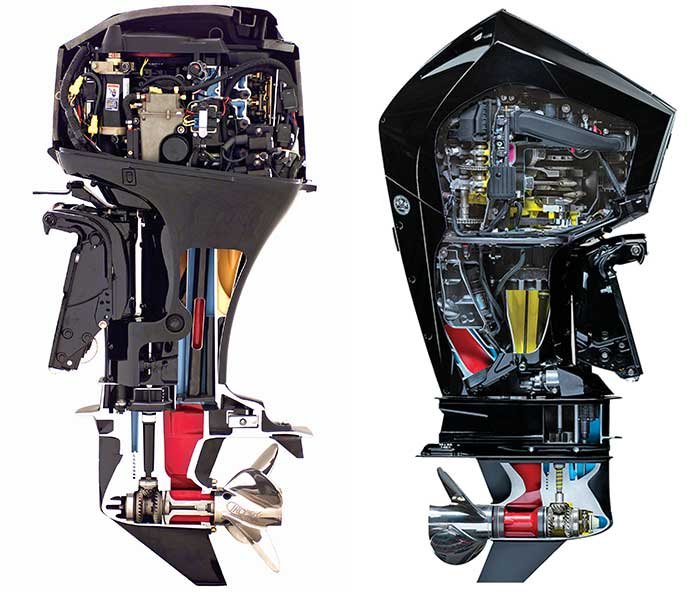
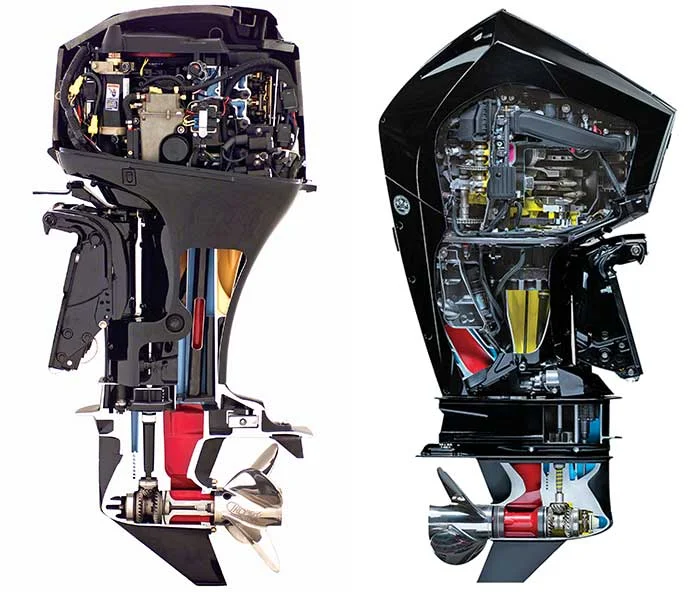
Matching the boat to the engine is the single most common thing boat engine dealers get right or wrong for a customer. Too little horsepower and the boat is sluggish and inefficient. Too much and you are carrying weight and cost you do not need, plus a maintenance load that scales with the extra cylinders.

New vs Used: What a Good Dealer Tells You Upfront
A new engine from an authorized boat engine dealer comes with a full manufacturer warranty, zero hours, and current emissions and safety compliance. That is the safest buy, but also the most expensive per horsepower.
A used engine, when properly inspected, is where the real value is for most buyers. The gap between a well-maintained 200-hour engine and a neglected one with the same hour count on paper is enormous, which is exactly why the inspection and disclosure part of buying from a dealer matters so much. We check compression, look at the lower unit oil for water contamination, verify the water pump condition, and disclose all of it before you buy, not after.
Specs to Compare Across Dealers
- Shaft length (15″, 20″, 25″) matched to your transom height, not just “whatever is in stock”
- Weight, which ranges from around 27 lbs on the smallest portables to roughly 670 lbs on a 425 HP V8, and affects both handling and what rigging your boat needs
- Fuel delivery, carbureted on entry-level small engines versus electronic fuel injection on most engines from roughly 25 HP up
- Control type, tiller for small boats versus remote mechanical or digital fly-by-wire for larger installations
- Compression numbers on used engines, and whether the dealer will actually share the test results with you
- Total hours and whether there is a maintenance log to back the number up
Any boat engine dealer worth buying from will walk through these specs with you unprompted, not wait for you to ask.
How to Read a Dealer’s Reputation Before You Buy
Reviews matter, but read them for detail, not star rating alone. A dealer with a handful of reviews that mention specific model names, honest condition disclosure, and post-sale help is a better sign than a dealer with hundreds of generic five-star reviews and nothing specific in them. Also worth checking: how long the dealer has operated under the same name and domain, since here-today-gone-tomorrow resellers rarely stick around long enough to build a track record.
What Happens If Something Goes Wrong After Delivery
This is the question most buyers forget to ask until they need the answer. A reliable boat engine dealer has a clear process for damage claims, missing parts, or an engine that does not perform as described, ideally spelled out before you pay rather than negotiated after a problem shows up. We document engine condition with photos and written notes at the point of sale specifically so there is no ambiguity if a shipping issue or a dispute comes up later.
Matching Engine Type to Boat Type
| Boat type | Typical HP range | Common mistake |
|---|---|---|
| Jon boat / small aluminum | 9.9-40 HP | Overpowering the transom rating |
| Pontoon | 60-115 HP | Underpowering for passenger and cargo weight |
| Center console | 150-425 HP | Choosing single vs twin engine without considering redundancy offshore |
| Bass boat | 115-250 HP | Ignoring the manufacturer’s max HP rating for insurance reasons |
Good boat engine dealers will ask about your hull before recommending anything, not just sell you whatever has the highest margin.
Financing and Payment
Larger purchases, especially engines in the 200 HP-plus range, are often financed rather than paid outright. A transparent dealer lays out total cost including freight before financing conversations even start, so there are no surprises once paperwork is underway. We are upfront about full landed cost, including shipping to your country, before any commitment is made.
Warranty and Support After the Sale
New engines carry manufacturer warranty terms, typically several years depending on the model and region. Used engines vary by dealer, and this is one of the biggest differentiators between a serious boat engine dealer and a casual reseller. We disclose warranty coverage clearly on every listing, and if there is no remaining manufacturer warranty on a used engine, we say so rather than letting the buyer assume otherwise.

Questions Worth Asking Any Boat Engine Dealer
- Can I see the compression test results and hour meter reading?
- What exactly was inspected before this engine was listed?
- What is covered under warranty, and for how long?
- Is freight included in the price, or quoted separately?
- What happens if the engine arrives with damage or a problem?
- Can you match this engine to my boat and typical use (fishing, cruising, watersports)?
If a dealer cannot answer these clearly and quickly, that alone tells you something about how the business is run.
Why Buyers Choose Us Over a Generic Marketplace
We are boat engine dealers who also service what we sell. That means the person answering your question about a specific model has actually worked on that model, not just read the brochure. Our range runs from small 9.9 HP and 15 HP engines for smaller boats, through 60 HP and 90 HP mid-size options, up to the 425 HP V8 for serious offshore power, and we ship every one of them worldwide with clear, documented condition reports.
Frequently Asked Questions
What should I look for in a boat engine dealer? Transparent inspection process, clear warranty terms, honest horsepower guidance for your specific boat, and support after the sale, not just before it.
Is it better to buy from a local dealer or ship internationally? Both work, provided the dealer is transparent about condition and handles shipping properly. International buyers should confirm crating, documentation, and delivery timelines before paying.
How much should I expect to pay for a mid-range outboard? A 40-90 HP four-stroke outboard typically runs $3,400 to $6,300 depending on model, year, and condition, based on current market pricing.
Do dealers offer financing on marine engines? Many do, particularly for larger purchases. Ask upfront about total landed cost before starting a financing conversation so the numbers are accurate.
For independent buying guidance, Discover Boating (discoverboating.com), a resource maintained by the National Marine Manufacturers Association, and the U.S. Coast Guard’s boating safety resources (uscgboating.org) are both worth reading before a major purchase.
Browse our full stock of outboard motors for sale, or read our guide to outboard motor maintenance to understand the ownership cost before you buy.
Posts Widget
- 1

- 2
- 3
- 4


S.H Continental Marine
USA HERALD MAGAZINE INC
Our team is dedicated to providing exceptional customer service.
Email: info@shcontinentalmarine.com
Choose S.H Continental Marine
for your outboard engine needs and enjoy superior quality, exceptional customer service, and unbeatable prices.
