
Honda 150hp Outboard: Full Specs, Features, and Buying Guide
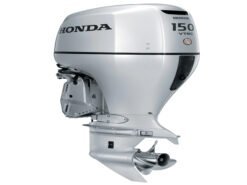
If you’ve been shopping for a mid-to-large four-stroke, chances are the Honda 150hp outboard has already landed on your shortlist. It’s one of those engines that mechanics recommend without hesitation, and once you understand why, the reasoning is pretty simple: Honda builds car engines for a living, and it shows. We stock the full BF150 lineup and ship it to customers around the world, so this guide walks through everything you actually need to know before you commit — specs, real-world performance, what it costs to run, and which variant fits your boat.
Why the Honda 150hp Outboard Keeps Showing Up on Repower Lists
Ask ten boat mechanics which 150-class four-stroke holds up best over a decade of saltwater use, and a good number of them will name the Honda 150hp outboard first. Part of that reputation comes from Honda’s automotive roots. The BF150 shares core engineering philosophy with Honda’s car engines: tight tolerances, VTEC variable valve timing, and a fuel-injection system tuned for smooth, predictable power delivery rather than raw peak numbers on a spec sheet.
That doesn’t mean it’s slow. The Honda 150hp outboard produces strong mid-range torque, which matters more than most buyers realize. A motor that’s quick off idle and pulls hard through the mid-range gets a loaded boat on plane faster and holds it there without hunting for revs. On a 20 to 24-foot center console or a mid-size pontoon, that translates to a noticeably better ride than the horsepower number alone would suggest.
Honda 150hp Outboard Specifications
Here’s the full spec sheet for the BF150 four-stroke, the engine behind every Honda 150hp outboard we carry:
- Engine type: 2.4L inline-4, SOHC, 4 valves per cylinder, VTEC
- Displacement: 2,354 cc
- Bore x stroke: 87mm x 99mm
- Compression ratio: 10.7:1
- Fuel delivery: Programmed Fuel Injection (PGM-FI), multi-point
- Full throttle RPM range: 5,000-6,000 rpm
- Starting system: Electric
- Gear ratio: 2.16:1
- Alternator output: 30A / 20A net
- Weight: Approximately 202-227 kg depending on shaft length and rigging (electric vs. mechanical steering, tiller vs. remote)
- Shaft lengths available: 20 in (L), 25 in (XL)
- Fuel tank: Remote mount, portable or built-in depending on boat setup
- Trim system: Power trim and tilt standard
- Lubrication: Wet sump, forced pressure with oil filter
- Recommended oil: Honda 10W-30 or 10W-40 four-stroke marine oil
Those numbers matter, but they only tell part of the story. What actually separates a Honda 150hp outboard from a generic 150hp four-stroke is how those components are put together and how they behave once you’ve had the motor for three or four seasons.

VTEC, PGM-FI, and BLAST: What’s Actually Under the Cowling
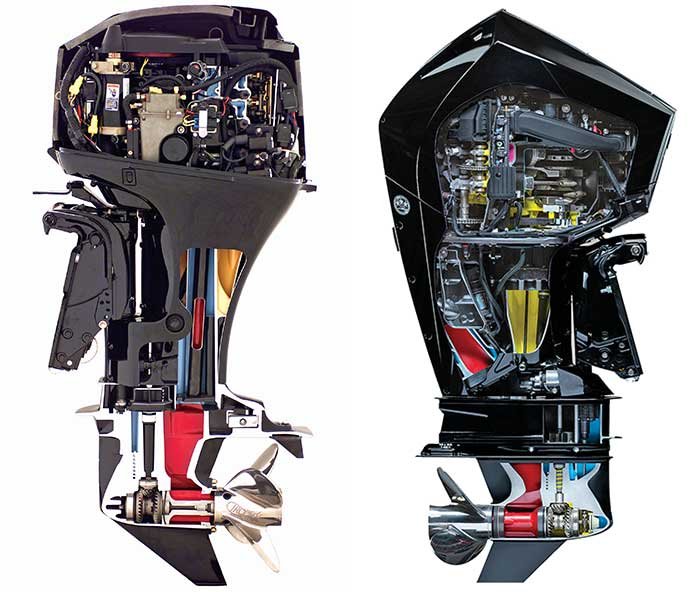
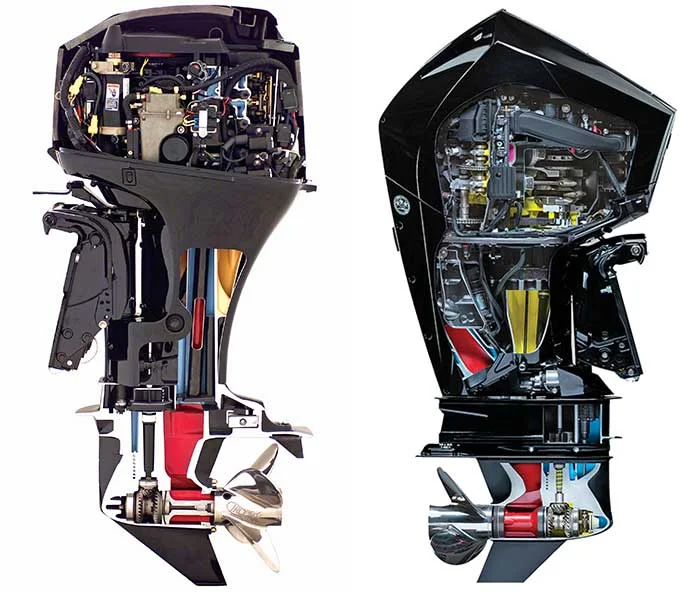
Honda borrowed VTEC (Variable valve Timing and lift Electronic Control) from its automotive division, and on the Honda 150hp outboard it does exactly what it does in a Civic Type R, just tuned for marine use. At lower RPM the valve timing is set for smooth, efficient cruising. Above roughly 4,300 rpm, the system switches to a more aggressive cam profile, opening the valves further and for longer to let the engine breathe and produce more top-end power. You won’t feel a hard “kick” the way you might expect — it’s a seamless-feeling handoff rather than a jolt, which is part of why owners describe this motor as smooth rather than punchy.
PGM-FI (Programmed Fuel Injection) is Honda’s multi-point injection system, and it’s the reason a Honda 150hp outboard tends to start on the first crank whether the boat’s been sitting for two days or two months. The ECU constantly reads intake air temperature, engine temperature, and throttle position to adjust the fuel mixture in real time, which also keeps emissions down and fuel consumption predictable.
Then there’s BLAST (Boosted Low Speed Torque), a feature Honda added specifically to the 150hp and other mid-range four-strokes to address a common complaint with four-stroke outboards in general: sluggish hole shot compared to older two-strokes. BLAST briefly enriches the fuel mixture and advances ignition timing the moment you go from idle to wide open throttle, giving the Honda 150hp outboard a noticeably quicker jump onto plane, especially with a loaded boat or when pulling a skier.
How It Performs on the Water
On paper, 150 horsepower is 150 horsepower. In practice, how an engine delivers that power matters just as much as the number itself. Owners running a Honda 150hp outboard on 21 to 23-foot bay boats and center consoles consistently report top speeds in the 45 to 52 mph range depending on hull design, prop selection, and load, with cruise-speed fuel burn that undercuts a lot of the competition in this class.
Where the motor really earns its reputation is in the mid-range. Because VTEC and BLAST are both working in the 2,500 to 4,500 rpm band where most boaters actually spend their time, the Honda 150hp outboard feels responsive without constantly demanding wide-open throttle. That’s the difference between an engine that feels like it’s working with you and one that feels like it’s always catching up.
Noise and vibration are also worth mentioning, because they’re part of the experience nobody puts on a spec sheet. The inline-4 configuration, combined with Honda’s engine mounts and a well-designed exhaust path, keeps the Honda 150hp outboard quieter at cruise than a lot of V6 competitors in the same horsepower class. If you spend long days on the water, that difference adds up.
Fuel Economy and Running Costs
Fuel burn depends heavily on hull, load, and how you run the boat, but as a general benchmark, a Honda 150hp outboard on a well-matched hull will typically burn somewhere around 8 to 12 gallons per hour at wide-open throttle and considerably less — often under 5 gallons per hour — at a comfortable cruise around 3,500 to 4,000 rpm. PGM-FI’s precise fuel metering is a big part of why this engine tends to sip fuel more conservatively than carbureted or less refined injection systems.
Maintenance costs are the other half of the running-cost equation, and this is where the Honda 150hp outboard tends to win people over long term. Standard service intervals call for an oil and filter change every 100 hours or annually, a valve clearance check at 24 months or 200 hours, and spark plug replacement around every 300 hours. None of this requires exotic parts. Honda outboards use largely the same filtration and service philosophy across their range, so parts availability is rarely an issue, even outside major boating markets.
Reliability and Warranty
Honda backs the BF150 with a True 5 warranty — five years of coverage with no hour restrictions for recreational use, which is longer than what a lot of competitors offer as standard. That length of coverage tells you something about how confident Honda is in the design. Corrosion protection is built in throughout, from anodes to coated internal components, which matters a great deal if you’re running in saltwater.
We’ve sold and shipped a lot of these engines, and the pattern we see with the Honda 150hp outboard is consistent: owners who stay on top of the basic service schedule get well past 2,000 hours without major issues. That’s not a marketing claim, that’s just what tends to happen with an engine this well-engineered when it’s maintained properly.
Which Boats Pair Well With a Honda 150hp Outboard
This engine sits in a sweet spot for a lot of hull types:
- Center console boats in the 20-24 foot range, especially those used for inshore and nearshore fishing
- Bay boats and flats boats where quick hole shot and quiet cruising both matter
- Pontoon and tritoon boats up to roughly 24-26 feet looking for genuine planing performance rather than a barely-adequate motor
- Aluminum fishing and utility boats where corrosion resistance and low vibration extend the life of the whole rig
- Repower projects replacing an aging two-stroke or a less reliable four-stroke, where owners want a straightforward bolt-up without re-engineering the transom
Before ordering, it’s worth double-checking your transom height against the shaft length options. Getting this wrong is the single most common mistake we see, and it’s an easy one to avoid with a five-minute measurement.
Choosing the Right Honda 150hp Outboard Variant
We currently carry several configurations of the BF150, and the right one depends on your rigging preferences and shaft length needs:
- Honda 150 HP BF150A2LA — 20 in shaft, mechanical remote control, a solid choice for standard transom heights
- Honda 150 HP BF150A2XA — 25 in shaft variant for taller transoms and offshore-oriented hulls
- Honda 150 HP BF150A2XCA — digital electronic throttle and shift for boats set up with modern DTS-compatible controls
- Honda 150 HP BF150AK2JA — tiller-oriented configuration for smaller, more manually operated setups
If you’re not sure which one matches your boat, send us your transom measurement and control setup and we’ll point you to the correct model before you order, not after.

Honda 150hp Outboard vs. Other Engines in the Same Class
Shoppers comparing a Honda 150hp outboard against the usual competitors — Yamaha’s F150, Suzuki’s DF150, Mercury’s 150 FourStroke — will find the horsepower numbers are close enough that spec sheets alone won’t settle the decision. Where the Honda tends to separate itself is in low-end drivability and long-term serviceability rather than outright top speed. The VTEC system gives it a broader useful power band, which shows up as easier throttle response when you’re maneuvering at the dock or idling through a no-wake zone, not just when you’re pinned at wide open throttle offshore.
Weight is roughly comparable across the class, with the Honda 150hp outboard sitting in the middle of the pack rather than being notably heavier or lighter. The real differentiator most repeat buyers mention is Honda’s automotive-grade fit and finish inside the powerhead. Fewer plastic components in high-heat areas, a well-sealed wiring harness, and a reputation among mechanics for fewer sensor-related nuisance faults over the first five years of ownership. None of that shows up on a spec comparison chart, but it’s exactly the kind of thing that determines whether an engine is still running strong at year eight or already needing major work.
Rigging and Installation Considerations
Getting a Honda 150hp outboard installed correctly starts well before the engine ever touches the transom. Shaft length is the first thing to nail down — too short and you’ll get ventilation and cavitation issues at speed, too long and you’re dragging extra lower unit through the water at low speeds, hurting both performance and fuel economy. Measure from the top of the transom straight down to the bottom of the hull at the point where the engine will mount, and match that to the 20 in or 25 in shaft options.
Prop selection is the second variable that makes or breaks how a Honda 150hp outboard actually performs once it’s on the water. The factory often ships a general-purpose prop that’s fine for average loads, but if you’re regularly running heavy, loading up gear and passengers, or towing, it’s worth discussing prop pitch with a rigger before your first outing rather than after you notice the engine isn’t reaching its rated RPM range at wide open throttle.
Electrical integration is usually straightforward. The BF150’s charging system is rated to keep pace with typical marine electronics loads — chartplotters, livewell pumps, trolling motor charging systems — but if you’re running a heavily accessorized center console, it’s worth having your rigger confirm your total amperage draw against the alternator’s net output before finalizing the build.
What Owners Actually Say After a Season or Two
We hear from a fair number of customers after their first full season running a Honda 150hp outboard, and the feedback is fairly consistent. Cold starts on humid mornings are painless, which matters more than people expect until they’ve dealt with an engine that doesn’t want to turn over. Idle quality stays smooth even after the engine’s been sitting for a few weeks between trips, something that isn’t universal across this horsepower class.
The most common piece of feedback, though, is about the mid-range punch from BLAST. Owners coming from an older four-stroke or a smaller-displacement 150 often comment that the hole shot feels noticeably stronger than the horsepower number alone would suggest, especially with a loaded boat. That’s the BLAST system doing its job, and it’s one of those features that’s hard to appreciate from a spec sheet but obvious the first time you’re running three passengers and gear off the line.
Financing, Bulk Orders, and Fleet Purchases
Beyond individual repower orders, we work with dealers, rental fleets, and commercial operators who buy multiple units of the Honda 150hp outboard at once. If you’re outfitting a fleet of rental boats or a charter operation, reach out directly and we’ll put together pricing based on volume, along with a shared shipping schedule to cut down freight costs per unit. We can also coordinate staggered delivery if you need engines to arrive across several months rather than all at once, which is common for operators replacing a fleet in phases rather than all in one go.
Ordering and Worldwide Shipping
We export the Honda 150hp outboard to customers across multiple continents, with export crating, freight documentation, and shipping handled on our end. Most orders move by sea freight in a reinforced wooden crate to protect the powerhead and lower unit during transit, with air freight available for customers who need the engine faster and are willing to cover the additional cost. Every unit ships with its factory paperwork, and we can also arrange rigging accessories — props, gauges, control cables — as part of the same shipment if that’s easier on your end.
If you’re comparing this engine against other options in the 150hp class, it’s worth reading Honda Marine’s own BF150 technical page for the manufacturer’s official specifications alongside what we’ve outlined here.
Emissions and Environmental Compliance
Four-stroke technology already puts the Honda 150hp outboard well ahead of older two-stroke engines on emissions, but Honda takes it further with PGM-FI’s precise air-fuel management and a catalytic converter built into the exhaust path on this model. The result is an engine that meets EPA and CARB 3-star emissions ratings in the US, along with the equivalent RCD requirements in the EU market, which matters if you’re planning to register and operate the boat across different jurisdictions. For customers in regions with stricter marina or lake-specific emissions rules, this is often the deciding factor over an older or less-regulated engine.
Beyond the compliance paperwork, lower emissions also mean less unburned fuel smell around the transom and cleaner-running exhaust at idle, which is a small but noticeable quality-of-life improvement if you spend a lot of time trolling or idling near other boats.
Common Questions About the Honda 150hp Outboard
How much does a Honda 150hp outboard weigh?
Depending on shaft length and control configuration, expect somewhere between 202 and 227 kg. The digital DTS models run slightly heavier than the mechanical versions due to the additional electronic components.
Is the Honda 150hp outboard saltwater safe?
Yes. It’s built with corrosion-resistant materials and anodes throughout, and it’s a common choice for coastal and offshore inshore use. Regular freshwater flushing after saltwater runs is still recommended, as with any outboard.
What’s the top speed I can expect?
It depends entirely on your hull, weight, and prop, but most 21-23 foot boats see 45-52 mph at wide-open throttle with a properly matched prop.
Can I run it on a boat currently fitted with a two-stroke?
In most cases yes, provided the transom height and rigging are compatible. We recommend confirming your current shaft length before ordering.
Does it come with a warranty when shipped internationally?
Yes, the True 5 warranty terms travel with the engine’s documentation, though local Honda Marine service network coverage varies by country, which is worth checking in advance.
Ready to Order
Whether you’re repowering an aging hull or specifying a new build, the Honda 150hp outboard is one of the more dependable choices you can make in this horsepower class. Browse our current stock of Honda 150 HP outboard motors, or get in touch with our team directly if you need help matching a variant to your boat before you buy. We also carry the wider Honda four-stroke lineup if 150hp isn’t quite the number you’re after, so feel free to ask what else is in stock. You can also browse our other outboard motor buying guides for comparisons across brands and horsepower ranges.
Posts Widget
- 1

- 2
- 3
- 4


S.H Continental Marine
USA HERALD MAGAZINE INC
Our team is dedicated to providing exceptional customer service.
Email: info@shcontinentalmarine.com
Choose S.H Continental Marine
for your outboard engine needs and enjoy superior quality, exceptional customer service, and unbeatable prices.
