
Marine Engine Maintenance: 6 Proven Habits That Add Years to an Engine
“Marine engine maintenance” gets thrown around as one general term, but it covers a few different worlds: outboards, sterndrives, and inboard diesels all have their own quirks. We sell and work on outboards day in and day out, so this guide leans on that experience, but the underlying principles of marine engine maintenance apply no matter what is bolted to your transom or sitting under the deck.
The short version: saltwater and fresh water are both harder on an engine than a road ever is on a car. Everything is fighting corrosion, vibration, and heat cycling at the same time, and a missed service interval shows up faster on the water than it does in a driveway. Here is what actually matters, in the order it tends to matter.
The Core of Marine Engine Maintenance
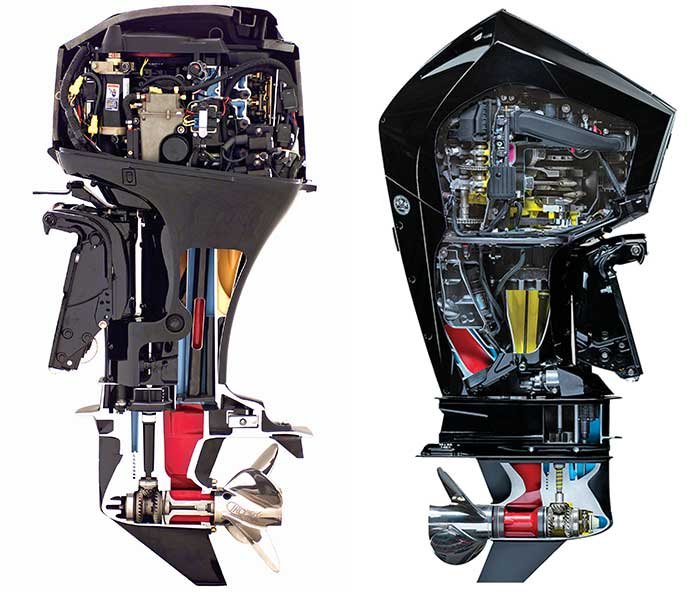
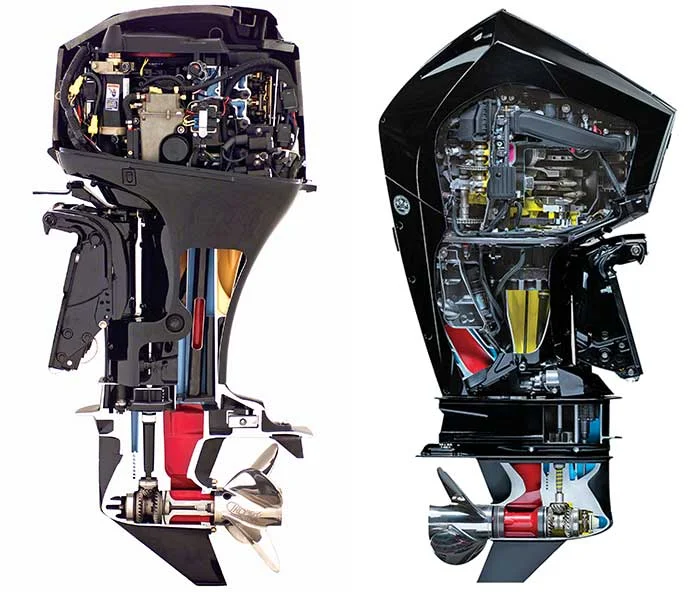
Strip away the brand-specific details and marine engine maintenance comes down to five systems that need regular attention:
- Cooling. Raw water intake, water pump impeller, and thermostat. This is the system most likely to cause catastrophic damage if it fails, since overheating warps heads and seizes pistons fast.
- Lubrication. Engine oil on four-strokes, fuel-oil mix on two-strokes, and gear oil in the lower unit or outdrive.
- Fuel delivery. Filters, fuel-water separators, and injectors or carburetors kept clean of ethanol residue and varnish.
- Corrosion protection. Anodes, bonding systems, and coatings that keep saltwater and even fresh water from eating aluminum and steel components.
- Ignition and electrical. Spark plugs, battery terminals, wiring connections that corrode from humidity even when the boat never touches saltwater.
Every maintenance schedule you will ever read is really just a calendar for those five systems. Learn those and the rest is detail.

A Season-by-Season Marine Engine Maintenance Schedule
| Season | Tasks |
|---|---|
| Spring commissioning | Change gear oil, check for water contamination, replace fuel filters, inspect anodes, top off battery, test compression if the boat sat all winter |
| Mid-season (every 50-100 hours) | Oil and filter change, grease fittings, check belt tension on larger engines, inspect prop for dings and fishing line |
| End of season | Fresh water flush, fuel stabilizer treatment, check and replace worn anodes before storage |
| Winterizing / lay-up | Fog the cylinders (two-stroke and carbureted models), drain or treat cooling water fully, change gear oil, disconnect and store the battery |
Owners who follow a schedule like this rarely see us for anything beyond routine parts. The ones who skip a season or two almost always show up with a cooling or corrosion problem that could have been caught early.
Specs That Drive the Maintenance Plan
The size and type of your engine changes how demanding marine engine maintenance actually is. Here is how it breaks down across the outboard range we carry, since that is where most recreational boaters land today compared to older inboard setups.
| Engine size | Cooling system | Typical service interval | Notes |
|---|---|---|---|
| 2.5-9.9 HP | Simple single water pump, small impeller | Annual or 50 hours | Cheapest and fastest to service, minimal downtime |
| 15-60 HP | Water pump plus thermostat | Annual or 100 hours | Add power trim fluid checks on most models |
| 70-150 HP | Dual water intake on some models | Annual or 100 hours | Higher oil volume, more thorough fuel system checks |
| 200-425 HP V6/V8 | High-volume cooling, dual thermostats on some engines | Annual or 100 hours, more frequent inspection | Multiple batteries, integrated hydraulic steering, higher parts cost per service |
A 60 HP outboard and a 425 HP V8 are both “marine engines” but the second one has roughly four times the maintenance surface area. Buyers often underestimate how much service cost scales with horsepower, which is something we walk through honestly before anyone signs off on a purchase.
Saltwater, Brackish, and Freshwater: Different Levels of Attack
Marine engine maintenance is not one-size-fits-all across water types. Saltwater is the harshest, attacking anodes, fasteners, and electrical connections fastest. Brackish water, common in tidal rivers and estuaries, is deceptively aggressive because the salinity fluctuates and owners often underestimate it. Freshwater is easiest on metal but still carries silt, weeds, and debris that wear impellers and can clog cooling passages, especially in shallow lakes and rivers.
Whatever you run in, the flush-after-every-trip habit matters. A five-minute flush with a set of muffs or a built-in flush port costs nothing and prevents the slow corrosion buildup that eventually shows up as a stuck thermostat or a leaking water pump housing.
Signs Your Marine Engine Needs Attention Now, Not Later
- Weak or no stream from the tell-tale (pee hole). This means reduced cooling flow, almost always an impeller or blocked passage.
- White or milky gear oil. Water has gotten into the lower unit or outdrive, usually through a worn seal, and needs immediate attention before it causes internal corrosion.
- Rough idle or hesitation. Often a fuel delivery issue, either a clogged filter or stale ethanol-blended fuel gumming up the system.
- Excessive smoke on two-stroke engines. Could mean the oil mix ratio is off, or worn rings are letting oil past.
- Corrosion around electrical connectors. A warning sign that moisture is getting into places it should not, which can cause intermittent no-start problems that are hard to diagnose later.
None of these are emergencies if caught early. All of them become expensive if ignored for a season.

Two-Stroke, Four-Stroke, and Diesel: Different Maintenance Personalities
Two-stroke outboards are mechanically simple and forgiving of neglect longer than you would think, but they run hotter internally and are less fuel-efficient. Their maintenance centers on keeping the oil mix correct and the exhaust ports clean.
Four-stroke outboards, which dominate the market now, run like a small car engine. Oil changes, filters, and valve clearance checks (on larger models, at longer intervals) are the core of their marine engine maintenance routine. They are quieter, cleaner burning, and generally last longer when serviced properly.
Diesel inboards and sterndrives are a different animal entirely, with heat exchangers, raw water pumps, and fuel systems that are far less tolerant of contaminated fuel. If you are running diesel, marine-specific fuel additives and regular fuel polishing matter more than they do on a gasoline outboard.
Building a Realistic Maintenance Budget
| Engine class | Approximate annual maintenance budget |
|---|---|
| Portable 2.5-9.9 HP | $80-$180 |
| Mid-range 15-60 HP | $200-$400 |
| 70-150 HP | $350-$600 |
| 200-425 HP | $600-$1,200+ |
These figures assume routine service, not repairs. Deferred marine engine maintenance almost always costs more later than it would have cost on schedule, because small problems (a weeping seal, a slightly worn impeller) turn into big ones (a flooded lower unit, an overheated powerhead) given enough time on the water.
Tools Worth Keeping in the Boat
- A basic socket set sized for your engine’s fasteners
- Spare fuses matched to your electrical panel
- A multimeter for quick electrical checks
- Dielectric grease for connectors exposed to moisture
- A printed or saved copy of your engine’s torque specs
None of this replaces a real toolbox at home, but it covers the small fixes that turn a ruined weekend into a ten-minute delay.
How Marine Engine Maintenance Affects Resale Value
Buyers pay a real premium for documented marine engine maintenance history. A logged, on-schedule service record routinely adds 10-20% to resale value compared to an identical engine with no paperwork, because it removes the biggest unknown in a used purchase: how the engine was actually treated. If you plan to sell in a few years, keep every receipt and note every service date, even the ones that feel too minor to matter.
DIY vs Professional Marine Engine Maintenance
Oil changes, spark plugs, greasing fittings, checking anodes, and flushing are all reasonable DIY jobs with basic tools and a service manual for your model. Impeller replacement, fuel injection diagnostics, and anything touching the powerhead are better left to a certified marine mechanic, since a mistake there tends to cost more than the labor would have.
A lot of our customers split the difference: routine checks themselves through the season, and one full professional service a year that covers the impeller, compression test, and anything starting to show wear. It is the most cost-effective approach we see in practice.
Why This Matters When You Are Buying an Engine
Marine engine maintenance history is one of the biggest factors in how long an engine lasts and what it is worth on resale. When we sell a motor, we can tell you honestly what kind of maintenance load to expect based on the horsepower and use case, not just recite a spec sheet. That is the advantage of buying from a dealer who also does the wrench work, rather than a pure marketplace listing with no service history behind it.
Our current stock spans everything from a 4 HP portable for a dinghy to a full 425 HP offshore V8, with plenty in between like the 30 HP and 70 HP ranges that suit most family and fishing boats. Every engine ships ready to run, and we are happy to talk through what its maintenance schedule will realistically look like before you buy.
Frequently Asked Questions
What is the single most important part of marine engine maintenance? Cooling system care, specifically the water pump impeller. More engines are destroyed by overheating than by any other single cause.
How is marine engine maintenance different from car engine maintenance? Marine engines fight corrosion constantly, run at higher relative loads for longer periods, and rely on external water for cooling instead of a sealed radiator system, which makes the cooling and corrosion-protection systems far more critical.
Does a boat that sits unused still need maintenance? Yes. Fuel degrades, gear oil can absorb moisture, and anodes keep corroding even when the engine never runs, so an annual service is still necessary regardless of hours.
Is it worth paying for a full annual service instead of doing everything yourself? For most owners, yes, at least once a year, because a professional catches early-stage wear (a slightly loose fitting, a starting-to-crack impeller vane) that is easy to miss without experience.
For sourcing guidance and technical standards behind engine cooling, corrosion protection, and fuel systems, the National Marine Manufacturers Association (nmma.org) and BoatUS Foundation (boatus.org) both publish detailed, non-brand-specific resources worth reading.
If your engine is past routine maintenance and into repair territory, our outboard engine repair guide covers what typically breaks and what it costs to fix. And if you are ready to shop, browse our full lineup of marine outboard engines for sale, shipped worldwide.
Posts Widget
- 1

- 2

- 3
- 4


S.H Continental Marine
USA HERALD MAGAZINE INC
Our team is dedicated to providing exceptional customer service.
Email: info@shcontinentalmarine.com
Choose S.H Continental Marine
for your outboard engine needs and enjoy superior quality, exceptional customer service, and unbeatable prices.
