
Mercury 200hp Outboard: Pro XS vs Verado Specs and Buying Guide

When someone asks us for a serious offshore or bass-boat repower and mentions they want real top-end speed without giving up reliability, the Mercury 200hp outboard is usually the first thing we bring up. It’s the horsepower point where Mercury’s Pro XS and Verado lines both offer a 200hp option, which means you actually get to pick between two very different engineering approaches depending on what you want the boat to do. We stock several 200hp Mercury configurations and ship them worldwide, so here’s the full rundown — specs, real differences between the variants, what it costs to run, and how to pick the right one.
Two Different Engines, One Horsepower Number
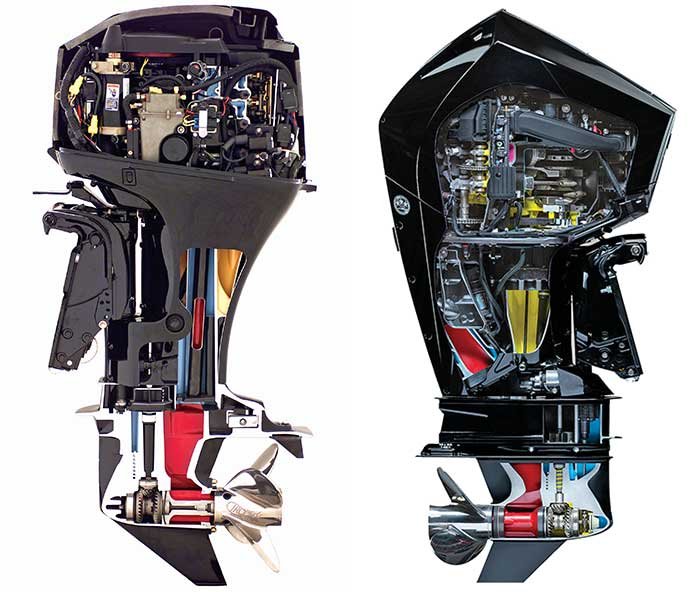
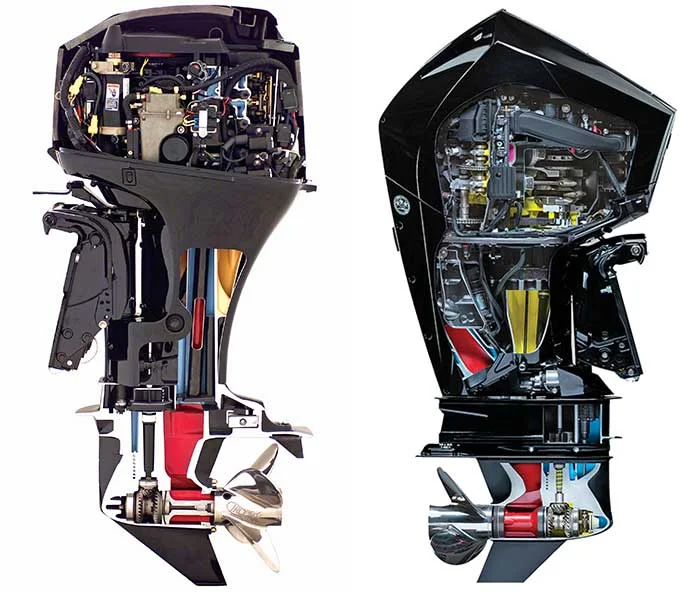
This is the part that trips up a lot of buyers. “Mercury 200hp outboard” isn’t one engine, it’s a horsepower rating that two completely different engine families hit. The Pro XS 200 is a naturally aspirated 4.6L V8 tuned for acceleration and top speed, built for anglers and tournament boats where hole shot and WOT numbers matter. The Verado 200 is a supercharged inline-6, built more around smooth, refined power delivery and a quieter ride, closer to what you’d want on a family runabout or a pontoon. Both are excellent engines. They’re just built for different priorities, and figuring out which one matches your boat and how you actually use it should happen before you place an order, not after.
Mercury 200hp Outboard Specifications (Pro XS V8)
Here’s the core spec sheet for the Pro XS version of the Mercury 200hp outboard, the configuration most of our customers end up ordering:
- Engine type: 4.6L V8, DOHC, 32-valve
- Displacement: 4.6L (279 cid)
- Full throttle RPM range: 5,600-6,200 rpm
- Fuel system: Electronic Fuel Injection with Advanced Range Optimization (ARO)
- Ignition: SmartCraft PCM 112 with Transient Spark
- Alternator output: 85 amp with Idle Charge
- Gearcase: TorqueMaster, 1.75:1 ratio, 1.25-inch prop shaft
- Steering: Hydraulic power steering
- Starting system: Electric
- Weight: Approximately 229-232 kg (505-511 lb) dry, depending on shaft length and gearcase
- Shaft lengths: 20 in (L) and 25 in (XL)
- Recommended fuel: 87 octane (R+M/2) minimum, up to 10% ethanol
- Compatibility: Full SmartCraft integration for digital gauges and engine monitoring
What separates this from a lot of other 200hp four-strokes is the combination of a genuine V8 with a fairly light dry weight. Mercury shaved weight out of the Pro XS block specifically to keep the power-to-weight ratio favorable, and it shows in how quickly this Mercury 200hp outboard gets a loaded boat out of the hole compared to inline-6 competitors in the same class.
Transient Spark, ARO, and Adaptive Speed Control
Three features do most of the heavy lifting on the Pro XS version of this engine. Transient Spark Technology electronically adjusts ignition timing on the fly, which produces additional torque right when you need it most: hole shot and hard acceleration out of a turn. It’s not something you consciously feel as a separate event, it just shows up as the boat jumping onto plane noticeably faster than the horsepower number alone would predict.
Advanced Range Optimization (ARO) works in the opposite direction, quietly leaning out the fuel mixture at cruise speeds to stretch range without the operator having to do anything or even notice it happening. Between Transient Spark handling acceleration and ARO handling cruise efficiency, the Mercury 200hp outboard manages to be both quick off the line and reasonably efficient at a steady cruise, which isn’t always an easy combination to get right in a naturally aspirated V8.
Adaptive Speed Control is the third piece, and it’s genuinely useful rather than just a marketing checkbox. It holds a set RPM automatically regardless of load changes, sea conditions, or current, without the operator touching the throttle. Trolling near structure, running through chop, or holding a set speed for someone fighting a fish are all situations where this quietly does real work.
How the Pro XS 200 Performs on the Water
This is where the Mercury 200hp outboard earns its reputation. On a well-matched 22 to 26-foot center console or bay boat, expect wide-open-throttle speeds in the 60 to 68 mph range, sometimes higher on a light, purpose-built bass boat with a stepped hull. Hole shot is genuinely aggressive for a naturally aspirated engine in this class, largely thanks to Transient Spark and the favorable power-to-weight ratio from the lightweight V8 block.
The exhaust note is tuned to be aggressive without becoming fatiguing over a full day on the water, which matters more than people expect until they’ve spent eight hours next to an engine that drones. Mercury calls this Performance-Tuned Exhaust, and in practice it means the Mercury 200hp outboard sounds purposeful at wide open throttle and settles down noticeably at cruise.
The Verado Alternative: 200XL Verado
If your priority leans more toward smoothness, quiet cruising, and a slightly more refined ride than outright acceleration, the Verado version of the Mercury 200hp outboard is worth a serious look. It’s a supercharged inline-6, which delivers power in a noticeably different way than the V8, more linear and less peaky, with excellent low-RPM torque thanks to the supercharger rather than relying purely on displacement. Verado engines also run quieter at idle and low cruise, which owners of pontoons, tritoons, and family-oriented center consoles consistently mention as the deciding factor over the Pro XS.
We stock the Mercury 200XL Verado alongside the Pro XS variants, and if you’re not sure which powerhead philosophy fits your boat, tell us how you actually use it and we’ll point you toward the right one.
Fuel Economy and Running Costs
Fuel burn on a Mercury 200hp outboard depends heavily on hull design and how hard you run it, but as a general reference point, expect somewhere around 16 to 20 gallons per hour at wide-open throttle on the Pro XS V8, dropping to roughly 6 to 9 gallons per hour at a comfortable cruise in the 3,500 to 4,000 rpm range where ARO is doing its job. The Verado tends to run slightly more conservative at cruise due to its different combustion characteristics, though WOT consumption is broadly comparable between the two.
On the maintenance side, both variants follow a similar service schedule: oil and filter changes every 100 hours or annually, water pump impeller inspection around 300 hours or three years, and spark plug replacement on a similar interval. Parts commonality across the Mercury FourStroke and Pro XS range keeps this straightforward even for customers outside major Mercury dealer networks, since a lot of consumables are shared across the broader engine family.
Which Boats Pair Well With a Mercury 200hp Outboard
- Center console boats in the 22-26 foot range built for offshore or nearshore work
- Bass boats and bay boats where hole shot and top speed genuinely matter for tournament performance
- Pontoon and tritoon boats up to roughly 28 feet, particularly well suited to the Verado variant
- Repower projects moving up from a smaller engine on a hull rated for 200hp, where the extra power noticeably changes the boat’s capability
- Dual-console and walkaround boats where reliability and range matter as much as speed
As always, confirm your boat’s rated horsepower and transom height before ordering. Running a 200hp engine on a hull not rated for it is a safety issue, not just a performance question.
Choosing the Right Mercury 200hp Outboard Variant
We currently stock the following configurations:
- Mercury 200XL Pro XS — 25 in shaft, mechanical control, the standard choice for most repower and new-build orders
- Mercury 200XL Pro XS DTS — digital throttle and shift for boats rigged with modern SmartCraft-compatible controls
- Mercury 200L Pro XS TorqueMaster — 20 in shaft with the TorqueMaster gearcase for boats needing the shorter shaft length
- Mercury 200XL Verado — supercharged inline-6 for a smoother, quieter power delivery
If you’re torn between Pro XS and Verado, send us details on your hull, typical passenger load, and how you use the boat, and we’ll give you a straight answer rather than just upselling whichever one happens to be in stock that week.

Rigging Considerations
Shaft length is non-negotiable to get right on a Mercury 200hp outboard given how much power and torque this engine puts through the transom. Measure from the top of the transom to the bottom of the hull at the mounting point and match it to the 20 in or 25 in option rather than guessing. Prop selection also matters more here than on smaller engines — the difference between a well-matched prop and an off-the-shelf default can be several hundred RPM at wide open throttle, which directly affects both top speed and how hard the engine works to get there.
If you’re going with the DTS digital throttle and shift version, confirm your boat’s control head and SmartCraft gauge compatibility before ordering, since retrofitting digital controls onto a boat wired for mechanical cables is a bigger job than most people expect.
Reliability and Warranty
Mercury backs the 200hp range with its standard limited warranty, and both the Pro XS and Verado lines have a long track record in commercial and tournament use, environments that put far more hours and abuse on an engine than typical recreational use ever will. The lightweight V8 architecture on the Pro XS has been refined over multiple generations at this point, and the supercharged Verado platform has similarly matured into one of the more trusted options in its class for owners prioritizing smoothness and longevity over outright speed.
Mercury 200hp Outboard vs. Other Engines in This Class
Against Yamaha’s F200 and Suzuki’s DF200, the Mercury 200hp outboard holds its own on paper and tends to separate itself in two areas: the Pro XS variant’s power-to-weight ratio and Mercury’s SmartCraft ecosystem, which integrates cleanly with digital gauges, Adaptive Speed Control, and (on DTS models) joystick piloting systems if you add them down the line. Yamaha’s F200 is a strong, proven engine in its own right and tends to win on straightforward long-term reliability data simply because it’s been in the field longer with less variation across trim levels. Suzuki’s DF200 leans toward smooth, quiet operation similar to what Mercury’s Verado targets, so the real three-way comparison usually comes down to Pro XS versus Verado versus DF200 rather than brand versus brand.
What tends to tip buyers toward the Mercury 200hp outboard specifically is the flexibility of having two genuinely different engine architectures under one horsepower rating. Very few manufacturers let you choose between a performance-tuned V8 and a refined supercharged inline-6 at the same power output, and that choice matters more than most spec-sheet comparisons once you actually start using the boat.
What Owners Notice After a Season
Feedback we hear back from Pro XS owners after their first season centers almost entirely on hole shot and midrange pull — loaded boats coming onto plane faster than expected, and the engine staying responsive through the midrange rather than needing to be pinned at WOT to feel strong. Verado owners talk more about cabin conversation levels at cruise and how little vibration transmits back through the helm, which lines up with what the engine is actually built to prioritize.
One thing both groups mention: Adaptive Speed Control gets used far more than they expected going in. Trolling for bait, holding position near a reef, or running a consistent speed while someone’s fighting a fish are all situations where not having to babysit the throttle turns out to matter a lot more in practice than it sounds like on a features list.
Emissions and Environmental Compliance
Both the Pro XS and Verado versions of the Mercury 200hp outboard meet EPA and CARB 3-star emissions standards in the US, along with equivalent RCD compliance for the EU market. ARO’s precise fuel metering on the Pro XS and the inherently efficient combustion characteristics of the supercharged Verado both contribute to this, and it’s worth checking if you’re planning to register and operate the boat in a region with stricter marina-level emissions rules, which is increasingly common in parts of Europe and Australia.
Financing, Bulk Orders, and Fleet Purchases
We work with dealers, charter operations, and rental fleets ordering multiple units of the Mercury 200hp outboard at once, whether that’s a mix of Pro XS and Verado configurations or a single standardized spec across an entire fleet. Volume orders get consolidated freight pricing, and we can coordinate staggered delivery schedules if you’re replacing a fleet in phases rather than all at once. Reach out directly with your fleet size and timeline and we’ll put together a quote that reflects actual volume pricing rather than a generic markup.
Common Questions About the Mercury 200hp Outboard
What’s the difference between Pro XS and Verado at 200hp?
Pro XS is a naturally aspirated V8 tuned for acceleration and top speed. Verado is a supercharged inline-6 tuned for smoothness and quiet cruising. Both make 200hp, they just get there differently.
How much does a Mercury 200hp outboard weigh?
The Pro XS V8 runs around 229 to 232 kg dry depending on configuration. The Verado inline-6 weighs somewhat more due to the supercharger and additional components.
What top speed can I expect?
On a well-matched 22 to 26 foot hull, 60 to 68 mph at wide open throttle is a realistic range for the Pro XS, with the Verado typically running slightly behind that in pure top-end numbers but ahead on refinement.
Can I run 87 octane fuel?
Yes, both variants of the Mercury 200hp outboard are rated for 87 octane minimum, with up to 10% ethanol content acceptable.
Do you ship the Mercury 200hp outboard internationally?
Yes, we export both Pro XS and Verado configurations worldwide, with sea freight and air freight options depending on your timeline.
Ordering and Worldwide Shipping
We ship the Mercury 200hp outboard to customers across multiple continents, with export crating and full freight documentation handled on our end. Most orders go by sea freight in a reinforced crate, with air freight available if you need the engine faster. If you want to compare the Pro XS spec sheet against Mercury’s own published data, their official Pro XS 175-300hp page covers the full range this 200hp variant belongs to.
Ready to Order
Whether you’re chasing tournament-level acceleration or a smoother, quieter ride for the family, the Mercury 200hp outboard covers both ends of that spectrum depending on which variant you choose. Browse our current stock of Mercury 200hp outboard motors, or reach out directly and we’ll help you land on the right configuration for your boat before you order. Check our other outboard motor buying guides if you’re still weighing this against other horsepower ranges or brands.
Posts Widget
- 1

- 2

- 3
- 4


S.H Continental Marine
USA HERALD MAGAZINE INC
Our team is dedicated to providing exceptional customer service.
Email: info@shcontinentalmarine.com
Choose S.H Continental Marine
for your outboard engine needs and enjoy superior quality, exceptional customer service, and unbeatable prices.
