
Mercury Verado Outboard Motors: Specs, Prices & Worldwide Shipping

If you have shopped for a big four-stroke outboard in the last fifteen years, you have run into the name Verado. It is Mercury’s supercharged, high-horsepower line, and it has a reputation for being quiet, smooth, and strong enough to push heavy center consoles and offshore boats without straining. We keep Mercury Verado outboard motors for sale across the horsepower range, from 175 up through the big 350 and 400 blocks, and this guide walks through what the line actually offers, what the numbers mean, and which units we have ready to ship.
We are not a Mercury dealership reading from a brochure. We buy, grade, and resell real used and reconditioned marine engines every week, Verado included, and we crate and ship them worldwide. So this is written the way we’d explain it to someone standing in our warehouse asking which engine on the shelf actually fits their boat.
In this guide:
What Makes a Verado Different From a Standard Mercury Four-Stroke
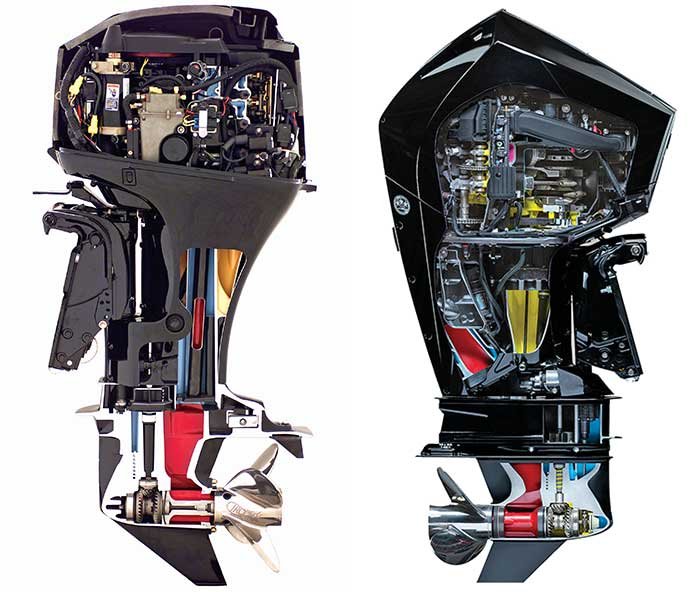
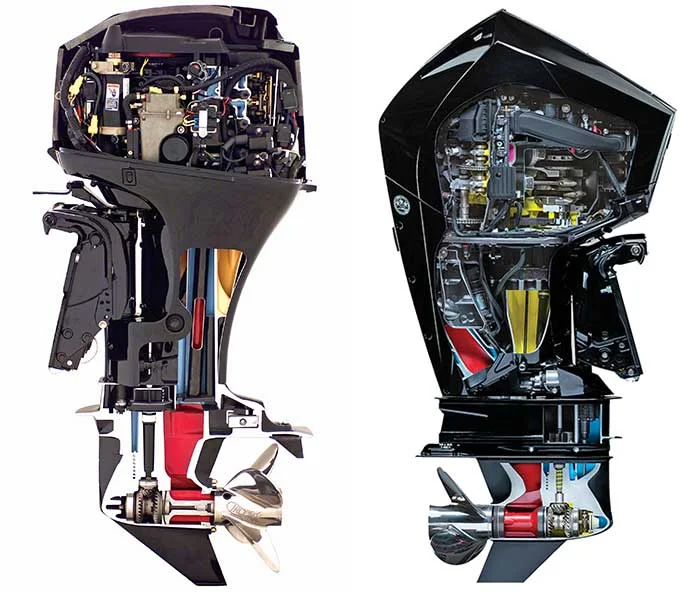
Mercury builds two families of big four-stroke outboards: the naturally aspirated Pro XS and FourStroke line, and the Verado line, which is supercharged. The supercharger is the whole story here, built on the same forced-induction principle Mercury documents on its own Verado product line page. It lets Mercury pull big horsepower numbers out of a smaller displacement block by forcing more air into the cylinders instead of relying purely on engine size, which is why a Verado 350 is noticeably lighter and quieter at idle than you’d expect for that kind of power.
The other thing that sets Verado apart is the top cowl and sound-dampening. Mercury built the Verado around a two-piece cowl with extra insulation, so at idle and cruise it runs quieter than most competing V8 outboards. Offshore anglers and center console owners who spend hours a day behind the engine notice this immediately. It is not a marketing line, it is just physically a quieter engine because of how the cowl and mounting are engineered.
Verado models also share a common architecture across a wide horsepower spread. The inline six-cylinder block covers 175 through 300 horsepower depending on tune, while the V8 and V10 Verado blocks cover 350 up to 400 horsepower. That shared platform is part of why parts and service knowledge transfer well across the lineup, which matters if you are buying a used unit and want to know parts will still be available in five years.
Verado Specs by Horsepower
Here is a straightforward breakdown of the Verado range as Mercury has built it. Actual weight and gear ratio vary slightly by shaft length and rigging option (mechanical, digital throttle and shift, or joystick-ready), so treat these as the baseline you should confirm against the specific unit before you buy.
| Model | Configuration | Displacement | Approx. Weight | Typical Gear Ratio |
|---|---|---|---|---|
| Verado 175-225 | Inline 6, supercharged | 2.6L | 490-520 lbs | 1.75:1 |
| Verado 250-300 | Inline 6, supercharged | 2.6L | 530-560 lbs | 1.75:1 |
| Verado 350 | V8, supercharged | 4.6L | 635-670 lbs | 1.85:1 |
| Verado 400 | V10, supercharged | 5.7L | 730-770 lbs | 1.85:1 |
Notice the jump from the inline-six block to the V8 and V10 blocks around the 350 mark. That is not just a horsepower bump, it is a different engine architecture entirely, with a wider mounting footprint and a heavier transom load. If you are repowering a boat that currently runs a 250 or 300, moving to a 350 is a real structural question, not just a bolt-on swap, and we always tell buyers to check transom rating before committing to that jump.
Fuel system across the current Verado line is direct or port fuel injection depending on model year, and all of them run on 87 octane minimum, though Mercury recommends premium for the 350 and 400 under sustained heavy load. Alternator output scales with horsepower too, running from around 60 amps on the smaller inline-six units up to 115 amps on the V10, which matters if you are running a lot of electronics or a trolling motor charging system off the main engine.
Verado Models We Have In Stock
Stock turns over regularly since these are used and reconditioned units, but here is a sample of what we typically carry. Each listing has the actual hours, compression numbers, and cosmetic condition, not a generic stock photo description.
In the 250 horsepower range we regularly have the Mercury Verado 250HP CXL, the Verado 250HP XL, and the 250HP CXXL for boats with a taller transom. Moving up, we stock the Verado 300HP CXL, the 300HP XL, and both white and standard cowl options across shaft lengths.
For buyers who want the V8 platform, we carry the Verado 350HP CXL, the 350HP XL, and the heavier-duty 350XL Verado FourStroke along with the 350XXL Verado HD for extra long shaft applications. If you’re building or rebuilding a twin rig, we can match hours and serial ranges across two units so both engines wear evenly, which we cover in more depth in our guide on twin outboard motor setups.
Every Verado we sell gets a compression test, a lower unit oil check for water intrusion, and a full visual inspection of the powerhead, mounting bracket, and cowl before it goes up for sale. We list the actual hour meter reading on every listing, not a rounded estimate.
DTS Controls vs Mechanical Rigging
One decision that trips up a lot of buyers new to Verado is throttle and shift control. Mercury builds Verado in both mechanical (cable-actuated) and DTS, which stands for Digital Throttle and Shift. DTS uses electronic controls instead of physical cables running to the engine, and it is what makes joystick docking control and Skyhook GPS-based station keeping possible on twin and triple installs.
Mechanical Verado units are simpler, cheaper to service since there is no control module to diagnose, and a safer bet if you are repowering an older boat that already has mechanical rigging in place, since swapping to DTS means rerunning the whole control system. DTS units cost more up front, both new and used, but they are the only option if you want joystick maneuvering or if you are matching an existing DTS-rigged twin setup. When you’re comparing listings, always confirm which control type you’re looking at before you buy, since the rigging is not interchangeable without significant extra cost.
Buying a Used Verado vs a New One
A new Verado 300 from an authorized dealer runs well into five figures before rigging, tax, and installation. A used or reconditioned unit from our stock typically comes in at a fraction of that, and the gap only gets wider as horsepower climbs into the 350 and 400 range. The tradeoff is obvious: you give up factory warranty length in exchange for a much lower purchase price, and the real question is whether the specific engine you’re buying has enough good life left in it to make that trade worthwhile.
This is where hour count and maintenance history matter more than model year. A 2019 Verado 300 with 180 hours and documented oil changes is a better buy than a 2021 model with 600 hours and an unknown service record. Supercharged engines in particular reward regular oil changes since the supercharger bearing and clutch depend on clean oil pressure, so when we grade a used Verado we look specifically at oil condition and any metal in the filter before we list it.
We back every used Verado outboard motor we sell with a tested-and-verified condition report, and we are upfront in every listing about hours, compression numbers across all cylinders, and any cosmetic wear on the cowl or lower unit. If a unit has a known issue, we say so and price it accordingly rather than passing a problem down the line.
Matching a Verado to Your Boat
Horsepower rating on your boat’s capacity plate is a hard ceiling, not a suggestion. It is set by the hull manufacturer under the standards the U.S. Coast Guard publishes for maximum boat capacities, based on the transom and hull design, so the first check before buying any Verado is confirming your boat’s rated max horsepower. Beyond the legal ceiling, there is a practical sweet spot: most center consoles in the 24 to 28 foot range run best on a single Verado 300 or 350, or twin 250s, depending on how the boat is loaded and how much top end speed matters to the owner.
Transom height is the next thing to check. Verado is built in 20-inch (standard), 25-inch (XL), and 30-inch (XXL/XXXL) shaft lengths, and running the wrong shaft length causes cavitation, ventilation, and steering problems even on an otherwise perfectly good engine. We list shaft length clearly on every Verado listing, but if you are unsure what your boat needs, measure from the top of the transom straight down to the bottom of the hull at the centerline, and match that to the shaft length chart before you order.
Weight is worth a second look too, especially if you’re moving from a naturally aspirated engine to a Verado, or between Verado horsepower classes. A jump from a 300 to a 350 adds roughly 100 to 130 pounds at the stern, which is enough to change how a boat sits at rest and how it handles a following sea, so factor that into the decision rather than just chasing the horsepower number.
Worldwide Shipping and Crating
We ship Mercury Verado outboard motors worldwide, and every engine leaves our warehouse fully crated on a wooden pallet with the powerhead braced and the lower unit protected against impact. We handle export documentation, and we can ship by air freight for buyers who need an engine fast, or by ocean freight in a shared or full container for buyers moving multiple units at once, which is common with dealers and fleet operators restocking several engines in one shipment.
Because Verado units run from roughly 500 pounds on the smaller inline-six models up to nearly 800 pounds on a V10 400, crate dimensions and freight cost scale with horsepower. We quote actual shipping cost to your port or address before you commit to a purchase, not a flat estimate, so you know the landed cost up front rather than getting surprised at customs.
Keeping a Verado Running Long Term
Supercharged engines are not more fragile than naturally aspirated ones, but they are less forgiving of skipped maintenance. Mercury’s recommended service interval for the supercharger drive belt and internal components is typically every 300 hours or three years, whichever comes first, and skipping that interval is the single most common reason we see a used Verado come in with supercharger noise or reduced boost.
Oil changes should happen every 100 hours or annually. Mercury specifies a full synthetic marine oil for Verado, and using anything below spec is a fast way to shorten supercharger clutch and bearing life. Beyond that, the maintenance list is standard four-stroke outboard care: water pump impeller replacement every one to two years or 300 hours, fuel-water separator checks, and annual gearcase oil changes with a check for water intrusion at the drain plug.
Corrosion protection matters more on Verado than on many competing engines because of the aluminum supercharger housing, so if the engine runs in saltwater, flushing after every use and checking anodes regularly protects a genuinely expensive component from a slow, preventable failure.
What Drives the Price on a Used Verado
Every batch of Mercury Verado outboard motors for sale on our site is priced differently, and hours are the biggest factor by far. A low-hour unit under 200 hours commands a real premium over an otherwise identical engine with 500-plus hours, even if both pass compression testing, simply because remaining service life is longer and resale value holds up better down the road.
Model year and horsepower are the next biggest factors. A 350 or 400 costs more than a 250 or 300 in comparable condition, both because the V8 and V10 blocks are more expensive to build and because demand for the top of the range stays strong among offshore and tournament buyers. Shaft length and cowl color (white cowls typically carry a small premium over standard black) move price slightly, and DTS-controlled units cost more than mechanical units of the same horsepower because of the added electronics and the joystick-docking capability they unlock.
Cosmetic condition affects price too, but less than most buyers expect. A Verado with a scratched cowl and clean internals is a better buy, and usually cheaper, than a glossy-looking engine with unknown maintenance history. We price based on what actually matters to how long the engine will run, not how it photographs, and every listing spells out exactly why a unit is priced where it is.
Where a Verado Actually Earns Its Keep
Offshore center consoles are the most common home for Verado power, particularly in the 300 to 400 horsepower range on twin or triple installs, where the quiet running and smooth power delivery matter over long runs to the canyon or the reef. Charter captains running six-hour trips with paying customers on board notice the lower cabin noise immediately compared to a naturally aspirated V8 competitor at the same horsepower.
Pontoon and tritoon owners often run a single Verado 250 or 300 for boats used for watersports and family cruising, where the quiet idle matters for a boat that spends a lot of time at low speed near swimmers and other traffic. We’ve shipped plenty of Verado units for exactly this application, since the smooth low-end torque makes pulling a tube or wakeboarder noticeably less jarring than a high-revving smaller engine working hard to do the same job.
Commercial and government buyers, from dive operators to patrol boats, gravitate toward Verado for a different reason: duty cycle. These engines are built to run for hours at a stretch under sustained load, and the supercharger design keeps power consistent rather than tapering off in the way some naturally aspirated engines do when pushed hard for extended periods. If that’s your use case, we can help match hour count and service history to that kind of demanding schedule rather than just selling on horsepower alone.
FAQs
What horsepower range does the Verado line cover?
Current and recent Verado models span 175 to 400 horsepower, built on either an inline-six block (175 to 300hp) or a V8/V10 block (350 to 400hp).
Is a used Verado a reliable buy?
Yes, provided the maintenance history is documented and the supercharger service interval has been followed. Hour count and oil condition matter far more than model year alone.
Can I run a Verado on a boat rigged for a mechanical, cable-controlled engine?
Yes, as long as you buy a mechanical Verado rather than a DTS unit. DTS requires electronic rigging that is not compatible with cable-based control systems without a full rerig.
What shaft length do I need?
Measure from the top center of your transom straight down to the bottom of the hull. Match that measurement to 20-inch, 25-inch, or 30-inch shaft options; running the wrong length causes cavitation and handling problems.
Do you ship Verado outboard motors internationally?
Yes, we crate and ship worldwide by air or ocean freight, and we quote landed shipping cost to your destination before you buy.
How much does a used Verado cost compared to new?
Pricing varies by hours, horsepower, and control type, but used and reconditioned units from our stock typically run well below new dealer pricing for the same horsepower, often by a significant margin once you factor in dealer rigging and installation fees.
Will a Verado fit any boat rated for its horsepower?
Horsepower rating is only part of the equation. Shaft length, transom strength, and control type (mechanical vs DTS) all need to match your boat, so always confirm those three details before ordering, not just the horsepower number on the capacity plate.
We keep a rotating stock of Mercury Verado outboard motors for sale, from 175hp inline-six units to 400hp V10s, each one graded, compression tested, and listed with real hours and honest condition notes. If you know which Verado horsepower and shaft length fits your boat, browse our current stock or reach out with your boat’s make, model, and transom height, and we’ll point you to the right unit and give you a shipping quote the same day, wherever in the world you’re located.
Posts Widget
- 1

- 2

- 3
- 4


S.H Continental Marine
USA HERALD MAGAZINE INC
Our team is dedicated to providing exceptional customer service.
Email: info@shcontinentalmarine.com
Choose S.H Continental Marine
for your outboard engine needs and enjoy superior quality, exceptional customer service, and unbeatable prices.
