
How to Flush a Yamaha Outboard Motor
How to Flush a Yamaha Outboard Motor
Anybody who owns a Yamaha outboard long enough eventually learns one thing pretty quickly.
Saltwater destroys marine engines when maintenance gets ignored.
Even freshwater boating leaves behind dirt, sand, algae, and debris inside the cooling system over time.
That is why so many boat owners search for How to Flush a Yamaha Outboard Motor after every trip or before storing their boats.
And honestly, they should.
Flushing a Yamaha outboard is one of the simplest things a boat owner can do to help extend engine life and avoid expensive repair bills later.
A lot of marine engine problems start small.
Restricted cooling passages.
Salt buildup.
Corrosion inside the water jackets.
Overheating issues.
Water pump strain.
Then one day the engine temperature climbs too high and the repair bill becomes painful.
This guide about How to Flush a Yamaha Outboard Motor was written for real boat owners who want practical information without complicated mechanical language.
We supply Yamaha outboard engines for buyers worldwide. Whether you need a replacement Yamaha motor, a low-hour fishing boat engine, a four-stroke offshore setup, or a complete outboard assembly, we help buyers source dependable marine engines with worldwide shipping support.
The goal stays simple.
Good engines. Honest information. Reliable marine equipment. No unnecessary sales talk.
Why Buyers Search for How to Flush a Yamaha Outboard Motor
Most people searching for How to Flush a Yamaha Outboard Motor fall into one of two groups.
The first group wants to protect their current engine properly.
The second group already experienced overheating or corrosion problems and does not want that happening again.
Marine engines operate in harsh conditions.
Saltwater especially becomes brutal on internal cooling passages when engines are not cleaned regularly.
That is why flushing matters so much.
Proper flushing helps reduce:
- Salt buildup
- Corrosion
- Cooling blockages
- Overheating risk
- Water pump strain
- Internal debris accumulation
Ignoring basic flushing maintenance usually creates bigger repair costs later.
Why Yamaha Outboards Need Regular Flushing
A lot of people assume Yamaha outboards are tough enough to survive without regular maintenance.
Yamaha engines are reliable, but no marine engine is immune to corrosion and buildup.
Every boating trip pushes water through the engine’s cooling system.
That water may contain:
- Salt
- Sand
- Mud
- Minerals
- Debris
- Organic material
If those contaminants remain inside the cooling passages, they slowly create problems over time.
That is why buyers searching for How to Flush a Yamaha Outboard Motor are usually trying to prevent long-term engine damage before it starts.
Our Yamaha Outboard Engine Supply
We supply Yamaha outboard motors for buyers worldwide.
Some customers are replacing older marine engines.
Others are repowering fishing boats or offshore vessels.
Some buyers are commercial operators replacing high-hour engines.
We help buyers source:
- Used Yamaha outboards
- Low-hour Yamaha motors
- Four-stroke marine engines
- Offshore Yamaha setups
- Replacement outboard motors
- Twin-engine configurations
Availability changes depending on inventory and market demand.
How to Flush a Yamaha Outboard Motor Properly
Flushing a Yamaha outboard is not complicated, but it should still be done correctly.
The goal is simple.
Push clean freshwater through the cooling system to remove salt, sand, and debris before storage or the next boating trip.
Use Freshwater Immediately After Saltwater Use
Saltwater creates corrosion faster than many boat owners realize.
The longer salt sits inside the cooling passages, the more damage it can cause over time.
That is why flushing immediately after boating is always better than waiting days later.
Using Flushing Muffs
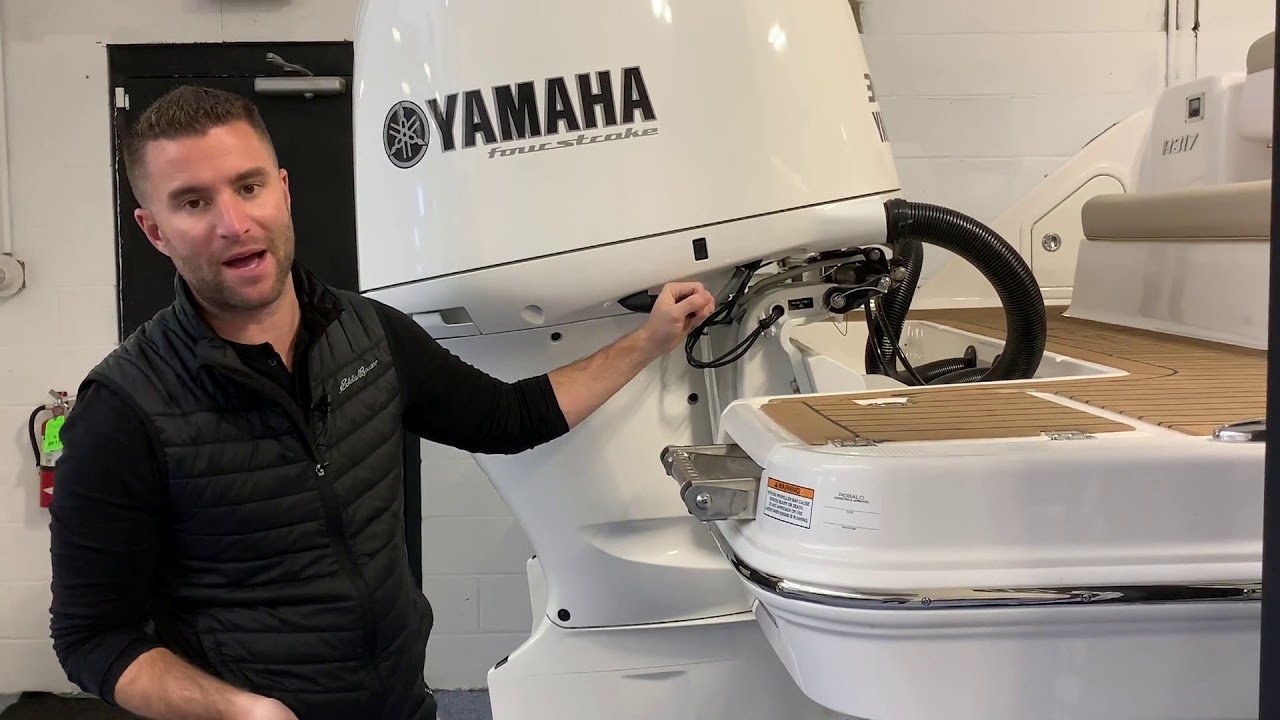
One of the most common flushing methods uses flushing muffs connected to a garden hose.
The flushing muffs fit over the water intake ports on the lower unit.
Once connected properly, freshwater flows into the cooling system while the engine runs at idle speed.
This helps remove:
- Salt residue
- Sand buildup
- Mud
- Debris
A lot of buyers researching How to Flush a Yamaha Outboard Motor use flushing muffs because they are simple and affordable.
Built-In Yamaha Flushing Ports
Some Yamaha outboards include built-in flushing ports.
These ports allow owners to connect a hose directly to the engine without running the motor.
This setup simplifies flushing for many boat owners.
Still, flushing procedures can vary depending on Yamaha model and engine size.
Step-by-Step Yamaha Outboard Flushing Process
Step 1 – Position the Engine Properly
Make sure the outboard remains in a proper vertical position.
This helps water drain correctly during flushing.
Step 2 – Connect the Water Supply
Attach the garden hose either to:
- Flushing muffs
- Built-in flushing port
Make sure water pressure remains steady.
Step 3 – Start Water Flow
Turn on the water before starting the engine if using flushing muffs.
This helps protect the water pump.
Step 4 – Run the Engine at Idle
Allow the engine to idle while freshwater circulates through the cooling system.
Most owners flush for several minutes to help remove contaminants properly.
Step 5 – Monitor Water Flow
Check for proper telltale water flow from the engine.
Weak water flow may indicate blockage or water pump issues.
Step 6 – Shut Down Properly
Turn off the engine before disconnecting the water supply when using flushing muffs.
Why Flushing Helps Engine Lifespan
Buyers searching for How to Flush a Yamaha Outboard Motor are usually trying to protect their investment.
Marine engines are expensive.
Regular flushing helps reduce long-term wear caused by:
- Corrosion
- Salt buildup
- Overheating
- Internal cooling restriction
That maintenance can help engines last significantly longer.
Common Problems Caused by Poor Flushing
A lot of marine engine failures start with cooling system neglect.
Some common problems include:
- Corroded cooling passages
- Overheating
- Water pump damage
- Thermostat blockage
- Internal scaling
- Restricted water flow
Those repairs can become expensive very quickly.
How Often Should Yamaha Outboards Be Flushed?
Most boat owners flush their engines:
- After every saltwater trip
- Regularly during freshwater use
- Before long-term storage
- Before winterization
Saltwater boats especially should never skip flushing.
Yamaha Outboard Specifications
Most buyers ask for engine specifications before purchasing.
That is normal because different boats require different horsepower setups.
Yamaha F90 Specifications
Engine Type
Four-Stroke Outboard
Horsepower
90 HP
Fuel Type
Gasoline
Cooling System
Water-Cooled
Common Use
Fishing boats and recreational boats
Yamaha F150 Specifications
Engine Type
Four-Stroke Outboard
Horsepower
150 HP
Common Use
Offshore fishing and center console boats
Yamaha F250 Specifications
Engine Type
V6 Four-Stroke Outboard
Horsepower
250 HP
Common Use
Large offshore and commercial boats
Why Buyers Prefer Yamaha Outboards
A lot of boat owners stay loyal to Yamaha because of long-term reliability.
That reputation matters in the marine industry.
Yamaha outboards are commonly used for:
- Offshore fishing
- Recreational boating
- Commercial use
- Saltwater applications
- Twin-engine offshore setups
A properly maintained Yamaha engine can last a very long time.
Why Proper Maintenance Matters
Flushing is only one part of Yamaha outboard maintenance.
Boat owners should also monitor:
- Engine oil
- Gear oil
- Water pumps
- Fuel filters
- Corrosion protection
- Propeller condition
Regular maintenance helps reduce expensive repairs later.
Shipping Yamaha Outboards Worldwide
We support worldwide shipping depending on buyer requirements.
Available shipping methods may include:
- Crated shipping
- Freight transport
- Container shipping
- Marine export handling
Engine Preparation
Before shipping, engines are usually:
- Secured properly
- Wrapped for protection
- Drained when required
- Prepared for transport safety
Proper preparation helps reduce shipping-related damage.
Why Buyers Continue Working With Us
Most repeat buyers come back for one reason.
Straightforward communication.
Nobody wants hidden surprises when purchasing marine engines.
We focus on:
- Honest engine information
- Proper shipping coordination
- Clear communication
- Reliable inventory updates
- Compatibility support
That matters more than flashy advertising.
Frequently Asked Questions
Why is flushing a Yamaha outboard important?
Flushing helps remove salt, dirt, sand, and debris from the cooling system.
How often should a Yamaha outboard be flushed?
Most owners flush the engine after every saltwater trip.
Can saltwater damage Yamaha outboards?
Yes. Salt buildup can create corrosion and cooling system problems over time.
What are flushing muffs?
Flushing muffs connect a garden hose to the lower unit water intake ports for freshwater flushing.
Do all Yamaha outboards have flushing ports?
Some Yamaha models include built-in flushing ports depending on engine design.
Should the engine run during flushing?
That depends on the flushing method and Yamaha model.
Do you sell Yamaha outboard motors?
Yes. We supply Yamaha outboards for buyers worldwide.
Are used Yamaha outboards available?
Yes. Used and low-hour Yamaha marine engines may be available depending on inventory.
Do you ship Yamaha outboards internationally?
Yes. Worldwide shipping support is available.
Why do buyers search for How to Flush a Yamaha Outboard Motor?
Most buyers want to protect their marine engines properly and avoid overheating or corrosion damage.
Tips Before Flushing a Yamaha Outboard
Before flushing any marine engine, boat owners should always verify:
- Proper water flow
- Correct hose connection
- Proper engine position
- Cooling system condition
- Water pressure stability
Ignoring basic maintenance steps usually creates bigger repair bills later.
Final Thoughts on How to Flush a Yamaha Outboard Motor
Anybody who owns a Yamaha outboard knows marine engines are expensive.
That is why regular flushing matters so much.
A few minutes of maintenance after boating can help prevent major cooling system problems later.
This guide about How to Flush a Yamaha Outboard Motor was written to help boat owners better understand why flushing matters and how proper maintenance helps extend engine life.
If you need a replacement Yamaha outboard, a low-hour marine engine, a fishing boat motor, or a complete offshore setup, we are ready to help with available inventory and worldwide shipping support.
Yamaha 300HP Outboard Review: Built for Speed and Strength – Yamaha 300HP outboard for sale
Electric vs Gas Outboard Motors: Pros, Cons & Which is Right for You
Posts Widget
- 1

- 2

- 3

- 4


S.H Continental Marine
USA HERALD MAGAZINE INC
Our team is dedicated to providing exceptional customer service.
Email: info@shcontinentalmarine.com
Choose S.H Continental Marine
for your outboard engine needs and enjoy superior quality, exceptional customer service, and unbeatable prices.
