
Electric Outboard Motors: What They Actually Do Well (and Where They Still Fall Short)
Electric Outboard Motors: What They Actually Do Well (and Where They Still Fall Short)
A few years ago, if you asked a dealer about electric outboard motors, you’d get a polite shrug and a redirect to the gas engines in the back lot. That’s changed. We get calls every week now from people who want to ditch the smell of two-stroke exhaust, run a kayak motor that won’t spook fish, or just try something quieter for evenings on the lake. So let’s talk plainly about what electric outboards can and can’t do, what’s actually for sale right now, and who they make sense for.
What an Electric Outboard Motor Actually Is
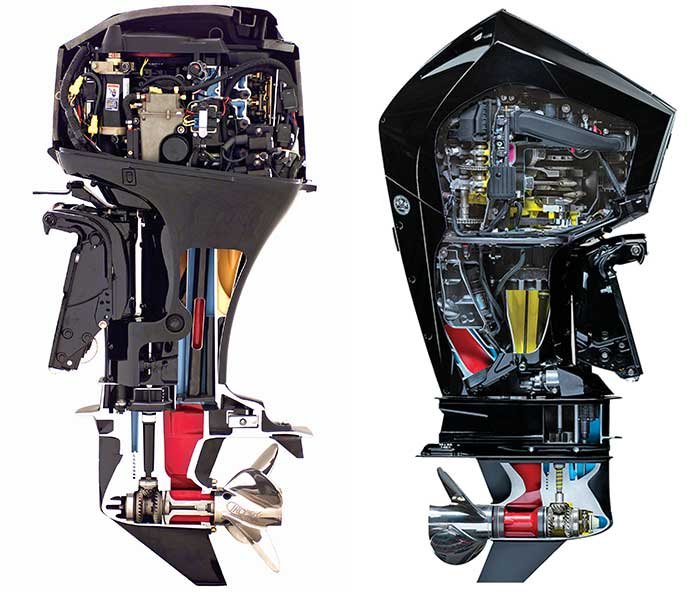
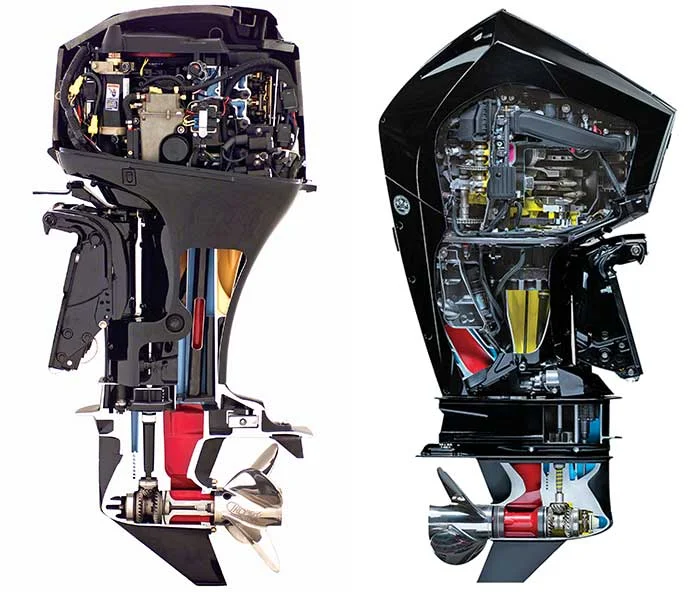
Strip away the marketing and an electric outboard is a simple idea: a sealed electric motor turns the prop shaft directly, powered by a lithium battery pack instead of a fuel tank. No spark plugs, no carburetor, no oil to mix or change, no fuel lines to gum up over a winter in storage. You charge it, mount it, and go. The trade-off is range and power density — batteries still don’t pack the same punch per pound that gasoline does, which is why electric outboards dominate the small-to-midsize end of the market rather than competing with 300 hp offshore engines just yet.
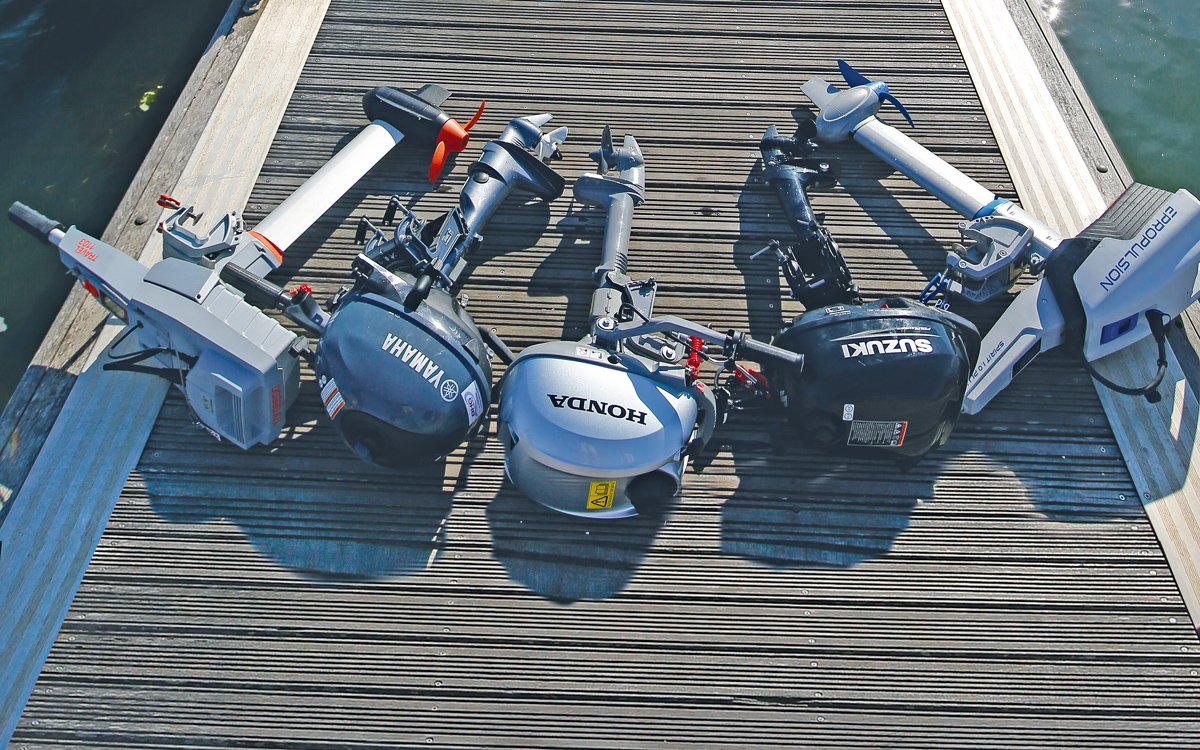
We currently carry the Torqeedo line, which is about as established as electric outboard motors get. Torqeedo’s been building these since the early 2000s, and their gear shows up on everything from inflatable tenders to small sailboats used as auxiliary power.
The Torqeedo Lineup We Stock
Torqeedo splits its electric outboard motors into a few families depending on what you’re powering:
- Ultralight series — built for kayaks and canoes. The Ultralight 403A with a 320 Wh battery weighs under 10 lbs for the motor head and clips onto most kayak mounts. If you want more range, the 403AC version with the 915 Wh battery roughly triples your runtime.
- Travel series — this is the small-tender and dinghy class, equivalent in thrust to a 3 hp gas outboard. We have the Travel 603 S with its 500 Wh integrated battery, and the longer-shaft Travel 1103CL and 1103CS, both running a larger 915 Wh pack for boats that need a bit more push.
- Cruise series — this is where electric outboard motors start acting like real auxiliary power for sailboats and small cruisers, comparable to a 6-9 hp gas motor. We stock the Cruise 6.0 RL and 6.0 RS (remote steering versions), plus the tiller-style 6.0 TL and 6.0 TS, and the Cruise 6.0 Fixed Pod with Torqlink for permanent installs.
Specs That Actually Matter
When people shop electric outboard motors, they tend to fixate on horsepower-equivalent numbers and skip past the things that actually decide whether the motor fits their boat. Here’s what to look at:
| Spec | Why it matters |
|---|---|
| Battery capacity (Wh) | Determines runtime at a given speed. A 500 Wh pack on a Travel 603 gives roughly an hour at cruising speed; double the battery and you roughly double the time, though not in a perfectly straight line because higher speeds eat power faster. |
| Equivalent gas horsepower | Torqeedo rates motors by comparable thrust, not by actual electric horsepower, since the two don’t translate directly. A “3 hp equivalent” Travel motor pushes a small tender about like a 3 hp two-stroke would. |
| Shaft length | Same rule as gas outboards — measure your transom height and match the shaft so the prop sits at the right depth. |
| Integrated vs. removable battery | Smaller motors like the Travel series have the battery built into the tiller arm, which is convenient but means you can’t easily swap in a spare for extended range. Larger Cruise motors use separate battery packs you can size up. |
| Display and GPS integration | Most Torqeedo units include a small display that calculates real-time range based on your current speed and remaining charge — genuinely useful, not just a gimmick. |
Who Electric Outboard Motors Actually Make Sense For
I’ll be honest about this rather than oversell it. Electric outboard motors are an excellent fit if you’re running a kayak, canoe, inflatable, small tender, or sailboat that just needs auxiliary push to get in and out of a marina or up a no-wake zone. They’re also a strong choice for small lakes with gas-engine bans, which is a real and growing thing — several reservoirs and conservation lakes in the US now restrict combustion engines entirely.
Where they’re not yet the right call: if you need to run wide open for hours, tow a skier, or push a loaded pontoon across open water all day, you’re still better served by a conventional outboard motor — at least until battery energy density catches up further. We tell people this even when it costs us a sale, because a customer who buys the wrong tool for the job is a customer who calls back annoyed.
Charging and Range, in Plain Terms
A Torqeedo Travel motor with the standard 500 Wh battery charges fully from a household outlet in roughly 4-6 hours using the included charger. Cruise series batteries take longer given their larger capacity, but most owners just plug in overnight at the dock. Range depends entirely on speed — Torqeedo’s own range calculator (built into the display) will show something like 20+ miles at a slow, efficient cruise but drop to a fraction of that at wide-open throttle. If you’ve ever watched your phone battery drain faster on full brightness, it’s the same idea on the water.
Maintenance: The Part People Underestimate
This is honestly where electric outboard motors win the argument for a lot of owners. There’s no annual oil change, no carburetor to clean after a season of sitting, no fuel stabilizer to remember before winter storage, no spark plugs to gap. You rinse the lower unit after saltwater use just like you would with a gas motor, store the battery somewhere it won’t freeze, and that’s close to the whole list. Fewer moving parts means fewer things to fail.
Buying One From Us
Every electric outboard motor we sell ships factory new, with the manufacturer’s warranty intact, and we’ll walk you through battery sizing for your specific boat and trip length before you buy — not after. If you’re not sure whether a Travel or Cruise model fits your application, reach out to our team and tell us your boat length, typical load, and how far you usually run. We’d rather spend ten minutes on the phone getting it right than sell you the wrong motor.
You can browse the full electric lineup alongside our gas outboard motors for sale if you want to compare options side by side, including weight, thrust, and price.
A Quick Comparison: Electric vs. Gas, Honestly
| Electric Outboard Motor | Gas Outboard Motor | |
|---|---|---|
| Noise | Near silent | Audible, varies by model |
| Maintenance | Minimal — no fluids or filters | Regular oil, filters, plugs |
| Range | Limited by battery, typically hours not days | Limited only by fuel carried |
| Upfront cost | Higher per equivalent hp | Lower upfront, ongoing fuel cost |
| Refuel time | Hours to recharge | Minutes at the pump |
| Emissions | Zero at point of use | Exhaust emissions |
A Note on Standards and Safety
If you’re new to electric propulsion, it’s worth a quick read through the National Marine Manufacturers Association resources on electric boating, and the Torqeedo manufacturer site for full technical documentation on each model’s battery management system. We’re a dealer, not the manufacturer, so for deep technical questions about cell chemistry or BMS behavior, their documentation is the better source — we’re happy to help with fit, sizing, and getting the right unit to your door.
Installing an Electric Outboard Motor: What’s Different
Mounting is mostly the same as a gas outboard — clamp it to the transom, check the shaft length matches your hull, make sure the prop has clearance. The differences show up around the electronics. You’ll want a dry spot to store the battery when it’s removable, and on Cruise series installs with a separate battery pack, you’re running a cable from the battery location to the motor, so plan that route before you mount anything permanently. Torqeedo’s manuals are detailed and most owners with basic mechanical comfort handle the install themselves in an afternoon. If you’d rather not, any marine electrician familiar with 12V/48V systems can do it in under two hours for the smaller units.
One thing worth flagging: don’t skip the corrosion protection steps just because there’s no engine block to worry about. The lower unit, prop shaft seal, and any electrical connectors at the waterline still need the same freshwater rinse and occasional anode check as a combustion motor. Saltwater doesn’t care whether your propulsion runs on gasoline or lithium.
Real Questions We Get About Electric Outboard Motors
Can I use an electric outboard motor in saltwater?
Yes. Torqeedo builds the Travel and Cruise lines for saltwater use, with sealed motor housings and corrosion-resistant materials. Rinse after every saltwater outing the same way you would a gas motor.
How long do the batteries actually last before they need replacing?
Lithium battery packs in this class typically hold meaningful capacity for several hundred charge cycles — for most recreational owners running a handful of trips a month, that translates to many years before you’d notice a real drop in range. Heat and deep discharges age batteries faster, so storing the pack at moderate temperature and avoiding running it down to zero every time will stretch its life.
Is an electric outboard motor legal everywhere a gas motor is?
Almost always yes, and on a growing number of lakes electric is the only propulsion allowed, since several reservoirs ban combustion engines outright to protect water quality. Always check the specific lake or marina rules, but electric is rarely the restricted option.
Will it actually push my boat as well as my old gas motor did?
Within its intended class, yes. A Cruise 6.0 genuinely performs like a 6-9 hp gas outboard for displacement-hull sailboats and small cruisers. Where it won’t keep up is planing a heavier hull or running long distances at high speed — that’s still combustion-engine territory for now.
Why We Started Carrying Electric Outboard Motors
Honestly, demand drove it. We sell a lot of conventional gas outboard motors and we’re not walking away from that — gas power is still the right answer for most boats on our lot. But enough customers were asking about quiet propulsion for kayaks, dinghies, and small sailboats that stocking the Torqeedo line made sense. It’s not a trend we’re chasing for marketing points; it’s a real category with real, satisfied owners, and we’d rather be straight with you about where it fits than pretend it solves every boating need.
The Bottom Line
Electric outboard motors aren’t a universal replacement for gas power yet, and anyone who tells you otherwise is selling something. But for kayaks, tenders, small sailboats, and quiet-water cruising, they’ve genuinely arrived — reliable, low-maintenance, and pleasant to use in a way that’s hard to overstate until you’ve actually idled into an anchorage without a single person on the dock looking up. If that sounds like your kind of boating, take a look at the Torqeedo lineup above, or call us and we’ll help you figure out which model fits your boat. For the lightest gas-powered option in Yamaha’s range, our Yamaha 6hp outboard motor guide covers full specs and stock.
Posts Widget
- 1

- 2
- 3
- 4


S.H Continental Marine
USA HERALD MAGAZINE INC
Our team is dedicated to providing exceptional customer service.
Email: info@shcontinentalmarine.com
Choose S.H Continental Marine
for your outboard engine needs and enjoy superior quality, exceptional customer service, and unbeatable prices.

One thought on “Electric Outboard Motors: What They Actually Do Well (and Where They Still Fall Short)”
Pingback: Electric Kayak Motor: The Complete 2026 Buyer's Guide