
Yamaha E75BMHL Price: What This 75 HP Two-Stroke Really Costs
If you’ve been shopping around and keep landing on different numbers, here’s the short version: the Yamaha E75BMHL price at S.H Continental Marine is $2,800, and the unit is in stock right now, already tested, ready to crate and ship. That’s not a “call for quote” placeholder — it’s the real price on the product page today. The rest of this article walks through what you’re actually paying for, what the engine can do, and why a used two-stroke like this one is still one of the smartest buys in the 75 HP class.

We’ve sold and shipped a lot of outboards over the years, and the E75BMHL keeps coming up as one of those engines people ask about by name. It’s not flashy. It doesn’t have a touchscreen or Bluetooth pairing. What it has is a reputation — three decades of Yamaha two-stroke engineering behind a motor that starts when you turn the key and keeps running long after fancier engines have been back to the shop twice.
A lot of the emails we get about this listing start the same way: “is this actually the price, or is there a catch.” Fair question, honestly, because the used-outboard market is full of listings that quote a low number and then hit you with inspection fees, shipping surprises, or an engine that “runs” in the loosest possible sense. That’s not how this listing works. The Yamaha E75BMHL price you see is the price you pay for the engine, full stop, and everything else — testing, documentation, crating — is something we did before it ever went live, not something we tack on after you’ve committed.
What the Yamaha E75BMHL Actually Is
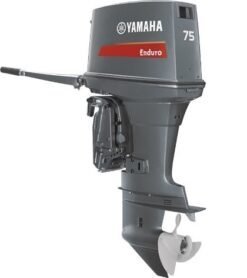
The E75BMHL is a 75 horsepower, three-cylinder, two-stroke outboard from Yamaha’s long-running commercial and workboat lineup. The “E” prefix marks it as part of Yamaha’s Enduro-style series — engines built with fewer electronics, simpler internals, and a strong bias toward reliability over refinement. These aren’t the recreational-market four-strokes you see on new center consoles at the boat show. They’re the motors that get bolted onto panga hulls, fishing skiffs, and small workboats where someone genuinely needs the thing to run every single day, rain or shine, without a laptop to diagnose it.
Three cylinders, carbureted, oil-injected or premix depending on setup — this is a mechanically straightforward engine. That simplicity is exactly why the Yamaha E75BMHL price makes sense compared to a similarly powered four-stroke: less to go wrong, less to service, and when something does need attention, a competent mechanic anywhere in the world can figure it out without a dealer scan tool.
The “L” in the model code tells you it’s a long-shaft configuration, which matters more than people think when they’re comparing engines online. Get the shaft length wrong and the anti-cavitation plate sits at the wrong height relative to the hull bottom — too high and you get ventilation and cavitation under load, too low and you’re dragging extra resistance through the water for no benefit.
This unit is set up as a long shaft, which covers the transom height on the large majority of boats in the size range this engine is meant for. If you’re not sure what your transom measures, it’s a five-minute check with a tape measure before you commit, and we’re happy to talk you through it.
Full Specs: What You Get for the Yamaha E75BMHL Price
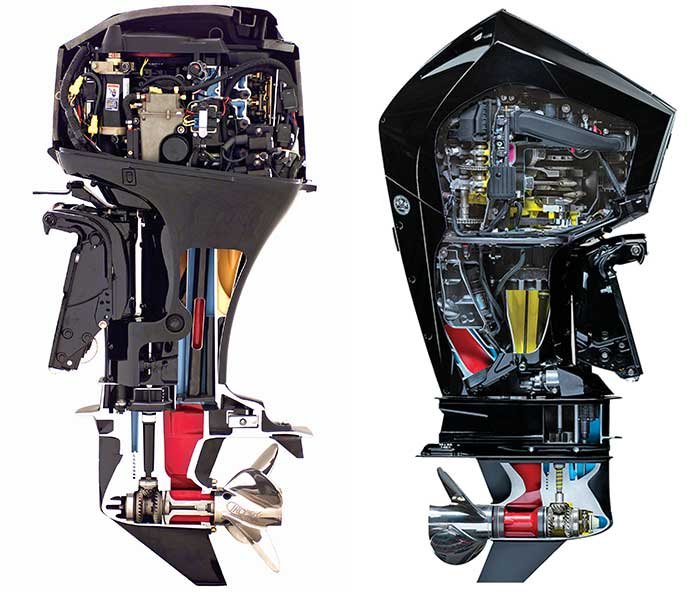
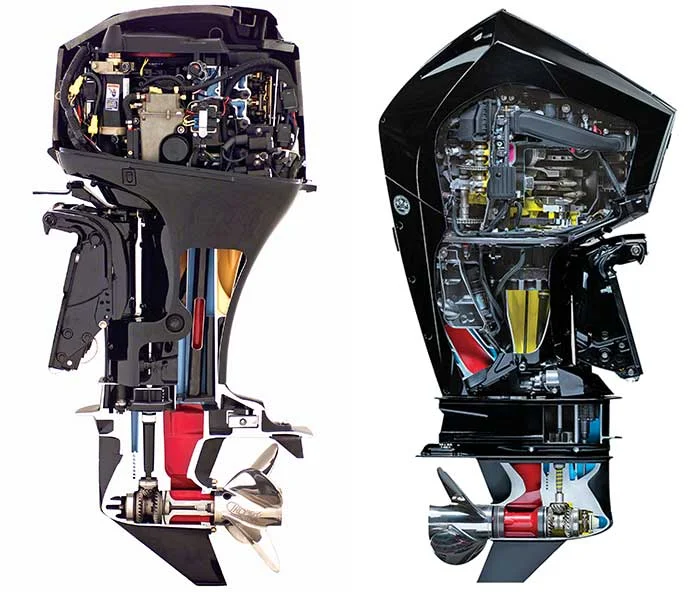
Here’s the breakdown of what’s actually under the cowling. We tested this specific unit before listing it, so these aren’t manufacturer claims pulled from a brochure — this is the engine as it sits, ready to run. You can see the current stock status and price for yourself on the listing itself, but here’s the spec sheet laid out plainly.
| Model | Yamaha E75BMHL |
| Engine type | 2-stroke, 3-cylinder |
| Horsepower | 75 HP |
| Shaft length | Long shaft (L) |
| Starting | Manual/electric configuration per Enduro series (H = tiller-friendly handle setup) |
| Fuel delivery | Carbureted |
| Condition | Used, factory-tested, functioning as intended |
| Category | Used Outboard Engines |
| Price | $2,800.00 |
| Availability | In stock, ready to ship |
What those numbers translate to on the water: strong low-end torque for pushing loaded hulls off the plane, smooth mid-range acceleration, and fuel economy that’s genuinely decent for a two-stroke of this displacement. It won’t sip fuel like a fuel-injected four-stroke, but it also won’t demand the maintenance schedule one does, and that trade-off is a big part of what shapes the Yamaha E75BMHL price against newer alternatives.
Weight is another spot where this engine earns its keep. Two-strokes shed the balance shafts, extra oil galleries, and heavier block castings that four-strokes need, so a 75 HP two-stroke like this one comes in noticeably lighter than a four-stroke equivalent. On smaller hulls that difference shows up immediately — better hole shot, less stern weight to fight against, easier trailering. On a workboat that’s loaded down with gear and people most of the day, shaving weight off the transom isn’t a nice-to-have, it’s extra usable payload.
Who Actually Buys This Engine
We see three types of buyers on this listing, over and over.
First, fishing operators — both weekend tournament guys and full-time commercial fishermen. A 75 HP two-stroke on the right hull gets you to the fishing grounds fast and gets you home fast when weather turns, and it does it without the electronics-dependent quirks that can leave a four-stroke stranded when a sensor throws a code twenty miles offshore. For tournament fishing specifically, where a blown engine means a blown weekend and a blown entry fee, a lot of anglers keep a proven two-stroke like the E75BMHL as either a primary or a dead-reliable backup.
Second, workboat and commercial operators — harbor tenders, small ferries, utility skiffs, dive-support boats. These buyers care less about top speed and more about uptime. An engine that starts every morning and doesn’t need a dealer visit for routine issues is worth more to them than one with a few extra bells and whistles.
Third, water-sports enthusiasts who want enough pull for tubing, wakeboarding, or just moving a family boat with some authority. Seventy-five horsepower on a mid-size hull is a genuinely fun amount of power without tipping into the insurance and fuel costs of something bigger.
Across all three groups, the actual conversation is the same: they want to know the engine works, they want to know what it costs, and they want it shipped without drama. That’s the whole business model behind this listing.
What Actually Drives the Yamaha E75BMHL Price
People sometimes assume a used outboard’s price is just whatever the seller feels like charging. It isn’t, or at least it shouldn’t be. A handful of concrete things go into the $2,800 figure on this unit.
Testing and verification. Before this engine ever went up for sale, it was run — not just turned over, run. Compression checked across all three cylinders, water pump and cooling flow confirmed, lower unit inspected, shift function verified in forward, neutral, and reverse. An engine that’s been sitting in a warehouse untested might look identical in a photo, but it’s a different product, and it should carry a different price. Part of what you’re paying for in the Yamaha E75BMHL price is the labor and expertise that went into confirming this specific unit runs the way a 75 HP Yamaha two-stroke should.
Condition, not just age. This is a used engine, and we’re not going to pretend otherwise — but “used” and “worn out” are not the same word. This unit was pulled from service in usable condition, cleaned up, inspected, and evaluated on its mechanical health rather than its calendar age. That’s a meaningfully different product than a motor that’s been rebuilt cosmetically and had the problems papered over.
Support after the sale. Buying an outboard from a stranger on a classifieds site means that once the money moves, you’re on your own. That’s not how we operate. If you have questions about this engine after it arrives — mounting, break-in, troubleshooting — you can reach us. That backing has a cost to provide, and it’s baked into the price rather than tacked on as an upsell.
Shipping and logistics. We ship worldwide, and crating and moving a 75 HP outboard safely isn’t free. The engine gets properly secured, propeller protected, lower unit braced, and packed to survive ocean freight or air cargo without shifting. None of that is glamorous, but skip it and you get a damaged engine on arrival regardless of how good it was when it left the shop.
Put those four things together and the Yamaha E75BMHL price starts to look less like a number and more like a summary of the work that went into making sure the engine you receive actually runs.
It’s also worth saying what does not factor into the price, because it matters just as much. We don’t inflate the number to leave room for “negotiation theater,” and we don’t price it low and then recoup the difference through inflated shipping or hidden fees once you’re already invested in the deal. What you see is what the engine costs, and what shipping quotes to your address is what shipping actually costs to move a 75 HP outboard to that address. That’s the whole pricing philosophy, and it’s why buyers who’ve dealt with us before tend to come back when they need a second or third engine.
How We Test, Verify, and Ship This Engine Worldwide
Our process on every used outboard we list follows roughly the same sequence, and this E75BMHL went through all of it.
- Visual and mechanical inspection of the powerhead, lower unit, and mounting hardware
- Compression test across all cylinders to confirm even, healthy readings
- Water pump and cooling system check to rule out overheating risk
- Fuel system inspection — carburetor condition, fuel lines, primer bulb
- Shift and throttle linkage test through the full range
- Run test under load where conditions allow, not just an idle check
- Cleaning, corrosion treatment where needed, and cosmetic once-over
- Professional crating built for international freight, with the propeller and lower unit protected against shipping damage
We ship internationally as a matter of course, not as a special accommodation — buyers reach out from all over, and the logistics side is set up to handle that. If you’re outside the immediate region, don’t assume that rules you out. Ask about your destination and we’ll tell you straight whether it’s a simple shipment or one that needs extra paperwork.
The crating itself deserves a mention because it’s where a lot of used outboards actually get damaged — not in the workshop, but in transit. An engine like this one gets bolted to a purpose-built pallet or crate, not just wrapped and set in a box. The prop is pulled or secured separately, and the skeg and lower unit are braced so nothing shifts under the kind of jostling that’s normal for ocean freight.
The powerhead is also protected against moisture for however long the voyage runs. We’ve had buyers tell us the crate looked like it had been through a lot by the time it arrived — and the engine underneath it was still exactly as tested, because the packaging did its job.
How the E75BMHL Stacks Up
If you’ve looked at Yamaha’s smaller engines too, you already know the family resemblance — the same stubborn reliability shows up whether you’re looking at something like our Yamaha 6HP outboard motor for a dinghy or tender, or this 75 HP unit for a full-size fishing or work boat. Yamaha built its outboard reputation on exactly this kind of engine — simple, tough, and engineered to run in conditions that would sideline more delicate machinery. You can see that philosophy carried through the current lineup on Yamaha’s own outboard motors site, where the same emphasis on durability and low-maintenance operation still drives how they build engines today, decades after two-strokes like the E75BMHL first earned that reputation.
Compared to buying new, the math isn’t close. A new 75 HP four-stroke from any major manufacturer will run you well into five figures before rigging, and you’ll be paying a premium for electronics and emissions equipment that a lot of commercial buyers don’t actually need or want. The Yamaha E75BMHL price of $2,800 gets you real, usable horsepower from a brand with a genuine track record, at a fraction of that cost. For a lot of our buyers — particularly commercial operators replacing a tired engine on a working boat — that difference is the entire budget for the season.
It’s also worth comparing against other used listings you’ll find elsewhere, not just against new engines. A lot of “cheap” used 75 HP outboards floating around online are cheap because nobody’s actually confirmed they run — you’re buying a photo and a promise. Once you factor in the cost of getting an untested engine inspected and repaired after the fact, a lower sticker price can end up costing more than the Yamaha E75BMHL price on a unit that was already verified before it shipped. We’d rather be upfront about the number and have it mean something.
What Ownership Actually Looks Like
Two-strokes have a maintenance rhythm that’s different from four-strokes, and it’s worth being straight about it. You’ll want to run the right fuel-to-oil ratio if this isn’t set up with oil injection on your particular unit, keep an eye on the water pump impeller on the usual service interval, and flush after saltwater use like you would with any outboard. None of that is complicated, and none of it requires a dealership. It’s the kind of maintenance a boat owner or a local mechanic anywhere can handle with basic tools.
What you don’t get with an engine like this is a warning light that locks the throttle down over a sensor glitch, or a service bulletin that requires a factory technician. That’s a feature for a lot of our buyers, not a limitation. Commercial guys especially tend to prefer a motor they can actually work on themselves when they’re three hours from the nearest dealer.
Parts availability is worth touching on too, since it’s a common worry with any used engine. Yamaha’s two-stroke lineup from this era used a lot of shared components across models, which means gaskets, impellers, spark plugs, and the usual wear items aren’t hard to source. This isn’t some obscure engine with three units ever built — it’s a mainstream commercial workhorse, and that shows up in how easy it is to keep running for years after you buy it.
Break-in matters too, even on a used engine that’s already been run and tested. We’d still recommend treating the first few hours a bit conservatively — vary the RPM instead of holding one speed, avoid pinning it wide open right out of the gate, and keep an eye on the water stream from the tell-tale to confirm the cooling system is doing its job under real load. None of this is unique to buying used; it’s just good practice any time an engine goes onto a new boat and a new set of conditions.
Common Questions Before Buying
Where do I check current availability?
Stock on a used, tested unit like this can move — we don’t keep large quantities sitting around. The product page always reflects real-time status, so if it shows in stock, it’s actually in stock.
Is the Yamaha E75BMHL price negotiable for bulk or fleet orders?
If you’re outfitting more than one boat, reach out before you buy — fleet and multi-unit orders are handled differently than a single retail sale, and it’s worth a conversation.
Does the price include shipping?
The $2,800 is the engine price; shipping is calculated based on your destination since freight costs vary enormously between, say, a regional port and a landlocked location requiring inland transport. Ask for a quote to your specific location and we’ll give you a straight number.
What condition will the engine arrive in?
Tested, functional, and crated for freight. This isn’t a parts engine or a “for repair” listing — it’s a running unit that passed our inspection process before it went up for sale.
Can I see more photos or ask specific questions before committing?
Yes. Reach out through the product page and we’ll answer directly — serial number details, service history we have on file, whatever you need to feel good about the purchase.
Will this engine fit my boat?
This unit is a long-shaft configuration, which is the right fit for most boats built for a 75 HP class outboard. Measure your transom from the top edge down to the bottom of the hull before you order, and if the number doesn’t line up with what you expected, ask us before you buy rather than after it arrives.
Why buy used instead of a new outboard at this power range?
Mostly it comes down to what you actually need. If you need a working engine that starts reliably and doesn’t require a dealership relationship to maintain, a tested used two-stroke does that job for a fraction of what a new engine costs. The Yamaha E75BMHL price reflects a proven, inspected unit — not a discount on something unproven.
Ready to Move on This One
Engines like this don’t sit in inventory long, mostly because the combination of a trusted name, a tested unit, and an honest Yamaha E75BMHL price doesn’t come around constantly. If you need a dependable 75 HP two-stroke for a fishing boat, a workboat, or just a boat you actually want to run without babysitting, this is a straightforward buy.
Head over to the Yamaha E75BMHL product page to lock in the current price and get shipping worked out for your location. And if you’re still comparing options, it’s worth taking a look through our full outboard motor guides or browsing everything currently in stock over at the shop — but if a proven 75 HP Yamaha two-stroke at $2,800 is what you came here looking for, this engine is sitting in our inventory right now, tested and ready to go.
Posts Widget
- 1

- 2

- 3

- 4


S.H Continental Marine
USA HERALD MAGAZINE INC
Our team is dedicated to providing exceptional customer service.
Email: info@shcontinentalmarine.com
Choose S.H Continental Marine
for your outboard engine needs and enjoy superior quality, exceptional customer service, and unbeatable prices.
