
Fuel-Efficient Outboard Motors: What Actually Saves You Gas

Fuel is one of the few boating costs you actually pay every single time you go out, which makes fuel-efficient outboard motors matter in a way that horsepower and top speed don’t. A slightly slower boat costs you nothing extra on a given weekend. A motor that burns noticeably more gallons per hour costs you real money every trip, every season, for as long as you own it. If you’re comparing outboards and fuel economy is high on your list, there’s a specific set of factors that actually move the needle — and a few that get talked about online but don’t matter nearly as much as people think.
We sell outboards across every horsepower class at S.H Continental Marine, and fuel economy comes up constantly, especially from customers who put a lot of hours on the water each season. Here’s what genuinely affects how much fuel an outboard burns, and how to shop for efficiency without sacrificing the performance you actually need.
What Actually Drives Fuel Efficiency in an Outboard
A few technical factors account for most of the difference between an efficient outboard and a thirsty one:
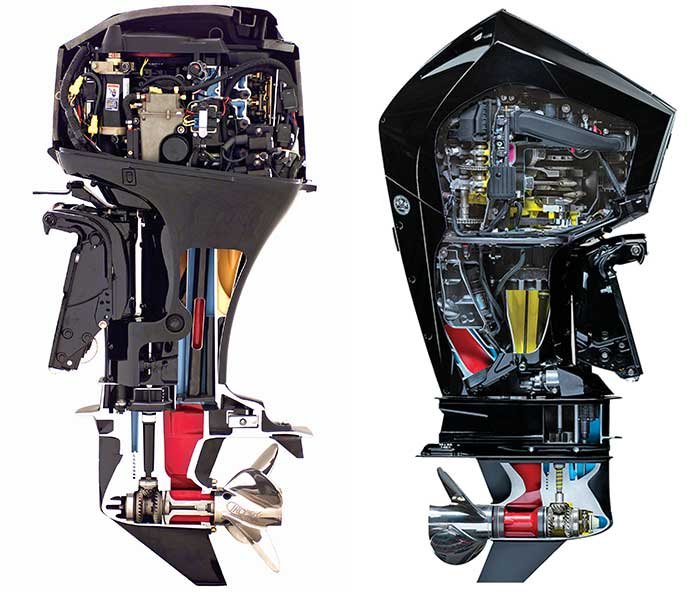
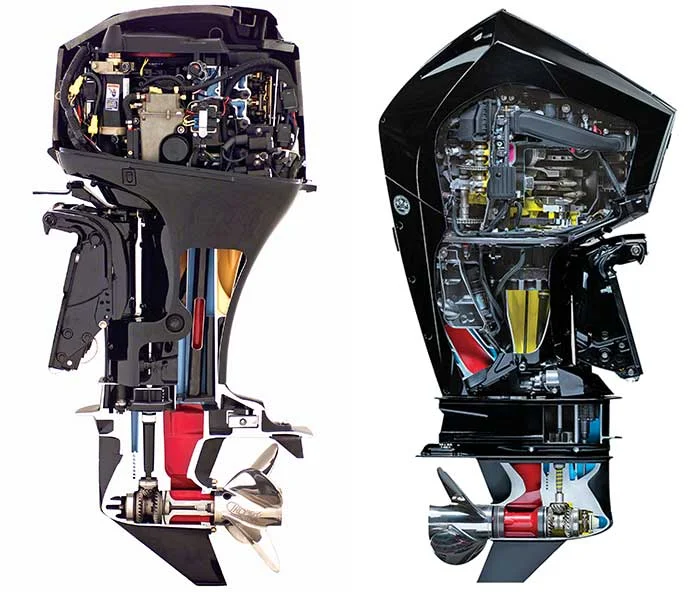
- Fuel delivery system. Electronic fuel injection (EFI) meters fuel far more precisely than a carburetor, adjusting in real time to engine load, altitude, and temperature. This alone typically accounts for a meaningful chunk of the efficiency gap between older and current-generation outboards.
- Four-stroke vs. two-stroke design. Four-strokes burn fuel more completely and don’t lose unburned fuel-oil mixture out the exhaust the way older two-strokes did, which translates directly into better real-world fuel economy.
- Compression ratio and engine tuning. Higher compression, when properly engineered, extracts more energy from each unit of fuel — this is part of why manufacturers keep incrementally raising compression ratios in newer engine revisions.
- Weight. A lighter motor requires less energy to push the same boat to the same speed, so weight and fuel efficiency are more connected than most buyers realize.
- Propeller selection. Even the most fuel-efficient outboard motor on paper will underperform its rated economy if it’s paired with the wrong propeller pitch and diameter for your boat and typical load.
Get those five factors right and you’ll see a real difference at the fuel dock, regardless of which brand you ultimately choose.
EFI: The Single Biggest Factor
If you’re comparing two outboards of similar horsepower and one is carbureted while the other uses EFI, the EFI model will almost always be the more fuel-efficient outboard motor of the two, particularly across varying conditions. Carburetors deliver a relatively fixed fuel-to-air ratio that has to be manually tuned for average conditions, which means they’re rarely optimal — running slightly rich most of the time to avoid running dangerously lean under load. EFI systems continuously adjust based on real-time sensor data, keeping the engine closer to its optimal fuel-to-air ratio across the entire RPM range.
This is a big part of why nearly every current-generation outboard from Yamaha, Honda, and Mercury uses EFI, and why we’d steer anyone prioritizing fuel efficiency firmly toward EFI models over carbureted ones, new or used.
Four-Stroke Efficiency in Practice
The move from two-stroke to four-stroke technology across the outboard industry over the past two decades was driven partly by emissions regulations and partly by the genuinely better fuel economy four-strokes deliver. A four-stroke engine completes a full combustion cycle — intake, compression, combustion, exhaust — using a separate crankcase oil supply, rather than burning oil mixed directly into the fuel. That difference alone typically improves fuel economy by a meaningful margin compared to an equivalent-horsepower carbureted two-stroke, on top of the emissions benefits.
The Yamaha 90 HP F90XB is a solid real-world example — a 1.8L four-cylinder four-stroke with EFI that’s specifically engineered around fuel efficiency without sacrificing the throttle response boaters expect. Its Variable Trolling RPM Switch also helps efficiency at low speed by letting you dial in precise trolling RPM instead of constantly adjusting the throttle, which reduces the fuel waste that comes from inconsistent low-speed running. The lighter Yamaha 90 HP F90LB and compact Yamaha 8 HP F8SMHB follow the same efficiency-focused EFI and four-stroke engineering at different ends of the horsepower spectrum.
Right-Sizing Your Motor: The Efficiency Factor Nobody Talks About
Here’s something that rarely gets mentioned in fuel-efficient outboard motor discussions: an oversized motor is almost never the efficient choice, even though it might seem like more power should mean more control over your speed and therefore your fuel use. In practice, an overpowered motor runs at a less efficient point on its power curve for typical cruising speeds, and the extra weight it adds to the transom increases drag and fuel burn across the board.
The most fuel-efficient setup is almost always a properly sized motor for your hull, run at a moderate cruising RPM rather than wide open throttle. Most four-stroke outboards have a “sweet spot” in their RPM range — typically somewhere in the mid-range — where fuel efficiency per mile traveled is noticeably better than either idling along at very low RPM or running wide open. Check your owner’s manual for the manufacturer’s recommended cruising RPM range, and you’ll often find real fuel savings just from adjusting how you throttle, independent of which engine you own.
Fuel Economy by Horsepower Class
Fuel-efficient outboard motors exist across every horsepower range, but the absolute numbers obviously scale with size. Here’s a general sense of what to expect from a well-tuned modern four-stroke EFI outboard at efficient cruising speed:
| Horsepower Class | Typical Efficient Cruising Burn | Best Suited For |
|---|---|---|
| 8-15 HP | Under 1 gallon/hour | Dinghies, small tenders, sailboats |
| 25-60 HP | 1.5-3 gallons/hour | Small fishing boats, light runabouts |
| 90-115 HP | 3-5 gallons/hour | Bay boats, pontoons, family runabouts |
| 150-200 HP | 5-9 gallons/hour | Center consoles, larger pontoons |
| 250+ HP | 9-15+ gallons/hour | Offshore center consoles, larger cruisers |
These figures vary with hull design, load, propeller choice, and sea conditions, but they’re a reasonable starting point for comparing whether a specific outboard’s advertised efficiency is realistic for its class.
Maintenance Habits That Protect Fuel Efficiency
A fuel-efficient outboard motor doesn’t stay efficient automatically — a handful of maintenance habits directly affect how much fuel an engine burns over its life:
- Keep the fuel system clean. Fresh fuel and a clean filter keep EFI systems and carburetors alike operating at their designed efficiency; stale or contaminated fuel throws off the combustion process.
- Check and clean the propeller regularly. Marine growth, dings, or the wrong pitch all increase drag and force the engine to work harder for the same speed.
- Keep the hull bottom clean. This isn’t about the engine directly, but a fouled hull dramatically increases the fuel needed to reach and hold cruising speed.
- Don’t skip scheduled tune-ups. Spark plugs, air filters, and fuel injector cleaning all directly affect combustion efficiency over time.
- Trim the motor correctly. Running with the wrong trim angle increases drag and forces the engine to burn more fuel to maintain speed — this is one of the most overlooked, easiest-to-fix efficiency factors.
Of that list, trim angle is probably the most underrated. Many boaters run with the motor trimmed the same way regardless of speed or load, when in reality adjusting trim to keep the hull running at its most efficient angle can measurably improve fuel economy on the same engine, same boat, same day.
How Ethanol Fuel Affects Efficiency
Most pump gasoline in the U.S. and many other markets contains up to 10% ethanol (E10), and it’s worth understanding how that affects fuel-efficient outboard motors specifically. Ethanol carries less energy per gallon than pure gasoline, which means an engine running on E10 will burn slightly more fuel for the same output compared to running on ethanol-free gas, all else being equal. It also absorbs moisture more readily, which over time in a boat’s fuel system — especially one that sits between uses — can lead to phase separation and the kind of fuel system problems that hurt both performance and efficiency.
If ethanol-free fuel is available near you, it’s generally worth the modest price premium for a boat that sits for extended periods, both for the fuel efficiency and for reducing the risk of fuel system issues down the line. If you’re stuck with E10, using a marine-rated fuel stabilizer and not letting fuel sit for months at a time goes a long way toward minimizing the downsides. The EPA’s ethanol fuel guidance is a useful independent reference if you want more detail on how blend levels affect small engines.
Fuel Efficiency Myths Worth Retiring
A few ideas about fuel-efficient outboard motors circulate constantly but don’t hold up well under scrutiny:
“Idling burns almost no fuel, so it doesn’t matter.” Extended idling is actually one of the least efficient ways to run a four-stroke, since the engine is operating well outside its optimal combustion range. If you’re going to be sitting for a while, shutting the engine off is usually the more efficient choice over idling for long stretches.
“A smaller motor is always more fuel efficient.” Not if it’s undersized for the hull. An underpowered motor working hard to get a heavy boat on plane can burn more fuel per mile than a properly sized motor cruising comfortably at a moderate RPM.
“Synthetic oil improves fuel economy dramatically.” Synthetic oil offers real benefits for engine protection and can offer a small efficiency edge through reduced internal friction, but it’s a minor factor compared to EFI, proper sizing, and propeller selection. Don’t expect it to transform a thirsty engine into an efficient one.
“All EFI systems are equally efficient.” EFI calibration quality varies by manufacturer and model year. A well-tuned EFI system from an established manufacturer with years of refinement will typically outperform a newer or less-refined EFI implementation, even with similar on-paper specs.
Calculating Your Real Fuel Cost Per Trip
It’s worth doing simple napkin math before assuming a given outboard’s efficiency will translate into meaningful savings for your specific use. Take your typical trip length in hours, multiply by the engine’s fuel burn at your normal cruising RPM (available in the owner’s manual or from the manufacturer’s published curves), then multiply by your local fuel price. Compare that number across two or three motors you’re considering, over a full season of typical trips, and the efficiency differences that looked marginal on a spec sheet often add up to a genuinely meaningful amount by the end of the year — sometimes enough to offset a meaningful chunk of the price difference between a base and premium model.
How Manufacturers Compare on Efficiency
Yamaha, Honda, and Mercury all offer genuinely fuel-efficient outboard motors in their current four-stroke lineups, and the differences between them at similar horsepower and EFI configuration tend to be smaller than marketing materials suggest. Where real differences show up is usually in specific engineering choices — Yamaha’s Variable Trolling RPM Switch, for instance, helps efficiency specifically at low-speed trolling by letting you hold a precise RPM instead of constantly adjusting throttle by hand, which reduces the fuel waste that comes from a boat operator’s natural throttle drift.
Honda’s four-stroke lineup, drawing on decades of automotive EFI experience, tends to deliver very consistent, predictable fuel economy across its range, particularly in smaller portable models where the automotive-grade engineering discipline really shows. Mercury’s more recent FourStroke and Verado lines have closed much of the historical efficiency gap that existed when their lineup leaned more heavily on older two-stroke and carbureted designs.
The practical takeaway: within any of these three manufacturers’ current EFI four-stroke lineups, you’re choosing between genuinely efficient options, and the deciding factor should usually come down to which specific model best matches your hull and use case rather than chasing marginal efficiency differences between brands.
Weight and Efficiency: A Closer Look
It’s worth spending a bit more time on weight, since it’s one of the more overlooked levers for fuel efficiency. Every pound an outboard adds to the transom is a pound the hull has to push through the water at speed, and that translates directly into additional fuel burn across an entire season of use. This is part of why manufacturers invest heavily in lightweight alloy construction even as they add features — a motor that gains capability without gaining much weight preserves the fuel efficiency gains from better EFI tuning rather than offsetting them.
When comparing two similarly rated outboards for fuel efficiency, don’t just look at the advertised fuel burn numbers — check the weight listed in the spec sheet too. A lighter motor with slightly less sophisticated EFI tuning can sometimes out-perform a heavier motor with marginally better combustion efficiency, simply because it’s not dragging as much extra weight through the water on every trip.
Comparing Fuel-Efficient Options in Our Inventory
Every outboard we sell lists its fuel delivery system, displacement, and compression ratio, which are the specs that matter most for comparing real-world efficiency within a horsepower class. If fuel economy is your top priority, filter by EFI models first, then compare weight — lighter motors of similar horsepower and fuel delivery type will generally sip less fuel across a season of typical use.
Browse our full outboard motor inventory to compare EFI four-strokes across every horsepower class, or reach out to our team and tell us your typical trip length and boat — we can point you toward the specific models that’ll actually save you money at the fuel dock, not just the ones marketed as “efficient.”
Frequently Asked Questions
Are four-stroke outboards more fuel efficient than two-stroke?
Generally yes. Four-strokes burn fuel more completely and don’t lose unburned fuel through the exhaust the way older two-strokes with oil-mixed fuel did, typically delivering meaningfully better fuel economy at similar horsepower.
Does EFI actually save fuel compared to a carburetor?
Yes, EFI continuously adjusts the fuel-to-air ratio based on real-time conditions, while carburetors run a relatively fixed ratio tuned for average conditions. This generally makes EFI outboards more fuel efficient across varying loads and speeds.
Does a bigger outboard always use more fuel?
Not necessarily at idle, but an oversized motor for your hull typically runs less efficiently at normal cruising speeds and adds weight that increases fuel burn overall. A properly sized motor is usually the more fuel-efficient choice.
What RPM is most fuel efficient for an outboard?
Most four-stroke outboards have a mid-range “sweet spot,” often noted in the owner’s manual, where fuel burned per mile traveled is meaningfully better than at very low RPM or wide-open throttle.
Fuel-efficient outboard motors aren’t about finding one magic model — they’re about combining EFI, a properly sized four-stroke, a well-matched propeller, and a few consistent maintenance habits. Get those right and the fuel savings show up trip after trip, season after season.
Posts Widget
- 1

- 2

- 3
- 4


S.H Continental Marine
USA HERALD MAGAZINE INC
Our team is dedicated to providing exceptional customer service.
Email: info@shcontinentalmarine.com
Choose S.H Continental Marine
for your outboard engine needs and enjoy superior quality, exceptional customer service, and unbeatable prices.
