
Genuine Yamaha Engines: The Ultimate 2026 Verification Guide
Finding genuine Yamaha engines sounds like it should be simple, walk into a dealer, buy the engine, done. In practice, the used and grey-market outboard trade has enough counterfeit parts, mismatched serial plates, and unauthorized rebuilds floating around that buyers who don’t check carefully sometimes end up with an engine that isn’t what it was sold as. We’ve handled genuine Yamaha engines for customers worldwide for years, and this guide walks through exactly how to verify what you’re buying, what the real specs look like across the lineup, and where counterfeit risk actually shows up in practice.
Why Verifying Genuine Yamaha Engines Matters
- Warranty validity. Yamaha’s factory and dealer warranties only apply to verified genuine units with intact, unmodified serial numbers, so a mismatched plate can mean zero coverage even on a recent engine.
- Parts compatibility. Counterfeit or heavily modified engines sometimes use non-genuine internal components that don’t match Yamaha’s official parts catalog, which complicates future servicing.
- Resale value. An engine with clean, verifiable documentation holds value far better than one with an unclear history or altered identification.
- Actual performance and safety. Genuine Yamaha engineering, tolerances, and quality control are what the brand’s reputation is built on. Counterfeit components erode exactly the reliability buyers are paying for.
How to Verify Genuine Yamaha Engines
Verification comes down to a few concrete checks that take a few minutes and remove most of the guesswork.
- Check the serial number plate. Every genuine Yamaha outboard carries a serial number stamped on the engine mount bracket. The plate should be factory-stamped, not a sticker, and should show no signs of tampering, re-stamping, or mismatched fonts.
- Cross-reference with an authorized dealer. Authorized Yamaha dealers can look up a serial number against Yamaha’s records to confirm the engine’s model, production year, and original market of sale.
- Inspect fasteners and casting marks. Genuine Yamaha powerheads use consistent casting marks and OEM-spec fasteners. Mismatched bolts, inconsistent paint finish, or casting numbers that don’t match Yamaha’s published parts references are warning signs.
- Ask for the original bill of sale or import documentation. A clean paper trail back to an authorized dealer is the strongest single piece of evidence you’re looking at a genuine unit.
- Buy from a seller who tests before listing. We verify serial numbers and inspect internals on every used Yamaha engine before it goes up for sale, specifically so buyers don’t have to do this detective work themselves.
Where Counterfeit and Grey-Market Risk Actually Shows Up
Counterfeit outboards are more common in the small-to-mid horsepower portable range, where unauthorized manufacturers in some markets have historically produced look-alike engines using Yamaha’s branding without licensing. Larger, more complex Yamaha engines like the F150 and above are harder and less economical to counterfeit convincingly, so risk there tends to come more from mismatched parts on rebuilt units than from outright fakes. Grey-market units, meaning genuine Yamaha engines sold outside their intended regional market without proper documentation, are a separate but related issue: the engine itself may be authentic, but warranty and parts support can be limited or void depending on the region.
Genuine Yamaha Engine Specifications Across the Range
| Spec | Typical Range |
|---|---|
| Horsepower range | 2.5 HP to 425 HP |
| Engine type | 4-stroke, inline 2/3/4-cylinder, V6, and V8 depending on horsepower |
| Fuel system | Electronic fuel injection standard on most models from F25 up |
| Notable technology | Variable Camshaft Timing on select mid-range and V6 models |
| Starting | Manual or electric depending on model |
| Shaft lengths | 15″, 20″, and 25″ depending on model, 30″ and 35″ on the flagship V8 |
| Recommended fuel | 87 octane minimum on most models |
What We Currently Stock
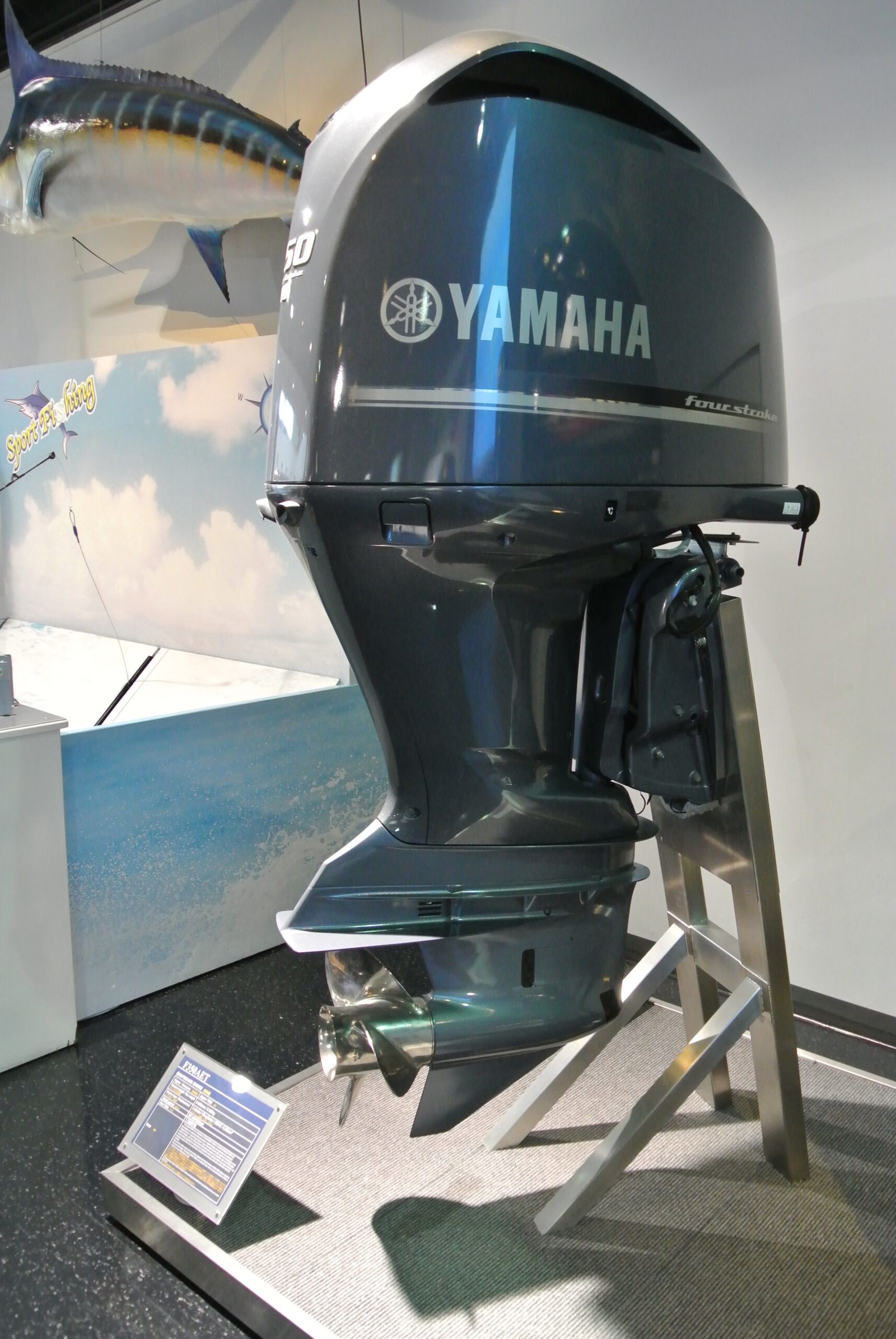
Every unit we list has been checked for a matching, unaltered serial number and authentic factory components before it goes up for sale. Recent genuine Yamaha engines in stock have included the Yamaha 9.9 HP T9.9LWHB, the Yamaha 90 HP F90LB, and the flagship Yamaha 425hp V8. You can browse the full current lineup on our Yamaha outboards category page. Availability shifts with demand, so get in touch with your target horsepower and we’ll confirm current stock along with the engine’s verification documentation.
Genuine Yamaha Parts and Oil
Verification doesn’t stop at the engine itself. Genuine Yamaha service relies on genuine Yamalube oil and Yamaha-specified parts, since off-brand substitutes can affect warranty claims even on an otherwise authentic engine. When buying replacement parts, purchase from an authorized Yamaha parts dealer rather than unverified marketplace listings, particularly for internal components like water pump kits, gaskets, and fuel system parts, where counterfeit versions have shown up in some markets and can cause real damage if installed.
Yamaha’s Manufacturing and Global Production
Yamaha builds the large majority of its marine engines in Japan, with some production and assembly also handled at facilities in other countries under Yamaha’s direct oversight and quality control. This matters for verification because a genuine Yamaha engine, regardless of exact assembly location, still carries Yamaha’s official serial numbering and passes through Yamaha’s quality control process, unlike unauthorized copies produced entirely outside the company’s supply chain. If you’re ever unsure whether a specific production location affects a unit’s authenticity, an authorized dealer serial lookup resolves the question directly.
Variable Camshaft Timing and Yamaha’s Engineering Edge
One of Yamaha’s genuine engineering advantages worth knowing about is Variable Camshaft Timing, used on select mid-range and V6 models, which adjusts valve timing to improve both low-end torque and top-end power depending on load, rather than forcing a compromise between the two. It’s the kind of refinement that’s difficult to fake convincingly, since it requires precision components and calibration that unauthorized manufacturers generally can’t replicate at scale, which is itself a reasonably good practical signal that an engine with genuinely smooth VCT-equipped performance is likely to be authentic.
How to Choose the Right Yamaha Engine
- Small tenders and inflatables: The 2.5 to 9.9 HP portable range prioritizes light weight for easy transport and mounting on smaller hulls.
- Aluminum fishing boats and jon boats: The 15 to 60 HP range typically fits, depending on hull size and typical load carried.
- Center consoles and mid-size fishing boats: The 90 to 150 HP range is where a large share of recreational buyers land.
- Offshore and performance applications: The 200 to 425 HP range, including the flagship V8, delivers serious speed and towing capacity for larger hulls and multi-engine setups.
Shaft length is critical to get right — measure your transom height accurately before ordering, since the wrong length puts the propeller at the wrong depth and hurts both performance and gearcase longevity. If you’re unsure which configuration your boat needs, send us the make, model, and transom measurement and we’ll confirm before you order.
Corrosion Protection in Practice
Genuine Yamaha engines carry a strong anti-corrosion reputation, but no outboard is maintenance-free in saltwater. Flush the engine with fresh water after every saltwater outing using the built-in flush port, inspect anodes at least twice a season and replace anything more than half consumed, and rinse the cowling and external connectors regularly to prevent salt buildup around electrical contacts. Owners who keep up this routine consistently report Yamaha outboards holding up well over years of coastal use.
Buying New vs. Used Genuine Yamaha Engines
New genuine Yamaha engines come with full factory warranty and current technology, at a price premium over used units. A well-maintained used genuine Yamaha engine can represent strong value, provided verification checks out cleanly. When buying used, always ask for compression test results, service history, hours if known, and confirmation of the serial number against Yamaha’s records. We test every used unit before listing and describe condition honestly, including any known issues.
Worldwide Shipping
We ship genuine Yamaha engines internationally by sea and air freight, with crating, insurance, and export documentation handled on our end. We’ve shipped Yamaha engines to customers across Africa, the Caribbean, Southeast Asia, the Middle East, and Europe, managing customs classifications so the engine arrives ready to mount rather than delayed at port while paperwork gets sorted. Every export includes documentation confirming the unit’s verified serial number and authentic origin.
Bulk and Fleet Orders
Dealers, charter operators, and commercial fleets sourcing genuine Yamaha engines in volume should reach out directly. We verify every unit individually regardless of order size, and we arrange consolidated shipping and volume pricing for multi-unit orders, which keeps per-unit freight costs reasonable compared to ordering engines individually over time.
Genuine Yamaha Engines for Commercial and Workboat Use
Beyond recreational buyers, we regularly supply verified genuine Yamaha engines to commercial operators — ferry tenders, dive boat operators, small-scale fishing fleets, and water taxi services. Documentation and verification matter even more in commercial applications, where insurance and regulatory compliance often require proof of an engine’s authentic origin. If you’re buying for a commercial application, tell us your typical duty cycle and load, and we’ll help you land on a configuration built for sustained heavy use, backed by full verification paperwork.
Red Flags When Shopping Elsewhere
If you’re comparing listings beyond what we have in stock, a few warning signs are worth watching for: a seller who won’t provide a serial number before payment, a price significantly below market for the claimed model and condition, missing or inconsistent documentation, and reluctance to let you verify the serial number independently with a dealer before completing the purchase. None of these automatically means a listing is fraudulent, but any of them is a reason to slow down and verify carefully before you send money.
A Brief History of Yamaha Marine
Yamaha entered the outboard motor business in 1960, building on manufacturing expertise it had already developed in motorcycles and industrial engines. That cross-industry engineering base is part of why Yamaha’s marine division has such a strong reputation for reliability, the same precision manufacturing standards that built Yamaha’s motorcycle business carried directly over into outboards. Over more than six decades, Yamaha grew into one of the two or three largest outboard manufacturers in the world, which is also exactly why the brand’s popularity has made it a target for counterfeiters in certain unregulated markets, genuinely popular products are the ones worth faking.
Rigging and Propeller Selection
Getting the most from a genuine Yamaha engine comes down partly to propeller choice, which is one of the more overlooked parts of buying an outboard. Stock aluminum props handle general use fine, but heavier boats loaded with gear typically do better with a slightly lower pitch to improve hole shot, while lighter boats running mostly flat water can pick up extra RPM at wide-open throttle with a higher pitch prop. Yamaha’s own stainless props, like the Saltwater Series, are engineered specifically around Yamaha’s gearcase geometry and tend to outperform generic aftermarket props built for other brands. If you’re not sure where to begin, we can recommend a starting pitch based on your boat’s length and typical load.
Maintenance on a Genuine Yamaha Engine
Routine service follows the standard four-stroke schedule: oil and filter changes every 100 hours or annually, spark plug replacement on the same interval, water pump impeller inspection roughly every 300 hours or three years, and gear oil service annually, especially with regular saltwater use. Sticking to genuine Yamaha parts and Yamalube oil during this routine matters more than owners sometimes realize, non-genuine substitutes can affect performance and, in some cases, void warranty coverage even when the underlying engine itself is authentic.
Trailering and Winter Storage
If you trailer your boat or lay it up for winter, a few habits protect your investment in a genuine Yamaha engine. Always trim the engine down for trailering rather than leaving it tilted, since a raised outboard bouncing on rough roads puts unnecessary stress on the tilt tube and mounting bracket. Before storage, run fogging oil through the cylinders, stabilize the fuel, and change the gear oil if it’s due, since old gear oil left sitting over winter is one of the more common causes of internal corrosion found during spring service.
Genuine Yamaha Engines vs. Other Major Brands
Buyers comparing genuine Yamaha engines against Mercury, Honda, and Suzuki are typically weighing dealer network breadth, resale value, and specific technology like Variable Camshaft Timing against what competing brands offer. Yamaha generally holds resale value about as well as any brand in the industry, largely because its reputation for reliability is so well established globally. Mercury edges ahead on raw power-to-weight with its supercharged Verado line, and Honda and Suzuki both compete closely on fuel efficiency at mid-range horsepower. Where genuine Yamaha engines consistently win is the combination of a truly global dealer and parts network with an engineering reputation that’s held up for decades, which is exactly why authenticity verification matters so much, buyers are paying for that reputation specifically.
Financing and Fleet Orders
We work with dealers, charter operators, and commercial fleets who want to source genuine Yamaha engines in quantity for similar hulls. If you’re outfitting a fleet, tell us the quantity and timeline and we’ll work out volume pricing along with a consolidated shipping plan so freight costs stay reasonable on a per-unit basis rather than being charged individually for each engine, with full verification documentation provided for every unit.
Repowering With a Verified Genuine Yamaha Engine
A large share of buyers looking for genuine Yamaha engines aren’t outfitting a new boat, they’re repowering an older hull that’s outgrown its original engine or is nearing the end of its service life. Repowering with a verified genuine Yamaha engine protects the investment you’re making twice over: you get modern fuel efficiency and reliability, and you know the warranty and parts support you’re paying for is actually valid. Before repowering, confirm your transom is rated for the new engine’s weight and horsepower, and double check your boat’s maximum horsepower rating, which is usually posted on a capacity plate near the helm. We can help match a genuine Yamaha model to your existing rigging and controls to minimize the extra work involved in the swap.
Documentation We Provide With Every Sale
Every genuine Yamaha engine we sell ships with documentation confirming the verified serial number, our inspection findings, and, where available, the original dealer sale history. This isn’t just paperwork for its own sake, it’s what protects you if a warranty question or resale situation comes up years down the line and you need to prove the engine’s authentic origin. Keep this documentation with your boat’s records the same way you’d keep a vehicle title.
Why Buyers Trust Us for Genuine Yamaha Engines
We’ve built our process around the exact problem this guide addresses: buyers want certainty that what they’re paying for is real. Every genuine Yamaha engine that comes through us gets a serial number check, a physical inspection for mismatched or non-genuine components, and a compression test before it’s ever listed for sale. We turn away units that don’t check out cleanly rather than risk selling something we can’t fully stand behind, which is a slower way to run inventory but it’s the reason customers keep coming back when they need another engine down the line.
Common Questions About Genuine Yamaha Engines
How do I check if a Yamaha outboard is genuine?
Look up the serial number stamped on the engine mount bracket with an authorized Yamaha dealer, and inspect casting marks and fasteners for consistency with Yamaha’s official parts references.
Are all Yamaha outboards made in Japan?
Most are, though Yamaha also operates some production and assembly facilities elsewhere under its own direct oversight and quality control, all carrying genuine Yamaha serial numbering.
What horsepower range do genuine Yamaha engines cover?
From 2.5 HP portable engines up to the 425 HP flagship V8, covering nearly every recreational and commercial application.
Do you ship internationally?
Yes, we export worldwide with sea and air freight options depending on your timeline and budget, with verification documentation included.
Is a used genuine Yamaha engine a safe purchase?
Yes, provided the serial number checks out and the engine has been properly inspected. We verify every used unit before listing.
What should I do if a seller won’t provide a serial number?
Treat it as a serious red flag and walk away. Legitimate sellers of genuine Yamaha engines have nothing to hide and will readily provide serial numbers for verification.
Does buying from an authorized reseller guarantee authenticity?
It significantly reduces risk, but verification is still worth doing yourself. We verify every unit’s serial number independently regardless of where it originally came from.
Ready to Buy Genuine Yamaha Engines
Whether you need a small portable engine or a full offshore repower, we can help you source a verified genuine Yamaha engine and get it shipped to your location. Tell us your boat’s horsepower rating, transom height, and typical use, and we’ll confirm current availability, verification documentation, and a shipping quote. You can also browse our other outboard motor buying guides, including our full Yamaha outboards buying guide and our guide to verifying genuine outboard motors generally, if you’re still comparing options.
For official specifications, current model lineups, and warranty details straight from the manufacturer, Yamaha’s official outboards site maintains full documentation on the current range.
Posts Widget
- 1
- 2

- 3

- 4


S.H Continental Marine
USA HERALD MAGAZINE INC
Our team is dedicated to providing exceptional customer service.
Email: info@shcontinentalmarine.com
Choose S.H Continental Marine
for your outboard engine needs and enjoy superior quality, exceptional customer service, and unbeatable prices.
