
Marine Engines for Fishing Boats: The Complete Guide to Torque and Reliability

Marine engines for fishing boats have to handle a driving pattern that’s completely different from cruising or watersports. You’re not running wide open for long stretches — you’re idling along a shoreline, throttling up briefly to reach the next spot, then dropping back down to troll or drift. Marine engines for fishing boats need to handle that stop-and-go pattern without complaint, and they need to be reliable enough that a dead battery or a flooded engine doesn’t end your day thirty minutes after it started.
This guide covers what actually matters for a fishing-focused engine: low-RPM behavior, fuel delivery, tiller versus console control, sizing by boat type, and how to keep a fishing engine dependable trip after trip.
Low-RPM Torque Matters More Than Top Speed
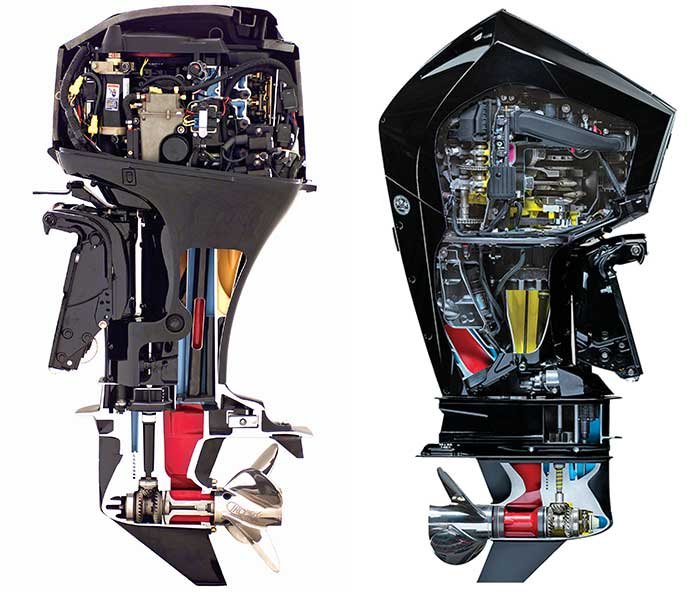
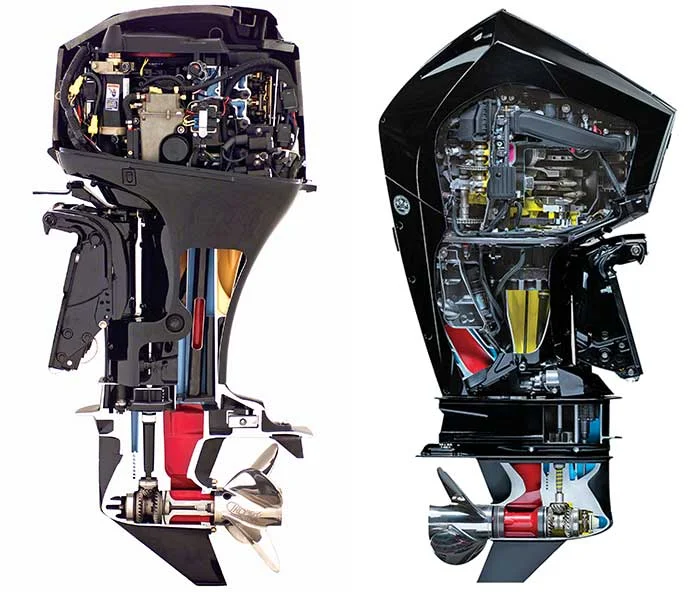
The Yamaha 40 HP F40JEHA is a good illustration of what a fishing-focused engine looks like on paper. It’s a 3-cylinder, 747cc four-stroke with electronic fuel injection, built as much for smooth idle and low-speed control as for getting you to your spot. That combination matters because fishing boats spend a lot of their engine hours at low throttle, not wide open — and an engine that bogs or hunts for RPM at idle is a real annoyance when you’re trying to hold a position over a reef or work along a drop-off.
Specifications Worth Checking
| Spec | Yamaha F40JEHA |
|---|---|
| Horsepower | 40 HP |
| Engine type | 3-cylinder, 4-stroke, SOHC |
| Displacement | 747cc |
| Fuel delivery | Electronic fuel injection |
| Shaft length | 20″ (long shaft) |
| Weight | ~214 lbs |
| Steering | Tiller handle |
| Starting | Electric |
| Full throttle range | 5,000–6,000 RPM |
For larger fishing boats needing more range or the ability to run offshore, the 90 HP VF90LA steps up the power while keeping the same EFI reliability, and it’s a common choice for bass boats and multi-species rigs that need to cover more water between spots.
Matching Engine Size to Boat Type and Fishing Style
| Fishing style | Typical boat | Suggested HP range |
|---|---|---|
| Inshore skiff fishing | 14–18 ft aluminum or fiberglass | 25–60 HP |
| Bass and multi-species tournament | 18–21 ft bass boat | 90–150 HP |
| Bay and nearshore fishing | 20–24 ft center console | 115–200 HP |
| Offshore fishing | 24+ ft center console | 200–425 HP, often twin |
Aluminum bass boats and jon boats generally sit well in the 25–60 HP range depending on hull length and weight capacity. Bay boats and center consoles chasing more range and speed typically want 90 HP and up. Going oversized on a light aluminum hull doesn’t just waste money — it can push you over the boat’s rated horsepower limit, which is both a safety issue and something that will show up if you ever try to insure or sell the boat.
Fuel Injection vs. Carburetion for Fishing Use
EFI has mostly won this argument over the last decade, and for fishing specifically it’s an easy call. A carbureted engine can flood if you’re idling for a long stretch or bumping the throttle in and out repeatedly, which is exactly the pattern fishing produces. EFI systems manage that fuel curve automatically, which means fewer stalls, more consistent idle, and easier cold starts on an early morning run out.
Tiller Control for Small Fishing Boats
A lot of serious anglers actually prefer tiller steering on smaller rigs, even though it looks like a step down from a console setup. Tiller control puts throttle and steering in one hand, which is genuinely useful when you’re working a shoreline solo and need to make constant small adjustments while also managing a rod. The F40JEHA’s electric tiller with adjustable throttle tension is built specifically for that kind of single-handed operation.
Battery Power and Livewell Draw
Fishing boats put more electrical demand on the charging system than most other applications — livewells, aerators, fishfinders, and trolling motor batteries all draw power that has to come from somewhere. The F40JEHA’s alternator puts out 17 amps, which is enough for a modest electronics and livewell setup, but if you’re running a serious multi-battery system with a high-draw livewell pump and multiple electronics displays, it’s worth checking your total amperage needs against the alternator output before assuming any given engine will keep up.
Engine Noise and Spooking Fish
Anyone who’s fished skinny water knows a loud, rough-running engine can put fish down before you’re even in casting range. Modern four-stroke engines are dramatically quieter than older two-strokes, and the F40JEHA’s smoother idle characteristics are partly why anglers favor it for skittish inshore species. Approaching a spot at low RPM rather than trolling in hot is worth doing regardless of engine choice, but a quieter engine gives you more margin for error.
Reliability in the Field
Nothing ruins a fishing trip like an engine that won’t start. CARB 3-star certified engines like the F40JEHA meet strict emissions and reliability testing, and sticking with EFI four-strokes from an established manufacturer significantly cuts your odds of a dead trip. Beyond the engine itself, keeping the battery terminals clean, running fresh fuel (ethanol-blended gas sitting in a tank for months is a common cause of hard starts), and flushing after saltwater use will do more for reliability than almost anything else.
Seasonal Maintenance for Fishing Engines
Fishing engines often see irregular use — heavy through peak season, then sitting for weeks at a time in the off months. That pattern is harder on an engine than steady regular use, since fuel degrades and seals can dry out during long idle periods. Running fuel stabilizer before extended storage, changing the oil before winterizing rather than after, and doing a proper flush and fog before any multi-week layup will meaningfully cut down on spring startup problems.
Buying Marine Engines for Fishing Boats
We carry the full Yamaha fishing-appropriate range from small tiller models through 90 HP and beyond, all brand new with full manufacturer warranty and ready to ship. Tell us your hull type and typical fishing style and we can help you land on the right HP and shaft length. Contact our team for a quote, or check out our smaller high-thrust models if you’re also outfitting a tender for getting to the fishing grounds. We ship worldwide.
For guidance on properly matching horsepower to your specific hull, the Discover Boating horsepower guide is a solid independent reference, and Yamaha’s official outboard site has complete spec sheets for the full F-series lineup.
Frequently Asked Questions
What HP is best for a small aluminum fishing boat?
Most 14–16 foot aluminum boats do well in the 25–40 HP range, though you should always stay within the boat’s rated maximum, which is usually posted on a capacity plate near the helm.
Is tiller or remote steering better for fishing?
Tiller is common on smaller rigs and single-handed fishing since it combines throttle and steering. Remote steering makes more sense on larger boats or ones with a proper console.
Do I need a high-thrust model for fishing?
Only if you’re regularly running a heavily loaded boat at low speed, like trolling with a full livewell and gear. Standard gearing is fine for most recreational fishing.
How much amperage do I need for a typical fishing electronics setup?
It depends on your livewell pumps, aerators, and electronics, but a 17-amp alternator like the F40JEHA’s handles a modest setup comfortably — heavier setups may need a higher-output engine.
Does engine noise really affect fishing success?
In shallow, clear water with skittish species, yes — a smoother, quieter four-stroke gives you more margin when approaching a spot compared to a loud, rough-running engine.
How should I store a fishing engine over the off season?
Run fuel stabilizer through the system, change the oil before storage rather than after, and do a proper flush and fog before any layup longer than a few weeks.
Can ethanol-blended gas cause problems in a fishing engine?
Yes, especially if fuel sits unused for extended periods — it’s a common cause of hard starting after the off season, and running fresh fuel or a stabilizer helps prevent it.
Posts Widget
- 1

- 2
- 3
- 4


S.H Continental Marine
USA HERALD MAGAZINE INC
Our team is dedicated to providing exceptional customer service.
Email: info@shcontinentalmarine.com
Choose S.H Continental Marine
for your outboard engine needs and enjoy superior quality, exceptional customer service, and unbeatable prices.
