
Marine Outboard Technology: What Powers Today’s Engines
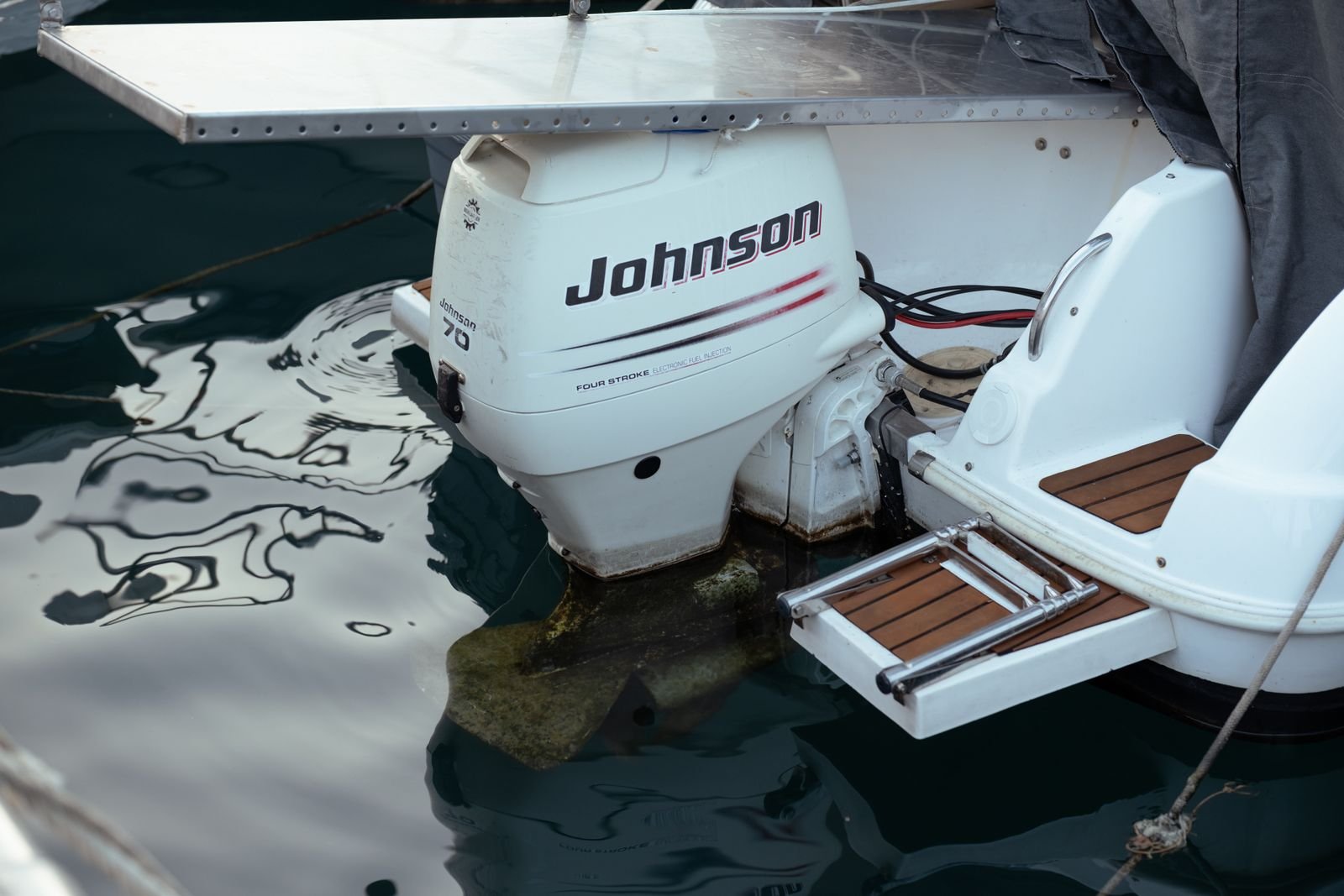
Where Marine Outboard Technology Actually Stands Right Now
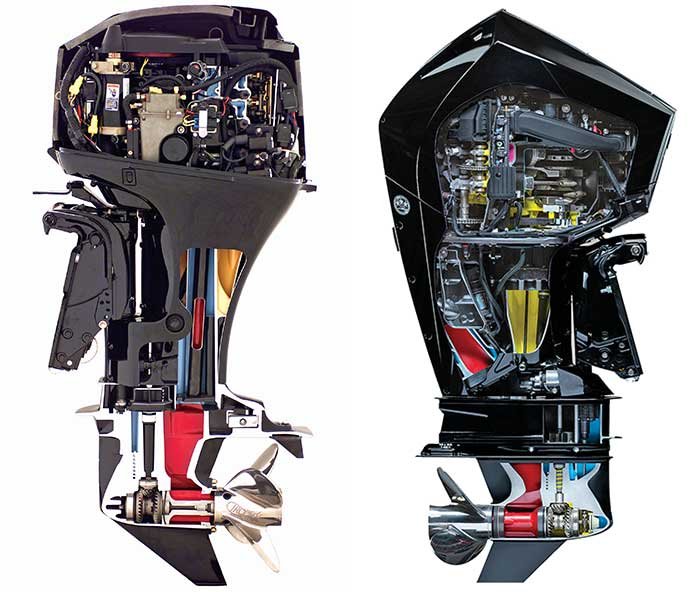
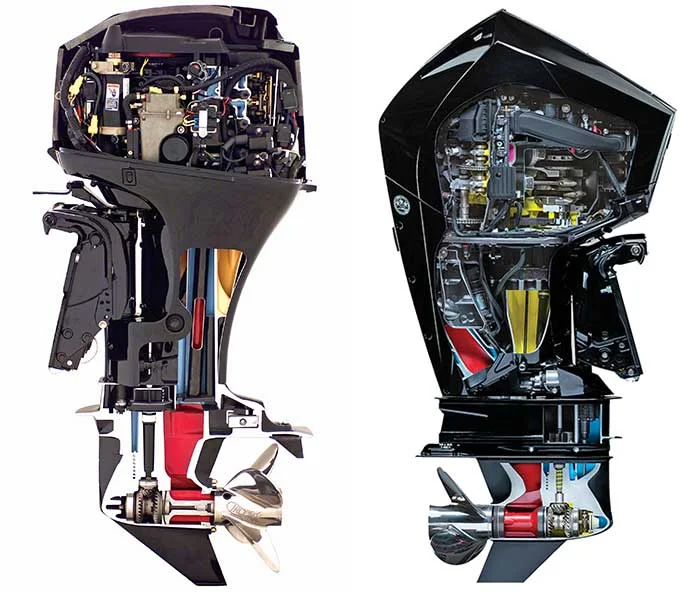
Ask anyone who’s owned an outboard for twenty years and they’ll tell you the same thing: today’s motors barely resemble what used to sit on transoms in the 2000s. Marine outboard technology has moved from carburetors and manual chokes to fuel injection systems that adjust hundreds of times a second, digital shift controls that replace mechanical cables, and in a growing number of cases, electric propulsion that skips combustion entirely. We sell these engines every day, and the conversations with customers have shifted too. People aren’t just asking about horsepower anymore. They’re asking about throttle response, integrated displays, and whether a motor can talk to their chartplotter.
This piece covers what’s actually changed under the cowling, which features are worth paying extra for, and how to read a spec sheet that’s now as much about electronics as it is about displacement. Everything referenced here is available through our current stock, so you can see the technology in person rather than just read about it.
From Carburetors to Computers
The shift that defined the last two decades of marine outboard technology was the move from carbureted two-strokes to fuel-injected four-strokes, driven partly by emissions rules and partly because injected engines simply run better. Carburetors mix fuel and air mechanically, which works fine until conditions change, altitude, temperature, load, and then the mixture is wrong until someone adjusts it by hand. Electronic fuel injection uses sensors to read those conditions constantly and adjust the mixture in real time, which is why modern outboards start easier in cold weather and idle more smoothly at the dock.
The next leap was direct injection, where fuel is sprayed straight into the combustion chamber at high pressure rather than mixed in the intake first. Yamaha’s XTO Offshore V8, for example, uses five separate fuel pumps working at up to 2,900 PSI, paired with a 12.2:1 compression ratio that’s unusually high for a marine engine. That combination burns fuel more completely, which shows up as both more usable power and better fuel economy at cruise. It’s a good example of how modern outboard engineering treats combustion efficiency as seriously as raw horsepower now.
Digital Throttle and Shift
Older outboards controlled throttle and gear shift through steel cables running from the helm to the engine. It worked, but cables stretch, corrode, and eventually need replacing, and the feel at the throttle was never perfectly consistent. Digital Throttle and Shift, usually shortened to DTS, replaces those cables with electronic signals. Move the throttle lever and a sensor sends a command to the engine’s control module, which adjusts timing and shift engagement in milliseconds.
Mercury’s Verado lineup leans heavily on this, and their 2026 update to the V10 Verado platform, now offered up to 425 horsepower, pairs DTS with what Mercury calls Adaptive Speed Control, which holds a set RPM automatically even as load changes from waves or current. For anyone running twin or triple engine setups, DTS is also what makes synchronized shifting between engines possible, so all your motors shift into gear at the same moment instead of clunking in one after another.
Joystick and Wireless Helm Control
This is probably the single biggest visible change in how people actually drive a boat. Yamaha’s Helm Master EX system lets an operator move around the boat with a wireless joystick controller rather than being tied to a fixed helm station, with autopilot and integrated man-overboard response built into the same system. Instead of racing back to the wheel when someone falls in, the system can hold position or bring the boat back to a marked point automatically.
Suzuki has taken a similar direction by partnering with VETUS to unify joystick control across the outboard, the steering system, and bow thrusters, all from one interface. Contra-rotating propellers on twin Suzuki setups also help here, since opposing prop rotation cancels out the torque steer that used to make close-quarters docking trickier on twin-engine boats. None of this is gimmick territory. Docking in a crosswind with a loaded boat is exactly the situation where joystick control earns its keep, and it’s now standard enough that we get more questions about it than about horsepower on mid-range and larger outboards.
Electric and Hybrid Propulsion
Electric outboards used to mean trolling motors bolted to the bow of a bass boat. That’s changed. Torqeedo builds electric propulsion systems that scale from portable units like the Ultralight 403AC, pulling 1,100 watts off a 915 Wh lithium battery for kayaks and canoes, up through the Cruise and Travel lines that push mid-range boats at speeds comparable to small gas outboards, with none of the exhaust, fuel smell, or scheduled oil changes.
Tohatsu has also moved into this space with a 6kW, 48-volt electric outboard aimed at small craft, alongside new battery-less EFI models in their 8, 9.9, 15, and 20 horsepower gas range that simplify starting without needing a separate battery at all. The direction is clear even if gas outboards aren’t going anywhere soon: electric propulsion has moved from a niche accessory to a real category with its own lineup, and marine outboard technology now spans both combustion and battery power depending on what the boat and the trip call for.
Charging Systems and Onboard Power
As boats carry more electronics, trolling motors, livewell pumps, chartplotters, sonar, the outboard’s alternator has had to keep up. Mercury’s current Verado platform ships with a 150-amp alternator as standard, with an optional dual-mode 12V/48V alternator available for boats running 48-volt trolling motor systems or heavier house battery banks. That’s a meaningful jump from outboards a decade ago, which often struggled to keep pace with a boat’s electrical demands on a long day of fishing with everything running at once.
Electric steering has followed a similar path. Mercury’s electric steering option on the Verado line uses under half the power draw of older hydraulic steering pumps, which sounds like a small detail until you’re running a full electronics suite off the same battery bank and every amp matters.
Quieter Running by Design
Noise and vibration engineering has become its own discipline. Mercury’s naturally aspirated 300hp V8 Verado uses what they call Transient Spark technology to smooth out torque delivery, combined with an isolated midsection mount that separates engine vibration from the transom. Mercury’s own figures put the result at roughly 20% quieter at idle and 35% quieter at cruise compared to the engine it replaced. On a full day on the water, that difference is the kind of thing you actually notice, especially trolling or anchored near other boats.
Self-Diagnostics and Onboard Displays
Modern outboards run a network of sensors constantly, tracking oil pressure, water flow through the cooling system, engine hours, fuel consumption, and dozens of other data points that used to be invisible unless something already went wrong. That data now feeds directly into color displays at the helm, and in most cases into multi-function chartplotters over NMEA 2000 networks, so the same screen showing your GPS position also shows engine temperature, trim angle, and fuel burn in real time.
This matters more than it sounds like on paper. Catching a slow drop in oil pressure or a rising water temperature trend on a display, before it becomes an audible alarm, is often the difference between a five-minute fix at idle and a tow back to the dock. Mercury’s SmartCraft system, Yamaha’s Command Link Plus, and Suzuki’s equivalent displays all do versions of this now, and it’s become close to standard across mid-range and larger outboards rather than a premium add-on reserved for flagship engines.
Self-diagnostics also help at the service counter. When a customer brings in an engine with a fault code instead of a vague description of “it just started running rough,” a technician can usually pull the stored code and go straight to the likely cause instead of working through every possibility by hand. That’s a direct result of how far marine outboard technology has come on the software side, not just the mechanical side.
Where Hybrid and Multi-Power Setups Are Headed
A growing number of boaters are pairing a primary gas outboard with a smaller electric unit for trolling, running the gas motor to reach the fishing grounds and switching to near-silent electric power once they’re working a spot. This isn’t a factory hybrid drivetrain in the automotive sense, it’s closer to running two separate propulsion systems on the same boat, but the effect is similar: quiet, fume-free operation exactly when it matters most, with the range and refueling convenience of gas for everything else.
We expect this pairing to become more common as battery energy density keeps improving and prices on units like the Torqeedo Cruise range keep coming down. It’s a practical middle ground for anyone who isn’t ready to go fully electric but wants the option of silent running without giving up range.
Corrosion Resistance and Materials
Technology in outboards isn’t only about electronics. Materials engineering has quietly improved just as much. Yamaha’s plasma-fused cylinder liners on the XTO Offshore platform, for example, create a harder, more wear-resistant cylinder wall than traditional cast iron sleeves, which helps the engine hold tighter tolerances over its service life. Anodes, powder-coated internals, and sealed electrical connectors have all improved across most major brands too, which is a big part of why saltwater outboards last considerably longer than they did fifteen or twenty years ago with proper flushing and basic care.
A Quick Spec Snapshot
| Feature | What it does | Where you’ll find it |
|---|---|---|
| Direct fuel injection | Sprays fuel at high pressure directly into the cylinder for cleaner, more complete combustion | Yamaha XTO Offshore V8 (5.6L, 425hp) |
| Digital Throttle & Shift | Replaces mechanical cables with electronic control for smoother, synchronized shifting | Mercury Verado V8/V10 lineup |
| Wireless joystick control | Lets the operator control the boat from anywhere aboard, with autopilot functions | Yamaha Helm Master EX |
| Contra-rotating props | Cancels torque steer on twin-engine setups for easier docking | Twin Suzuki DF outboard installations |
| Lithium electric propulsion | Battery-powered thrust with no combustion, fuel, or exhaust | Torqeedo Cruise and Ultralight ranges |
| Dual-mode alternator | Charges both 12V and 48V systems from one outboard | Mercury Verado (optional) |
Comparing a Simple Engine to a Fully Digital One
It helps to put two real examples side by side. A small tiller-steer 4-stroke, something like a Tohatsu 9.9 HP or a Yamaha F9.9, uses mechanical shift, a simple carbureted or basic EFI fuel system, and no networked display at all. It’s easy to work on with basic tools, parts are inexpensive, and there’s very little to go wrong electronically. That simplicity is exactly why small tiller outboards remain popular for dinghies, tenders, and backup power on sailboats, where reliability and ease of field repair matter more than refinement.
Compare that to a Mercury Verado V10 or a Yamaha XTO Offshore, both running full DTS, digital displays, electric steering, and networked diagnostics. These engines deliver a smoother, quieter, more precisely controlled experience, but they also require a technician with the right diagnostic tools if something does go wrong, and repairs tend to cost more in both parts and labor. Neither approach is wrong. It comes down to matching the engine’s complexity to how, where, and how often you actually use the boat, and whether you value outright refinement or field-serviceable simplicity more.
How Buyers Should Weigh These Features
When a customer asks us to help choose between two outboards with similar horsepower but different technology packages, we usually walk through three questions: how often will you run in tight marinas or crowded anchorages where joystick control earns its keep, how much onboard electronics do you already run that would benefit from a bigger alternator, and how comfortable are you (or your local mechanic) working on a digitally controlled engine versus a mechanical one. The answers usually point pretty clearly toward one option over the other, and it’s a more useful way to shop than just comparing horsepower and price.
What This Means When You’re Actually Buying
Reading a modern outboard spec sheet means looking past horsepower to the control system behind it. Two engines with identical horsepower numbers can feel completely different at the helm if one has DTS and adaptive speed control and the other is running mechanical cables. If you’re repowering a boat that already has electronics you rely on, checking alternator output and whether the engine supports your existing display network matters just as much as the HP rating on the cowling.
We stock engines across this entire range, from straightforward mechanical-shift small outboards for anyone who wants simplicity and easy field repairs, up through fully digital Verado and XTO Offshore platforms for boats that need the control precision. If you’re not sure which generation of marine outboard technology actually fits your boat and how you use it, that’s a conversation worth having before you buy rather than after.
Our Inventory Reflects Where This Is Heading
We carry new and used outboards from Yamaha, Mercury, Suzuki, Tohatsu, Evinrude, and Torqeedo, which means we see the full spread of marine outboard technology come through our shop, from simple tiller-steer 4-strokes to digitally controlled offshore V8s and electric systems built for silent running. That range lets us give a straight answer when someone asks whether a feature is worth the upgrade cost for their specific boat and how they actually use it, rather than pushing whatever happens to be sitting on the floor. Ship anywhere in the world, and every engine, new or used, gets tested before it goes out the door.
Common Questions About Marine Outboard Technology
What is DTS on an outboard motor?
Digital Throttle and Shift replaces mechanical throttle and shift cables with electronic controls, giving smoother, more precise shifting and enabling features like synchronized multi-engine control.
Are electric outboards as powerful as gas motors?
In the small to mid range, yes, close enough for most recreational use. Torqeedo’s Cruise line, for example, is built to match the performance of gas outboards in a similar power class, though very high-horsepower electric outboards for offshore use are still limited compared to gas and diesel options.
Is newer marine outboard technology worth the extra cost?
It depends on how you use the boat. Features like joystick control and adaptive speed control pay for themselves quickly if you’re docking in tight marinas or running long days at varied throttle. For simple lake use, a mechanically simpler outboard can be the more practical and easier to service choice.
Can older boats be fitted with newer outboard technology?
Often yes, as long as the transom and rigging can support the new engine’s control systems. Digital shift engines typically need matching digital controls at the helm, so a full repower sometimes means updating the control head and cabling too, not just swapping the motor.
Which brands are leading in marine outboard technology right now?
Yamaha, Mercury, and Suzuki are pushing hardest on digital control and joystick systems for mid to large outboards, while Torqeedo leads on electric propulsion and Tohatsu has focused on simplifying small gas outboards with battery-less EFI.
Do I need a compatible display to use these features?
For diagnostics and engine data, yes, you’ll generally need a compatible multi-function display or the manufacturer’s own gauge system. Core features like DTS and electric steering work through the engine’s own control head regardless of whether a display is connected.
Does more advanced technology mean more maintenance?
Not necessarily more frequent maintenance, but it often means maintenance needs to be done by someone with the right diagnostic equipment, particularly for anything involving the electronic control module or digital shift system. Routine service items like oil, filters, and impellers stay largely the same across both simple and advanced engines.
Where to See This Technology in Person
Spec sheets only tell you so much. If you can, sit at the helm of a boat running DTS and try the throttle response side by side with a mechanical-shift engine, or ask to see a joystick docking demo if the dealer offers one. The difference is obvious within a few minutes in a way that’s hard to convey in writing. We keep a rotating stock of both simple and technology-heavy outboards, new and used, precisely so customers can ask questions about the real differences rather than relying on a brochure. If you’re weighing a repower decision and want an honest opinion on whether the newer marine outboard technology is worth the jump for your specific boat, that’s exactly the kind of question we’re set up to answer.
Related Guides
To see this technology applied to specific hull types, check our guides on outboard motors for pontoons, advanced boat engines, and outboard motors for canoes for the lighter end of the range.
Final Thoughts
Marine outboard technology has genuinely changed what it means to own and run a boat, from how you dock in a crosswind to how quiet the ride is at cruise. Not every feature matters for every boater, but understanding what’s actually behind the spec sheet numbers means you can spend your money on the technology that fits how you actually use your boat, not just the biggest number on the box. We’re happy to walk through the options with you and match a motor to your boat rather than the other way around.
Posts Widget
- 1

- 2
- 3
- 4


S.H Continental Marine
USA HERALD MAGAZINE INC
Our team is dedicated to providing exceptional customer service.
Email: info@shcontinentalmarine.com
Choose S.H Continental Marine
for your outboard engine needs and enjoy superior quality, exceptional customer service, and unbeatable prices.
