
Advanced Boat Engines: Inside Today’s Flagship Outboards

What Actually Counts as an Advanced Boat Engine Today
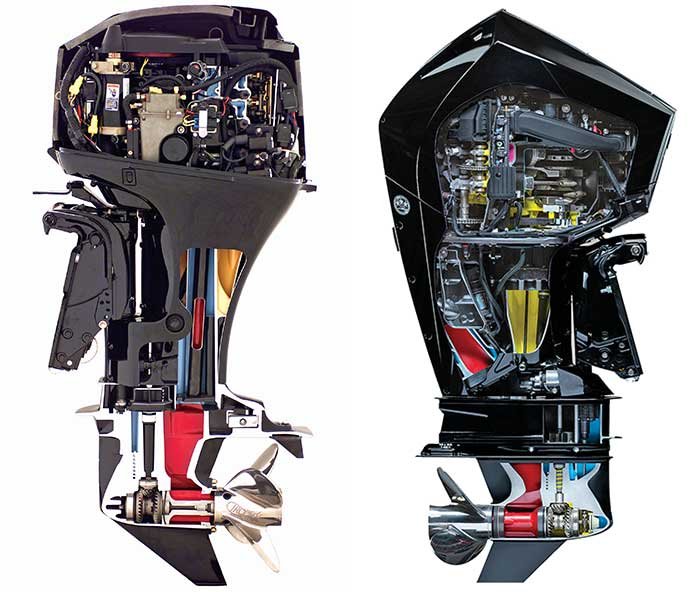
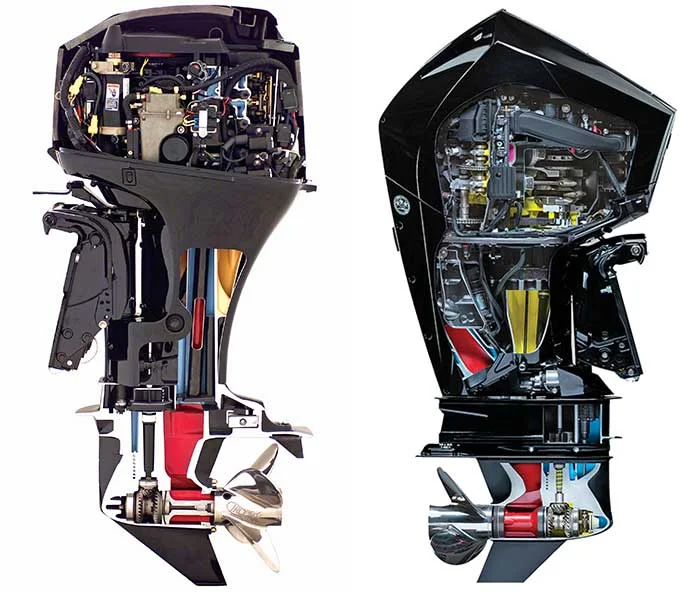
The term gets thrown around loosely, but real advanced boat engines share a few things in common: direct fuel injection running at very high pressure, digital control over throttle and shift, electric steering, and engineering aimed as much at refinement and control as at raw horsepower. We sell everything from simple tiller outboards to flagship V8 offshore engines, and the gap between those two ends of the lineup has never been wider. This guide breaks down what’s actually inside today’s most advanced engines, the real specs behind the marketing language, and which models in our stock represent the top of the current lineup.
The V8 and V10 Offshore Class
At the top end of what’s available for recreational and light commercial boats sits the V8 and V10 offshore outboard class, led by Yamaha’s XTO Offshore and Mercury’s Verado platform. These aren’t scaled-up versions of mid-range engines, they’re purpose-built for boats that need serious power delivered reliably, often in demanding offshore conditions.
The Yamaha XTO Offshore is a 5.6-liter V8 producing 425 horsepower, built around direct fuel injection running through five separate fuel pumps at pressures up to 2,900 PSI, with an unusually high 12.2:1 compression ratio for a marine engine. Its cylinder liners use a plasma-fusion process that creates a harder wear surface than traditional cast iron sleeves, and the engine runs dual overhead camshafts with a self-tensioning chain to maintain precise valve timing over its service life. A two-stage exhaust system and all-electric steering round out an engine that weighs around 442 kg (roughly 975 lbs) and comes with a five-year factory warranty.
Mercury’s Verado line covers similar territory with its naturally aspirated 4.6-liter V8, offered at up to 300 horsepower and weighing about 272 kg (600 lbs), and their expanded V10 platform now reaching 425 horsepower for 2026. Mercury leans on Transient Spark technology to smooth torque delivery and an isolated midsection mount to cut vibration transfer into the transom, with the company claiming roughly 20% quieter idle and 35% quieter cruise compared to the engines they replaced.
Digital Throttle and Shift: The Backbone of Advanced Control
What separates these engines from older high-horsepower outboards isn’t just the power figure, it’s how precisely that power gets delivered. Digital Throttle and Shift, DTS, replaces mechanical cables with electronic signals between the helm and the engine’s control module, which allows for near-instant, consistent throttle response and, critically, synchronized shifting across multiple engines on the same boat. On a triple or quad-engine center console, that synchronization is what keeps all the engines shifting into gear together instead of clunking in one after another.
Mercury’s 2026 Verado update pairs DTS with Adaptive Speed Control, which automatically holds a set RPM even as load changes from waves, current, or trim adjustments, a feature that matters considerably more on a boat running offshore in variable sea conditions than it would on a calm inland lake.
Electric Steering and Reduced Power Draw
Older high-horsepower outboards relied on hydraulic steering systems that, while effective, drew meaningful power and added complexity in the form of hydraulic lines, pumps, and fluid maintenance. Electric steering, now standard or optional across most advanced boat engines, uses under half the power draw of hydraulic systems according to Mercury’s own figures, freeing up alternator capacity for the electronics-heavy boats these engines typically power. The Yamaha XTO Offshore’s all-electric steering system follows the same logic, prioritizing precision and reduced complexity over the older hydraulic approach.
Charging Capacity for Serious Electronics
Boats running advanced offshore engines typically also run substantial electronics: multiple chartplotters, radar, livewells, outriggers, and sometimes 48-volt trolling motor systems for extended range fishing. Mercury’s current Verado platform addresses this with a 150-amp alternator as standard equipment, with an optional dual-mode 12V/48V alternator available for boats that need to keep both a traditional 12V house bank and a 48V trolling motor system charged from the same engine. That kind of charging capacity simply wasn’t available on outboards a decade ago, and it’s become a genuine differentiator among advanced boat engines rather than a minor spec sheet line.
Combustion Efficiency: Where the Real Gains Are
Horsepower numbers get the attention, but the more meaningful engineering story in advanced boat engines is combustion efficiency. Direct injection at high pressure atomizes fuel far more finely than port injection, which lets the engine run a higher compression ratio without knock, extract more energy from the same amount of fuel, and produce fewer unburned hydrocarbons in the exhaust. The Yamaha XTO Offshore’s 12.2:1 compression ratio, paired with direct injection at up to 2,900 PSI, is a good example of how far this has come; older carbureted or even early EFI outboards ran compression ratios well below that, simply because the fuel delivery couldn’t support it without pinging or overheating.
The practical result for an owner is twofold: more usable torque across the RPM range rather than just a higher peak number, and better fuel economy at cruise, which matters considerably on an offshore engine that might run for hours at a stretch reaching distant fishing grounds. It’s also part of why advanced boat engines increasingly recommend or require specific fuel octane ratings, since the compression and injection timing are tuned tightly around a particular fuel spec.
Cooling and Thermal Management
Higher compression and higher horsepower both generate more heat, and advanced boat engines address this with more sophisticated cooling architecture than older designs. Two-stage exhaust systems, like the one on the Yamaha XTO Offshore, separate exhaust gas flow to manage backpressure and temperature more precisely than a single-stage system. Larger water pumps, additional cooling passages around cylinder liners, and more precise thermostat control all contribute to keeping these engines running within a tight temperature window even under sustained heavy load, which is exactly the condition offshore boats put engines through on long runs at cruising RPM.
Real-World Performance Context
Numbers on a spec sheet only tell part of the story. What owners of advanced boat engines actually notice day to day is how the power comes on: smoother acceleration out of the hole thanks to digital throttle mapping, less noticeable RPM hunting at idle thanks to adaptive speed control, and a flatter torque curve that makes holding a specific speed in rough water considerably easier than with an older mechanical-shift engine. On a twin or triple-engine center console pushing offshore in a moderate chop, that refinement translates into a noticeably less fatiguing ride over a long day, which matters as much as top speed for most serious offshore anglers and cruisers.
Advanced Engines for Commercial and Working Boats
It’s not only recreational anglers and cruisers buying into this class. Commercial operators running outboard motors for commercial boats increasingly specify advanced engines for the same reasons: reliability under sustained load, better fuel economy over long duty cycles, and diagnostic systems that make fleet maintenance more predictable. The same holds for operators running fishing vessel engines that need to cover long distances to working grounds and back reliably, day after day, where an engine failure isn’t just an inconvenience but a lost day of income. Larger operations moving gear and personnel, the kind covered in our guide to marine engines for cargo boats, weigh many of the same factors, charging capacity, digital diagnostics, and duty-cycle durability, when specifying engines for their fleets.
Spec Comparison: Flagship Offshore Engines
| Engine | Horsepower | Displacement | Weight | Key Technology |
|---|---|---|---|---|
| Yamaha XTO Offshore | 425 hp | 5.6L V8 | ~442 kg (975 lbs) | Direct injection, plasma-fused liners, electric steering |
| Mercury Verado V8 | up to 300 hp | 4.6L V8 | ~272 kg (600 lbs) | Transient Spark, isolated mounting, DTS |
| Mercury Verado V10 | up to 425 hp | V10 | Varies by config | DTS, Adaptive Speed Control, dual-mode alternator option |
Joystick Control on High-Horsepower Setups
Multi-engine offshore boats running twin, triple, or quad advanced outboards increasingly ship with joystick docking control as standard or optional equipment. Yamaha’s Helm Master EX system extends this further with wireless joystick operation, letting an operator move around the boat while retaining full control, along with autopilot and man-overboard response features. Suzuki has taken a related approach by integrating joystick control across the outboard, steering, and bow thrusters through a partnership with VETUS, with contra-rotating propellers on twin installations helping cancel out torque steer for more predictable close-quarters handling.
On a large, heavy boat with three or four engines mounted on the transom, docking without joystick assistance is genuinely difficult in any wind or current. This is one area where the jump from a mid-range setup to a fully advanced one changes the boat’s usability more than the horsepower figures alone suggest.
Materials and Longevity Engineering
Advanced boat engines put real engineering into materials, not just electronics. The plasma-fused cylinder liners on the Yamaha XTO Offshore create a harder, more wear-resistant surface than a traditional cast iron sleeve, helping the engine maintain tighter tolerances further into its service life. Sealed electrical connectors, improved anode placement, and more corrosion-resistant coatings across major brands have all extended typical service life on saltwater-run engines considerably compared to a generation ago, provided the engine gets flushed and serviced on schedule.
What This Class of Engine Costs
Flagship advanced boat engines represent a serious investment. A new Yamaha XTO Offshore or a comparably specced Mercury Verado V8/V10 typically runs well into five figures depending on horsepower and options, before rigging, controls, and installation labor. That’s a substantial jump from a mid-range 115-150 hp 4-stroke, and it’s worth going in with clear expectations rather than sticker shock partway through the buying process.
Used flagship engines do come up, particularly from owners upgrading boats or moving to newer model years, and can offer meaningful savings if the service history and hours check out. Because these engines carry more electronic complexity than simpler outboards, a pre-purchase inspection by someone who can read the engine’s diagnostic history is worth the cost before committing to a used unit in this class, since a hidden electronic fault is a more expensive fix than a mechanical one on a simpler engine.
Who Actually Needs This Level of Engine
Not every boat benefits from a flagship advanced engine, and it’s worth being honest about that before spending the extra money. Offshore fishing boats running long distances in open water, boats towing serious weight, or multi-engine center consoles where synchronized digital control and joystick docking genuinely change how the boat handles are the clearest candidates. A smaller inland lake boat used for casual weekend cruising rarely needs a 425 hp V8’s capability, and a simpler mid-range engine will do the job with lower purchase cost, simpler service, and less to go wrong electronically.
We walk through this honestly with every customer considering a repower into this class, because an advanced boat engine is a meaningful investment, and it should match how the boat actually gets used, not just what sounds impressive on paper.
Propeller Technology Matters Just as Much
A flagship engine paired with the wrong propeller leaves real performance on the table. Advanced boat engines are typically engineered around a specific range of prop options tuned for their power delivery curve, and manufacturers now offer stainless steel props with more precise blade geometry, better cupping, and options tuned specifically for hole shot, top speed, or fuel economy depending on how the boat gets used. Getting prop selection right, matching pitch and diameter to your boat’s weight, hull design, and typical load, can shift both top speed and fuel burn noticeably, sometimes more than a horsepower upgrade would. We factor this into every advanced engine sale, since handing over a powerful engine with a mismatched prop undersells what the engine is actually capable of.
Connected Diagnostics and Remote Monitoring
Many advanced boat engines now support remote diagnostics, where engine data, hours, fault codes, fuel consumption, gets logged and in some cases can be reviewed remotely by a dealer or service center before a boat even comes in for service. For commercial operators or anyone running a boat hard across a season, this kind of connected monitoring catches developing issues earlier than a traditional inspection schedule would, often before they show up as a noticeable performance change on the water. It’s a meaningful shift from the older model of servicing purely on a fixed hours-based schedule regardless of how the engine has actually been used.
Why Buy Advanced Engines From Us
We carry advanced boat engines from Yamaha, Mercury, and Suzuki alongside our full range of mid and entry-level outboards, so you’re getting an honest comparison rather than a sales pitch toward whatever’s most expensive on the floor. Every engine we sell, new or used, gets tested before it ships, and new units carry full manufacturer warranty coverage. We ship worldwide and can help coordinate rigging and control system compatibility if you’re moving up from an older mechanical-shift engine into a fully digital platform, which sometimes requires updating the helm controls and cabling alongside the engine itself.
Rigging and Installation Considerations
Moving into advanced boat engines from a simpler platform often means more than swapping the engine on the transom. Digital shift and electric steering require compatible helm controls, wiring harnesses, and in some cases updated gauges to display the engine’s diagnostic data properly. We factor this into every advanced engine sale, checking what control system is currently on the boat and flagging upfront if a controls upgrade will be needed alongside the engine itself, rather than letting that surface as a surprise during installation.
Related Guides
For more background on the electronics behind these engines, see our guide to marine outboard technology. If a flagship offshore engine is more than your boat needs, our guide to outboard motors for pontoons covers the mid-range, and our full outboard engine inventory shows the complete range in between.
Frequently Asked Questions
What makes an outboard engine “advanced” compared to a standard one?
Advanced boat engines typically combine direct fuel injection at high pressure, digital throttle and shift control, electric steering, and networked diagnostics, compared to standard engines that rely more on mechanical cables and simpler fuel delivery systems.
Are advanced boat engines worth the extra cost?
For offshore boats, multi-engine setups, or boats running heavy electronics loads, yes, the control precision and charging capacity pay off directly. For casual inland use, a simpler mid-range engine often delivers better value.
How much do advanced boat engines weigh compared to standard outboards?
Flagship V8 offshore engines typically weigh between 600 and 975 lbs depending on displacement and configuration, considerably more than a mid-range 115-150 hp 4-stroke, which usually falls between 375 and 480 lbs.
Do advanced boat engines need special maintenance?
Routine service items like oil and filters follow similar schedules to standard engines, but diagnostic work on the electronic control system typically requires a technician with manufacturer-specific tools, so factor that into your service planning.
Can advanced engines be installed on older boats?
Often yes, provided the transom is rated for the engine’s weight and the boat’s control systems can be upgraded to support digital shift and electric steering. A full rigging assessment before ordering avoids surprises during installation.
What’s the difference between a V8 and V10 advanced outboard?
Broadly, more cylinders allow for smoother power delivery and higher total displacement within a compact block, which typically translates into a higher horsepower ceiling. Mercury’s V10 Verado platform, for instance, extends up to 425 hp, above what their V8 configuration offers.
Do advanced boat engines require premium fuel?
It depends on the specific engine and its compression ratio. Some flagship engines are tuned for standard 87-89 octane fuel, while certain high-compression or performance-tuned models call for higher octane. Always check the engine’s specific fuel requirement rather than assuming based on horsepower alone.
Final Thoughts
The gap between a basic outboard and a true flagship engine has grown into a genuine difference in capability, not just horsepower. Direct injection, digital control, electric steering, and serious charging capacity define what separates advanced boat engines from the rest of the lineup today, and matching that capability to how you actually use your boat is the real decision to get right. We’re glad to talk through whether stepping up to this class makes sense for your boat, or whether a mid-range engine will serve you just as well for considerably less money.
Posts Widget
- 1

- 2
- 3
- 4


S.H Continental Marine
USA HERALD MAGAZINE INC
Our team is dedicated to providing exceptional customer service.
Email: info@shcontinentalmarine.com
Choose S.H Continental Marine
for your outboard engine needs and enjoy superior quality, exceptional customer service, and unbeatable prices.
