
Yamaha 6HP Outboard Motor: Full Specs, Prices & Worldwide Shipping
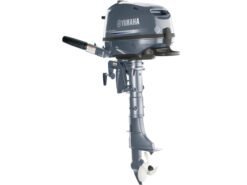
A Yamaha 6hp outboard motor is the kind of engine people buy once and then forget they own, in the best way. It sits in a shed or a garage corner, and it starts every single time you pull it out for the season. This is the size for small jon boats, dinghies, and tenders where you need real forward motion without the weight, cost, or complexity of anything bigger. We keep both configurations of the Yamaha F6 in stock, and this guide covers exactly what you’re getting, what it weighs, and which shaft length actually fits your boat.
In this guide:
- What the Yamaha 6hp Outboard Motor Actually Is
- Full Specifications
- Shaft Length and Fuel Tank Options
- Yamaha 6HP Units We Have In Stock
- What Boats This Engine Actually Fits
- Fuel Economy and Tank Range
- How It Compares to Honda and Tohatsu’s 6hp Class
- Maintenance This Engine Actually Needs
- Worldwide Shipping
- What Affects Pricing on a Yamaha 6hp Outboard
- Choosing the Right Shaft Length
- What to Check Before Buying One Used
- FAQs
What the Yamaha 6hp Outboard Motor Actually Is
The Yamaha 6hp outboard motor is built around a 139cc, single-cylinder, overhead-valve four-stroke block, sharing its basic architecture with Yamaha’s 4hp below it in the lineup. It’s a genuinely simple engine by design, and that simplicity is the whole point. There’s no electric start option on this size, no power trim, and no digital anything, just a pull cord, a twist-grip throttle, and a tiller handle, which is exactly what most buyers in this class actually want.
What separates the Yamaha 6hp outboard motor from a lot of budget alternatives in the same power class is the attention to small details that don’t show up on a spec sheet. It has a labyrinth exhaust system for quieter running, a long-span mounting system that reduces vibration transfer into the hull, and a leak-free oil storage design that lets you lay the engine down on either side or face-down for transport and storage without oil finding its way somewhere it shouldn’t.
At under 60 lbs in its lightest configuration, this is genuinely a one-person engine. You can carry it from a truck bed to a dock, mount it, and be running in a couple of minutes, and that portability is really the entire reason this horsepower class exists.
Full Specifications
Here’s the full spec sheet for the current Yamaha F6.
| Spec | Detail |
|---|---|
| Engine Type | 4-Stroke, OHV, 1-cylinder |
| Displacement | 139 cc |
| Bore x Stroke | 62mm x 46mm |
| Prop Shaft Horsepower | 6hp @ 5,000 rpm |
| Full Throttle RPM Range | 4,500 – 5,500 rpm |
| Compression Ratio | 8.9:1 |
| Fuel Induction | Carburetor |
| Gear Ratio | 2.08:1 |
| Alternator Output | 12V / 6 Amps (optional) |
| Ignition | CDI |
| Lubrication | Wet Sump |
| Starting System | Manual |
| Recommended Fuel | Regular unleaded, minimum 87 octane |
| Recommended Oil | Yamalube 4M |
| Fuel Tank | 1.1L built-in, external tank compatible |
| Dry Weight (15″ shaft) | 59 lbs (27 kg) |
| Dry Weight (20″ shaft) | 61-62 lbs (28 kg) |
| Steering Angle | 90° from center, each direction |
| Spark Plug | CR6HSB |
| Warranty | 3 years |
That 90 degree steering angle is worth calling out specifically, since it’s a genuinely wide turning arc for a small tiller outboard and makes the Yamaha 6hp outboard motor noticeably easier to maneuver in tight marina slips or around a dock compared to engines with a more restricted swing radius.
Shaft Length and Fuel Tank Options
The Yamaha 6hp outboard motor comes in two shaft lengths, 15 inch and 20 inch, and that’s really the only meaningful configuration decision on this engine since there’s no electric start or high-thrust variant at this horsepower class. Both shaft lengths share the identical powerhead, so there’s no performance trade-off either way, only fit.
The 1.1 liter built-in fuel tank is enough for short trips around a lake or harbor, and the external fuel tank connection point lets you extend your range significantly for longer outings without modifying anything on the engine itself. Most owners running this engine as a dinghy or tender motor use the built-in tank exclusively and only hook up an external tank for longer passages.
Yamaha 6HP Units We Have In Stock
We currently carry the Yamaha 6 HP F6SMHA on the 15 inch short shaft, and the Yamaha 6 HP F6LMHA on the 20 inch long shaft, both tested and run-checked before listing. Since shaft length is the only real fork in this engine’s lineup, we make sure both configurations stay in stock rather than leaving buyers waiting on the one that isn’t.
If you’re not certain which shaft length your transom needs, measure straight down from the top of the transom to the bottom of the hull rather than guessing from the boat’s overall length, and we’re happy to confirm the right fit before you order.
What Boats This Engine Actually Fits
Small jon boats and aluminum skiffs in the 10 to 12 foot range are the classic home for this engine, giving one or two people real forward motion without the weight of anything larger. Inflatable dinghies and RIBs used as tenders for bigger boats are the other major category, since the light weight makes it practical to store the engine separately and mount it only when the tender goes in the water.
It also shows up frequently as backup or emergency power on small sailboats, kept aboard specifically for the situation where wind dies and you need to get back to a mooring under your own power rather than drift. It’s genuinely not the right engine for anything over about 12 feet carrying more than two people, since the power simply isn’t there for anything heavier. The National Marine Manufacturers Association publishes general guidance on matching engine power to hull size if you want a second reference point beyond the builder’s capacity plate.
We also see this engine go to fishing camps and lodges that keep a small fleet of aluminum boats on a lake and need engines that survive being started by guests of wildly varying mechanical experience without breaking down. The manual pull-start and lack of complex electronics make the Yamaha 6hp outboard motor genuinely forgiving in that kind of setting, since there’s very little on the engine that an inexperienced user can actually damage through mishandling.
Fuel Economy and Tank Range
A single-cylinder 139cc engine at this output sips fuel, typically burning well under half a gallon an hour at a comfortable cruise, which means the 1.1 liter built-in tank actually stretches further than its small size suggests for short trips around a harbor or lake. For anything beyond a couple of hours of running, hooking up an external tank is the practical move rather than making repeated trips back to shore to refill.
Because the tank is semi-transparent, checking remaining fuel is a glance rather than a guess, which matters more than it sounds on a small boat where running out of fuel away from the dock is a genuine inconvenience rather than a minor annoyance.
How It Compares to Honda and Tohatsu’s 6hp Class
Honda’s BF6 and Tohatsu’s equivalent small outboards are the main alternatives buyers cross-shop against the Yamaha 6hp outboard motor, and all three compete closely on weight and features at this size. Yamaha’s edge tends to be the wide 90 degree steering angle and the leak-free oil storage system for multi-position transport, both genuinely useful for a portable engine that gets stored on its side in a truck bed or garage between uses.
Honda counters with a strong reputation for smooth, quiet idle even at this small displacement, and Tohatsu often undercuts both on price while sharing enough parts commonality with Mercury’s small outboards, sold under license, to make service support widely available in a lot of markets. None of the three engines separate themselves dramatically on reliability at this size, since a well-maintained single-cylinder four-stroke this simple rarely fails outright regardless of brand.
Where the comparison gets more interesting is resale and global parts support. Yamaha’s dealer network is genuinely the largest of the three across most international markets, which matters a lot more on a small portable engine than it might seem, since these motors tend to travel with their owners between countries and boats far more than a permanently rigged main engine does. If you’re buying this as a spare or backup motor for a boat you’ll eventually sell, a Yamaha badge on the cowling is usually the easiest to move on to the next owner, and it tends to hold its value a little better than the equivalent Tohatsu at resale.
Maintenance This Engine Actually Needs
The Yamaha 6hp outboard motor asks for very little upkeep, which is part of its appeal. An annual oil change using Yamalube 4M or an equivalent marine four-stroke oil keeps the wet sump lubrication working properly, and it’s a five-minute job on an engine this size. The carburetor is the one component that needs attention if the engine sits unused for an extended period, since stale fuel gums up the small jets on any carbureted engine, so draining the tank or running fuel stabilizer before winter storage prevents most starting problems.
Spark plug replacement, using the CR6HSB, is worth doing annually even if the old one looks fine, since it’s an inexpensive part and a fresh plug makes cold starts noticeably easier. The water pump impeller should be checked periodically as well, particularly if the engine is used in sandy or silty water, since impeller wear is the most common cause of overheating on small outboards.
Worldwide Shipping
We ship the Yamaha 6hp outboard motor worldwide, and given its compact size and light weight, it’s one of the most economical engines in our entire range to freight internationally. We handle all export documentation and provide a full landed cost quote, including freight and any applicable duties, before you commit to an order. For a broader look at how crating, freight, and customs work across our full inventory, see our outboard motors worldwide shipping guide.
Air freight is genuinely practical for an engine this light if you need it quickly, and we’ll give you a straight comparison of air versus ocean freight cost and timeline once we know your destination.
What Affects Pricing on a Yamaha 6hp Outboard
Shaft length is really the only configuration variable affecting price on this engine, and the difference between 15 inch and 20 inch is minor. Condition and hours matter more here than configuration, and we’re upfront about whether a listed unit is new or lightly used, noting any cosmetic wear directly on the product page.
Because this is one of the most affordable four-stroke outboards Yamaha makes, it’s also one of the easiest engines in our range to budget for, with far less price variation between units than you’ll see on larger, more complex engines.
Choosing the Right Shaft Length
Measure your transom the standard way, from the top edge straight down to the bottom of the hull. The 15 inch shaft suits smaller tenders, inflatables, and shallow-transom jon boats, while the 20 inch shaft fits most standard-height transoms on aluminum skiffs and small fishing boats. Getting this measurement right matters even on a small engine, since a shaft that’s too short causes the propeller to run too shallow and cavitate, while one that’s too long drags the lower unit and adds unnecessary resistance.
If you’re between sizes or genuinely unsure, the 20 inch long shaft is the safer default for anything beyond a small inflatable tender, since most standard recreational boat transoms fall closer to that height.
What to Check Before Buying One Used
A used Yamaha 6hp outboard motor is about as low-risk a purchase as you’ll find in the outboard world, given how simple the engine is, but we still run every trade-in through the same checks. Compression on the single cylinder comes first, checked cold against Yamaha’s spec, since low compression points to worn rings or a valve issue that’s worth knowing before you buy.
Carburetor condition is the next thing we check, since stale fuel from sitting unused is the single most common issue on any small carbureted engine, and it’s usually an easy, inexpensive fix if caught. We also verify the pull-start mechanism operates smoothly, check that forward-neutral-reverse shifting engages cleanly, and inspect the lower unit oil for water contamination before any used unit goes up for sale.
We also ask about storage history on every used unit we take in, since a 6hp that’s lived its whole life in a garage between summer trips is in a different category from one that sat rigged on a boat in saltwater year-round. Both can be perfectly good buys, but the corrosion check needs to be more thorough on the latter, and we disclose what we find rather than presenting every used engine as though it had an identical history.
FAQs
How much does a Yamaha 6hp outboard motor weigh?
59 lbs on the 15 inch shaft, 61 to 62 lbs on the 20 inch shaft.
Does the Yamaha 6hp outboard motor have electric start?
No, this horsepower class is manual pull-start only. Electric start becomes available starting around the 9.9hp class.
What fuel does the Yamaha 6hp outboard motor need?
Regular unleaded gasoline with a minimum of 87 octane.
What boats is a Yamaha 6hp outboard motor good for?
Small jon boats and skiffs up to about 12 feet, inflatable dinghies and tenders, and as backup auxiliary power on small sailboats.
How big is the fuel tank on the Yamaha 6hp outboard motor?
1.1 liters built-in, with an external tank connection available for extended range.
Do you ship the Yamaha 6hp outboard motor internationally?
Yes, worldwide by air or ocean freight, and it’s one of the most affordable engines in our range to ship given its light weight.
What shaft lengths does the Yamaha 6hp outboard motor come in?
15 inch and 20 inch, matched to your boat’s transom height.
How often does the Yamaha 6hp outboard motor need service?
An annual oil change, an annual spark plug check, and periodic water pump impeller inspection cover the basics.
We keep Yamaha 6hp outboard motors in stock in both shaft lengths, tested and ready to ship worldwide. Tell us your transom measurement and we’ll confirm the right fit and put together a same-day quote.
Posts Widget
- 1

- 2

- 3

- 4


S.H Continental Marine
USA HERALD MAGAZINE INC
Our team is dedicated to providing exceptional customer service.
Email: info@shcontinentalmarine.com
Choose S.H Continental Marine
for your outboard engine needs and enjoy superior quality, exceptional customer service, and unbeatable prices.
