
4 Stroke Outboard Motor: Full Guide to Specs, Selection, and Maintenance
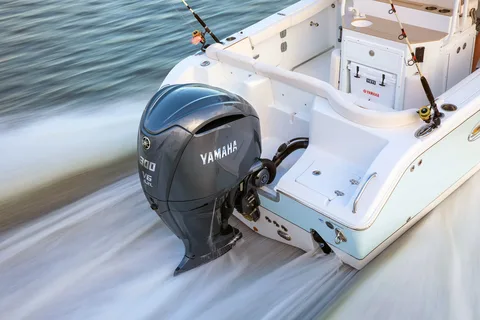
The 4 stroke outboard motor is the standard choice for the vast majority of boat owners today, and for good reasons that go beyond marketing. Quieter, more fuel-efficient, longer-lasting, and easier on emissions — the modern 4 stroke outboard motor is a genuinely better engine for most applications than what came before it. At SH Continental Marine, we specialize in Yamaha 4 stroke outboard motors and ship them to buyers worldwide. This post covers how a four-stroke works, the key specs, how to choose the right one, and how to keep it running.
How a 4 Stroke Outboard Motor Works
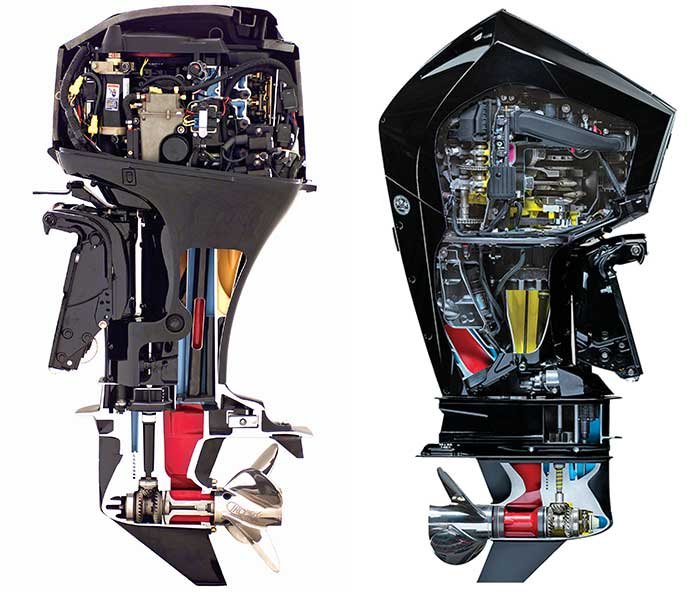
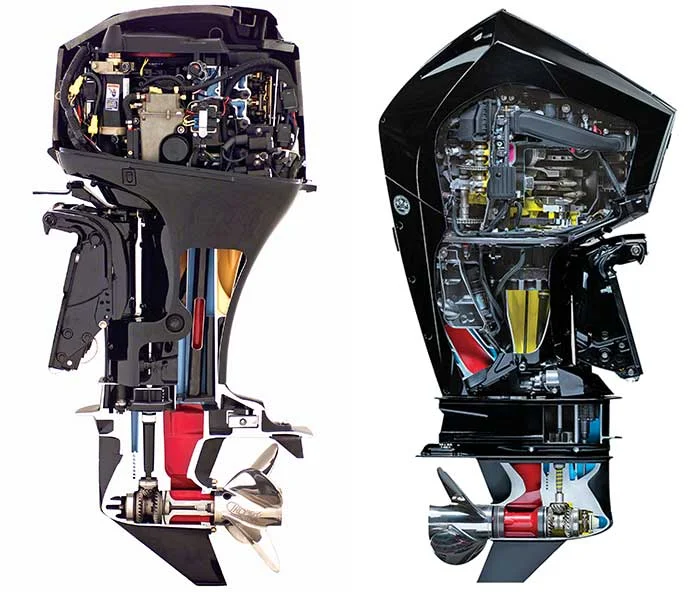
A 4 stroke outboard motor completes its power cycle in four piston strokes: intake, compression, power, and exhaust. On the intake stroke, the piston moves down and draws an air/fuel mixture into the cylinder. Compression stroke: piston moves up, compressing the mixture. Power stroke: spark plug fires, combustion drives the piston down. Exhaust stroke: piston moves back up, pushing spent gases out. The cycle repeats thousands of times per minute.
Unlike a two-stroke, a 4 stroke outboard motor has a separate oil sump that lubricates the engine independently from the fuel. This is why four-strokes run on straight gasoline — no oil mixing required — and why they produce less smoke and lower emissions than two-stroke alternatives. The oil circulates, lubricates, and returns to the sump. It’s a cleaner, more efficient system that extends engine life substantially.
Why the 4 Stroke Outboard Motor Dominates the Market
The shift from two-stroke to four-stroke dominance wasn’t driven by regulation alone. Once manufacturers like Yamaha cracked the engineering challenge of making a 4 stroke outboard motor that was light enough to be practical, the performance and reliability advantages were obvious. Buyers who switched didn’t go back.
Fuel economy is measurably better on a 4 stroke outboard motor compared to a two-stroke of equivalent horsepower. The four-stroke combustion cycle is more efficient and doesn’t expel unburned fuel through the exhaust. For buyers who run their engines regularly, this adds up to real money saved over a season.
Noise and vibration levels are lower on a 4 stroke outboard motor. The slower combustion cycle and valve-damped intake produce a smoother, quieter operation than a two-stroke at comparable RPM. For fishing, where engine noise can affect your results, or for recreational use where a quieter ride is simply more pleasant, the four-stroke wins clearly.
Service life is longer. A properly maintained Yamaha 4 stroke outboard motor regularly reaches 1,500–3,000 hours before requiring major internal work. That’s significantly more than a typical two-stroke at equivalent usage levels. The additional complexity of four-stroke valve train engineering is more than offset by the durability gains.
Yamaha 4 Stroke Outboard Motors We Stock
We focus on Yamaha 4 stroke outboard motors because they represent the best combination of reliability, parts availability, and global service network access. Here’s a breakdown of the main models we carry.
Yamaha 9.9 HP 4 Stroke Outboard Motor
The Yamaha 9.9 HP is a benchmark in the small 4 stroke outboard motor class. It handles tenders, dinghies, small aluminum boats, and sailboat auxiliaries without issue. Key specifications: 212cc displacement, SOHC 2-cylinder, 4-stroke, carbureted fuel system, electric or manual start depending on variant, 25-inch shaft option, power tilt on electric start models, weight approximately 100–117 lbs. It starts easily, runs cleanly, and is light enough for one person to manage. See our Yamaha 9.9 HP listing here.
Yamaha 90 HP F90LB 4 Stroke Outboard Motor
The F90LB is our most consistently sold 4 stroke outboard motor. It fits center consoles, pontoon boats, bay boats, aluminum fishing boats, and light commercial vessels. Full specifications: 1.8L (1,832cc) inline 4-cylinder, DOHC 16-valve, Electronic Fuel Injection (EFI), 90 HP at 5,500 RPM, full throttle range 5,000–6,000 RPM, 35-amp alternator, power trim and tilt, 20-inch long shaft, TCI microcomputer ignition, electric start, compression ratio 10.0:1, weight approximately 353 lbs. Gear ratio 2.15:1. Recommended fuel: 87 octane minimum. This 4 stroke outboard motor is available in both long shaft (F90LB) and extra-long shaft (F90XB) configurations. See the Yamaha F90LB here.
Yamaha 90 HP VF90LA V MAX SHO 4 Stroke Outboard Motor
The VF90LA is a performance-oriented 4 stroke outboard motor built on the same 1.8L platform as the standard 90 HP but tuned for more aggressive output. Specifications: 1.8L inline 4-cylinder, DOHC 16-valve, EFI, 90 HP rated output, 35-amp alternator, full power trim and tilt, weight approximately 353 lbs. The V MAX SHO designation indicates Yamaha’s high-performance tune on this engine — stronger acceleration and higher top-end output than the standard F90. Popular with bass boat owners and anyone running a lighter hull who wants stronger hole shot performance from their 4 stroke outboard motor. See the Yamaha VF90LA here.
Key Specifications on 4 Stroke Outboard Motors
Understanding the spec sheet on a 4 stroke outboard motor helps you compare engines meaningfully and avoid buying the wrong unit for your setup.
Displacement and Torque
Displacement is engine volume. More displacement in a 4 stroke outboard motor typically means more torque at lower RPM. Yamaha’s 1.8L engines are large-displacement for their rated horsepower class — they produce strong mid-range torque that makes boats feel responsive and capable under load, not just at full throttle. When comparing 4 stroke outboard motors at the same HP rating, the one with higher displacement usually feels stronger in real-world use.
EFI System
Electronic Fuel Injection on a 4 stroke outboard motor manages fuel delivery with precision. The ECU reads throttle position, temperature, RPM, and load, and adjusts fuel injection timing and quantity accordingly. The practical results: the engine starts reliably in hot or cold conditions, runs smoothly across the throttle range, uses fuel more efficiently than a carbureted system, and is easier to diagnose when something goes wrong. All Yamaha 4 stroke outboard motors in the 90 HP class use EFI.
Full Throttle RPM Range
Yamaha specifies the WOT (wide open throttle) RPM range for each 4 stroke outboard motor. For the 90 HP class, this is 5,000–6,000 RPM. When properly propped, your engine should reach 5,000–6,000 RPM at full throttle with your typical load aboard. Running consistently outside this range indicates a prop pitch mismatch. Too low: too much pitch. Too high: not enough. Our guide on best propellers for Yamaha outboards explains how to dial in the right prop for your 4 stroke outboard motor and boat combination.
Alternator Output
The 35-amp alternator in Yamaha’s 90 HP 4 stroke outboard motors is one of the stronger outputs in this class. It keeps the battery charged while running multiple electronics — GPS, sonar, radio, navigation lights, livewells, and bilge pumps. For heavily equipped vessels, 35 amps is still usually sufficient. For very large commercial setups running significant electrical loads, check your total amp draw against the alternator output of any 4 stroke outboard motor you’re considering.
Shaft Length and Transom Matching
The shaft length of your 4 stroke outboard motor must match your transom height. Standard options are short shaft (15 inches / 381mm), long shaft (20 inches / 508mm), and extra-long shaft (25 inches / 635mm). Measure your transom height before ordering. A 4 stroke outboard motor with an incorrect shaft causes prop ventilation if the shaft is too short, or excessive drag and steering issues if it’s too long. Both hurt performance significantly.
4 Stroke Outboard Motor Maintenance
A 4 stroke outboard motor that’s properly maintained will outlast one that isn’t by a significant margin. The service schedule is straightforward and the cost of doing it correctly is small compared to the cost of repairs from neglect.
Break-In Service
New Yamaha 4 stroke outboard motors require a break-in service at 20 hours. This includes an oil and filter change, gear lube inspection, and a check of all fasteners and systems. The break-in period is when piston rings seat and internal clearances stabilize. Follow the break-in RPM limits in the manual — no sustained full throttle in the first 10 hours.
Oil Changes
Oil changes on a 4 stroke outboard motor are required every 100 hours or annually, whichever comes first. Use the correct grade — Yamaha specifies Yamalube 4M for marine use. Our post on the best oil for Yamaha outboards covers exactly what to use and why it matters. Using automotive oil in a 4 stroke outboard motor is not recommended — marine engine oil is formulated to handle the higher-humidity, higher-RPM environment of outboard use.
Impeller
The water pump impeller is the most commonly neglected service item on a 4 stroke outboard motor. Replace it every 100–200 hours. When this rubber vane fails, the cooling system stops working and the engine overheats within minutes. Cylinder scoring and head damage follow quickly. It’s an inexpensive part and a straightforward job. Our impeller replacement guide explains how to do it and what to look for.
Saltwater Flushing
After every saltwater outing, flush your 4 stroke outboard motor with fresh water for several minutes. Salt deposits in the cooling passages cause corrosion from the inside that’s invisible until it causes a failure. Five minutes of flushing after each trip adds years to engine life. Our post on how to flush a Yamaha outboard motor covers the correct procedure.
Overheating
If your 4 stroke outboard motor shows a high-temp warning, shut it down immediately and diagnose before running again. Overheating causes rapid, serious damage. Common causes include blocked water intake, failed impeller, stuck thermostat, or head gasket failure. See our guide on Yamaha outboard overheating causes for a complete breakdown of each scenario and how to fix it.
4 Stroke Outboard Motors for Different Applications
Freshwater Fishing
For bass boats, aluminum fishing boats, and inshore freshwater setups, a 4 stroke outboard motor in the 60–90 HP class covers most needs. The Yamaha 90 HP runs quietly at trolling speeds, has enough alternator output for modern electronics, and starts reliably in all conditions. The lower maintenance burden of a four-stroke versus a two-stroke matters to fishermen who use their boats frequently.
Saltwater and Offshore
Yamaha’s 4 stroke outboard motors are specifically engineered for saltwater durability. The proprietary aluminum alloy used in the powerhead and lower unit, combined with sacrificial anodes and corrosion-resistant coatings, makes these engines genuinely suitable for regular saltwater use. They just need to be flushed properly and have their anodes checked and replaced on schedule. Offshore fishing operators running Yamaha 4 stroke outboard motors in twin configurations report excellent reliability under heavy commercial use.
Commercial and Patrol
Government agencies, water police, rescue services, and commercial fishing operations worldwide use Yamaha 4 stroke outboard motors because downtime is not an option. The combination of reliability, global parts availability, and proven service procedures makes Yamaha the default choice in applications where engine failure has real consequences. We supply commercial operators directly — contact us through our contact page if you’re buying for fleet or commercial use.
Troubleshooting Your 4 Stroke Outboard Motor
Most problems with a 4 stroke outboard motor have straightforward causes. If it won’t start, work through the basics: battery charge, kill switch, fuel supply, fuel primer bulb, and choke use. Our Yamaha outboard won’t start troubleshooting guide covers every common no-start scenario in order. Most issues are diagnosable without professional help.
If your 4 stroke outboard motor runs but performs poorly — lacks top speed, runs rough, or uses excessive fuel — check the prop first. A damaged or incorrect prop pitch causes symptoms that look like engine problems but aren’t. Then check the basics: air filter, fuel filter, spark plugs. Our guide on Yamaha outboard gauges explained helps you understand what the instruments are telling you during operation.
Rigging and Accessories for 4 Stroke Outboard Motors
A 4 stroke outboard motor properly rigged with the right controls and prop performs noticeably better than the same engine with mismatched or worn components. Control box and cable quality directly affects throttle response and shift feel. Our Yamaha outboard control box buying guide explains what to look for when choosing or replacing controls.
Genuine parts make a real difference on a 4 stroke outboard motor. When service items need replacing — impeller, thermostat, water pump housing, fuel filter — use OEM-specification parts. Our post on genuine Yamaha outboard parts explains why aftermarket substitutes often cost more in the long run. Also see our top Yamaha outboard accessories list for maintenance items and upgrades worth having.
Common Questions About 4 Stroke Outboard Motors
How often does a 4 stroke outboard motor need service?
Yamaha recommends: initial 20-hour service (new engines), then annual service or every 100 hours — oil and filter change, gear lube change, spark plug check, impeller inspection, anode check, and general inspection. Following this schedule is what separates engines that reach 2,500 hours from ones that fail at 600.
Is a 4 stroke outboard motor better than a 2 stroke?
For most applications, yes. Better fuel economy, lower emissions, longer service life, quieter operation. A two-stroke has advantages in weight and simplicity for specific use cases. But for general recreational, fishing, and commercial use, the 4 stroke outboard motor is the better choice for most buyers today.
Do you ship 4 stroke outboard motors worldwide?
Yes. We ship Yamaha 4 stroke outboard motors to buyers worldwide from SH Continental Marine. Engines are properly packed, insured, and tracked. We handle customs documentation. Contact us via the contact page for a shipping quote to your location.
Order Your 4 Stroke Outboard Motor
Browse our current 4 stroke outboard motor inventory at the shop. If you need help matching an engine to your boat, use the contact page and give us your boat’s specs — transom height, hull type, rated HP, and how you use it. We’ll give you a straight answer on which 4 stroke outboard motor fits and what it costs to ship to your location.
Posts Widget
- 1

- 2

- 3

- 4


S.H Continental Marine
USA HERALD MAGAZINE INC
Our team is dedicated to providing exceptional customer service.
Email: info@shcontinentalmarine.com
Choose S.H Continental Marine
for your outboard engine needs and enjoy superior quality, exceptional customer service, and unbeatable prices.
