
Power Trim and Tilt Outboard Motor: How It Works and Why It Matters

Anyone who’s driven an older boat with a manual-tilt outboard, or worse, one with no trim adjustment at all, understands immediately why power trim and tilt became standard equipment. It’s not a luxury feature. A power trim and tilt outboard motor lets you adjust the engine’s running angle from the helm while underway, and separately lets you lift the whole engine clear of the water at the push of a button, and both of those things change how a boat handles, how efficiently it burns fuel, and how much physical strain docking and trailering put on the owner.
We stock outboard motors across the horsepower range, including the Mercury Verado and Tohatsu lines, and today power trim and tilt comes standard on nearly everything above 25 horsepower, with plenty of smaller engines offering it too. Here’s what the system actually does, how to use it properly, and what to check when you’re buying a used engine with power trim and tilt.
In this guide:
What Power Trim and Tilt Actually Does
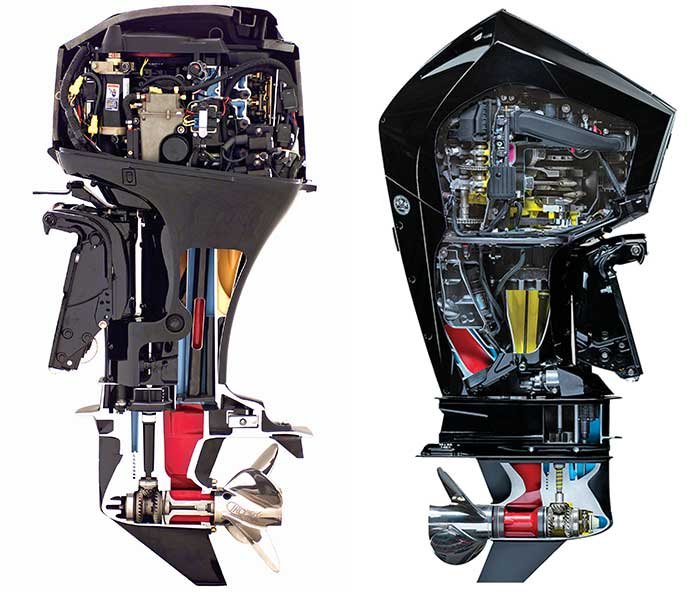
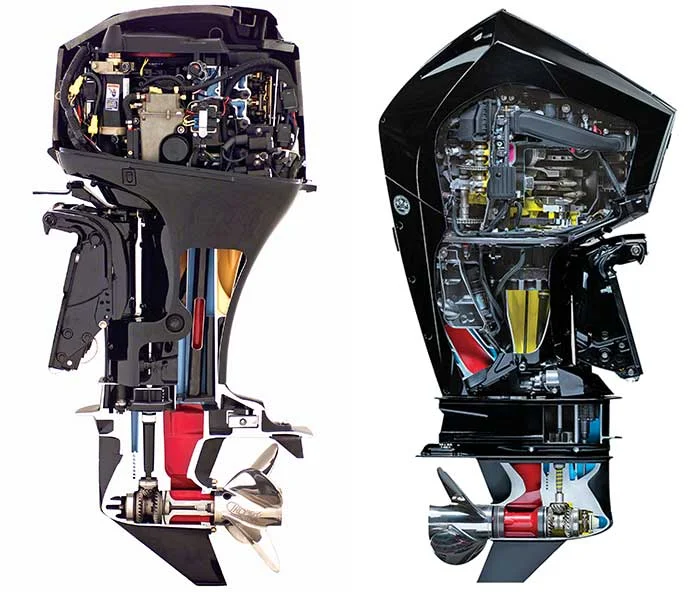
Power trim and tilt is a hydraulic system built into the outboard’s mounting bracket that does two related but distinct jobs. Trim adjusts the engine’s angle in small increments while the boat is moving, tilting the whole powerhead and lower unit in or out relative to the transom, which changes the angle the boat’s hull meets the water. Tilt is the larger-range motion that lifts the entire engine up and out of the water when docked, trailering, or running in shallow water, well beyond what trim range covers.
Both functions run off the same hydraulic pump and ram, controlled by a switch on the throttle handle or dash, which is why the two get talked about as one system even though they serve different purposes at different times.
Trim vs Tilt: The Real Difference
Trim range is small, typically covering roughly 20 degrees of adjustment out from full-in, and it’s the range you use constantly while running, adjusting a few degrees at a time to find the sweet spot for current speed, load, and water conditions. Tilt range is much larger, lifting the engine up to 70 or 80 degrees from the running position, and it’s used only when stopped, since running with the engine tilted up would lift the prop out of the water entirely.
| Function | Range of Motion | When Used |
|---|---|---|
| Trim | ~20 degrees | While underway, continuously adjusted |
| Tilt | ~70-80 degrees | Docked, trailering, shallow water, stopped |
Some engines mark a visible detent or stop between trim range and tilt range on the gauge or indicator, letting the operator feel or see the transition, since exceeding trim range while moving at speed can cause the engine to porpoise or lose bite unexpectedly.
How the System Works Mechanically
An electric motor drives a small hydraulic pump, which pressurizes fluid that extends or retracts one or two rams (single-ram systems are common on smaller engines, dual-ram on larger horsepower where more lifting force is needed). The rams push against the engine’s swivel bracket, changing the angle of the whole powerhead relative to the transom bracket that stays fixed to the boat.
A relief valve, described in Discover Boating’s outboard buying guide as a key protective feature, allows the engine to kick up automatically if it strikes an underwater obstruction, protecting the lower unit and gearcase from a hard impact that would otherwise transmit straight through to the prop shaft and gears. This same relief function is why a properly working trim system offers real protection value beyond convenience, particularly in shallow or debris-prone water.
Why Trim Angle Changes Performance
Trimmed all the way in (down), the bow sits low and the boat plows through water with more hull surface in contact, which is correct for getting on plane from a stop but creates unnecessary drag once up to speed. Trimming out (up) raises the bow, reduces wetted surface, and generally increases top speed and fuel efficiency at cruise, but trim out too far and the boat can start to porpoise, bouncing the bow in a way that’s uncomfortable and can even cause the propeller to ventilate intermittently.
The right trim angle changes with speed, load, and water conditions, which is exactly why the adjustment needs to happen from the helm in real time rather than being set once and left alone. A boat loaded heavy in the bow needs different trim than one loaded aft, and a boat running into a chop typically wants a slightly different angle than one running flat calm water, all things a fixed, non-power trim system simply can’t accommodate without stopping to manually adjust.
Using Power Trim and Tilt Correctly
Start every run trimmed all the way in for the best bow lift and control coming onto plane, then trim out gradually once up to speed, watching for the point where the ride smooths out and speed picks up without the bow starting to porpoise. That sweet spot moves as speed, load, and water conditions change, so treat trim as something you adjust continuously rather than set once per outing.
Never trim the engine out to raise the prop toward the surface as a way to run in shallow water while still under power, that’s what the separate tilt function and its greater range are for, and running with the engine trimmed out far enough to lift the prop dangerously close to the surface while at speed risks sudden loss of steering control. Use tilt only when stopped, whether docking, trailering, or clearing a shallow patch at idle speed.
Engines We Stock With Power Trim and Tilt
Power trim and tilt comes standard across nearly all of our mid-size and large outboard inventory, including the Mercury Verado 300HP CXL and the full Verado line, plus most of our Tohatsu units from roughly 20 horsepower and up, like the Tohatsu 30 HP MFS30DEFL. On smaller portable engines, power trim and tilt is less common since the whole point of a portable is manual handling, but once you’re above roughly 25 to 30 horsepower, expect it as a standard feature rather than an upgrade.
Every listing in our inventory notes whether power trim and tilt is present and functioning, and for used units we test the system through its full range before listing, checking for smooth, even movement without hesitation or excessive noise from the pump.
What to Check on a Used System
Cycle the trim and tilt through its full range and listen for the pump motor. It should run smoothly without excessive whining, and the engine should move at a consistent speed through the full range rather than slowing, stalling, or jerking partway through. Uneven movement usually points to low hydraulic fluid, a failing pump, or air in the system, all fixable but worth knowing about and pricing into an offer before you buy.
Check for fluid leaks around the ram seals and at the pump housing, since a slow leak eventually leads to the system losing pressure and the engine drooping under its own weight, sometimes settling all the way down over time even with the trim switch untouched. Also check that the engine holds its position once you release the trim switch. Drift downward after release, even slow drift, indicates a seal or valve problem that will only get worse.
Maintaining the Hydraulic System
Guidance from BoatUS’s outboard engine study guide recommends that trim and tilt hydraulic fluid be checked at the reservoir periodically and topped off with the manufacturer-specified fluid, never substituted with generic hydraulic fluid or automotive transmission fluid, which can damage seals not designed for those formulations. Most manufacturers recommend a full fluid change every one to two years or at a set hour interval, alongside the rest of the outboard’s regular service schedule.
Corrosion around the ram and pivot points is the most common failure point on saltwater-used engines, since these components sit low and get direct spray constantly. A quick rinse with fresh water after every saltwater outing, paying particular attention to the trim rams and pivot bushings, meaningfully extends the system’s service life and is one of the cheapest maintenance habits that actually prevents an expensive repair down the line.
Why This Feature Matters When You’re Buying
If you’re shopping for a power trim and tilt outboard motor rather than a manual-tilt unit, the decision usually comes down to how the boat gets used. Anyone running varied conditions, different loads, or shallow water regularly benefits enormously from being able to adjust trim in real time and tilt the engine clear without physically lifting it, which on anything above about 60 horsepower isn’t something one person can safely do by hand anyway.
Docking and trailering are where the tilt function earns its keep for owners who might not think about it day to day. Being able to lift the engine clear of a boat ramp or a shallow slip at the push of a button, rather than wrestling with a manual tilt lock, matters even more for anyone launching and retrieving solo, which describes a large share of the boaters we work with. It’s also simply safer, since manual tilt mechanisms have historically been a source of pinch injuries when a lock slips under load.
How Power Trim and Tilt Affects Price
A power trim and tilt outboard motor generally costs more than an equivalent manual-tilt engine of the same horsepower, both because of the added hydraulic hardware and because it’s typically bundled with higher trim levels and larger engines that already carry other features. On the used market, the price gap narrows, and condition of the trim and tilt system matters more than whether it’s present at all, since a struggling or leaking system needs repair regardless of the engine’s other merits.
When we price a used engine with power trim and tilt, we factor in the system’s condition directly. A unit with a smooth, leak-free trim system commands a real premium over an otherwise identical engine with a sluggish or leaking one, since replacing a trim ram or pump is a genuine repair cost a buyer would otherwise have to absorb. We disclose exactly what we found testing the system so that price reflects reality, not just the presence of the feature on paper.
Common Problems and What They Usually Mean
An engine that won’t trim at all, with the motor making no sound when the switch is pressed, usually points to a blown fuse, a bad relay, or a dead trim motor, roughly in that order of likelihood and cost to fix. If the motor runs but the engine doesn’t move, that’s typically low fluid, air in the system, or a failing pump that’s spinning without building pressure.
An engine that trims up but won’t hold position, slowly drooping back down, points to a bad check valve or worn ram seals letting pressure bleed off internally. This is a common issue on older or neglected systems and is usually a seal kit or ram rebuild rather than a full pump replacement, though on some models replacing the complete trim ram assembly is more practical than rebuilding it.
Jerky or uneven movement through the range, rather than smooth continuous motion, often indicates air trapped in the hydraulic lines from a previous low-fluid condition, and can sometimes be resolved by cycling the system through its full range repeatedly to work the air out, though persistent jerkiness after several cycles usually means a proper bleed procedure or fluid service is needed.
FAQs
What’s the difference between trim and tilt on an outboard motor?
Trim is a small-range adjustment (around 20 degrees) used continuously while underway to optimize the boat’s running angle. Tilt is a much larger range used only when stopped, to lift the engine clear of the water.
Does every outboard motor have power trim and tilt?
No. It’s standard on nearly all engines above roughly 25 to 30 horsepower, but less common on smaller portable engines built for manual handling.
How do I know if I’m trimming correctly?
Start trimmed in for hole shot, then trim out gradually once on plane. If the bow starts bouncing or porpoising, you’ve trimmed out too far and should trim back in slightly.
What should I check when buying a used engine’s trim and tilt system?
Cycle it through its full range checking for smooth, consistent movement, inspect for fluid leaks at the rams and pump, and confirm the engine holds position after you release the switch.
Can I use trim to lift the engine for shallow water while running?
No, use the separate tilt function for that, and only while stopped. Running with the engine trimmed out too far while still moving risks losing steering control.
How often should trim and tilt fluid be changed?
Most manufacturers recommend every one to two years or at a set hour interval, using the manufacturer-specified fluid rather than a generic substitute.
We stock a wide range of outboard motors with functioning, tested power trim and tilt systems, each listing noting the system’s condition alongside full engine specs. If you’re comparing engines and want to confirm trim and tilt condition on a specific unit, reach out and we’ll walk you through what we found during testing, plus give you a worldwide shipping quote.
Posts Widget
- 1

- 2

- 3

- 4


S.H Continental Marine
USA HERALD MAGAZINE INC
Our team is dedicated to providing exceptional customer service.
Email: info@shcontinentalmarine.com
Choose S.H Continental Marine
for your outboard engine needs and enjoy superior quality, exceptional customer service, and unbeatable prices.
