
Propane Outboard Motor Buying Guide: 7 Best LPG Models Compared (2026)
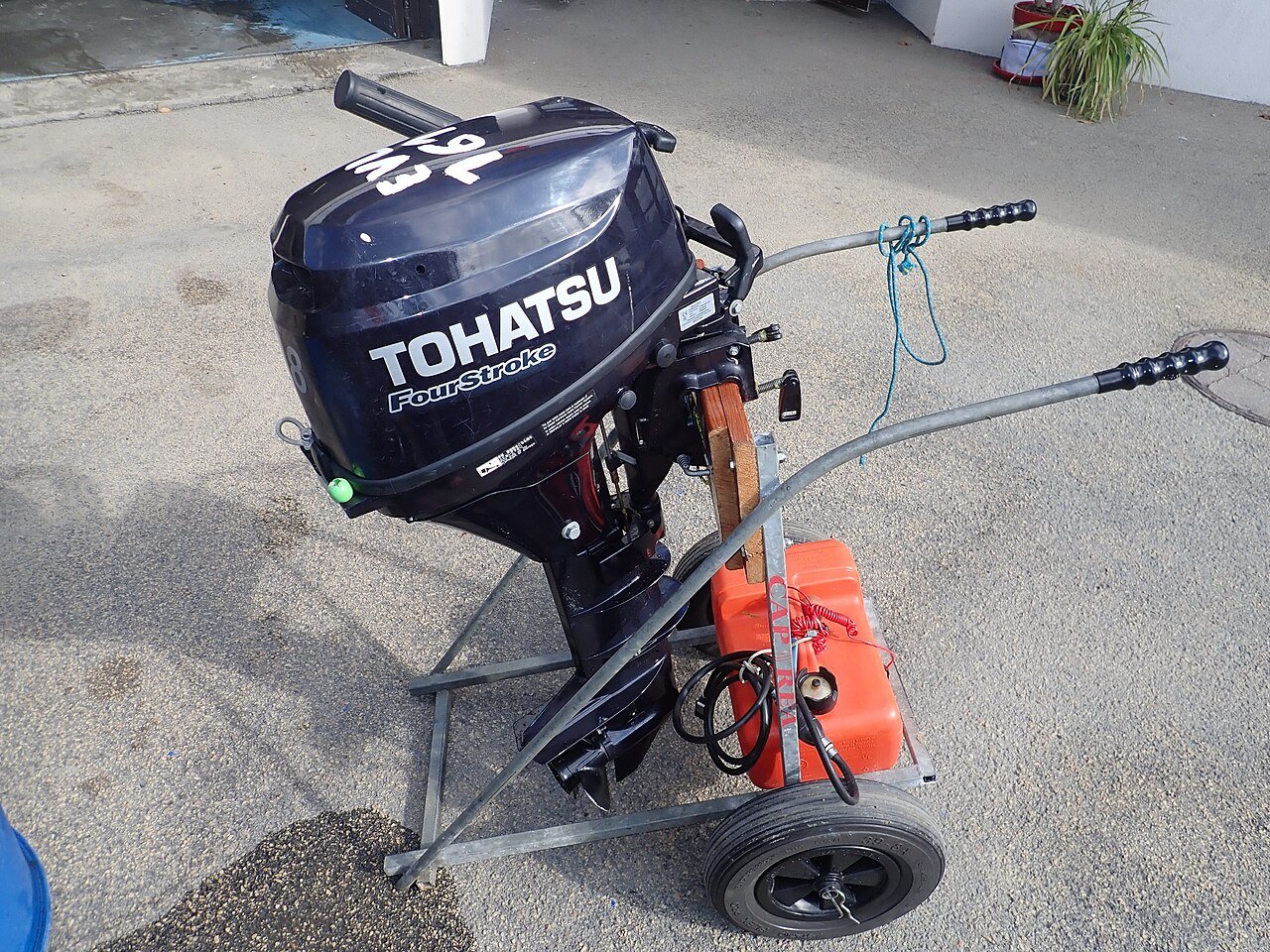
A propane outboard motor is a small four-stroke outboard that runs on LPG from an ordinary gas cylinder instead of petrol. You get no fuel can, no stale gas and no carburettor full of varnish after a winter ashore. Right now there are two current production designs you can buy new: the Mercury FourStroke Propane 5hp and the Tohatsu MFS5D LPG. Both are 5 HP, 123 cc single-cylinder engines weighing about 59.5 lb (27.2 kg) in their lightest form. We stock seven versions of the two, from $1,695 to $1,990, and ship them worldwide.
This guide covers what a propane outboard motor does well, where it falls short, how the seven models differ, and how to pick the right shaft length and set-up for your boat. If you already know what you want, jump straight to the model list or browse our Mercury outboard motors and Tohatsu outboards.
Table of Contents
Table of Contents

What Is a Propane Outboard Motor?
Mechanically, a propane outboard motor is very close to a normal 5 HP four-stroke. You still have a single cylinder, a crankcase full of oil, a recoil starter, a gearcase with forward, neutral and reverse, and a water pump impeller. The difference is the fuel system. Instead of a carburettor fed from a petrol tank, the engine takes gas from a pressurised propane cylinder through a hose and a regulator.
Tohatsu lists the fuel as LPG HD-5 (more than 65% propane). Mercury describes a pressurised system that needs no priming. In both cases the hose connects to a standard North American propane cylinder, the same kind people use for a barbecue. Both makers also fit an automatic shut-off valve, so gas stops flowing when the engine is not running or the hose is disconnected.
Because a propane outboard motor takes its fuel as a vapour under pressure, there is no float bowl to gum up and no fuel left sitting in the engine to go bad. That single change is the reason most buyers look at a propane outboard motor in the first place.
Who actually buys these engines
From the enquiries we get, buyers fall into three groups:
- Sailors who want an auxiliary for a small keelboat or a tender and hate carrying petrol on board.
- Lake and cottage owners who already have propane on site for cooking or heating and use the boat a few weekends a year.
- Owners of boats that sit for long spells, where a petrol carburettor usually gets blocked between uses.
If you fit one of those, keep reading. If you want speed or plan to plane a heavy boat, a propane outboard motor is the wrong tool, and we’ll point you to better options further down.
Why People Switch to a Propane Outboard Motor
1. The fuel doesn’t go stale
This is the big one. Most pump petrol is now E10, and ethanol blends cause real trouble in boats. BoatUS warns that ethanol attracts more water than straight petrol and can “phase separate” into two layers in the tank. Once that happens the engine may not run, and adding fresh fuel won’t fix it (BoatUS on ethanol and boat storage). In the US, the EPA also says E15 must not be used in boats at all (EPA E15 fuel guidance), which means one more thing to watch for at the pump.
A propane outboard motor doesn’t have that problem. Mercury’s category manager put it simply when the engine launched: “Propane doesn’t degrade or contain ethanol” (BPN coverage of the Mercury launch). An engine that sits for three months starts the same as one used yesterday. For a tender that lives on the foredeck or a lake boat used twice a summer, that alone can justify buying a propane outboard motor.
2. No petrol on board
Carrying petrol on a small sailboat is a nuisance, and it’s the reason many sailors start looking at a propane outboard motor. The can leaks, the cockpit smells, and you’re always worried about spilling while refuelling over the transom. With a propane outboard motor the cylinder screws on, and you’re done. Tohatsu makes this point directly in its product material: sailors don’t have to carry gasoline on board (Tohatsu North America, 5 HP LPG).
3. Cleaner exhaust
Mercury says its propane engine’s exhaust emissions are about 25% lower than comparable gasoline outboards. Tohatsu claims 30% cleaner emissions based on its own engineering data, and lists an EPA and CARB 3-Star “ultra-low emission” rating. For context, CARB’s 3-Star tier is 65% lower than its original 1-Star standard (BoatTest on CARB star ratings). Those percentages are manufacturer figures, not independent tests, but the direction is clear. Propane burns cleaner, and on a quiet lake you notice the difference in smell when a propane outboard motor goes past.
4. Easy starting and almost no fuel-system upkeep
There’s no priming bulb to squeeze. Mercury uses a manual choke for cold starts, and the BPN launch report mentions auto decompression to make pulling the cord easier. Tohatsu calls its LPG fuel system “virtually maintenance free”, with no ethanol- or gasoline-related failures. Nobody can promise a fault-free engine. But the carburettor clean, the most common small-outboard repair, mostly disappears with a propane outboard motor.

The Honest Downsides
We’d rather you buy the right engine than return the wrong one, so here’s the other side.
Propane holds less energy per gallon
The US Department of Energy’s fuel data puts propane at about 84,250 Btu per gallon, against roughly 112,000 to 116,000 Btu per gallon for petrol (Alternative Fuels Data Center fuel properties). So a gallon of propane carries roughly three quarters of the energy of a gallon of petrol. A propane outboard motor will burn more of it by volume for the same work. On a 5 HP engine the numbers are small, but plan your cylinder size around it.
Only one power size
Every new propane outboard motor on the market today is a 5 HP. That’s plenty for a tender, a dinghy, a canoe or an auxiliary on a sailboat up to around 20 to 25 feet in calm conditions. It is not enough to plane a loaded aluminium boat. If you need 8, 9.9 or 15 HP, you’ll be looking at petrol. Our guide on how to select the correct horsepower for your boat helps here.
Cylinder fittings vary by country
Both makers describe the hose as fitting a standard North American propane tank, and the Mercury hose uses the US POL connector on the tank end. Outside North America, cylinder valves and threads differ from country to country. If you’re buying from Europe, Australia, the Middle East, Africa or Asia, ask your local gas supplier which adapter you’ll need before the engine arrives. We can talk you through it when you order, but the local supplier has the final word on what’s legal and available where you live.
The cylinder adds bulk
A propane outboard motor weighs about the same as a petrol 5 HP. The difference is the cylinder. A full 11 lb (5 kg) bottle is heavier and bulkier than a small petrol can, and it has to be stowed safely, which we cover in the safety section below.
Propane Outboard Motor Specifications Compared
Here are the published specs for each propane outboard motor currently in production. Where a figure comes from only one manufacturer, we say so.
| Specification | Mercury FourStroke Propane 5hp | Tohatsu MFS5D LPG |
|---|---|---|
| Power | 5 HP | 5 HP |
| Engine | Single-cylinder four-stroke | Single-cylinder four-stroke |
| Displacement | 123 cc (7.5 cu in) | 123 cc (7.5 cu in) |
| Bore x stroke | Not published on Mercury page | 59 x 45 mm |
| Weight (lightest version) | 59.5 lb | 59.5 lb / 27.2 kg |
| Full-throttle rpm range | Not published on Mercury page | 5,000 to 6,000 |
| Gear ratio | Not published on Mercury page | 2.15:1 |
| Shaft lengths | 15, 20, 25 in | 15, 20, 25 in |
| Starting | Manual recoil, manual choke | Manual recoil |
| Charging | 12 V, 4 A / 50 W on Sail Power models | 12 V, 5 A / 60 W optional, standard on Sail Pro |
| Claimed run time | About 6 hours at full throttle on a 20 lb tank | About 5 hours at full throttle on an 11 lb tank |
| Safety shut-off | Auto shut-off on engine and hose connector | Safety fuel shut-off valve |
| Emissions claim | About 25% lower than comparable gasoline outboards | 30% cleaner; EPA and CARB 3-Star |
Two things stand out. First, the core engine numbers match almost exactly: same displacement, same weight, same shaft options.
nnSecond, the run-time claims don’t line up. Tohatsu says 5 hours from 11 lb of propane. Mercury says about 6 hours from 20 lb. (An earlier Mercury launch report even quoted 10 hours on 20 lb.) Our advice is to plan on Mercury’s more cautious figure. That’s around 3 lb of propane per hour at wide-open throttle, and less at the half-throttle most people actually cruise at. That last part is our estimate, not a manufacturer number, so carry a spare cylinder for longer trips until you know your own boat.
Every Propane Outboard Motor We Sell
All seven are new 5 HP four-strokes with tiller steering, manual tilt and recoil start. What changes is the shaft length and whether you get the high-thrust sailboat set-up. Prices below are current at the time of writing; the product page always shows the live price.
Mercury 5MH-LPG (15-inch shaft), $1,695
The Mercury 5 HP 5MH-LPG propane outboard motor is the short-shaft model. It’s the one for inflatables, small RIB tenders, jon boats and dinghies with a low transom. It is the cheapest way into a propane outboard motor that we sell, and for a yacht tender it’s usually the right call. Check our guide to inflatable boat motors if you’re fitting it to a RIB.
Mercury 5MLH-LPG (20-inch shaft), $1,725
The Mercury 5MLH-LPG adds five inches of shaft for boats with a standard 20-inch transom: many aluminium fishing boats, small skiffs and some canoes on a side bracket. It uses the normal propeller, so it suits boats that need a bit of speed rather than pulling power.

Mercury 5MLHA-LPG Sail Power (20-inch shaft), $1,790
The Mercury 5MLHA-LPG Sail Power is built for pushing a displacement hull. It has a high-thrust propeller and gearing, plus a 12 V charging output Mercury rates at 4 A / 50 W. That’s enough to top up a small house battery while you motor in. Pick this one for a small sailboat with a 20-inch mount, or a heavy tender you tow loaded with gear.
Mercury 5MXLHA-LPG Sail Power (25-inch shaft), $1,820
The Mercury 5MXLHA-LPG Sail Power is the extra-long-shaft version. On most sailboats with a transom bracket, the prop needs to sit deep so it doesn’t come out of the water when the stern lifts in a chop. If your bracket is high or your boat pitches a lot, this is the Mercury propane outboard motor to buy.

Tohatsu MFS5DLPGS (15-inch shaft), $1,750
The Tohatsu 5 HP MFS5DLPGS is the Tohatsu short-shaft model, the direct alternative to the Mercury 5MH-LPG. It’s a good fit for tenders and inflatables, and it’s the lightest-priced Tohatsu propane outboard motor we carry. If you already run other Tohatsu engines, or there’s a Tohatsu dealer near your marina, it makes sense to stay with the brand.
Tohatsu MFS5DLPGSPROL Sail Pro (20-inch shaft), $1,950
The Tohatsu MFS5DLPGSPROL Sail Pro combines the high-thrust prop with the 12 V alternator as standard (Tohatsu rates it at 5 A / 60 W). The Sail Pro prop gives strong reverse thrust, which matters most when you’re backing a sailboat into a tight berth.

Tohatsu MFS5DLPGSPROUL Sail Pro (25-inch shaft), $1,990
The Tohatsu MFS5DLPGSPROUL Sail Pro is the ultra-long-shaft version and the most “sailboat” of the seven. If you’re re-powering a small cruising yacht and want the strongest charging output of the group, this is the propane outboard motor we’d point you to.
Choosing the Right Shaft Length
Get the shaft wrong and nothing else matters. Too short and the prop sucks air. Too long and you add drag and hit the bottom in shallow water. Measure from the top of the transom (or the motor bracket) straight down to the bottom of the hull:
- About 15 inches: short shaft. Most inflatables, small RIBs, dinghies and jon boats.
- About 20 inches: long shaft. Many skiffs and fishing boats, and some sailboats with a low bracket.
- About 25 inches: extra-long or ultra-long shaft. Most sailboats on a transom bracket, especially in waves.
The anti-ventilation plate should end up roughly level with the bottom of the hull, or slightly below it on a sailboat. We’ve written a full guide on long shaft vs short shaft outboard motors and another on setting your cavitation plate height. If you’re unsure, send us your transom measurement before ordering and we’ll confirm the right propane outboard motor for it.
Sail Power and Sail Pro: Are They Worth the Extra?
Each brand’s sail version costs roughly $65 to $240 more than its basic propane model. Here’s what that extra money buys on a propane outboard motor.
A high-thrust propeller. A normal 5 HP prop is pitched for a light boat that moves fairly quickly. A sailboat is heavy for its length and never planes, so you want a prop that grips the water at low speed. The high-thrust prop gives you more push at the same rpm and much better reverse. If you’ve ever tried to stop a 22-foot keelboat in a marina with a standard prop, you know why this matters.
A charging output. Both sail versions put out 12 V. It won’t replace a solar panel, but it’ll keep a small battery topped up for navigation lights and a VHF while you motor.
For a pure tender, skip the sail versions and save the money. For a sailboat auxiliary, buy one. We’d also suggest reading our page on outboard motors for sailboats for more on mounting and prop choice.
Mercury or Tohatsu: Which Propane Outboard Motor Should You Buy?
On paper the two engines are close to identical. So the decision usually comes down to practical things:
- Price. In each matching size the Mercury is usually cheaper, sometimes by more than a hundred dollars on the sail models.
- Charging output. Tohatsu’s Sail Pro alternator is rated higher (5 A / 60 W against Mercury’s 4 A / 50 W).
- Dealer support near you. This is the one we’d weigh most. Look at who services which brand at your home marina. Warranty work and parts are simpler if the local shop already works on that name.
- Shaft options. Both come in 15, 20 and 25 inch, so you won’t be forced into one brand by transom height.
Our honest take: if you’re fitting a tender and want the lowest price, go Mercury. If you want the most charging output on a sailboat, go Tohatsu. Either way you’re getting a well-proven small four-stroke, and either propane outboard motor will do the job. More on the brands in general is in our Tohatsu outboard motors for sale guide and our Mercury vs Suzuki comparison.

What Does It Cost to Run a Propane Outboard Motor?
Let’s work through it with real numbers, keeping clear which are facts and which are estimates.
Fact: Tohatsu claims about 5 hours at full throttle on an 11 lb cylinder. Mercury claims about 6 hours at full throttle on a 20 lb cylinder.
Estimate: most people with a 5 HP don’t run flat out. A tender crossing an anchorage or a sailboat motoring into harbour usually sits around half to two-thirds throttle. At those settings, fuel use on any small four-stroke drops a lot, so your hours per cylinder should go up compared with the full-throttle claims.
Practical plan: carry two cylinders the first season, note how many hours you get from each one, and adjust from there. Refilling a cylinder is usually cheap and easy anywhere propane is sold for barbecues or camping. Local prices vary too much to quote one figure worldwide, so check with your nearest supplier.
The bigger saving is often the one you don’t see: no fuel stabiliser, no drained carburettor every autumn, and no shop bill for a gummed-up jet in spring. Our article on the hidden costs when buying an outboard motor covers the running costs people forget to budget for.
Propane Outboard Motor Safety: What You Must Get Right
A propane outboard motor is safe to use when you treat the fuel properly. The rules are short, but don’t skip them.
Propane is heavier than air
Escaping propane sinks. BoatUS puts it bluntly: escaping gas “can end up in your bilge. The results could be deadly” (BoatUS on handling propane aboard). Practical Sailor notes that propane’s lower explosive limit is about 2.1% by volume, so a few ounces collecting in a small bilge can be enough to create an explosion risk (Practical Sailor on stowing LPG).
Stow the cylinder on deck, never below
Practical Sailor’s advice is clear: don’t store cylinders, even small bottles, below decks or in lockers that drain or vent inside the boat. On an open tender or skiff that’s easy. The cylinder sits in the boat in the open air. On a sailboat, keep it in a rail-mounted holder or a locker that vents overboard. The same article says not to store cylinders above 120°F (49°C) and to use vertical cylinders in the orientation they were designed for.
Use the shut-off valves the engine already has
Both engines have automatic shut-off valves. Mercury fits them on the engine and at the hose connector. Still, with any propane outboard motor, close the cylinder valve when you’re finished for the day, check the hose for cracks each season, and use soapy water on the joints if you ever smell gas.
Keep your cylinders in date
Refillable cylinders have a date stamp and must be requalified periodically. In the US, the requalification periods for the common DOT 4-series propane cylinders are set out in federal rules (Federal Register, DOT cylinder requalification rule). Other countries have their own schedules, and most refill stations will refuse an out-of-date cylinder. Check yours before the season starts.
Your engine’s kill-switch lanyard matters just as much on a propane outboard motor as on a petrol one. Clip it to your life jacket or wrist every time you start up. If the engine ever runs rough or won’t start, our guide to troubleshooting common outboard motor problems covers the usual checks.
Propane vs Petrol vs Electric: Side-by-Side
A propane outboard motor sits between a normal petrol 5 HP and a battery outboard. Here’s how the three compare for a small boat:
| Propane 5 HP | Petrol 5–6 HP | Electric (e.g. Torqeedo Travel) | |
|---|---|---|---|
| Fuel storage life | Doesn’t go stale | Ethanol blends can absorb water and separate | Battery holds charge but slowly self-discharges |
| Refuelling | Swap or refill cylinder | Fill tank from can | Recharge from mains or solar |
| Range | Hours per cylinder | Hours per tank, easy to carry more | Limited by battery size |
| Noise and smell | Low smell, normal engine noise | Exhaust smell, normal noise | Near silent, no exhaust |
| Fuel-system maintenance | Very little | Carburettor care needed | None |
| Our price range | $1,695–$1,990 | About $1,570–$1,930 | About $2,000–$3,000 (Travel/Ultralight) |
If you mostly do short hops and can charge at a dock, electric may suit you better. Our electric outboard motors guide and the electric vs gas comparison go deeper. If you want range without batteries and hate petrol, a propane outboard motor is the middle ground.

When a Propane Outboard Motor Isn’t the Right Choice
Sometimes the right advice is “buy something else.” Here’s when we’d steer you away:
- You need more than 5 HP. Look at a petrol 8 or 9.9 HP such as the Tohatsu 9.8 HP MFS9.8BS or the Mercury 9.9MLH.
- You want the lightest possible engine to carry. A smaller petrol portable like the Mercury 4 HP 4MLH or the Suzuki 2.5 HP DF2.5S5 is easier on your back. See our lightweight outboard motors guide.
- Propane refills are hard to find where you boat. Then a petrol 5 or 6 HP is simpler: the Mercury 5 HP 5MH, Tohatsu 5 HP MFS5DS, Honda 5 HP BF5DHSHNA, Suzuki 6 HP DF6ASW5 or Yamaha F6SMHA.
- You want a sailboat auxiliary but prefer petrol. The Mercury 5MLHA Sail Power and Tohatsu 6 HP Sail Pro give you the same high-thrust idea on petrol.
- You want silence for a canoe or kayak. Look at the Torqeedo Travel 1103 CS or read our electric kayak motor and outboard motors for canoes guides.
Three Real Set-Ups: Matching a Propane Outboard Motor to the Boat
Spec tables only get you so far. Here’s how we’d kit out three common boats. These are typical examples, not the only right answers, so measure your own boat before ordering.
A 3-metre inflatable tender behind a cruising yacht
The tender spends its life lashed on deck or towed, and it might go weeks without running. That’s exactly where petrol carburettors give up. A short-shaft propane outboard motor such as the Mercury 5MH-LPG or Tohatsu MFS5DLPGS is the natural fit. Keep a small cylinder in the tender, clipped down, and a spare on the yacht’s rail. You skip the sail versions here, because a light inflatable doesn’t need a high-thrust prop or charging.
One thing to think about is lifting the engine. At about 59.5 lb before you add a cylinder, it’s manageable for most people from the yacht’s deck to the tender, but a simple halyard or davit makes it much safer. Our outboard motors for dinghies guide has more on handling.
A 20 to 24-foot trailer sailer or small keelboat
This is the boat the sail versions were designed for. You want the prop deep, so go for a 25-inch shaft unless your bracket is unusually low. You want reverse that actually stops the boat, so take the high-thrust prop. And you probably have a small battery for lights and a VHF, so the charging output is useful. That points to the Tohatsu MFS5DLPGSPROUL Sail Pro or the Mercury 5MXLHA-LPG Sail Power.
nnMany trailer sailers already carry propane for a galley stove, so you may only need one type of cylinder on board. Keep the stove and engine supply separate unless a qualified installer sets up a shared system to the relevant standard.
A 12 to 14-foot aluminium skiff on a quiet lake
Here the boat is light, the water is calm and you’re probably not in a hurry, which is where a propane outboard motor makes a lot of sense. A long-shaft model like the Mercury 5MLH-LPG will push it along at a gentle trolling or cruising pace. It won’t make it plane with two adults and gear on board. If the cottage already runs on propane, refuelling is as simple as swapping a barbecue bottle. If speed matters, step up to a petrol 9.9 HP instead. Our outboard motors for jon boats guide compares sizes for this kind of hull.
Fitting and First Start: Step by Step
Mounting a 5 HP is a one-person job, but take your time on the first day.
- Check the transom or bracket. Make sure it’s solid and rated for the engine’s weight. A soft or cracked transom is a common cause of a lost outboard.
- Hang the engine on centre and tighten the clamp screws by hand. Fit a safety line from the engine to a strong point on the boat in case the clamps loosen.
- Set the tilt pin so the shaft sits close to vertical when the boat is loaded normally.
- Check the oil in the engine and gearcase before the first start. Some engines ship with oil, some don’t. Follow the manual.
- Connect the propane hose to the cylinder and then to the engine. Open the cylinder valve slowly and check the joints with soapy water. Bubbles mean a leak, so shut off and fix it.
- Clip on the kill-switch lanyard, set neutral, use the choke if the engine is cold, and pull.
- Look for the tell-tale stream of cooling water within a few seconds of starting. No water, stop the engine.
For a longer walk-through, read our how to install an outboard motor guide.
Before You Order: A Quick Checklist
Run through these and you’ll pick the right propane outboard motor the first time:
- What is your transom or bracket height: 15, 20 or 25 inches?
- Is the boat a displacement hull (sailboat, heavy tender) that needs a high-thrust prop?
- Do you need 12 V charging?
- Where will you refill propane, and what cylinder fitting is standard there?
- Where will the cylinder live on board, in open air or in a locker that vents overboard?
- Who services Mercury or Tohatsu near your home water?
- Is 5 HP genuinely enough for your boat’s weight and the conditions you boat in?
If you get stuck on any of these, send us the answers you do have and we’ll fill in the gaps. Choosing the wrong shaft or set-up is the most common reason anyone is unhappy with a new outboard, and it’s easy to avoid. Our wider guide on how to choose the right outboard motor for your boat covers the same ground for petrol engines too.
Owning a Propane Outboard Motor: Break-In and Maintenance
The fuel is different, but the rest of a propane outboard motor is a normal four-stroke. Treat it that way.
Break-in
Follow the owner’s manual for the first hours: vary the throttle and avoid long runs at full power. Our outboard motor break-in guide explains why this matters on any new engine.
Regular jobs that still apply
- Engine oil changes at the intervals in the manual. It’s a four-stroke with its own oil supply. See our 4 stroke outboard motor guide.
- Gearcase oil check and change. Our lower unit oil guide walks through it.
- Water pump impeller inspection, especially if you’ve run in sand or mud.
- Freshwater flush after salt water use.
- Spark plug check each season.
- Fuel hose and fittings inspection for cracks and wear. This is the propane-specific job.
The full routine is in our outboard motor maintenance checklist.
Winter lay-up is simpler
With petrol, a big part of winterising is dealing with fuel: stabilising it, draining the carburettor, or running it dry. With a propane outboard motor you close the cylinder valve and disconnect the hose. You still need to flush it, fog it if the manual says so, change the gear oil and store it upright. But the fuel step basically goes away. Our winterizing guide has the rest.

Buying a Propane Outboard Motor From Us
Every propane outboard motor listed here is new. We ship worldwide, crated for freight, and we’ll go over customs paperwork with you before dispatch. If you want to know how shipping works, read outboard motors worldwide shipping explained, how we crate and freight outboards, and the cost of shipping an outboard motor internationally.
A few practical points before you order:
- The engine ships without fuel. You’ll buy and fill the propane cylinder locally, which avoids hazardous-goods problems in transit.
- Check your local cylinder fitting if you’re outside North America, as covered above.
- Confirm your shaft length with a tape measure, not a guess.
- Read the warranty terms for your region. Our outboard motors with warranty page explains what is and isn’t covered.
- Spread the cost if that helps. See can you finance an outboard motor.
Our shipping policy, returns and refund policy and order tracking pages have the details. If you’ve got a question about which propane outboard motor fits your boat, contact us with your boat’s length, weight and transom height, and we’ll give you a straight answer. You can also browse the full range in our shop, including Suzuki, Yamaha, Honda, Torqeedo electric and used outboard engines.
Propane Outboard Motor FAQ
How long does a propane outboard motor run on one tank?
Tohatsu claims about 5 hours at full throttle on an 11 lb (5 kg) cylinder. Mercury claims about 6 hours at full throttle on a 20 lb cylinder. At part throttle you should get longer, but measure it on your own boat before relying on it.
Can I use a small 1 lb camping cylinder?
Both makers describe connecting to a standard propane tank through the supplied hose, and they quote run times for 11 lb and 20 lb tanks. Some owners use small cylinders with an adapter, but neither manufacturer page we reviewed lists that as a standard set-up. Ask your dealer before you rely on it, and remember small cylinders run out fast.
Is a propane outboard motor as powerful as a petrol one?
Both current propane engines are rated at a true 5 HP, the same as a petrol 5 HP. You’ll use more fuel by volume, because propane holds about 74% of the energy of petrol per gallon.
Is propane safe on a boat?
Yes, if you store it correctly. Propane is heavier than air and can collect in a bilge, so keep cylinders on deck or in a locker that vents overboard, never below. Close the valve after use, check hoses regularly, and keep cylinders below 120°F (49°C).
Do I still need to change the oil?
Yes. A propane outboard motor is still a four-stroke with engine oil, gear oil, an impeller and a spark plug. What it removes is the carburettor and petrol care.
Which is better, Mercury or Tohatsu propane?
They’re very close on paper. Mercury is usually cheaper in each size. Tohatsu’s Sail Pro has a slightly higher charging output. Choose based on price, charging needs, and which brand your local service shop supports.
Is there a propane outboard bigger than 5 HP?
Not among the current models. Every new propane outboard motor from Mercury and Tohatsu is 5 HP. If you need more power, look at a petrol 8 to 9.9 HP engine.
Can you ship a propane outboard motor to my country?
Yes. We ship worldwide. The engine travels without fuel, and you fill the cylinder locally. Get in touch with your location, and we’ll confirm freight options and paperwork.
Sources and References
- Mercury Marine: FourStroke Propane 5hp specifications
- Tohatsu (international): 5 HP LPG outboard specifications
- Tohatsu (North America): 5 HP four-stroke LPG
- Butane-Propane News: Mercury introduces 5-HP four-stroke fuelled by propane
- US Department of Energy, Alternative Fuels Data Center: fuel properties comparison
- US EPA: E15 fuel registration and permitted uses
- BoatUS via boats.com: ethanol and winterizing
- BoatUS: how to handle propane on a boat
- Practical Sailor: safe options for stowing LPG on deck
- BoatTest: what CARB 3-Star means
- Federal Register: DOT cylinder requalification final rule (2020)
Posts Widget
- 1

- 2

- 3
- 4


S.H Continental Marine
USA HERALD MAGAZINE INC
Our team is dedicated to providing exceptional customer service.
Email: info@shcontinentalmarine.com
Choose S.H Continental Marine
for your outboard engine needs and enjoy superior quality, exceptional customer service, and unbeatable prices.
