Mercury 115hp Outboard: Full Specs and Buying Guide

The Mercury 115hp outboard occupies a horsepower bracket that a lot of boaters end up settling on almost by accident, because it turns out to be exactly enough power for a genuinely wide range of hulls without the weight, cost, and complexity that comes with anything larger. It’s also one of the more technically interesting engines in Mercury’s lineup, built on a 2.1-liter platform that’s notably light for its displacement. This guide covers the full spec sheet, both the standard FourStroke and Pro XS variants, and what to know before ordering one through us.
A Genuinely Light Engine for Its Displacement
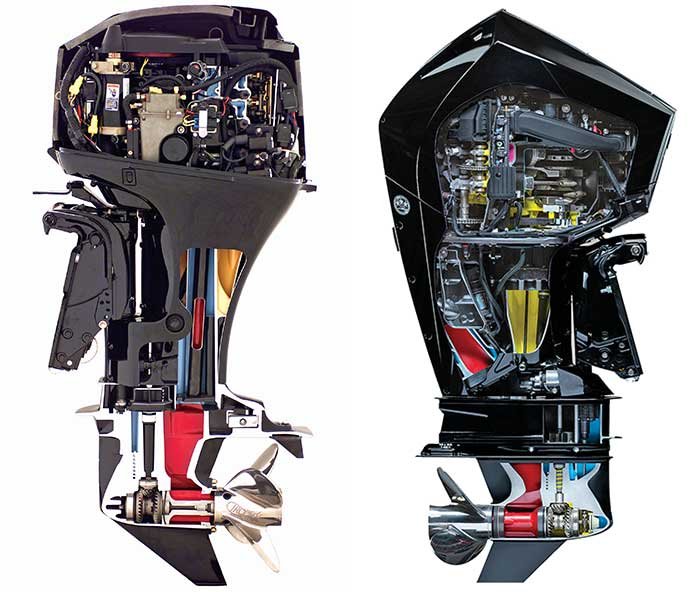
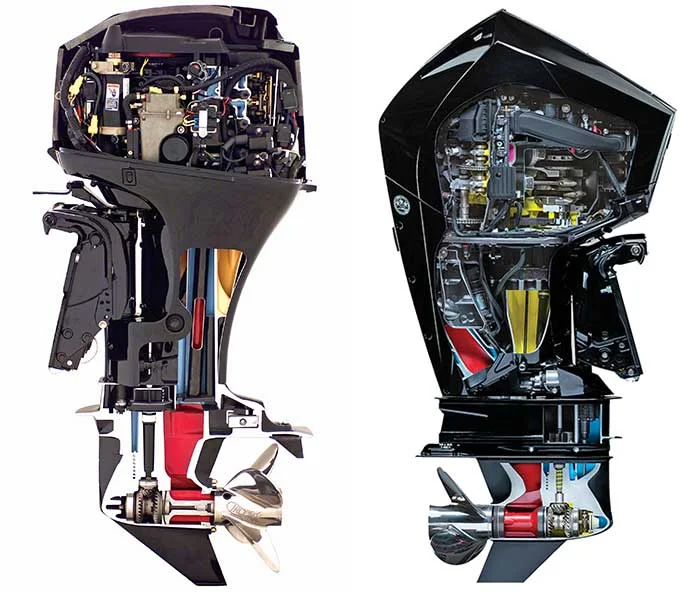
What sets the Mercury 115hp outboard apart from a lot of the competition is weight. At around 163 kg (359 lb) for the 20-inch shaft version, it’s lighter than its closest four-stroke competitors, and it’s even lighter than Mercury’s own older OptiMax two-stroke despite that engine using a smaller 1.5-liter block. That’s a genuinely unusual achievement in outboard engineering, since lighter engines typically mean smaller displacement, not more.
The reason it works is a 2.1-liter powerhead that’s the largest of a lightweight three-engine family Mercury introduced together, sharing core architecture across the range. More displacement at a lower weight means more low-end torque without the acceleration and hole shot penalty you’d normally expect from a heavier engine, which is exactly why the Mercury 115hp outboard punches above its horsepower number in real-world use.
Mercury 115hp Outboard Specifications (Standard FourStroke)
- Engine type: Inline-4, SOHC, 8-valve
- Displacement: 2.1L (126 cid)
- Bore x stroke: 90mm x 81mm (3.5 in x 3.2 in)
- Full throttle RPM range: 5,000-5,800 rpm
- Fuel system: Electronic Fuel Injection (EFI)
- Gear ratio: 2.07:1
- Starting system: Electric with SmartStart protection
- Weight: Approximately 163-173 kg (359-381 lb) depending on shaft length
- Shaft lengths: 20 in (L) and 25 in (XL)
- Recommended fuel: 87 octane minimum (R+M/2), up to 10% ethanol
- Recommended oil: Mercury FourStroke 25W-40 or equivalent marine oil
- SmartCraft compatible: Yes
- Trim system: Power trim and tilt standard
- Steering: Remote mechanical, hydraulic power steering available
Mercury built the valve train on this engine specifically to require no scheduled maintenance, which is a meaningful cost and time saving over the life of ownership compared to engines that need periodic valve clearance checks. The fuel filter is also tool-free to swap, taking under a minute, and an automotive-style spin-on oil filter with a built-in drip tray keeps oil changes cleaner and simpler than on a lot of competing engines.
The Pro XS Version: Same Platform, Sharper Tuning
Mercury also offers a Pro XS variant of the Mercury 115hp outboard, sharing the same 2.1L powerhead but retuned for stronger hole shot, higher wide-open-throttle RPM, and top speed rather than the standard version’s balance of smoothness and efficiency. Pro XS specs include a wider 5,300-6,300 rpm full-throttle range, versus the standard version’s 5,000-5,800 rpm, along with Idle Charge battery management and Redline Red accent styling that signals the performance orientation.
- Full throttle RPM range (Pro XS): 5,300-6,300 rpm
- Ignition: SmartCraft ECM 07, digital inductive
- Induction: Performance-Tuned Scroll Intake Manifold
- Steering options: Big Tiller compatible, dual cable mechanical, or hydraulic power steering
- Gearcase: Standard or Command Thrust for larger-diameter props
If your priority is outright acceleration and top speed on a bass boat, flats boat, or pontoon where you want maximum performance from 115hp, the Pro XS version of the Mercury 115hp outboard is worth the consideration over the standard FourStroke.
How It Performs on the Water
On a well-matched 18 to 21-foot bay boat, flats boat, or pontoon, the Mercury 115hp outboard delivers strong, confident acceleration thanks to its favorable power-to-weight ratio. The extra displacement relative to weight means the engine doesn’t have to work as hard as a heavier competitor to produce the same output, which translates directly into faster planing and better fuel efficiency at cruise, since a less-stressed engine typically burns less fuel to maintain a given speed.
The Pro XS variant pushes this further, with a genuinely aggressive hole shot and top speed that puts it near the top of its competitive class according to Mercury’s own comparative data. For anglers who need to get on plane quickly and cover water fast, that difference is noticeable in a way that matters practically, not just on paper.
Which Boats Pair Well With a Mercury 115hp Outboard
- Bay boats and flats boats in the 18-21 foot range
- Compact bass boats where the Pro XS variant’s hole shot is a genuine competitive advantage
- Pontoon and tritoon boats needing genuine planing performance rather than a barely-adequate motor
- Deck boats and runabouts balancing performance with fuel economy
- Inflatable rigid hull boats (RIBs) where the light weight of this engine matters for overall handling
Fuel Economy and Running Costs
The Mercury 115hp outboard runs on standard 87 octane fuel, and Mercury markets it as the lightest low-emissions outboard in its power range, which directly supports strong fuel efficiency at cruise. The lighter the engine relative to its displacement, the less work it has to do to move a given boat at a given speed, and that efficiency advantage is one of the main reasons this engine has stayed popular across multiple boat categories since its introduction.
Maintenance costs benefit from the maintenance-free valve train and the tool-free fuel filter design mentioned earlier. Standard service intervals still apply for oil changes (every 100 hours or annually) and spark plugs, but the overall maintenance burden on the Mercury 115hp outboard is lighter than a lot of comparable engines simply because Mercury engineered several routine service points to require less attention.
Choosing Between Standard and Pro XS
The decision between the standard Mercury 115hp outboard and the Pro XS variant comes down to how you actually use the boat. If you want the smoothest, quietest ride with strong all-around performance and don’t need maximum top speed, the standard FourStroke is the better fit and typically the more affordable option. If you’re running a bass boat, flats boat, or any application where quick hole shot and higher top speed genuinely matter to how you fish or boat, the Pro XS earns its premium.
Gearcase choice matters too. The Command Thrust option pairs a larger-diameter prop with lower gearing, favoring load-carrying and low-speed thrust over outright top speed, which is a common choice for pontoons and boats that regularly run loaded with passengers and gear.
Rigging and Installation Considerations
Shaft length needs to be measured accurately before ordering a Mercury 115hp outboard. Measure from the top of the transom straight down to the bottom of the hull at the mounting point, and match that to the 20-inch or 25-inch option. Getting this wrong causes ventilation and cavitation problems at speed if too short, or unnecessary drag if too long.
If you’re considering the Pro XS with hydraulic power steering, confirm your boat’s steering setup is compatible before ordering, since retrofitting hydraulic steering onto a boat wired for mechanical cables is a more involved job than most people expect going in.
Mercury 115hp Outboard vs. Other Engines in This Class
Against Yamaha’s F115 and Suzuki’s DF115, the Mercury 115hp outboard’s biggest differentiator is weight. Yamaha’s F115 has a long-standing reputation for reliability and is often the benchmark buyers compare against, while Suzuki’s DF115 tends to compete on smoothness and a slightly different power delivery character. What Mercury brings to the comparison is a genuinely lighter package for the same displacement class, which shows up directly in how quickly the boat comes onto plane and how the boat handles at rest, since less weight on the transom affects trim and balance beyond just straight-line performance.
The Pro XS variant sharpens this further, and Mercury’s own comparative claim is that no competitive outboard matches its top speed and acceleration in the 115 to 150hp Pro XS range. Whether that holds true for your specific hull is worth testing rather than taking purely on faith, but the underlying engineering case, less weight plus more displacement, is sound and consistent with what we hear from customers who’ve made the switch.
Maintenance Schedule in Detail
Because the valve train on the Mercury 115hp outboard is designed to be maintenance-free, owners avoid one of the more time-consuming service items that affects a lot of competing engines. What remains is a fairly standard schedule: oil and filter changes every 100 hours or annually using the recommended marine oil, spark plug replacement on a similar interval, and water pump impeller inspection around 300 hours or three years to prevent overheating issues before they start.
The tool-free fuel filter and drip-tray oil filter design mentioned earlier aren’t just convenience features, they genuinely reduce the mess and time investment of routine maintenance, which matters if you’re doing your own service rather than relying on a dealer for every basic task.
What Owners Notice After a Season
Feedback from Mercury 115hp outboard owners after a full season consistently centers on two things: how quickly the boat comes onto plane relative to the horsepower number, and how little maintenance fuss the engine has required compared to what they expected going in. Pro XS owners specifically mention hole shot and top-end acceleration as the standout characteristics, often describing the engine as feeling like it’s punching above its horsepower class, which tracks with the underlying weight-to-displacement advantage this engine family was specifically engineered around.
Financing, Bulk Orders, and Fleet Purchases
We work with dealers and fleet operators ordering multiple units of the Mercury 115hp outboard, whether that’s a mix of standard and Pro XS configurations or a standardized spec across a fleet of similar boats. Reach out with your quantity and timeline and we’ll put together volume pricing along with a consolidated shipping plan to reduce freight cost per unit.
Ordering Through Us
The Mercury 115hp outboard is an engine we source and ship regularly as part of Mercury’s current lineup, in both standard FourStroke and Pro XS configurations. Tell us your shaft length, gearcase preference, and whether you want the standard or Pro XS tune, and we’ll confirm accurate pricing and lead time for that exact configuration.
We also currently stock several related Mercury engines worth comparing if you want to see specs side by side or need something sooner:
- Mercury 200XL Pro XS — the larger Pro XS sibling if you need more horsepower
- Mercury 50 HP 50ELPT — a lighter FourStroke option from the smaller end of Mercury’s range
Reliability and Warranty
Mercury backs the 115hp FourStroke and Pro XS with a standard factory warranty, and both variants have an established track record since their introduction as part of Mercury’s lightweight 2.1-liter engine family. The maintenance-free valve train and simplified service points have contributed to a strong reputation for lower long-term ownership hassle compared to engines requiring more frequent scheduled maintenance.
Common Questions About the Mercury 115hp Outboard
What’s the difference between standard FourStroke and Pro XS?
Both share the same 2.1L powerhead. Pro XS is tuned for a higher RPM range (5,300-6,300 vs 5,000-5,800), stronger hole shot, and higher top speed, at the cost of some efficiency and smoothness compared to the standard version.
How much does a Mercury 115hp outboard weigh?
Approximately 163 kg (359 lb) for the 20-inch shaft version, making it one of the lightest engines in its horsepower class.
Does it require special maintenance?
The valve train is designed to be maintenance-free, and the fuel filter is tool-free to change. Standard oil changes and spark plug replacement still apply on normal intervals.
What fuel does it need?
87 octane minimum, with up to 10% ethanol tolerance.
Do you ship the Mercury 115hp outboard internationally?
Yes, we export both standard and Pro XS configurations worldwide, with sea and air freight options depending on your timeline.
Ordering and Worldwide Shipping
We ship the Mercury 115hp outboard to customers across multiple continents, handling export crating and freight documentation on our end. If you’d like to compare the Pro XS specifications directly against Mercury’s own published data, their official Pro XS 115-150hp page covers the performance-tuned variant of this engine in detail.
Ready to Order
Whether you want the smooth, efficient standard FourStroke or the sharper-tuned Pro XS, the Mercury 115hp outboard delivers a genuinely favorable power-to-weight ratio that’s hard to match in this horsepower class. Reach out with your specific configuration needs and we’ll confirm pricing and lead time, or browse our current stock of Mercury Pro XS outboards if you’re comparing horsepower options. Check our other outboard motor buying guides for more comparisons across brands and horsepower classes.
Expert Tips
Before you commit, write down how you really use the boat: how many people you carry, how far you go, and whether you need to plane quickly or cruise slowly. That picture makes it much easier to choose the right horsepower, shaft length, controls and propeller, and avoids paying for features you will not use.
Read the model code on any listing carefully. Letters in the code usually describe shaft length, starting method, steering, trim and rotation, and two engines that look identical in photos can be set up quite differently. If anything is unclear, ask before you order.
Key Points to Remember
- Start with your boat’s capacity plate: never exceed the rated horsepower or weight.
- Match the shaft length to your transom height.
- Choose tiller or remote steering, and manual or electric start, to suit how you use the boat.
- Read the model code carefully; it tells you shaft length, controls, rotation and colour.
- Budget for the full package: controls, gauges, propeller, battery and rigging.
- Confirm exactly what is included with the engine before you order.
Practical Checklist
Use this quick checklist to put the advice in this article into practice:
- Check the capacity plate for maximum horsepower and weight
- Measure transom height from the top of the transom to the bottom of the hull
- Decide on steering, starting and trim requirements
- Compare model codes and specifications
- Ask what is included: propeller, controls, fuel tank, cables
- Inspect the crate on delivery and note any damage before signing
Frequently Asked Questions
What shaft length do I need?
Measure from the top of the transom to the bottom of the hull on the centreline: about 15 inches suits a short shaft, 20 a long shaft, 25 an extra-long shaft and 30 an ultra-long shaft.
Should I buy new or used?
New engines give you a known history and full manufacturer support. A well-documented used engine can save money, but check hours, compression and service records carefully.
How much power do I really need?
Most owners choose an engine at 75 to 100 percent of the boat’s rated maximum, which usually gives the best balance of performance, economy and resale value.
Mercury 115 HP Outboards to Consider
If you are shopping for an engine after reading this guide, these models are a good place to start. Each listing has full specifications, the model code explained and buying advice.
- Mercury 4 HP 4MLH
- Mercury 300HP XL Four Stroke
- Mercury 3.5 HP 3.5MH
- Mercury Verado 350HP XL
- Mercury Verado 250HP XL
- Mercury Verado 250HP CXXL
Related Guides
- Mercury 200hp Outboard: Pro XS vs Verado Specs and Buying Guide
- Used Mercury Outboard Motors For Sale: Specs, Prices & Buying Guide
- Mercury 60hp Outboard: Full Specs and Buying Guide
- Mercury Verado Outboard Motors: Specs, Prices & Worldwide Shipping
- Buy Mercury Outboards: The Ultimate 2026 Buying Guide
- Buy Suzuki Outboards: Full Range, Specs and Buying Guide
Next Steps
Browse Mercury or the full outboard shop. Read our shipping policy for delivery details, and contact us if you would like help choosing the right engine for your boat.
Posts Widget
-
1

-
2

-
3

-
4


S.H Continental Marine
USA HERALD MAGAZINE INC
Our team is dedicated to providing exceptional customer service.
Email: info@shcontinentalmarine.com
Choose S.H Continental Marine
for your outboard engine needs and enjoy superior quality, exceptional customer service, and unbeatable prices.