
2 Stroke Outboard Motor: What It Is, How It Works, and When to Buy One
The 2 stroke outboard motor has been around for most of boating history. Before four-stroke engines took over the mainstream market, the two-stroke was the outboard. Light, simple, powerful for its size. Even now, with four-strokes dominating new sales, there are still situations where a 2 stroke outboard motor is exactly what a buyer needs. At SH Continental Marine, we know both sides of this market. This post covers what a 2 stroke outboard motor actually is, how it compares to four-stroke alternatives, the specs that matter, and when it still makes sense to buy one.
How a 2 Stroke Outboard Motor Works
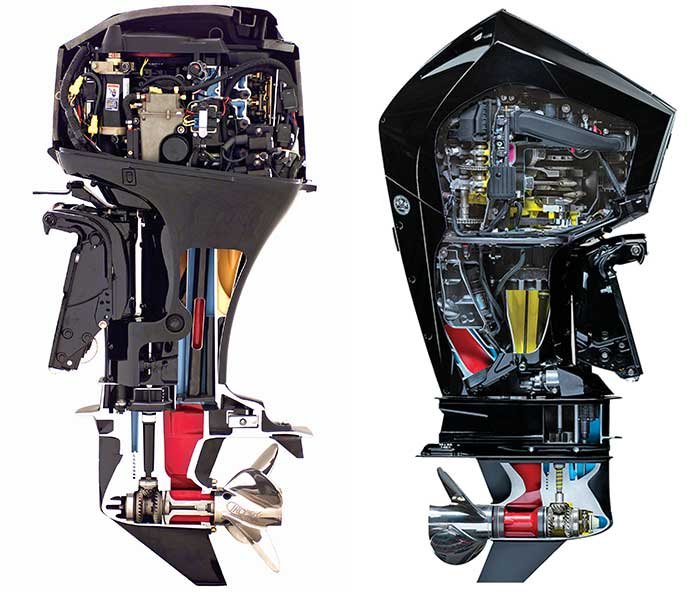
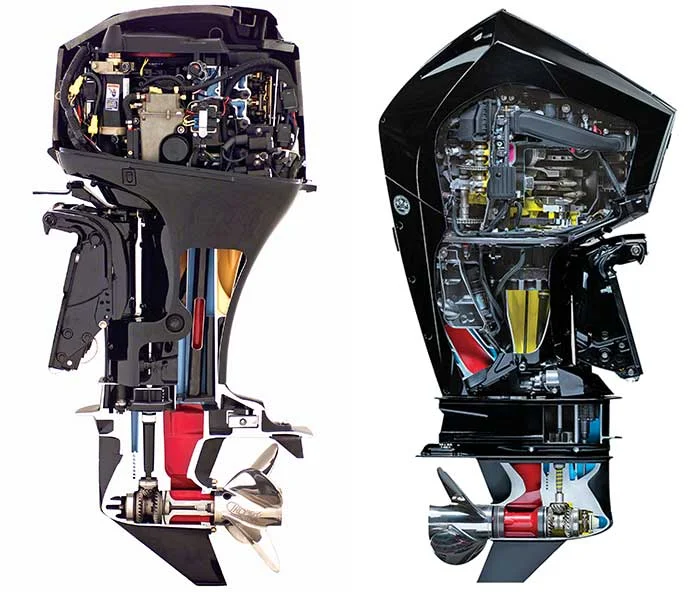
A 2 stroke outboard motor completes the power cycle in two piston strokes — one compression/power stroke and one exhaust/intake stroke. Compare that to a four-stroke, which takes four piston strokes to complete the same cycle. The two-stroke fires with every revolution of the crankshaft. That means a 2 stroke outboard motor produces more power pulses per RPM than a comparable four-stroke, which is why two-strokes often feel more responsive and aggressive at high throttle.
The fuel system in a 2 stroke outboard motor requires oil to be mixed into the fuel. Older systems required pre-mixing oil and gasoline in the tank. Modern 2 stroke outboard motors use oil injection systems that mix automatically, which removes the guesswork but still means managing a separate oil supply in addition to the fuel.
2 Stroke Outboard Motor vs 4 Stroke: The Real Differences
Understanding the actual differences between a 2 stroke outboard motor and a four-stroke helps you make the right buying decision rather than just following current trends.
Weight
A 2 stroke outboard motor is significantly lighter than a comparable four-stroke. The simpler engine architecture — no oil sump, no complex valve train, fewer moving parts — results in an engine that can be 30–40% lighter than a four-stroke producing the same rated horsepower. For smaller boats where transom weight rating is tight, or for applications where the engine needs to be hand-carried, a 2 stroke outboard motor has a real practical advantage.
Power-to-Weight Ratio
A 2 stroke outboard motor produces more power per kilogram than most four-stroke equivalents. This matters in high-performance applications — racing, high-speed runabouts, and applications where weight is a serious constraint. The trade-off is that a 2 stroke outboard motor reaches that power through higher RPM and less mid-range torque than most four-strokes in the same horsepower class.
Fuel Economy
A 2 stroke outboard motor generally uses more fuel than a comparable four-stroke. Part of this is structural — the two-stroke design inherently loses some unburned fuel through the exhaust port during scavenging. Modern direct-injection 2 stroke outboard motors addressed much of this, but the fundamental chemistry still works against them on fuel economy versus a modern four-stroke EFI engine at similar HP.
Emissions
Traditional 2 stroke outboard motors emit more hydrocarbons and particulates than four-strokes. This led to emissions regulations in many countries that effectively ended new two-stroke sales in those markets. If you’re operating in a region with strict marine emissions standards, confirm that a 2 stroke outboard motor is legal to use in your operating area before purchasing.
Simplicity and Repairability
This is where a 2 stroke outboard motor genuinely wins over a four-stroke in certain markets. Fewer moving parts means fewer things that can go wrong and simpler diagnosis when they do. A mechanic in a remote location with basic tools can often work on a 2 stroke outboard motor that would require specialized equipment and training on an EFI four-stroke. For buyers operating in areas with limited service access, this is a real consideration.
2 Stroke Outboard Motor Specifications Explained
When you’re evaluating a 2 stroke outboard motor, here are the key specs and what they mean.
Displacement
Displacement in a 2 stroke outboard motor is measured in cubic centimeters just like any engine. However, because a two-stroke fires on every revolution, a 2 stroke outboard motor produces equivalent power to a four-stroke with roughly twice the displacement. A 500cc two-stroke is in a similar power ballpark to a 1,000cc four-stroke. Keep this in mind when comparing spec sheets across engine types.
Oil Injection System
Modern 2 stroke outboard motors use Variable Ratio Oiling (VRO) or similar automatic injection systems. These pump oil into the fuel at a ratio that varies with throttle position and load — more oil at high load, less at low. When evaluating used 2 stroke outboard motors, always verify the oil injection system is functioning correctly. A failed oil pump that went unnoticed means the engine ran lean on lubrication, which causes rapid wear. Check for scored cylinder walls as a consequence.
Cooling System
Like all outboard motors, a 2 stroke outboard motor uses a water-cooled system that draws water from outside the hull, circulates it through the powerhead, and expels it with the exhaust. The water pump impeller in a 2 stroke outboard motor is just as critical as in a four-stroke. A failed impeller causes overheating that damages the cylinder and head rapidly. Check our guide on outboard overheating causes — the failure modes apply to two-stroke and four-stroke engines alike.
Shaft Length
Shaft length on a 2 stroke outboard motor follows the same standards as four-stroke units: short (15 inches), long (20 inches), and extra-long (25 inches). Match the shaft to your transom height. This is non-negotiable regardless of engine type. A mismatched shaft on a 2 stroke outboard motor causes the same prop ventilation and performance issues as on any other outboard.
Starting System
2 stroke outboard motors come with electric start, pull start, or both. Smaller two-strokes under 15 HP are often pull-start only. Mid-range 2 stroke outboard motors typically offer electric start with a pull backup. For commercial use, confirm electric start and ensure the starting circuit and battery are in good condition.
When a 2 Stroke Outboard Motor Still Makes Sense
Despite the market shift toward four-stroke dominance, there are genuine use cases where a 2 stroke outboard motor remains the better choice.
Ultralight and Portable Applications
Where weight is everything — small inflatables, kayaks, ultra-light tenders, and aircraft float applications — a 2 stroke outboard motor is still hard to beat. The weight difference over an equivalent four-stroke is significant and practical. If you need to carry the engine in and out of a vehicle or up steps to a dock, a lightweight 2 stroke outboard motor makes daily life easier.
Remote Areas with Basic Service Capability
In parts of the world where spare parts and skilled mechanics are limited, a 2 stroke outboard motor is more serviceable with basic tools and generic parts. A carburetor on a 2 stroke outboard motor can often be rebuilt with simple hand tools and a basic rebuild kit. An EFI four-stroke with electronic faults requires diagnostic equipment. This isn’t a universal argument for two-strokes, but it is a real practical consideration in some markets.
Racing and Performance
High-performance outboard racing still uses 2 stroke outboard motors in many classes. The power-to-weight advantage of a competition-tuned 2 stroke outboard motor is real and significant in a racing context where total boat weight and peak power output both matter enormously.
Maintaining a 2 Stroke Outboard Motor
Maintenance on a 2 stroke outboard motor follows different procedures from a four-stroke in some areas. There’s no crankcase oil to change — the lubrication is handled by the oil injection system. But other maintenance items remain the same or are more demanding.
Spark plugs in a 2 stroke outboard motor work harder and foul faster than in a four-stroke, especially at low throttle. Check and replace spark plugs on schedule. A fouled plug in a 2 stroke outboard motor causes misfiring, hard starting, and poor idle that’s often mistaken for a bigger problem. If your 2 stroke outboard motor is hard to start or idles roughly, check the plugs first. See our guide on outboard won’t start troubleshooting for a systematic approach.
Flushing after saltwater use is as important on a 2 stroke outboard motor as on any other outboard. Salt corrosion in the cooling passages is not an engine-type issue — it happens on two-strokes just as readily as four-strokes. Flush properly after every saltwater trip. Our post on how to flush a Yamaha outboard motor covers the process — the procedure is similar across engine types.
The impeller in a 2 stroke outboard motor needs to be checked and replaced on the same schedule as a four-stroke — every 100–200 hours. Check our impeller replacement guide for what to look for and when to act.
What to Check When Buying a Used 2 Stroke Outboard Motor
Used 2 stroke outboard motors require some specific checks that go beyond what you’d do on a four-stroke.
Cylinder compression is the starting point. Pull the plugs and check each cylinder with a compression gauge. Healthy 2 stroke outboard motors typically show compression in the 100–130 PSI range for most models, with all cylinders within 10% of each other. Low or uneven readings indicate ring or cylinder wall wear.
Check the oil injection pump. A 2 stroke outboard motor that was run without adequate lubrication through a failed injection pump shows it in the compression readings and often in visible scoring when you pull a head. Ask whether the injection pump has been serviced or tested recently.
Look at the prop shaft and lower unit carefully. 2 stroke outboard motors often end up in harsh use environments and the lower unit takes impact. Inspect the cavitation plate for impact damage and check gear lube color just as you would on any used outboard.
Rigging a 2 Stroke Outboard Motor
The control system for a 2 stroke outboard motor should be in good condition. Worn throttle and shift cables on an otherwise good engine make handling imprecise and can cause dangerous situations at speed. Our Yamaha outboard control box guide covers what to look for in control system components — the principles apply regardless of engine type.
Propeller selection for a 2 stroke outboard motor follows the same logic as for any outboard: match pitch and diameter to achieve the manufacturer’s WOT RPM range at full throttle with your typical load. Our guide on best propellers for outboards explains how prop selection affects performance. A correctly selected prop extracts better performance from a 2 stroke outboard motor and reduces fuel consumption.
Common Questions About 2 Stroke Outboard Motors
Are 2 stroke outboard motors still available new?
In some markets, new 2 stroke outboard motors in small HP classes are still sold. In markets with strict emissions regulations, new two-strokes are largely absent from the mainstream market. Used 2 stroke outboard motors remain widely available globally. Contact us with your requirements and location and we’ll tell you what we have available.
How long does a 2 stroke outboard motor last?
With proper maintenance, a 2 stroke outboard motor can reach 1,000–1,500 hours before requiring major internal work. The key variables are oil supply consistency (the injection system must function correctly at all times), spark plug maintenance, and flushing after saltwater use. Two-strokes generally have shorter service lives than modern four-strokes at equivalent usage, but they also typically cost significantly less.
Do you ship 2 stroke outboard motors internationally?
Yes. We ship 2 stroke outboard motors to buyers worldwide. Contact us through our contact page with your location and requirements for a shipping quote.
Why Buy From SH Continental Marine
We carry and supply both two-stroke and four-stroke outboard motors. If a 2 stroke outboard motor is the right choice for your application, we’ll help you find a good one. If a four-stroke is actually better suited to what you’re doing, we’ll tell you that instead.
Browse our current inventory at the shop or contact us directly through the contact page. We ship worldwide and we know how to get engines to buyers in difficult logistics environments.
Posts Widget
- 1

- 2

- 3
- 4


S.H Continental Marine
USA HERALD MAGAZINE INC
Our team is dedicated to providing exceptional customer service.
Email: info@shcontinentalmarine.com
Choose S.H Continental Marine
for your outboard engine needs and enjoy superior quality, exceptional customer service, and unbeatable prices.
