
Online Marine Engine Marketplace: Compare, Choose, and Buy With Confidence
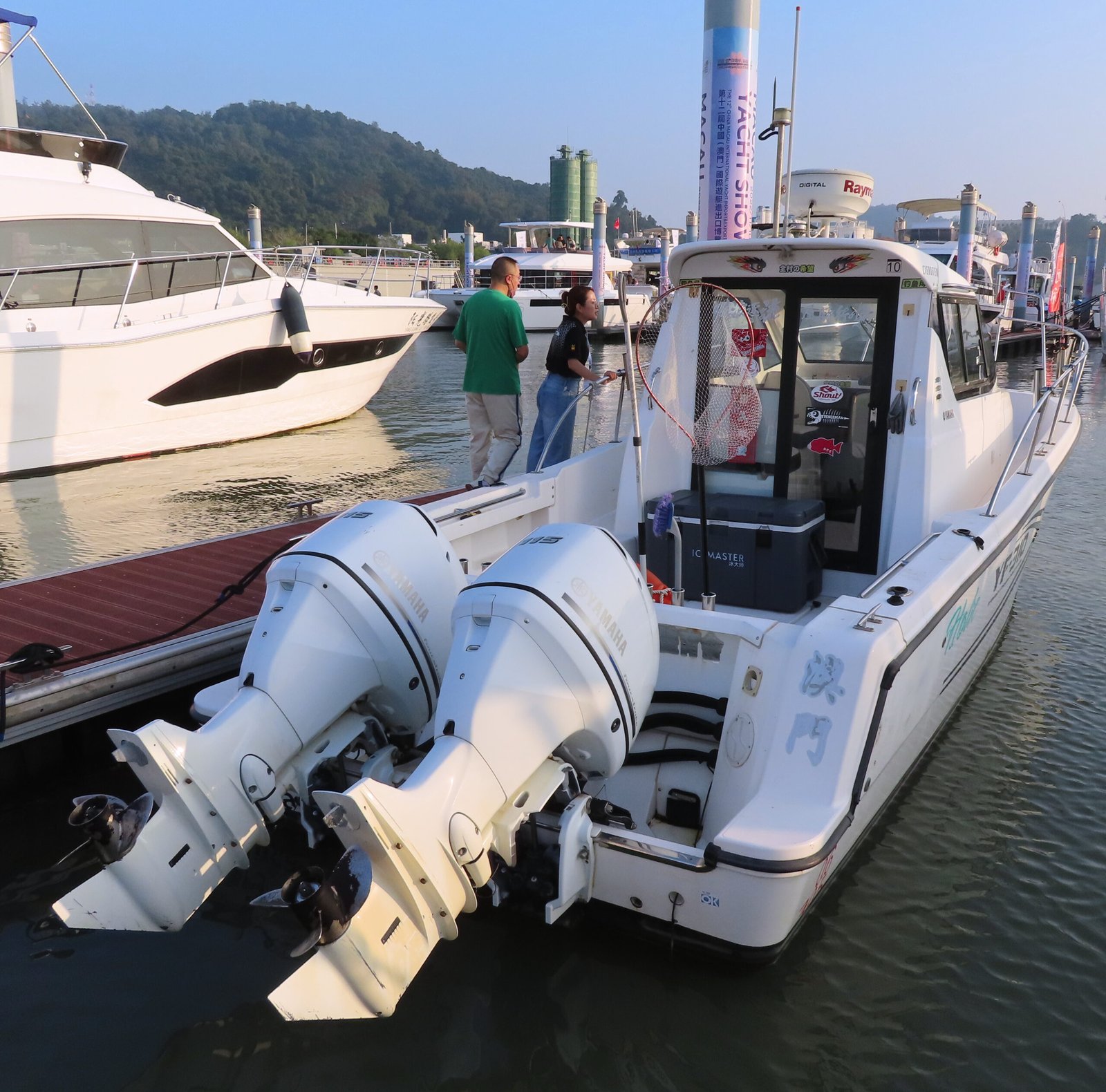
Ten years ago, if you wanted a marine engine, you called around town, or maybe drove to two or three dealers and compared what was sitting on their floor. That’s just not how most people shop anymore. Today an online marine engine marketplace does the job those phone calls used to do, except you can compare specs, prices, and photos from your kitchen table at midnight instead of waiting for a dealer to open on Monday.
We built our shop to work exactly that way. Every engine we carry — from small portable outboards to full offshore V8s — is listed with real specifications, a real price, and real photos, so you can make a decision without ever picking up the phone if you don’t want to. Browse the full online marine engine marketplace and you’ll see what we mean.
What separates a real marketplace from a glorified contact form
A lot of sites that call themselves an online marine engine marketplace are really just lead generators. You fill out a form, and somebody calls you back three days later with a quote that has nothing to do with anything you saw on the page. That’s not what we do. Here’s what an actual marketplace experience should include, and what you’ll find when you shop with us:
- Real prices attached to real listings — not “starting from” figures that balloon once you actually inquire.
- Specifications you can compare side by side — displacement, weight, shaft length, fuel system, and gear ratio, not just a horsepower number and a stock photo.
- Inventory you can actually check — if it’s listed as in stock, it’s in our warehouse, not sitting on a manifest somewhere overseas.
- A checkout process that doesn’t require three phone calls before you find out the real total cost.
Engines you’ll find on the marketplace right now
Yamaha 90 HP F90JB
- Displacement: 1,832 cc inline 4-cylinder
- Weight: approximately 165 kg
- Fuel system: EFI
- Starting: electric with power trim/tilt
- Price: $6,300
A common repower for pontoon boats and center consoles that need reliable mid-range power. View the full listing on our Yamaha 90 HP F90JB page.
Yamaha 60 HP F60JB
- Displacement: 995 cc inline 4-cylinder
- Weight: around 118 kg
- Fuel system: EFI
- Gear ratio: 2.08:1
- Price: $5,180
Details and photos are on the Yamaha 60 HP F60JB listing.
Yamaha 8 HP F8SMHB
- Displacement: 197 cc single-cylinder
- Weight: approximately 36 kg
- Starting: manual pull-start
- Fuel: carbureted
- Price: $1,300
A popular choice for dinghies and small aluminum boats — see it on the 8 HP F8SMHB page.
Yamaha 425 HP V8 (LXF425XSA2, 25″ shaft)
- Displacement: 5,559 cc V8
- Weight: roughly 283 kg
- Fuel system: direct fuel injection
- Alternator: 50 amp
- Price: $23,800
Built for serious offshore rigs running twin or triple setups — full specs on the 425 HP V8 25″ shaft listing.
How to actually compare engines on a marketplace without getting confused
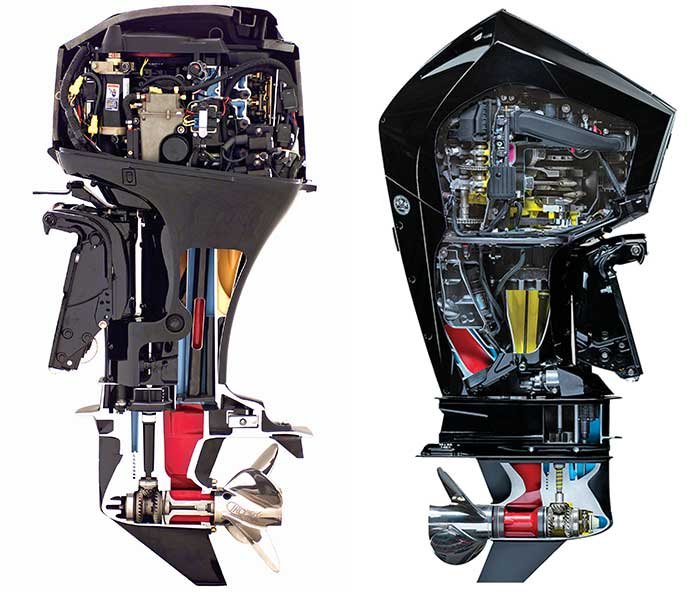
The specs sheet on any outboard listing can feel like alphabet soup if you’re not already fluent in marine engine terminology. Here’s a quick breakdown of what actually matters when you’re comparing two listings:
| Spec | Why it matters |
|---|---|
| Displacement (cc) | Roughly correlates with torque and how the engine feels under load, not just top speed |
| Weight (kg) | Affects transom load and how the boat sits and handles, especially on smaller hulls |
| Shaft length | Must match your transom height — the single most common ordering mistake |
| Fuel system | EFI generally means easier starting and better fuel economy than carbureted engines |
| Gear ratio | Lower ratios (closer to 1:1) suit high-speed props, higher ratios suit heavier loads |
| Alternator output | Matters if you’re running electronics, trolling motors, or livewells off the engine’s charging system |
Once you know what these numbers actually mean, comparing two listings on a marketplace takes minutes instead of a phone call to a stranger who might not even know the answer themselves.
Why buyers are moving away from classified sites and auction houses
Classified listings and auction sites have their place, but they come with real downsides that a dedicated online marine engine marketplace avoids. On a classifieds site, you’re often buying from a private seller with no inspection standard, no return policy, and no accountability if the compression numbers they quoted turn out to be optimistic. Auction houses add their own buyer’s premium on top of the hammer price, and by the time you factor that in, the “deal” often isn’t one anymore.
A proper marketplace run by an actual dealer changes that equation. We inspect what we sell, we photograph it honestly, and the price on the page is the price you pay — no premium tacked on at checkout, no surprise fees buried in a terms page you never read.
Filtering and finding the right engine faster
With dozens of engines in stock at any given time, the fastest way to shop is to know your three non-negotiables before you start browsing:
- Horsepower range — check your boat’s capacity plate first, not last.
- Shaft length — measure your transom from the top edge to the bottom of the hull.
- Budget ceiling — including shipping, since freight cost varies a lot by engine size and destination.
With those three numbers in hand, you can usually narrow our stock down to two or three realistic options within a few minutes of browsing the marketplace listings.
Shipping through the marketplace
Every listing includes shipping arranged directly by us, whether you’re a few hours away or on another continent. We’ve shipped engines to buyers across North America, Europe, the Middle East, Africa, Asia, and Australia, and each crate is built to match the specific engine going into it — a portable 8 HP doesn’t need the bracing a 425 HP V8 requires. For guidance on horsepower ratings and safe installation limits, the U.S. Coast Guard boating safety division publishes clear standards worth reviewing before you order, particularly if you’re repowering rather than buying for a new build. Buyers working internationally may also want to check current requirements through the International Maritime Organization, since import rules for marine engines vary by country.
What happens after you place an order
Once an order comes through the marketplace, here’s the actual sequence, not a vague promise about “processing time”:
- We confirm the engine is still physically available (rare that it isn’t, since stock updates in real time, but we double-check on higher-value units).
- The engine gets a pre-shipment inspection — fluid levels, external condition, prop and lower unit check.
- We build a crate sized to the engine and prepare shipping documentation.
- You receive tracking information as soon as the shipment leaves our facility.
- We stay reachable for questions about installation, break-in, or anything else once it arrives.
A note on trust signals when shopping online
Anybody can throw up a website with stock photos and call it a marketplace. A few things worth checking before you commit to any online marine engine seller, us included:
- Do the listing photos look like actual warehouse photos, or generic manufacturer stock images used across dozens of unrelated sites?
- Is there a real physical address and phone number, or just a contact form?
- Are prices listed plainly, or is everything “call for a quote”?
- Can you get a second opinion — video, extra photos, a compression reading — before you commit?
If a seller won’t answer those questions directly, that’s worth paying attention to. We answer all four without hesitation because we have nothing to hide about how the business runs.
Frequently asked questions
Do prices on the marketplace include shipping?
No — shipping is quoted separately based on engine size and destination, since a flat rate would either overcharge buyers close to us or undercharge international orders.
Can I negotiate the listed price?
On some higher-value units, yes, particularly if you’re buying more than one engine or paying by wire transfer. Ask directly and we’ll tell you honestly whether there’s room.
How current is the stock shown on the marketplace?
Listings are updated as engines sell or arrive, so what you see reflects what’s actually sitting in the warehouse, not a static catalog from months ago.
What if I need a part or accessory that isn’t listed?
Ask us directly — we carry propellers, control boxes, and rigging kits for most engines we sell, and can often source specific parts even if they’re not listed on the site yet.
More listings worth a look
Yamaha 9.9 HP T9.9LWHB
- Displacement: 232 cc inline 2-cylinder
- Weight: around 41 kg
- Shaft length: long (20″)
- Starting: manual with optional electric start
- Price: $1,960
A frequent pick for sailboat auxiliary power and tenders needing a long shaft. See the 9.9 HP T9.9LWHB listing.
Yamaha 9.9 HP F9.9SMHB
- Displacement: 212 cc inline 2-cylinder, four-stroke
- Weight: approximately 42 kg
- Fuel: carbureted
- Price: $1,590
One of the better value entries in the small four-stroke category, listed on the F9.9SMHB page.
Yamaha 40 HP outboards and the 6 HP F6LMHA
For buyers at the smaller end of the range, our 6 HP F6LMHA (995 cc-class portable, manual start, roughly 27 kg) lists at $1,690.99 and is a common tender and backup engine — check the 6 HP F6LMHA listing for the full spec sheet.
Marketplace, dealer floor, or auction: a side-by-side look
| Factor | Online marketplace (us) | Local dealer floor | Auction house |
|---|---|---|---|
| Selection | Dozens of models, updated in real time | Limited to what’s physically on the lot | Whatever happens to be in that week’s sale |
| Price transparency | Listed price, no surprises | Often requires negotiation on the floor | Hammer price plus buyer’s premium |
| Comparison shopping | Side-by-side specs in minutes | Requires visiting multiple locations | Limited to lot descriptions, often thin on detail |
| Shipping | Arranged and crated by the seller | Usually your own responsibility | Frequently your own responsibility, sometimes subcontracted |
Matching an engine to your boat type
The right listing on a marketplace depends heavily on what you’re actually doing with the boat, not just the horsepower number:
- Pontoon boats generally do well with 40–90 HP four-strokes depending on length and passenger load — our 50 HP and 60 HP listings are common matches.
- Bass and aluminum fishing boats often benefit from the higher-output tuned engines like the VF90LA V MAX SHO when hole-shot and top speed matter.
- Center consoles running offshore typically need 150 HP and up, frequently paired in twin or triple configurations for redundancy.
- Dinghies and tenders are well served by our portable 6–9.9 HP range, balancing weight against enough thrust to get on plane with two people aboard.
Reading a listing correctly before you buy
A well-built listing on any marine engine marketplace should answer these questions without you having to ask:
- Is this new, used, or reconditioned, and what’s the actual hour count?
- What shaft length is it, and are other lengths available?
- What’s included — controls, cables, propeller — and what isn’t?
- What warranty coverage, if any, transfers with the sale?
- Is the price the final price, or does it exclude shipping and handling?
If a listing leaves any of those five questions unanswered, message the seller before you buy rather than assuming the best case. On our listings, all five are answered directly on the product page.
Why real inventory beats a bigger-looking catalog
Some marketplaces pad their catalog with listings sourced from other sellers, which looks impressive until you actually try to buy something and find out it’s backordered, sold, or was never really available in the first place. We’d rather show you fifty engines we actually have than five hundred we’d need to go find. When you click through to a product page on our marketplace, what you’re looking at is what’s sitting on our floor right now, not a placeholder waiting on a supplier to confirm availability.
Bottom line
An online marine engine marketplace should save you time and money, not add another layer of guesswork on top of an already confusing purchase. We built ours around real inventory, honest specs, and pricing you can see before you ever pick up the phone. Take a look through the current stock listings, and if you don’t see exactly what you need, reach out — chances are we can point you to it or tell you honestly when something similar will be available.
Posts Widget
- 1

- 2

- 3
- 4


S.H Continental Marine
USA HERALD MAGAZINE INC
Our team is dedicated to providing exceptional customer service.
Email: info@shcontinentalmarine.com
Choose S.H Continental Marine
for your outboard engine needs and enjoy superior quality, exceptional customer service, and unbeatable prices.
