
Reliable Outboard Motors: What Actually Makes One Last
Reliability is the one spec you can’t find on a data sheet. You can look up horsepower, weight, and shaft length in thirty seconds, but whether an engine will still start on the first pull five years from now, in salt air, after sitting through a winter — that only shows up after people have owned the thing for a while. When customers ask us which are the most reliable outboard motors on the market, we don’t point them at a single number. We point them at a pattern: engineering discipline, corrosion protection, and a manufacturer with a long track record of the same motor family running trouble-free for a decade or more.
We sell outboards for a living at S.H Continental Marine, and reliability is genuinely the thing people care about most once the initial excitement of horsepower and top speed wears off. Nobody wants to be the person paddling back to shore because a twelve-year-old two-stroke finally gave up. So let’s talk about what actually makes an outboard reliable, which brands and models have earned that reputation, and how to shop for one without getting talked into paying for marketing instead of engineering.
What “Reliable” Actually Means in an Outboard
Reliability isn’t one thing. It’s a combination of several boring, unglamorous engineering choices that add up over years of use:
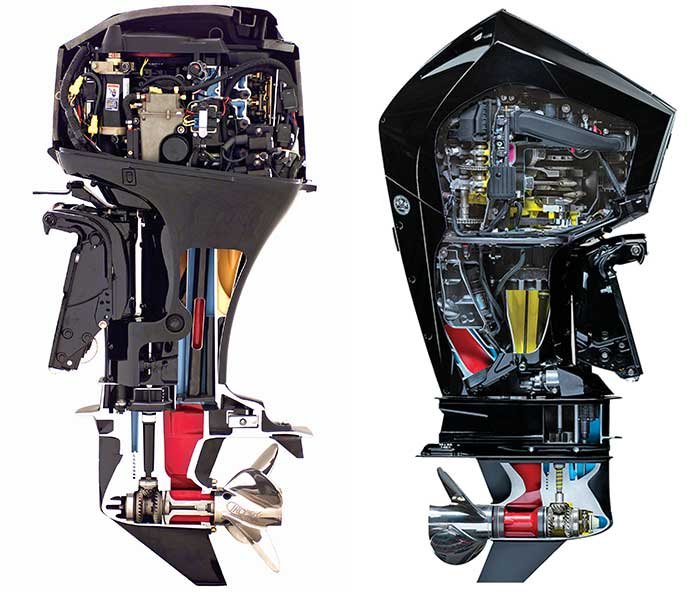
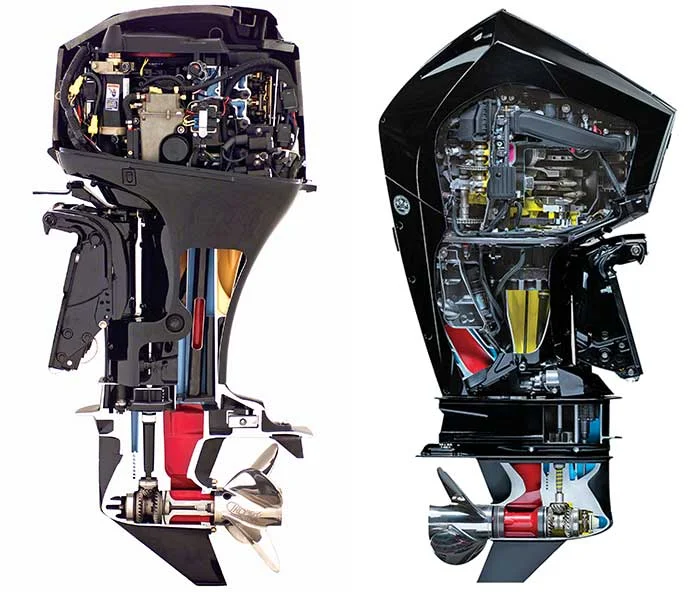
- Simple, well-tested architecture. Engines that have been in production for a long time, with incremental refinements rather than constant redesigns, tend to have fewer surprises. Manufacturers work out the weak points over successive model years.
- Corrosion resistance. Saltwater is the number one enemy of any outboard, and the difference between a motor that lasts eight years and one that lasts twenty often comes down to anode placement, alloy quality, and paint/coating systems.
- Electronic fuel injection done right. EFI systems that are properly calibrated start easier, run cleaner, and put less strain on the ignition system than older carbureted setups — but a poorly tuned EFI system can be just as troublesome as a bad carburetor.
- Parts availability. A reliable motor is one you can actually get serviced. An outboard with a small, hard-to-find parts network isn’t reliable in any practical sense, no matter how well it’s built, because a two-week wait for a gasket turns a five-minute fix into a lost season.
Keep that list in mind, because it’s the actual criteria that separates reliable outboard motors from ones that just look good on paper.
The Brands That Have Earned Their Reputation
Yamaha is the name that comes up most often in this conversation, and for good reason. Their four-stroke lineup has been refined over decades, they use a proprietary corrosion-resistant alloy (YDC-30) across their block castings, and their EFI calibration is widely regarded as some of the smoothest in the industry. It’s not an accident that Yamaha outboards routinely show up in “still running after 3,000 hours” stories from commercial fishermen — that’s the kind of use case where unreliable engines get exposed fast, because there’s no budget for downtime.
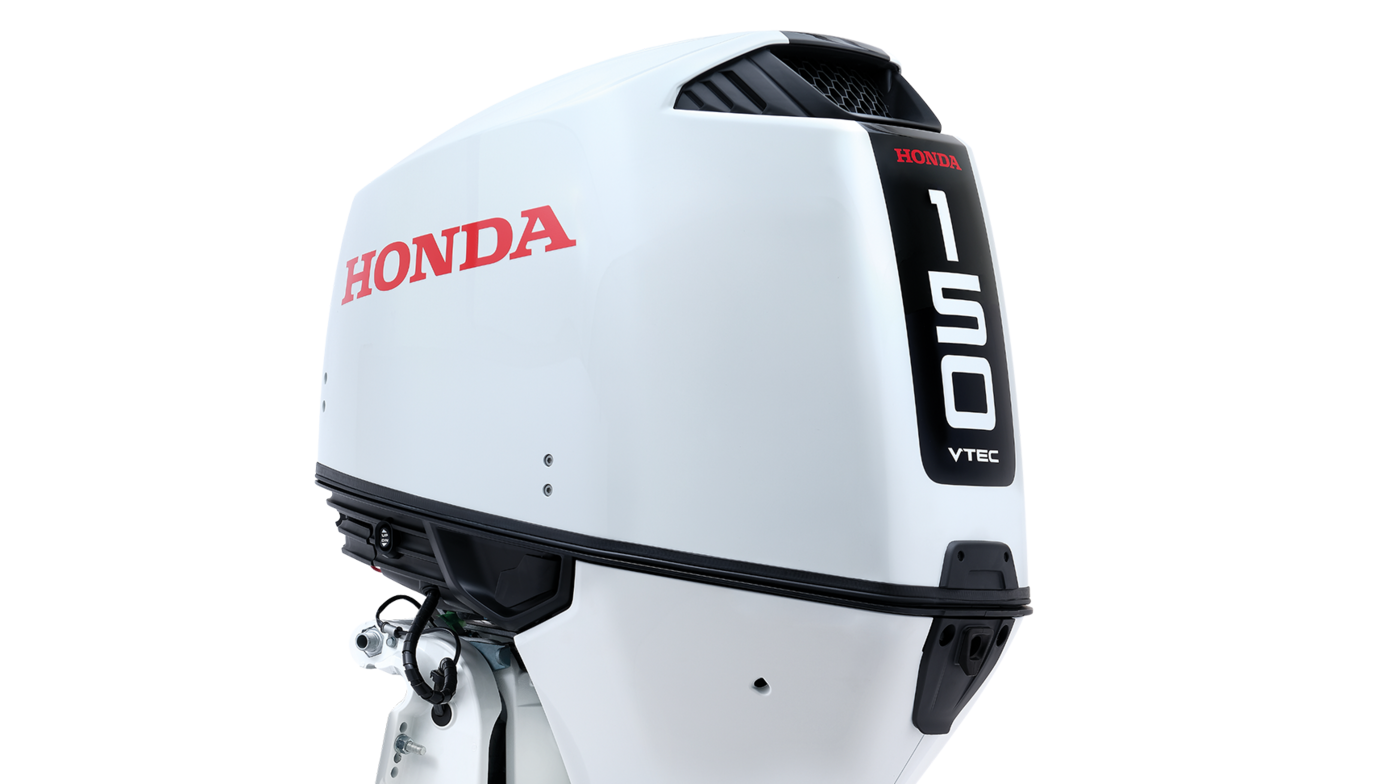
Honda’s marine division carries over a lot of the same automotive-grade engineering discipline that’s made their car engines famous, and their smaller portable outboards in particular have a strong reputation for starting reliably even after months of storage. Mercury has closed a lot of the reliability gap in recent years with their four-stroke FourStroke and Verado lines, particularly after moving away from some of the two-stroke designs that had a rougher reputation in the ’90s and 2000s.
What all three have in common: decades of iterative engineering, wide service networks, and enough production volume that any design flaw gets found and fixed quickly rather than lingering for years.
Real-World Examples From Our Own Inventory
We carry a wide range of outboards, and a few consistently come up when customers specifically ask for something reliable rather than something flashy. The Yamaha 90 HP F90LB is a good example — a 1.8L four-cylinder four-stroke with EFI, a 353-pound weight that’s light for its class, and a proven track record with commercial and recreational users alike. It’s not the flashiest motor in the catalog, but it’s the one we’d point a first-time buyer toward if reliability was their top priority.
On the smaller end, the Yamaha 9.9 HP F9.9LEB is built on the same four-stroke, corrosion-resistant philosophy in a much lighter package — electric start, a 20-inch shaft that fits a wide range of boats, and a reputation for being one of the easiest small outboards to keep running for a decade with basic maintenance. If you’re outfitting a dinghy, a small fishing boat, or want a dependable kicker motor, that kind of proven simplicity matters more than raw horsepower. The Yamaha 90 HP F90XB and the high-thrust Yamaha 9.9 HP T9.9LPHB round out the range of models we’d point reliability-focused buyers toward first.
Two-Stroke vs. Four-Stroke and What It Means for Reliability
Older two-stroke outboards have a reputation — sometimes deserved, sometimes not — for being less reliable than four-strokes. That reputation comes mostly from oil injection systems that could fail and leave the engine running lean, which cooks pistons fast. Modern two-strokes with direct fuel injection solved a lot of that, but four-strokes have largely won the reliability argument simply because they use a separate, monitored oil system that’s much closer to what’s proven itself in millions of car engines over the past several decades.
That’s part of why nearly every major manufacturer has shifted the bulk of their lineup to four-stroke. If reliability is genuinely your top priority and you’re comparing a used two-stroke against a four-stroke of similar age and hours, the four-stroke is very often the safer bet — all else being equal.
Maintenance: The Part of Reliability You Control
Here’s something that gets glossed over in a lot of “most reliable outboard motors” roundups: the motor is only half the equation. Two identical engines, one maintained on schedule and one neglected, will have wildly different reliability track records five years down the road.
The maintenance habits that separate a reliable outboard from a problem child are almost embarrassingly simple:
- Change the oil and filter on the manufacturer’s schedule, not “whenever it seems dirty.”
- Flush with fresh water after every saltwater outing, without exception.
- Replace the water pump impeller before it fails, not after.
- Check sacrificial anodes each season and swap them out once they’re more than half consumed.
- Use fresh, stabilized fuel — ethanol degradation is one of the most common causes of “reliable” motors suddenly running rough.
A mid-tier outboard maintained religiously will usually outlast a premium engine that’s neglected. If reliability is what you’re chasing, budget time and money for maintenance alongside the purchase price, not as an afterthought.
New vs. Used: Where Reliability Risk Actually Lives
A brand-new outboard from a reputable manufacturer is about as reliable as it gets, mostly because it hasn’t had time to accumulate wear, corrosion, or a history of deferred maintenance. The risk with used motors isn’t the design — it’s the unknown history. A ten-year-old Yamaha that’s been meticulously maintained can easily outlast a five-year-old motor from any brand that’s been run hard and serviced rarely.
If you’re shopping used, ask for maintenance records, check the compression on each cylinder, and look closely at the lower unit for water intrusion (a classic sign of a neglected seal). If you’re buying new, you’re largely buying into the manufacturer’s engineering reputation and warranty coverage — which is exactly why brand matters more on a new purchase and maintenance history matters more on a used one.
Specs Worth Checking Before You Buy
When you’re comparing reliable outboard motors side by side, a few specs are worth paying closer attention to than horsepower alone:
| Spec | Why It Matters for Reliability |
|---|---|
| Alternator output | Higher output means less strain charging accessories and batteries, reducing electrical wear over time |
| Fuel delivery system | EFI generally starts more reliably and runs cleaner than carbureted setups, especially after storage |
| Weight-to-horsepower ratio | Lighter engines put less stress on the transom and steering components over years of use |
| Warranty length | A manufacturer confident in their reliability backs it with a longer factory warranty |
| Corrosion protection system | Proprietary alloys and multi-layer paint systems directly extend service life in salt or brackish water |
Reliability Myths Worth Retiring
A few ideas about reliable outboard motors get repeated so often they’ve calcified into conventional wisdom, even where they’re outdated or only partially true.
“More cylinders means more reliable.” Not really. Cylinder count relates to power delivery and smoothness, not durability. A well-engineered two-cylinder portable can be every bit as dependable as a six-cylinder V6, provided both are maintained the same way.
“Carbureted engines are simpler, so they’re more reliable.” This was truer twenty years ago than it is today. Modern EFI systems are extremely well-sealed, resist ethanol-related fuel problems better than carburetors, and start more consistently after long storage — which is exactly the scenario where “simple” carbureted engines historically struggled most.
“A motor with more hours is automatically less reliable going forward.” Hours alone don’t tell the story — maintenance history does. A 400-hour engine that’s been neglected can be a worse bet than a 1,200-hour engine that’s had every service done on schedule.
“You need the top-of-the-line model for reliability.” Higher-end outboards often add performance features, digital displays, and joystick controls — genuinely nice, but not necessarily more reliable. In many manufacturer lineups, the mid-tier four-stroke model shares the same core engine block and corrosion protection as the flagship, just without the extra electronics that can themselves become points of failure.
Warning Signs You’re Not Looking at a Reliable Motor
Whether you’re buying new or used, a few red flags are worth taking seriously before you commit:
- No clear parts network. If a dealer can’t tell you where to get a water pump kit or fuel filter without a long lead time, that’s a reliability problem waiting to happen, regardless of how the engine performs on day one.
- Inconsistent idle on a test run. A healthy four-stroke should idle smoothly within a minute or two of starting cold. Hunting or surging at idle, even briefly, points to a fuel or ignition issue that will only get worse.
- Visible corrosion on external fasteners. If the bolts and brackets on the outside of the motor are already showing rust or white oxidation, it’s a reasonable bet the internal components haven’t been protected any better.
- A seller who can’t produce maintenance records on a used motor. This doesn’t automatically mean the engine is unreliable, but it does mean you’re buying blind, and you should price that uncertainty into your offer.
Matching the Motor to How You Actually Use the Boat
Part of long-term reliability is simply not overworking or underworking an engine relative to what it’s built for. A high-output performance outboard run constantly at low trolling speeds can build up carbon deposits faster than intended. A small kicker motor pushed to its absolute limit on every outing will wear out faster than the same motor used within a reasonable margin of its rated capacity.
When you’re shopping, be honest with yourself about your actual use case — weekend cruising, serious offshore fishing, commercial work, or occasional lake trips — and choose a horsepower and duty cycle that matches it. An outboard that’s neither overworked nor barely used tends to be the one that lasts longest, regardless of brand.
What We Actually Look At Before Recommending a Motor
Because we handle both sales and service, we get a longer view of reliability than a pure retailer would. When a customer asks which reliable outboard motors we’d put our own money into, here’s roughly what factors into the answer:
We look at how often a given model comes back to us for warranty work versus routine maintenance — engines that show up mostly for oil changes and impellers, rather than fuel system or electrical repairs, earn a stronger recommendation. We look at how the motor performs after sitting through an off-season, since cold-start reliability after storage is one of the clearest real-world reliability signals there is. And we pay attention to how easy a given engine family is to source parts for, because a motor that’s reliable in theory but expensive or slow to repair when something does eventually go wrong isn’t actually reliable in the way that matters to an owner.
None of that shows up in a spec sheet. It’s the accumulated pattern from selling and servicing these engines across hundreds of customers and thousands of hours of real use, and it’s exactly the kind of thing worth asking about directly rather than relying on a single online review. The National Marine Manufacturers Association publishes broader industry reliability and safety data that’s worth a look too, if you want a source beyond any single dealer’s opinion, including ours.
Talk to Someone Who Actually Services These Motors
Online reviews and forum threads are useful, but they’re also noisy — one bad experience gets repeated for years, and one glowing review doesn’t tell you much about long-term ownership. If you want a straight answer about which reliable outboard motors fit your specific boat, hours of use, and budget, reach out to our team. We service what we sell, which means we hear about problems as much as we hear compliments, and we’d rather steer you toward the motor that’ll actually hold up than the one with the biggest margin.
You can browse our full outboard motor inventory — new and pre-owned, across every horsepower class, including compact options like the Yamaha 8 HP F8SMHB — and every listing includes the specs that actually matter for reliability, not just the ones that look good in an ad. We ship worldwide, and new units come with full factory warranty coverage.
Frequently Asked Questions
Which outboard motor brand is considered most reliable?
Yamaha is most frequently cited by commercial operators and long-term owners, largely due to consistent four-stroke engineering and strong corrosion protection. Honda and Mercury are close behind, particularly in their smaller and mid-range four-stroke lines.
Are four-stroke outboards more reliable than two-stroke?
Generally, yes. Four-strokes use a separate, monitored oil system that avoids the oil-injection failures that historically plagued two-strokes, and they’ve benefited from decades of automotive-grade engineering carried over into marine applications.
How many hours should a reliable outboard motor last?
Well-maintained four-stroke outboards from major manufacturers routinely reach 1,500 to 3,000 hours before needing major work, and many commercial units exceed that with disciplined maintenance.
Does a higher price mean a more reliable motor?
Not automatically. Price often reflects horsepower, features, and brand positioning more than raw reliability. A well-maintained mid-range four-stroke from an established manufacturer will frequently outlast a neglected premium engine.
Reliability isn’t magic — it’s a combination of sound engineering and honest maintenance. Pick a manufacturer with a track record, stick to the service schedule, and an outboard motor will very rarely be the reason your day on the water gets cut short.
Posts Widget
- 1

- 2

- 3

- 4


S.H Continental Marine
USA HERALD MAGAZINE INC
Our team is dedicated to providing exceptional customer service.
Email: info@shcontinentalmarine.com
Choose S.H Continental Marine
for your outboard engine needs and enjoy superior quality, exceptional customer service, and unbeatable prices.
