
4 Stroke Outboard Motors – Complete Buyer’s Guide to Yamaha 4-Stroke Engines

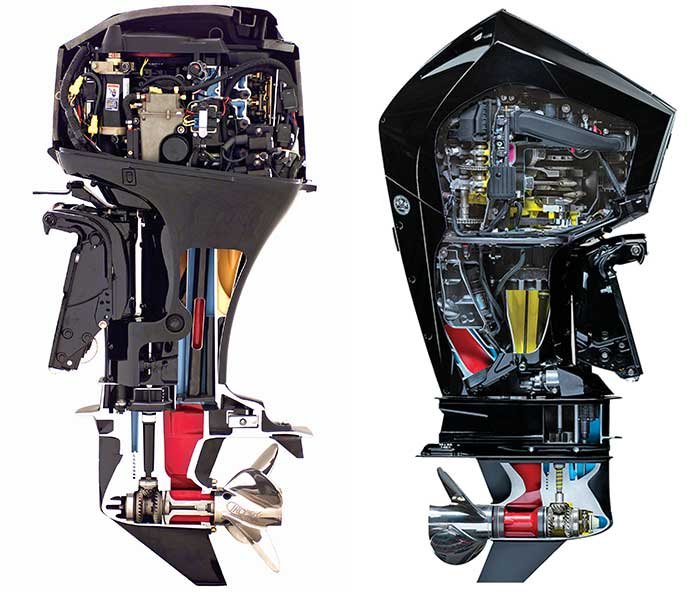
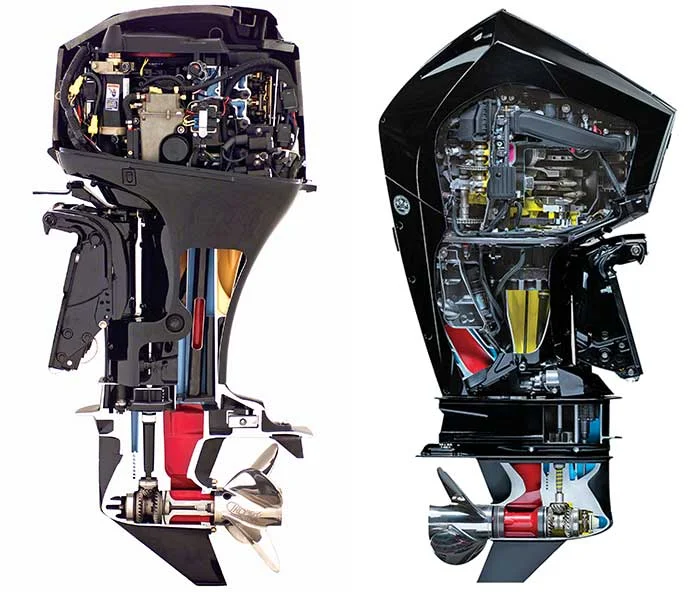
If you’re shopping for an outboard motor today, there’s a very good chance you’re looking at a 4 stroke outboard motor. That’s not an accident. Over the past 25 years, 4-stroke technology has taken over the marine market for reasons that are hard to argue with: better fuel economy, cleaner emissions, no oil mixing, quieter operation, and longer service life under consistent maintenance.
At SH Continental Marine, every engine we sell is a Yamaha 4-stroke outboard motor. We ship worldwide, and our catalog covers 8 HP all the way up to 90 HP with multiple variants at each power level to match different hull types, shaft lengths, and use cases. This post covers everything you need to know about 4 stroke outboard motors — the technology, the specific engines we carry with full specifications, maintenance, and how to pick the right one for your boat.
How 4 Stroke Outboard Motors Work
A 4 stroke outboard motor completes its combustion cycle in four piston strokes across two full crankshaft revolutions:
- Intake stroke: Piston moves down, intake valve opens, air-fuel mixture enters the cylinder
- Compression stroke: Piston moves up, both valves closed, mixture is compressed
- Power (combustion) stroke: Spark plug fires, combustion pushes piston down, generating power
- Exhaust stroke: Piston moves up, exhaust valve opens, burned gases exit the cylinder
This four-stroke cycle means the engine produces a power pulse every other crankshaft revolution. Compared to a 2-stroke (which fires every revolution), the 4-stroke produces slightly less raw power per unit of displacement. But the combustion process is cleaner, more complete, and far more fuel-efficient because the intake and exhaust events are fully separated. There’s no overlap where unburned fuel can escape through the exhaust.
That’s also why 4 stroke outboard motors don’t require oil mixed into the fuel. The crankcase lubrication system is completely separate from the combustion system, just like a car engine. You add oil through a dipstick, change it at regular intervals, and the engine lubricates itself internally without contaminating the combustion process.
Why 4 Stroke Outboard Motors Dominate the Market Today
The shift happened primarily through the 2000s and was driven by several factors:
Emissions Regulations
Modern emissions standards in North America, Europe, and most developed markets are stringent enough that traditional carbureted 2-stroke engines can’t meet them. 4 stroke outboard motors meet these standards without modification, making them legally compliant for use in increasingly regulated waterways.
Fuel Economy
A modern 4 stroke outboard motor with EFI uses significantly less fuel than a comparable carbureted 2-stroke at the same speed and load. Over the life of the engine, fuel savings often pay for the higher upfront cost of the 4-stroke.
Noise and Vibration
4-stroke engines are genuinely quieter. The more measured combustion cycle and the crankcase design reduce both noise and vibration at cruising RPM. If you’ve ever pulled up alongside a boat running an old 2-stroke, you know the difference.
No Oil Mixing
This is the quality-of-life improvement people don’t appreciate until they’ve been doing it the other way for years. With a 4 stroke outboard motor, you fill the tank with regular unleaded petrol and go. No premixing, no worrying about oil ratio, no oil-fouled plugs.
4 Stroke Outboard Motors We Carry — Full Lineup with Specifications
Yamaha 8 HP — Entry Level 4 Stroke
Our smallest 4 stroke outboard motors start with the Yamaha 8 HP range. These are ideal for inflatables, small aluminum fishing boats, and as auxiliary engines on larger vessels.
The Yamaha 8 HP F8SMHB (short shaft) and Yamaha 8 HP F8LMHB (long shaft) offer the same powerhead in two transom height options.
Yamaha 8 HP F8SMHB / F8LMHB Specifications:
- Configuration: In-line 2, 4-stroke, SOHC
- Displacement: 138cc
- Bore x Stroke: 56mm x 56mm
- Compression Ratio: 9.0:1
- Fuel Delivery: Carburetor
- Starting: Manual
- Shaft: Short (15″) or Long (20″) depending on model
- Weight: 58 lbs (26.3 kg) / 61 lbs (27.7 kg)
- Gear Ratio: 2.08:1
- Fuel Tank: External
- Alternator: 6A (optional)
- Max RPM: 5,000–6,000
Yamaha 9.9 HP — The Versatile Mid-Small 4 Stroke
The 9.9 HP class is one of the most purchased 4 stroke outboard motor categories we carry, and for good reason. It covers a wide range of boats and applications with multiple variants to suit different setups.
We stock six different 9.9 HP models:
- Yamaha 9.9 HP F9.9LEB — Long shaft, electric start, 4-stroke standard
- Yamaha 9.9 HP F9.9LMHB — Long shaft, manual start
- Yamaha 9.9 HP F9.9SMHB — Short shaft, manual start
- Yamaha 9.9 HP T9.9LPHB — High thrust, long shaft, manual
- Yamaha 9.9 HP T9.9LPB — High thrust, long shaft, tiller
- Yamaha 9.9 HP T9.9XWHB — High thrust, extra-long shaft, electric start
Yamaha 9.9 HP F9.9LEB Specifications:
- Configuration: In-line 2, 4-stroke
- Displacement: 212cc
- Fuel Delivery: Carburetor
- Starting: Electric
- Shaft Length: Long (20″)
- Weight: 90 lbs (40.8 kg)
- Gear Ratio: 2.08:1
- Max RPM: 5,000–6,000
- Alternator: 6A
Yamaha 60 HP — The Most Popular Mid-Range 4 Stroke
The 60 HP class is where the 4 stroke outboard motor conversation gets serious for most recreational boaters. This power level covers the majority of center console, bay boat, and dual-console applications from 17 to 20 feet.
We carry three 60 HP variants:
- Yamaha 60 HP F60LB — Standard 4-stroke EFI, long shaft
- Yamaha 60 HP F60JB — Jet drive version for shallow-water applications
- Yamaha 60 HP T60LB — High-thrust 4-stroke for heavy hulls and pontoons
Yamaha 60 HP F60LB Specifications:
- Configuration: In-line 4, 4-stroke, SOHC 16-valve
- Displacement: 996cc
- Bore x Stroke: 69mm x 66.8mm
- Compression Ratio: 9.5:1
- Fuel Delivery: Electronic Fuel Injection (EFI)
- Starting: Electric
- Shaft Length: Long (20″)
- Gear Ratio: 2.00:1
- Weight: 132 lbs (59.9 kg)
- Trim: Power Trim & Tilt
- Alternator: 35A
- Max RPM: 5,000–6,000
- Fuel Management: Multipoint Sequential EFI
The EFI system on the F60LB makes a real difference. Cold starts are instant and reliable — no choking, no priming rituals, no waiting for a carbureted engine to warm up before it runs cleanly. You turn the key, it starts. That’s what a modern 4 stroke outboard motor should do.
Yamaha 70 HP — The Lightweight High-Output 4 Stroke
The Yamaha 70 HP F70LA is a standout in the 4 stroke outboard motor category. It uses the same 996cc powerhead as the 60 HP models but with different tuning to extract 70 HP from the same displacement, while keeping the weight at just 231 lbs (104.8 kg). That makes it one of the lightest engines in its power class available anywhere.
Yamaha 70 HP F70LA Specifications:
- Configuration: In-line 4, 4-stroke
- Displacement: 996cc
- Fuel Delivery: EFI
- Starting: Electric
- Shaft Length: Long (20″)
- Gear Ratio: 2.08:1
- Weight: 231 lbs (104.8 kg)
- Trim: Power Trim & Tilt
- Alternator: 35A
- Max RPM: 5,500–6,000
Yamaha 75 HP — The Mid-High Range 4 Stroke
The Yamaha 75 HP F75LB fills the gap between the popular 60 HP and the 90 HP range. It’s the right choice for heavier 18–20 ft boats where the 60 HP feels a bit strained and the 90 HP is more engine than the hull needs.
Yamaha 75 HP F75LB Specifications:
- Configuration: In-line 4, 4-stroke
- Displacement: 1,596cc
- Fuel Delivery: EFI
- Starting: Electric
- Shaft Length: Long (20″)
- Gear Ratio: 2.00:1
- Weight: 290 lbs (131.5 kg)
- Trim: Power Trim & Tilt
- Alternator: 35A
- Max RPM: 5,000–6,000
Yamaha 90 HP — The Top-End 4 Stroke Range
The 90 HP class is where our 4 stroke outboard motor lineup tops out, and we carry four variants to cover different shaft lengths, configurations, and performance levels:
- Yamaha 90 HP F90LB — Standard 4-stroke EFI, long shaft — the everyday workhorse
- Yamaha 90 HP F90JB — Jet drive for rivers and shallow-water environments
- Yamaha 90 HP F90XB — Extra-long shaft (25″) for high-freeboard boats
- Yamaha VF90LA V MAX SHO — High-performance V4 DOHC with Variable Camshaft Timing
Yamaha 90 HP F90LB Specifications:
- Configuration: In-line 4, 4-stroke, SOHC
- Displacement: 1,596cc
- Bore x Stroke: 80mm x 79.4mm
- Compression Ratio: 9.4:1
- Fuel Delivery: Multipoint EFI
- Starting: Electric
- Shaft Length: Long (20″)
- Gear Ratio: 2.00:1
- Weight: 290 lbs (131.5 kg)
- Trim: Power Trim & Tilt
- Alternator: 35A
- Max RPM: 5,000–6,000
How to Choose the Right 4 Stroke Outboard Motor for Your Boat
Matching a 4 stroke outboard motor to your hull comes down to a few key decisions:
Step 1: Check Your Boat’s Maximum HP Rating
The capacity plate on your transom lists the maximum horsepower your hull is certified for. Don’t exceed it. This is a structural and safety limit, not a suggestion. A 90 HP 4 stroke outboard motor on a hull rated for 60 HP is dangerous at wide-open throttle.
Step 2: Consider Your Typical Load
The maximum HP rating assumes a light load. If you regularly run with heavy gear, full livewells, and multiple passengers, you want an engine closer to the maximum rating rather than the minimum. An undersized 4 stroke outboard motor runs harder and ages faster when consistently overloaded.
Step 3: Pick the Right Shaft Length
Measure your transom height from the mounting bracket bottom to the waterline at the stern. Short shaft (15″) suits older aluminum boats with low transoms; long shaft (20″) fits most modern fiberglass hulls; extra-long (25″+) handles high-freeboard boats, pontoons, and catamarans.
Step 4: Standard vs. High Thrust
Standard 4 stroke outboard motors are optimized for planing hull performance — they’re designed to get the boat up on plane and maintain speed efficiently. High-thrust variants (like the T9.9LPHB or T60LB) use a larger, slower-spinning prop to maximize low-end torque — ideal for heavy displacement hulls and pontoon boats that stay in the displacement mode rather than planing.
Step 5: Electric Start vs Manual Start
At 60 HP and above, electric start is standard on all our models. For the smaller 8–9.9 HP engines, we carry both electric start and pull-start variants. If you’re putting the engine on a tender or secondary boat, pull-start is simpler and has fewer electrical components to maintain.
4 Stroke Outboard Motor Maintenance Schedule
One of the biggest selling points of 4 stroke outboard motors is predictable, manageable maintenance. Here’s what a properly maintained Yamaha 4-stroke looks like over its service life:
After Every Saltwater Use
- Flush with fresh water for 10–15 minutes at idle using the flushing port or ear muffs
- Rinse the exterior of the engine with fresh water
- Spray exposed metal fittings with a corrosion inhibitor
Every 50 Hours or Seasonally
- Check engine oil level and condition
- Check gear oil level (look for any milkiness indicating water intrusion)
- Inspect propeller for nicks, dings, or damage
- Check all zincs (sacrificial anodes) for wear — replace when 50% consumed
Every 100 Hours or Annually
- Change engine oil and oil filter
- Change gear oil
- Replace fuel filter
- Replace spark plugs
- Inspect all fuel lines for cracks or deterioration
- Check throttle and shift linkage lubrication
Every 200–300 Hours or 3 Years
- Replace water pump impeller (critical — a failed impeller causes overheating within minutes)
- Inspect and service the lower unit seals
- Check timing belt or chain (model-dependent)
The full service manual for every Yamaha 4 stroke outboard motor we sell is available through the Yamaha Outboards support portal. Follow the manufacturer’s schedule and you’ll rarely have problems.
4 Stroke vs 2 Stroke — The Practical Summary
If you’re coming to this page from research on both engine types, here’s the direct comparison:
| Feature | 4 Stroke (Yamaha EFI) | 2 Stroke (Carbureted) |
|---|---|---|
| Fuel Economy | Better | Worse |
| Emissions | Low / Compliant | High / Often Non-Compliant |
| Oil Mixing | Not required | Required |
| Weight | Heavier | Lighter (advantage) |
| Cold Start | Reliable (EFI) | Variable |
| Noise Level | Quieter | Louder |
| Parts Availability | Excellent worldwide | Decreasing |
| Service Life | Very long with maintenance | Shorter typically |
For a detailed look at the 2-stroke side of this comparison, see our full guide on 2 stroke outboard motors. But if you’re buying new today, there are very few situations where a 2-stroke beats a modern 4 stroke outboard motor on total value.
External Resources for 4 Stroke Outboard Motor Buyers
- Yamaha Outboards Engine Lineup — Manufacturer’s full model range with official specifications
- BoatUS — Boating safety, maintenance guides, and on-water assistance resources
- MarineMax Boating Resources — Boating education and engine selection guides
Also see our post on high performance outboard motors if you want to go deeper on the 90 HP range, and our guide on affordable outboard motors for the value perspective across our full lineup.
Ready to Buy Your 4 Stroke Outboard Motor?
Our full 4 stroke outboard motor lineup is in stock and ships worldwide. Here are direct links to our most popular models:
- Yamaha 8 HP F8SMHB — Buy Now
- Yamaha 9.9 HP F9.9LEB — Buy Now
- Yamaha 60 HP F60LB — Buy Now
- Yamaha 70 HP F70LA — Buy Now
- Yamaha 75 HP F75LB — Buy Now
- Yamaha 90 HP F90LB — Buy Now
- Yamaha VF90LA V MAX SHO — Buy Now
Not sure which 4 stroke outboard motor fits your boat? Contact our team and we’ll help you choose the right engine based on your hull, use case, and budget. We answer engine compatibility questions before you order — no pressure, just straight information.
SH Continental Marine — your source for genuine Yamaha 4 stroke outboard motors, shipped worldwide. If you need a step below that range, our Yamaha 30hp outboard motor guide covers Yamaha’s smallest EFI engine in full detail.
Posts Widget
- 1

- 2

- 3
- 4


S.H Continental Marine
USA HERALD MAGAZINE INC
Our team is dedicated to providing exceptional customer service.
Email: info@shcontinentalmarine.com
Choose S.H Continental Marine
for your outboard engine needs and enjoy superior quality, exceptional customer service, and unbeatable prices.
