
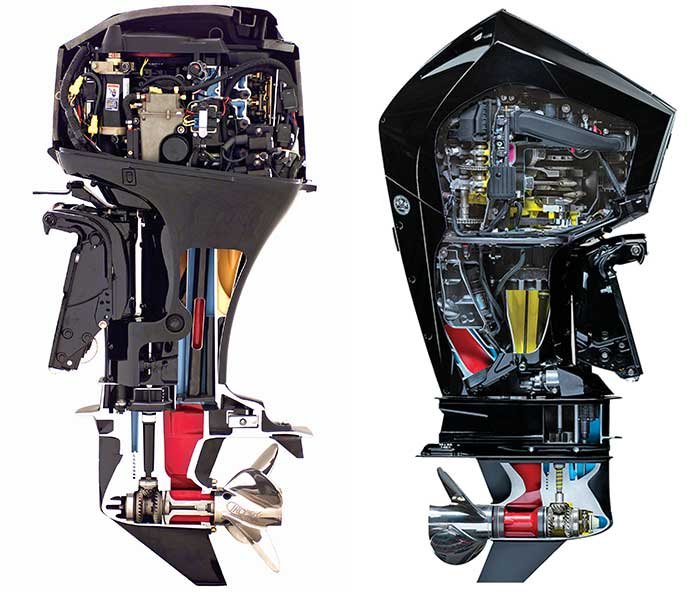
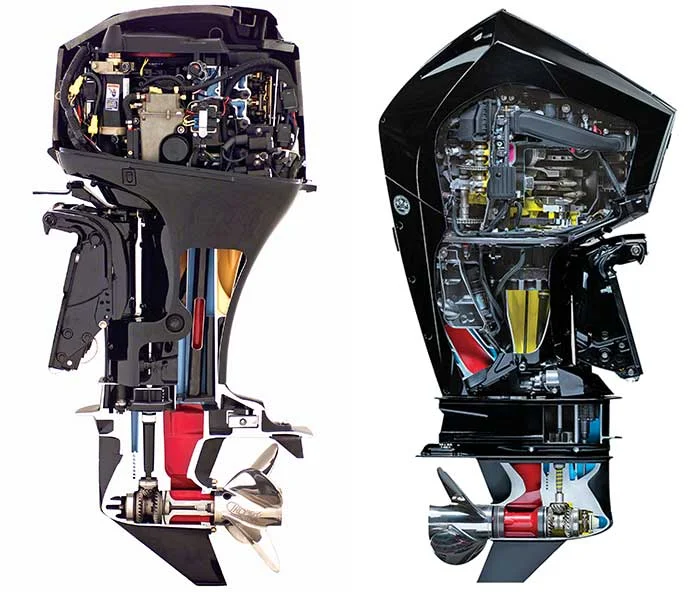
High Performance Outboard Motors – Yamaha Engines Built for Speed and Power

If you fish offshore, run a sport boat, or just refuse to accept slow as an option, you’re looking at high performance outboard motors. Not the kind of engine you put on a jon boat. The kind that puts a serious grin on your face when you push the throttle forward and the bow comes up.
At SH Continental Marine, we carry Yamaha’s high-output lineup, and we ship worldwide. This post is going to go deep on what makes an outboard motor genuinely high performance, which engines we carry in that category, full specifications, and how to pick the right one for your boat and your use case.
What “High Performance” Actually Means for Outboard Motors
The term gets used loosely. A lot of dealers call any engine above 50 HP “high performance.” That’s not how people who actually run fast boats think about it.
Real high performance outboard motors have a few things in common:
- High power-to-weight ratios — lots of horsepower without excessive engine weight
- Broad powerband — strong from mid-throttle through wide-open throttle
- Advanced fuel delivery — EFI or direct injection, not a carburetor trying to keep up
- Variable timing systems — engines that adapt to load and speed conditions in real time
- Robust cooling — high-output engines run hot and need serious thermal management
- Durability under stress — offshore conditions are hard on everything, including motors
The Yamaha 90 HP range we carry hits all of these marks. The V MAX SHO in particular is purpose-built for performance applications, and the specs back that up.
High Performance Outboard Motors We Carry
Yamaha 90 HP F90LB — The Solid High-Performance Foundation
The Yamaha 90 HP F90LB is where the high-performance conversation starts for most of our customers. It’s an in-line 4-cylinder, 4-stroke with EFI and a gear ratio tuned for a wide range of hull applications. This isn’t a finicky race motor — it’s a high performance outboard motor you can run hard and rely on every day.
Yamaha 90 HP F90LB Specifications:
- Configuration: In-line 4, 4-stroke
- Displacement: 1,596cc
- Bore x Stroke: 80mm x 79.4mm
- Fuel Delivery: Electronic Fuel Injection (EFI)
- Starting: Electric (remote)
- Shaft Length: Long (20″)
- Gear Ratio: 2.00:1
- Weight: 290 lbs (131.5 kg)
- Trim: Power Trim & Tilt
- Alternator: 35A
- Max RPM: 5,000–6,000
- Full Throttle RPM Range: 5,000–6,000
We also carry the Yamaha 90 HP F90JB jet drive version for shallow-water applications, and the Yamaha 90 HP F90XB extra-long shaft variant — ideal for high-freeboard boats and pontoon rigs that need the motor positioned lower.
Yamaha VF90LA V MAX SHO — The Real Performance Engine
The Yamaha 90 HP VF90LA V MAX SHO is in a different category. This is Yamaha’s dedicated performance engine at the 90 HP class — a V4 architecture with Yamaha’s Variable Camshaft Timing (VCT) system, which adjusts camshaft phasing in real time to optimize power delivery throughout the entire RPM range.
The result is an engine that pulls harder at mid-throttle, revs to the top of its range without going flat, and delivers the kind of acceleration most outboards at this displacement can’t match. It’s genuinely one of the most impressive high performance outboard motors in its class.
Yamaha VF90LA V MAX SHO Specifications:
- Configuration: V4, 4-stroke (DOHC 16-valve)
- Displacement: 1,832cc
- Bore x Stroke: 86mm x 78.8mm
- Compression Ratio: 10.0:1
- Fuel Delivery: Multi-Point EFI (VMAX SHO system)
- Starting: Electric (remote)
- Shaft Length: Long (20″)
- Gear Ratio: 2.08:1
- Weight: 352 lbs (159.7 kg)
- Trim: Power Trim & Tilt
- Alternator: 35A
- Variable Camshaft Timing: Yes (VCT)
- Shift Cut System: Yes
- Max RPM: 5,500–6,000
The VCT system alone is worth talking about. Most outboard engines have a fixed camshaft profile, which means the engine is optimized for a specific RPM range. The VF90LA adjusts its cam timing continuously — at low RPM it’s tuned for torque and fuel efficiency; at high RPM it opens up for maximum power. You get the best of both worlds in a single engine.
Yamaha 70 HP F70LA — High Performance for Lighter Hulls
Not every boat needs 90 HP to qualify for high performance. The Yamaha 70 HP F70LA is one of the lightest engines in its power class, and on a lightweight hull it delivers performance that competes with heavier 90 HP motors on heavier boats. If you’re running a 17–18 ft lightweight fiberglass hull, the 70 HP gives you genuinely quick performance without the weight penalty of a 90 HP unit.
Yamaha 70 HP F70LA Specifications:
- Configuration: In-line 4, 4-stroke
- Displacement: 996cc
- Fuel Delivery: Electronic Fuel Injection (EFI)
- Starting: Electric (remote)
- Shaft Length: Long (20″)
- Gear Ratio: 2.08:1
- Weight: 231 lbs (104.8 kg)
- Trim: Power Trim & Tilt
- Alternator: 35A
- Max RPM: 5,500–6,000
231 lbs for a 70 HP engine is light. For context, that’s less weight than some 60 HP competitors. On the right hull, this is a very capable high performance outboard motor.
What Makes the VF90LA V MAX SHO Different From a Standard 90 HP
People ask this all the time. Both are 90 HP on paper. Why is the V MAX SHO significantly more expensive?
Here’s the technical breakdown:
Engine Architecture
The F90LB is an in-line 4. The VF90LA is a V4. The V4 configuration has a lower center of gravity, different vibration characteristics, and more room for larger valves and more aggressive cam profiles within the same displacement. V4 architecture is inherently more conducive to performance tuning.
Displacement
The VF90LA has 1,832cc vs the F90LB’s 1,596cc. More displacement means more room for air and fuel per cycle — that’s more potential energy before you even optimize the combustion cycle. Both are rated at 90 HP, but the VF90LA reaches that rating with more headroom and less mechanical stress.
DOHC vs SOHC
The VF90LA runs a DOHC (dual overhead cam) design with 16 valves. The F90LB uses a SOHC setup. DOHC allows independent optimization of intake and exhaust valve timing, which is exactly what VCT takes advantage of. More valve control equals more power control across the RPM range.
Mid-Range Torque
The real difference you feel on the water isn’t at wide-open throttle. It’s at 60–80% throttle where you spend most of your time. The VF90LA pulls harder there. If you’ve ever pushed the throttle on an underpowered boat and felt it struggle to climb on plane, you’ll appreciate what a genuinely torquey high performance outboard motor feels like when it just grabs and goes.
Matching High Performance Outboard Motors to Your Hull
This is where people make mistakes. A high-performance engine on the wrong hull is a waste of money — and potentially dangerous.
Hull Rating First
Your boat has a maximum HP rating on its capacity plate. Don’t exceed it. This isn’t just a suggestion — it’s a safety rating based on the structural limits of your hull and transom. A 90 HP engine on a boat rated for 60 HP is an accident waiting to happen at full throttle.
Hull Weight and Type
High performance outboard motors perform best on hulls designed for speed — deep-V fiberglass, cathedral hull sport boats, and well-designed center consoles. Flat-bottom aluminum boats and pontoons won’t benefit the same way. The engine might be fast; the boat won’t be.
Gear Ratio and Propeller
The VF90LA V MAX SHO has a 2.08:1 gear ratio. That’s slightly higher than the F90LB’s 2.00:1. The difference affects what propeller pitch you can efficiently run. Higher gear ratios generally work better with lower-pitch props, allowing the engine to stay in its power range at cruise speeds. For most sport fishing and performance applications, this is the right setup. Check the Yamaha prop selector for your specific hull and use case.
High Performance Outboard Motor Reliability — What to Expect Long Term
Performance engines work harder than standard engines. That’s the point. But harder work means maintenance matters even more.
For the Yamaha 90 HP range, here’s what the maintenance schedule looks like when you’re running the engines hard:
- Every use in saltwater: Flush thoroughly with fresh water, minimum 10 minutes at idle
- Every 50–100 hours: Check gear oil level and condition (milky oil = seal failure, replace immediately)
- Every 100 hours: Change gear oil, inspect all fuel lines, check propeller for damage, clean fuel injectors
- Annually (or 100 hours): Replace spark plugs, inspect power trim/tilt system, check anodes
- Every 200–300 hours or 3 years: Replace water pump impeller
One thing that kills high performance outboard motors faster than anything is running them in detonation — often caused by wrong fuel octane, overheating, or a damaged cooling system. If your engine pings or knocks at high RPM, back off immediately and diagnose the issue. Detonation destroys pistons and rings fast.
Outbound Performance Resources Worth Bookmarking
If you’re serious about squeezing the most from your high performance outboard motors, these are resources worth your time:
- Motor Boating Magazine — Regular performance boat and motor tests
- Yamaha Outboards Engine Lineup — Complete model range with full specs
- US Coast Guard Boating Safety — HP rating compliance and safety requirements
Also take a look at our post on affordable outboard motors if you want to see the full value spectrum of what we carry, and our guide on the online outboard motor store buying process.
Ready to Buy High Performance Outboard Motors?
If performance is what you’re after, here’s where to start in our catalog:
- Yamaha VF90LA V MAX SHO — Buy Now
- Yamaha 90 HP F90LB — Buy Now
- Yamaha 90 HP F90XB (Extra Long Shaft) — Buy Now
- Yamaha 70 HP F70LA — Buy Now
We ship all of these high performance outboard motors worldwide. Full crating and customs documentation provided. Contact us to discuss compatibility with your hull, shaft length requirements, or to get a freight quote for your location.
SH Continental Marine — supplying high performance outboard motors to serious boaters around the world.
Posts Widget
- 1

- 2

- 3
- 4


S.H Continental Marine
USA HERALD MAGAZINE INC
Our team is dedicated to providing exceptional customer service.
Email: info@shcontinentalmarine.com
Choose S.H Continental Marine
for your outboard engine needs and enjoy superior quality, exceptional customer service, and unbeatable prices.
