
Powerful Boat Motors: The Ultimate 2026 Buyer’s Guide

If you’ve spent any time at a boat ramp watching a center console dig in and disappear over the horizon, you already know why people chase powerful boat motors. It isn’t about bragging rights, not really. It’s about getting on plane fast with a full load, holding speed against a headwind, and having enough reserve power that the motor isn’t working flat out just to keep up. We sell these engines every week, and the questions we get are almost always the same, so let’s just go through them properly.
Table of Contents
What Makes Powerful Boat Motors Different From the Rest
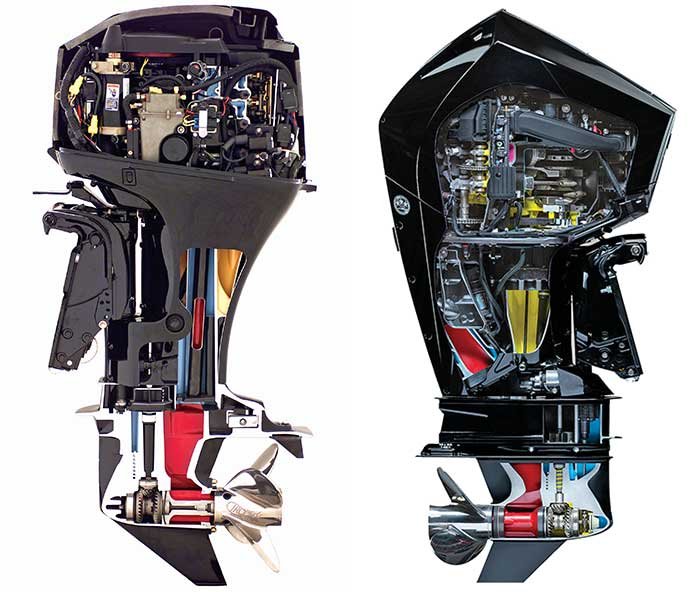
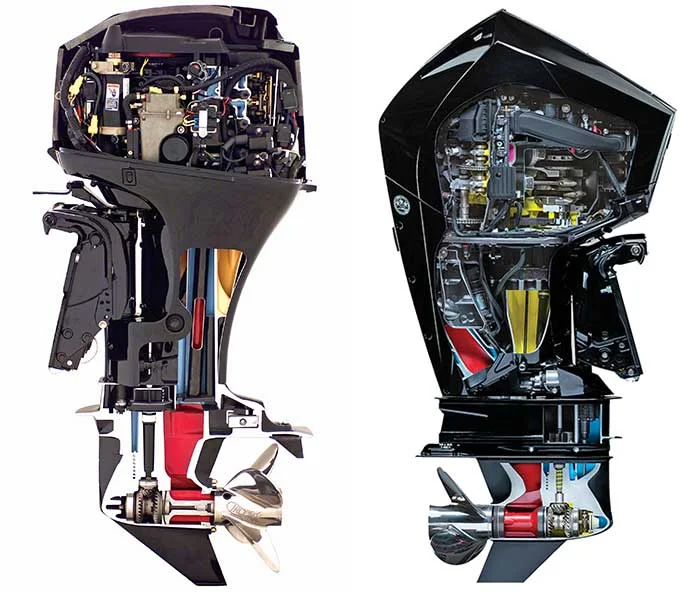
Horsepower gets all the attention, but it’s only part of the story. Two 300 HP outboards can behave completely differently depending on displacement, gear ratio, and prop selection. When we talk about powerful boat motors with customers, we’re really talking about three things together: peak horsepower, torque delivery through the mid-range (which is what you actually feel when you punch the throttle), and how well the lower unit and prop are matched to the hull.
A big block motor with the wrong prop will feel sluggish. A mid-size motor with the right setup can outperform a bigger engine that’s poorly matched. That’s why we always ask about your boat’s length, weight, and typical load before recommending anything.
Specs That Matter When You’re Comparing Big Outboards
Here’s what we tell people to actually look at on the spec sheet, not just the HP number on the cowling:
- Displacement (cc/liters): More displacement generally means more usable torque at cruising RPM, not just top-end horsepower.
- Weight: A lighter high-output motor (like Yamaha’s SHO line) gets on plane quicker and puts less strain on the transom.
- Gear ratio: Lower gear ratios (numerically higher, like 2.08:1) are built for turning bigger props and hauling heavier boats.
- Alternator output: Big power draws from electronics, livewells, and trim systems need real charging capacity, not just a token alternator.
- Max RPM range: Tells you where the engine is happiest and how it’ll respond to prop changes.
Take the 425HP Yamaha LXF425ESA2 as an example of the top of the range. It’s a 5.6L V8, built for big center consoles and offshore boats that need serious range and speed with a full fuel and gear load. On the other end, something like the Yamaha 90 HP VF90LA V MAX SHO shows that “powerful” isn’t only about massive HP numbers. At roughly 353 lbs, that V MAX SHO punches well above its weight class because Yamaha built it specifically for acceleration and top speed on lighter bass and multi-species boats.
Matching Power to Your Boat, Not the Other Way Around
This is where a lot of people get it wrong, and honestly, where a lot of dealers don’t push back when they should. Every hull has a maximum rated horsepower on the certification plate near the transom. Going over that isn’t just a warranty problem, it changes how the boat handles and can be genuinely unsafe in rough water. But going too far under it wastes the hull’s potential and leaves you underpowered the day you load up four people, coolers, and gear for an offshore run.
A good rule of thumb we use: if you regularly run with a full crew, fuel, and gear, aim for 80-100% of the boat’s max rated horsepower. If you’re mostly running light and solo, you can back off that a bit and save on fuel and purchase cost.
Fuel Injection, Turbochargers, and Why Modern Big Motors Are Different
Older big-block outboards were thirsty and heavy. That’s changed a lot. Direct and electronic fuel injection, four-stroke architecture, and better ECU tuning mean today’s high-horsepower motors deliver more usable power per pound than anything from even ten years ago. Mercury’s Verado line and Yamaha’s XTO and SHO series both lean heavily on this — supercharging or high-revving DOHC designs that push power without the fuel penalty older two-strokes carried.
If you want a deeper technical breakdown of how internal combustion marine engines are rated and tested, the National Marine Manufacturers Association publishes standardized certification info that’s worth a read before you buy anything second-hand or from an unfamiliar brand.
Twin Rigging and Why Bigger Boats Run Two Motors
Once you get into center consoles over 28 feet, single-engine setups start hitting practical limits, both in terms of raw power and redundancy. Twin or triple rigging spreads the load, improves handling at speed, and — this matters more than people think — gets you home if one motor has a problem 40 miles offshore. If you’re speccing a repower on a bigger hull, talk to us about rigging compatibility before you commit to a single big motor versus a twin setup with two mid-range engines.
Maintenance Reality for High-Output Motors
Big power means more heat, more load on internals, and less room for skipped maintenance. A few things that matter more on high-output motors than on a small kicker:
- Stick to the recommended oil change intervals — high-RPM engines work the oil harder.
- Check impellers and cooling systems every season; overheating a high-output motor is expensive.
- Use the fuel grade the manufacturer specifies, especially on supercharged or high-compression models.
- Have the prop inspected regularly — a dinged prop on a big motor wastes a noticeable amount of power.
Buying New vs. Buying a Serviced Used Motor
New high-horsepower motors carry a real premium, and a lot of buyers don’t need to pay it. A well-serviced used motor with documented maintenance and a clean lower unit can deliver 90% of the performance for a fraction of the price. We inspect compression, check for saltwater corrosion in the powerhead, and pressure test the cooling system on everything before it goes up for sale, so you’re not buying someone else’s problem.
If you’re weighing new against used, our wholesale outboard motors guide breaks down pricing across the HP range, and our marine engine replacement guide covers what a full repower actually costs versus a straight motor swap. If lighter rigs are more your speed, we also cover lightweight outboard motors in a separate guide.
Frequently Asked Questions About Powerful Boat Motors
What horsepower counts as a “powerful” outboard?
There’s no hard cutoff, but in the outboard world, most people start using the term once you’re above 200 HP, and it applies squarely to anything in the 300-425 HP range used on offshore center consoles.
Do I need a bigger battery and alternator for a high-output motor?
Usually yes. High-output motors and the electronics people run alongside them (multiple fishfinders, livewell pumps, trim tabs) draw more amperage than the stock setup on a smaller boat, so it’s worth checking your charging system when you upgrade.
Is a bigger motor always faster?
Not necessarily. Prop selection, hull design, and weight distribution affect top speed as much as raw horsepower. A well-matched mid-range motor can out-perform a poorly rigged bigger one.
Talk to Us Before You Buy Your Next Powerful Boat Motor
We stock and service everything from small kickers up through 425 HP offshore motors, and we’d rather spend fifteen minutes on the phone with you getting the HP, shaft length, and rigging right than sell you the wrong motor. Browse our current lineup of high-output Yamaha outboards, or reach out and tell us about your boat and how you actually use it.
Expert Tips
Before you commit, write down how you really use the boat: how many people you carry, how far you go, and whether you need to plane quickly or cruise slowly. That picture makes it much easier to choose the right horsepower, shaft length, controls and propeller, and avoids paying for features you will not use.
Read the model code on any listing carefully. Letters in the code usually describe shaft length, starting method, steering, trim and rotation, and two engines that look identical in photos can be set up quite differently. If anything is unclear, ask before you order.
Key Points to Remember
- Start with your boat’s capacity plate: never exceed the rated horsepower or weight.
- Match the shaft length to your transom height.
- Choose tiller or remote steering, and manual or electric start, to suit how you use the boat.
- Read the model code carefully; it tells you shaft length, controls, rotation and colour.
- Budget for the full package: controls, gauges, propeller, battery and rigging.
- Confirm exactly what is included with the engine before you order.
Practical Checklist
Use this quick checklist to put the advice in this article into practice:
- Check the capacity plate for maximum horsepower and weight
- Measure transom height from the top of the transom to the bottom of the hull
- Decide on steering, starting and trim requirements
- Compare model codes and specifications
- Ask what is included: propeller, controls, fuel tank, cables
- Inspect the crate on delivery and note any damage before signing
More Questions Answered
What shaft length do I need?
Measure from the top of the transom to the bottom of the hull on the centreline: about 15 inches suits a short shaft, 20 a long shaft, 25 an extra-long shaft and 30 an ultra-long shaft.
Should I buy new or used?
New engines give you a known history and full manufacturer support. A well-documented used engine can save money, but check hours, compression and service records carefully.
How much power do I really need?
Most owners choose an engine at 75 to 100 percent of the boat’s rated maximum, which usually gives the best balance of performance, economy and resale value.
Outboards to Consider
If you are shopping for an engine after reading this guide, these models are a good place to start. Each listing has full specifications, the model code explained and buying advice.
- Yamaha 60 HP T60LB
- Suzuki DF20ATS5
- Mercury 40 HP 40ELGA
- Honda 225 HP BF225DUDA
- Tohatsu 8 HP MFS8BEFL
- Torqeedo Travel 603 S
Related Guides
- Outboard Motor Propellers: A Buyer's Guide to Pitch, Blades, and Material
- Lightweight Outboard Motors: The Complete 2026 Buyer's Guide
- 4 Stroke Outboard Motors – Complete Buyer’s Guide to Yamaha 4-Stroke Engines
- Saltwater Outboard Motors: The 2026 Corrosion-Proof Buyer's Guide
- Yamaha Jet Drive Outboards: A Buyer’s Guide – Yamaha jet drive outboards
- Nissan Outboard Motors for Sale: A Buyer's Guide to the 6HP-9.8HP Class
Next Steps
Browse the full outboard shop. Read our shipping policy for delivery details, and contact us if you would like help choosing the right engine for your boat.
Posts Widget
- 1

- 2
- 3
- 4


S.H Continental Marine
USA HERALD MAGAZINE INC
Our team is dedicated to providing exceptional customer service.
Email: info@shcontinentalmarine.com
Choose S.H Continental Marine
for your outboard engine needs and enjoy superior quality, exceptional customer service, and unbeatable prices.
