

Saltwater Outboard Motors: The 2026 Corrosion-Proof Buyer’s Guide

Salt is relentless. It doesn’t care how good your motor’s paint job looks in the showroom — if the internals, fasteners, and cooling passages aren’t built for it, corrosion starts the first day the lower unit touches the ocean. That’s the whole reason saltwater outboard motors exist as their own category rather than just “outboard motors that happen to get used near the coast.” We sell and service a lot of these, and the difference between a motor that lasts fifteen years offshore and one that seizes up in three usually comes down to a handful of design details.
Table of Contents
What Actually Makes an Outboard Saltwater-Ready
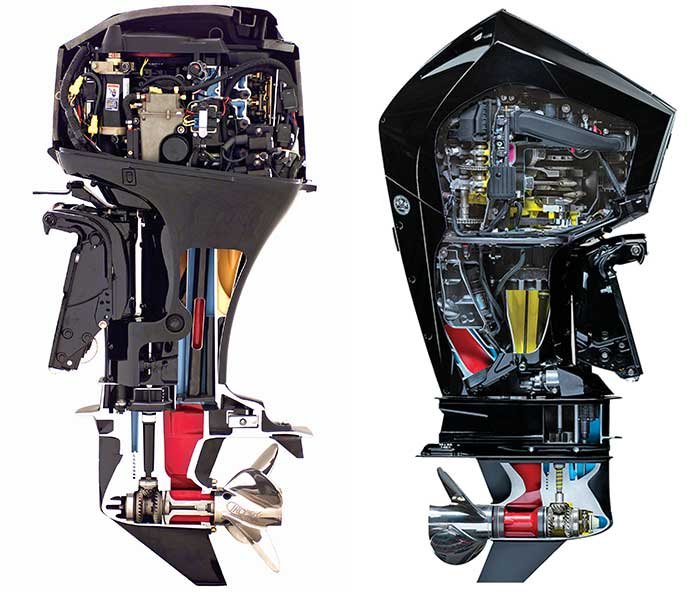
Every major manufacturer now builds four-stroke saltwater outboard motors with corrosion resistance baked into the design, not bolted on as an afterthought. The features that matter most:
- Anodes: Sacrificial zinc or aluminum anodes corrode instead of your powerhead and lower unit. Check and replace them every season, more often in warm tropical water.
- Coated internals: Marine-grade paint and epoxy coatings on the powerhead and internal passages slow saltwater intrusion significantly.
- Stainless fasteners and hardware: Cheap steel bolts rust solid within a season in saltwater; stainless and marine-grade alloys hold up for years.
- Freshwater flush port: A built-in flush fitting lets you run clean water through the cooling system after every trip, which matters more than almost anything else on this list.
- Sealed electrical connections: Marine-rated connectors keep saltwater spray from corroding wiring harnesses and sensors.
HP Ranges We Recommend for Different Saltwater Uses
For inshore and nearshore work on a skiff or bay boat, something in the 60-90 HP range covers most needs, and models like the Yamaha 90 HP F90XB or the Yamaha 75 HP F75LB are solid, proven choices for that water. Offshore center consoles running real distance in saltwater usually need to step up into our powerful boat motors range, where reserve power and range matter as much as raw speed.
The Freshwater Flush Habit That Saves Motors
If we had to name the single biggest factor in how long a saltwater outboard motor lasts, it’s not the metallurgy, it’s whether the owner flushes it after every use. Salt crystallizes in the cooling passages as they dry, and over seasons that buildup restricts water flow and causes overheating. A five-minute freshwater flush after each trip does more for longevity than almost any upgrade you could buy.
Anode Inspection and Replacement Schedule
Anodes are cheap and easy to check, so there’s no excuse to skip this. Pull the cowling and look at the trim tab anode, the lower unit anodes, and any block-mounted anodes at least every three months in regular saltwater use. Once an anode is worn past 50%, replace it — waiting until it’s fully gone means your powerhead starts absorbing the corrosion instead.
Choosing Between Two-Stroke and Four-Stroke for Salt Water
Modern direct-injection two-strokes and four-strokes both handle saltwater well when properly maintained, but four-strokes have become the default for most saltwater outboard motor buyers because of lower emissions, quieter running, and generally simpler long-term maintenance. If you’re comparing options, our marine engine replacement guide covers the trade-offs between architectures in more depth.
Corrosion Warning Signs to Catch Early
- White or green powdery buildup around fasteners and fittings — usually aluminum or copper oxidation starting.
- Reduced water flow from the telltale (pee stream) — often a sign of salt buildup restricting the cooling system.
- Sticky or hard-to-move throttle and shift linkages — corrosion working into moving parts.
- Pitting on the lower unit’s paint — a sign anodes weren’t replaced on schedule.
The National Marine Manufacturers Association publishes general guidance on marine engine corrosion standards if you want to dig into the certification side of things before buying.
Buying a Used Saltwater Outboard Motor Without Getting Burned
This is where a lot of buyers get stung. A motor that spent its life in saltwater without proper flushing can look fine on the outside and be corroded internally. We pull the lower unit, check compression, and inspect internal cooling passages on every used saltwater outboard motor before it’s listed, so you’re not inheriting someone else’s neglect. If you’re weighing new against a serviced used unit, check our discount outboard motors guide for how to spot a genuinely good deal.
Frequently Asked Questions About Saltwater Outboard Motors
Do I need a special saltwater outboard motor, or will any motor work?
Any modern four-stroke outboard can be run in saltwater, but motors specifically built and coated for marine saltwater use will resist corrosion far longer with the same maintenance effort.
How often should I flush a saltwater outboard motor?
After every single use. It takes five minutes and is the single most effective thing you can do to extend the motor’s life.
How long do saltwater outboard motors typically last?
With regular flushing, anode replacement, and standard servicing, a quality four-stroke saltwater outboard motor can easily run 1,500-3,000+ hours before needing major work.
Talk to Us About Your Saltwater Setup
We rig and service saltwater outboard motors across the full HP range, from inshore skiffs to offshore center consoles, and we can tell you exactly what corrosion protection and anode schedule fits your specific water. Browse our current saltwater-ready Yamaha lineup or reach out with your boat details.
Posts Widget
- 1

- 2

- 3

- 4


S.H Continental Marine
USA HERALD MAGAZINE INC
Our team is dedicated to providing exceptional customer service.
Email: info@shcontinentalmarine.com
Choose S.H Continental Marine
for your outboard engine needs and enjoy superior quality, exceptional customer service, and unbeatable prices.
