Suzuki 60hp Outboard Motor: Specs, Prices & Worldwide Shipping
A Suzuki 60hp outboard is one of those engines that doesn’t get talked about much online, mostly because it just works and nobody feels the need to write a forum post about an engine that hasn’t given them trouble. It sits in the size range where a lot of real boating actually happens: pontoons that need to move a full boat of people without drinking fuel, aluminum fishing boats in the 16 to 18 foot range, small center consoles, and repowers on hulls that have been running a tired two-stroke since before EFI was standard. We keep several Suzuki 60hp outboard units in stock, in both standard and high-thrust configurations, and this guide covers what the engine is, what it costs to run, and which version actually fits your boat.
In this guide:
- What the Suzuki 60hp Outboard Actually Is
- Full Specifications
- DF60A vs DF60AV: Which One You Need
- Suzuki 60HP Units We Have In Stock
- What Boats This Engine Actually Fits
- Fuel Economy and Real-World Range
- How It Stacks Up Against Yamaha and Honda
- Maintenance You Can’t Skip
- Worldwide Shipping
- What Affects Pricing on a Used Suzuki 60hp
- Matching the Suzuki 60hp to Your Boat
- Common Issues and What to Check Before Buying Used
- FAQs
What the Suzuki 60hp Outboard Actually Is
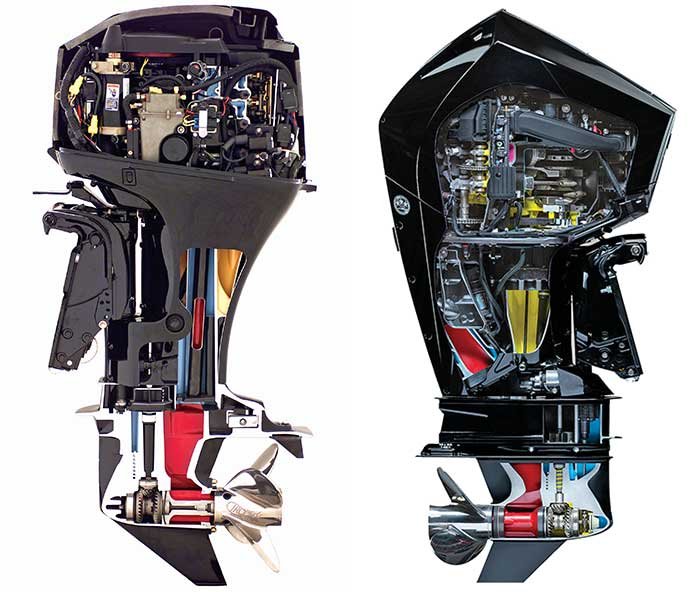
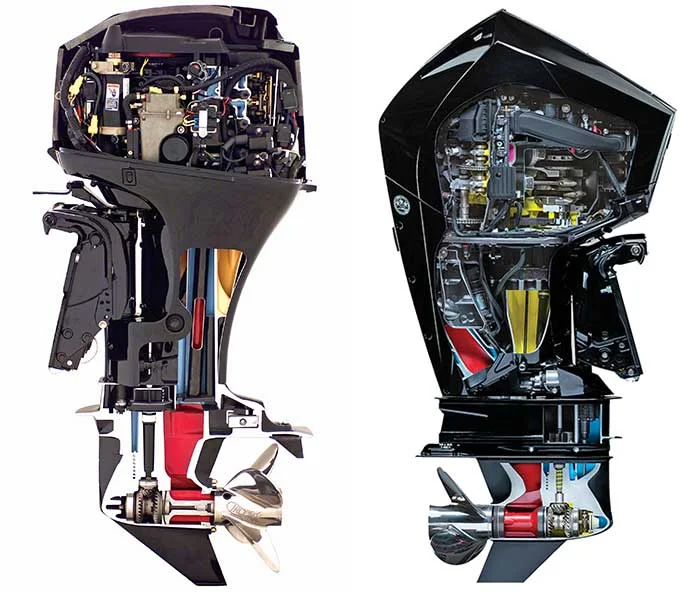
The Suzuki 60hp outboard, badged DF60A, is built around a 941cc inline three-cylinder block with a dual overhead cam design and four valves per cylinder. It was the first engine in the 60 horsepower class to get an oil-bathed timing chain with an automatic hydraulic tensioner, which is a small detail that matters a lot in practice, because it means you’re not scheduling a belt replacement every few years like you would on some competing engines. Suzuki redesigned this motor almost entirely from the ground up rather than just bumping displacement on an older block, and it shows in how compact and light the finished engine is for its output.
Fuel delivery is handled by multi-point sequential electronic fuel injection, and Suzuki paired that with what they call Lean Burn Control, a system that reads throttle position, load, and a handful of other variables to run a leaner air-fuel mixture whenever conditions allow. It doesn’t do anything dramatic on paper, but the effect shows up as noticeably better fuel economy at cruise, which is where most owners actually spend their time on the water rather than at wide open throttle.
Full Specifications
- Engine type: 4-stroke inline 3-cylinder, DOHC, 12-valve
- Displacement: 941cc (57.4 cu in)
- Bore x stroke: 72.5mm x 76.0mm
- Max output: 60hp (44.2kW) at 5,300-6,300 rpm
- Compression ratio: 9.7:1
- Fuel delivery: Multi-point sequential electronic fuel injection
- Fuel requirement: Unleaded gasoline, 87 octane minimum
- Gear ratio: 2.27:1
- Alternator: 19A, roughly 11.5A even at idle around 1,000 rpm
- Starting system: Electric
- Weight: 225 lbs (short shaft) up to 243 lbs (extra-long shaft, high thrust)
- Shaft lengths: 15″, 20″, and 25″
- Steering: Remote control standard, tiller available on some configurations
- Trim and tilt: Power trim and tilt standard
DF60A vs DF60AV: Which One You Need
Suzuki builds this engine in two distinct flavors and it’s worth knowing the difference before you buy, because putting the wrong one on the wrong hull will cost you performance. The standard DF60A (you’ll see it listed as DF60ATL2 or DF60ATLW2 depending on shaft length and color) uses a conventional gearcase and is the right call for aluminum fishing boats, small center consoles, and runabouts where the boat is light relative to the horsepower on the back.
The DF60AV, or high-thrust version, swaps in a larger diameter gearcase and a lower gear ratio. That trade sacrifices some top speed in exchange for a lot more low-rpm torque and prop bite, which is exactly what you want pushing a pontoon, tritoon, or houseboat that’s heavy and low in the water. If your boat weighs more than what you’d typically expect on a 60hp hull, the AV version is almost always the better call even though it costs a bit more upfront.
Suzuki 60HP Units We Have In Stock
We currently have multiple Suzuki 60hp outboard motors in stock, each run-tested and inspected before it’s listed. Available configurations include the Suzuki 60 HP DF60ATL2 in standard long shaft, the Suzuki 60 HP DF60ATLW2, and the high-thrust Suzuki 60 HP DF60AVTL2 for heavier hulls. Each listing shows hours, condition notes, and current pricing, and stock changes as units sell, so it’s worth checking availability directly rather than assuming a specific configuration is still on hand.
What Boats This Engine Actually Fits
The standard DF60A shows up most often on 16 to 19 foot aluminum fishing boats, small to mid-size bass boats, flats boats, and lighter center consoles rated in the 40 to 75hp range. It’s also a common repower choice on older bowriders that came factory with a similarly sized two-stroke. The high-thrust DF60AV is the one you want on pontoons and tritoons up to roughly 22 or 24 feet, and on houseboats or heavier displacement hulls where raw thrust off idle matters more than top-end speed.
Weight matters here more than most buyers expect going in. A hull rated right at the edge of the 60hp bracket will feel noticeably different with this engine than one that’s rated for 90 and simply has a 60 bolted on for economy reasons. If you’re not sure which category your boat falls into, checking your hull’s capacity plate against the engine weight above is a five-minute job that saves a lot of guesswork later.
Fuel Economy and Real-World Range
Owners running the DF60A at a normal cruise, somewhere around 4,000 to 4,500 rpm, typically report burning between 3.5 and 4.5 gallons per hour depending on hull, load, and prop pitch. That’s a meaningful improvement over the carbureted two-strokes this engine tends to replace, and the Lean Burn system is a real contributor rather than just a marketing line, since it’s actively adjusting the mixture during cruise rather than only at idle. Wide open throttle burn rates climb into the 6 to 7 gallon per hour range, which is normal for a naturally aspirated four-stroke at this output.
Fuel type matters more than people think outside the US. The DF60A is rated for a minimum of 87 octane unleaded, and Suzuki’s ethanol tolerance tops out at 10 percent for this engine, so if you’re shipping this to a market where higher ethanol blends are common at the pump, it’s worth sourcing ethanol-free fuel or a stabilizer additive rather than risking it. The EPA’s guidance on ethanol-blended fuel is a useful reference if you’re unfamiliar with how blend levels affect small engines.
How It Stacks Up Against Yamaha and Honda
The closest direct competitors to the Suzuki 60hp outboard are Yamaha’s F60 and Honda’s BF60. All three are inline three or four-cylinder four-strokes in a similar weight class, and on paper the differences are smaller than most sales pitches make them out to be. Suzuki’s advantage tends to be the maintenance-free timing chain and a slightly lower dry weight in some configurations, which matters on smaller hulls where every pound on the transom affects trim. Yamaha holds an edge in global parts network size and resale value in a lot of markets, which is worth factoring in if resale matters to you. Honda’s BF60 is a comparable engine but tends to run a bit heavier. None of these are wrong choices, and if you’re deciding between a used Suzuki 60hp and a Yamaha F60 at similar hours and price, condition should weigh more heavily than brand. If you want a side by side look at Yamaha’s version, we’ve written a separate guide to the Yamaha 60hp outboard covering the same detail.
Maintenance You Can’t Skip
The DF60A is a genuinely low-maintenance engine relative to older designs, but low-maintenance isn’t the same as no-maintenance. Suzuki recommends an oil and filter change every 100 hours or annually, whichever comes first, using a 10W-30 or 10W-40 four-stroke marine oil. Because the timing chain runs in an oil bath with a self-adjusting tensioner, you’re not paying for or scheduling a timing belt job the way you would on some competitors, which is one of the bigger long-term cost advantages of this platform.
The gearcase oil should be changed annually as well, and it’s worth doing this yourself or watching it done, because milky or discolored gear oil is the first sign of a failing seal that lets water into the lower unit. Water pump impellers should be inspected or replaced every two to three years depending on usage, more frequently if the engine spends a lot of time in sandy or silty water. Sacrificial anodes need a visual check a few times a season in saltwater use, since a fully consumed anode leaves the engine’s aluminum components exposed to galvanic corrosion.
Worldwide Shipping
We ship Suzuki 60hp outboard motors internationally by both air and ocean freight, with full landed cost quotes provided before you commit to a purchase, so there are no surprise fees once the engine clears customs on your end. Ocean freight is the more economical option for most international buyers and typically takes several weeks depending on destination port, while air freight costs more but gets the engine to you in days rather than weeks if timing matters. We handle export documentation and crating for both methods, and we’re happy to work with your freight forwarder if you already have one in place.
What Affects Pricing on a Used Suzuki 60hp
Hours are the biggest single factor, but they’re not the only one. An engine with 300 hours that’s had regular oil changes and lived in freshwater is often a better buy than one with 150 hours that spent its life in saltwater with inconsistent maintenance. Shaft length matters too, since a 25″ extra-long shaft unit is less commonly available and tends to command a premium when the transom height requires it. Standard versus high-thrust configuration affects price as well, with the AV models typically running a few hundred dollars more than an equivalent-hours standard unit due to the more complex gearcase.
Cosmetic condition and whether the original controls, wiring harness, and propeller are included also move the number. An engine sold as a bare powerhead without rigging will always price lower than a complete, ready-to-run package, so it’s worth confirming exactly what’s included before comparing prices across listings.
Matching the Suzuki 60hp to Your Boat
Start with your hull’s capacity plate, which lists the maximum rated horsepower and, on newer boats, sometimes a recommended engine weight range. Confirm your transom height against the shaft length options above, since running the wrong shaft length causes cavitation, poor trim response, and in bad cases, water intake through the exhaust at idle. If your boat sits at the heavier end of what a 60hp engine can push, or if it’s a pontoon or tritoon, lean toward the high-thrust DF60AV rather than the standard version even if it costs a bit more.
Common Issues and What to Check Before Buying Used
Compression testing is the first thing we do on every used unit before it goes up for sale, since low or uneven compression across cylinders points to internal wear that’s expensive to fix. After that, we check the fuel system closely, because EFI injectors can gum up from stale, ethanol-blended fuel just as badly as a carburetor’s jets can, and a rough idle or hard cold start on a used engine is often, though not always, a fuel system issue rather than something more serious.
Gearcase oil condition is the third check, and it’s the one we take most seriously, because milky or metal-flecked gear oil signals a seal failure that, left unaddressed, turns into a much costlier lower unit rebuild. Every engine we sell gets this inspection before listing, and we disclose anything short of clean condition rather than letting a buyer find out after the fact.
More Outboard Motor Guides
Comparing engines before you decide? Here are our other current guides covering this power range:
FAQs
What’s the difference between the Suzuki DF60A and DF60AV?
The DF60A is the standard configuration for typical fishing boats and runabouts. The DF60AV is the high-thrust version with a larger gearcase and lower gear ratio, built for pontoons, tritoons, and other heavier, low-riding hulls that need more push at idle and low rpm.
How much does a Suzuki 60hp outboard weigh?
The standard DF60A weighs between 225 and 236 lbs depending on shaft length, and the high-thrust DF60AV runs slightly heavier at up to 243 lbs due to the larger gearcase.
What boats is a Suzuki 60hp outboard good for?
Aluminum fishing boats and jon boats in the 16 to 19 foot range, small bass boats, flats boats, and lighter center consoles for the standard version. Pontoons, tritoons, and houseboats up to about 24 feet for the high-thrust DF60AV.
Do you ship the Suzuki 60hp outboard internationally?
Yes, we ship worldwide by air or ocean freight and provide a full landed cost quote before purchase.
Is a used Suzuki 60hp outboard a good buy?
Generally yes, provided compression and gearcase condition check out. We compression-test and inspect every unit before listing and disclose hours and condition honestly.
How does the Suzuki 60hp compare to Yamaha’s F60?
Both are solid, similarly weighted four-strokes with comparable fuel economy. Suzuki’s maintenance-free timing chain is a practical long-term advantage, while Yamaha tends to have wider parts availability in some regions.
What fuel does the Suzuki 60hp outboard need?
Unleaded gasoline with a minimum pump octane of 87. Suzuki’s ethanol tolerance for this engine tops out at 10 percent, so it’s worth confirming local fuel meets that spec outside the US.
Should I buy the standard or high-thrust version for a pontoon?
The high-thrust DF60AV is almost always the better choice for pontoons and tritoons, since its larger gearcase and lower gear ratio are built specifically to move heavier, lower hulls efficiently.
We keep Suzuki 60hp outboard motors in stock in multiple configurations, tested and ready to ship worldwide. If you know your shaft length and whether you need the standard DF60A or the high-thrust DF60AV, browse our current stock above or send us your boat’s details and we’ll get you a same-day shipping quote.
Expert Tips
Before you commit, write down how you really use the boat: how many people you carry, how far you go, and whether you need to plane quickly or cruise slowly. That picture makes it much easier to choose the right horsepower, shaft length, controls and propeller, and avoids paying for features you will not use.
Read the model code on any listing carefully. Letters in the code usually describe shaft length, starting method, steering, trim and rotation, and two engines that look identical in photos can be set up quite differently. If anything is unclear, ask before you order.
Key Points to Remember
- Start with your boat’s capacity plate: never exceed the rated horsepower or weight.
- Match the shaft length to your transom height.
- Choose tiller or remote steering, and manual or electric start, to suit how you use the boat.
- Read the model code carefully; it tells you shaft length, controls, rotation and colour.
- Budget for the full package: controls, gauges, propeller, battery and rigging.
- Confirm exactly what is included with the engine before you order.
Practical Checklist
Use this quick checklist to put the advice in this article into practice:
- Check the capacity plate for maximum horsepower and weight
- Measure transom height from the top of the transom to the bottom of the hull
- Decide on steering, starting and trim requirements
- Compare model codes and specifications
- Ask what is included: propeller, controls, fuel tank, cables
- Inspect the crate on delivery and note any damage before signing
More Questions Answered
What shaft length do I need?
Measure from the top of the transom to the bottom of the hull on the centreline: about 15 inches suits a short shaft, 20 a long shaft, 25 an extra-long shaft and 30 an ultra-long shaft.
Should I buy new or used?
New engines give you a known history and full manufacturer support. A well-documented used engine can save money, but check hours, compression and service records carefully.
How much power do I really need?
Most owners choose an engine at 75 to 100 percent of the boat’s rated maximum, which usually gives the best balance of performance, economy and resale value.
Suzuki 60 HP Outboards to Consider
If you are shopping for an engine after reading this guide, these models are a good place to start. Each listing has full specifications, the model code explained and buying advice.
Related Guides
- Suzuki 90hp Outboard Motor: Specs, Prices & Worldwide Shipping
- Suzuki 40HP Outboard Motor: Specs, Prices & Worldwide Shipping
- Suzuki 140hp Outboard Motor: Specs, Prices & Worldwide Shipping
- Yamaha 60HP Outboard Motor: Specs, Prices & Worldwide Shipping
- Honda 50hp Outboard Motor: Specs, Prices & Worldwide Shipping
- Yamaha 30HP Outboard Motor: Full Specs, Prices & Worldwide Shipping
Next Steps
Browse Suzuki 60 HP outboards, Suzuki range or the full outboard shop. Read our shipping policy for delivery details, and contact us if you would like help choosing the right engine for your boat.
Posts Widget
-
1
-
2
-
3

-
4


S.H Continental Marine
USA HERALD MAGAZINE INC
Our team is dedicated to providing exceptional customer service.
Email: info@shcontinentalmarine.com
Choose S.H Continental Marine
for your outboard engine needs and enjoy superior quality, exceptional customer service, and unbeatable prices.