
Yamaha 115HP Outboard Motor: Specs, Prices & Worldwide Shipping

The Yamaha 115hp outboard sits at the point in the lineup where “midrange” starts feeling like real power. It’s the engine Yamaha itself calls its best-selling model in this class, and once you spend time around one, it’s not hard to see why. This is the size that shows up on a huge share of 21 to 23 foot center consoles, bay boats, and multi-species boats, giving you genuine performance without stepping up into the weight, fuel burn, and price of a full-size V6. This guide covers the specs, what it actually costs to run, and what to know before you buy, whether new or used.
In this guide:
- What Makes the F115 Different
- Full Specifications
- What We Have Available
- Boats This Engine Is Built For
- Fuel Economy at Cruise and Trolling Speed
- Yamaha F115 vs Suzuki DF115
- Buying Used: What to Check
- Maintenance Schedule
- Worldwide Shipping
- 115hp vs 90hp vs 150hp: Picking the Right Step
- What Affects Pricing in This Horsepower Class
- What to Look For Before You Buy
- FAQs
What Makes the F115 Different
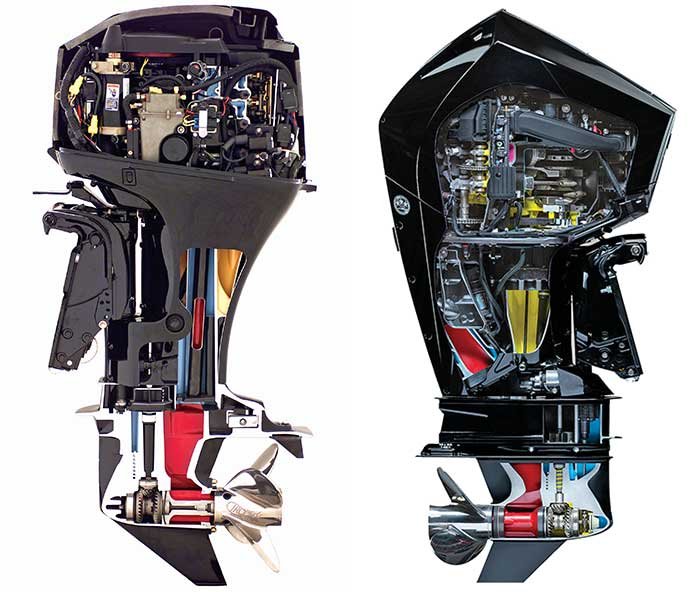
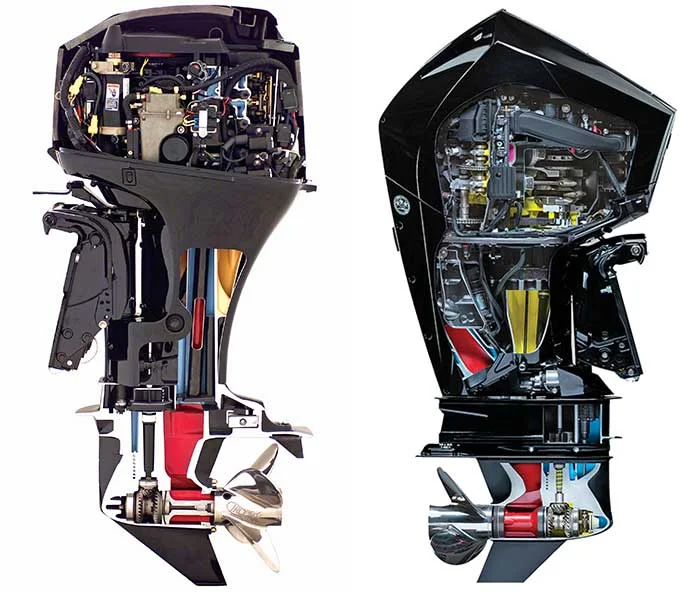
The current Yamaha F115 runs a 1.8-liter inline-four with a double overhead cam design and four valves per cylinder, the same displacement family as the F90 but tuned and built to pull meaningfully more output out of the block. Yamaha markets it honestly as the lightest four-stroke 115hp outboard on the market, and the number backs that up: 377 pounds for the base configuration, which undercuts most direct competitors by a real margin. That weight advantage matters twice over, once for the boat’s handling and fuel economy, and again for anyone repowering an older hull where transom weight capacity is a genuine constraint.
The alternator on the current F115 puts out 35 amps at wide open throttle, a meaningful jump over the previous generation, which matters more than it sounds like if you’re running any real electronics load, livewell pumps, or trolling motor charging off the outboard’s charging system while underway.
Full Specifications
| Spec | Detail |
|---|---|
| Engine Type | Inline 4-cylinder, DOHC, 16-valve |
| Displacement | 1,741cc (1.8L) |
| Bore x Stroke | 81mm x 88.9mm |
| Full Throttle RPM Range | 5,300 – 6,300 rpm |
| Compression Ratio | 10.0:1 |
| Fuel Induction | Electronic Fuel Injection (EFI) |
| Alternator Output | 35 amp at WOT, three-phase |
| Starting | Electric |
| Weight | 377-386 lbs depending on shaft length |
| Shaft Length | 20″ (L) or 25″ (X) |
| Recommended Fuel | 87 octane minimum, regular unleaded |
Yamaha’s Variable Trolling RPM Switch is standard on this engine and worth understanding if you fish seriously, since it lets you dial trolling speed in 50-rpm increments from as low as 650 rpm up to 900 rpm, well below what a standard idle-in-gear speed would give you, and it’s a genuinely useful feature rather than a marketing bullet point once you’ve used it for a season of trolling for stripers or walleye.
What We Have Available
Yamaha’s current lineup doesn’t currently put an F115 through our regular channel, and rather than list something we can’t back up with a real unit in hand, we’ll point you honestly to what we do carry that’s closest to this class. Our Yamaha 90 HP F90XB shares the same 1.8-liter architecture and is a strong option if your hull is rated for slightly less power. For buyers who specifically need 115 horsepower and are open to another proven brand, we carry a deep stock of the Suzuki 115 HP DF115B and several other Suzuki DF115 configurations, a well-proven direct competitor to the Yamaha F115 that we can ship immediately.
Reach out to us directly with your boat’s specs and rigging requirements and we’ll tell you honestly what’s the closest match currently available, whether that’s sourcing a Yamaha F115 on lead time or getting you into the Suzuki equivalent right away. We’d rather be straight about current stock than waste your time.
Boats This Engine Is Built For
21 to 23 foot center consoles are the classic home for a 115hp outboard, along with bay boats, flats boats needing serious hole shot in skinny water, and deck boats carrying a full complement of passengers. This is also a common repower size for older boats that came factory-rigged with a heavier carbureted V6 in a lower horsepower rating, since the modern F115’s light weight and torquey delivery often outperforms an older, heavier engine of nominally similar output.
Pontoons and tritoons on the performance end of that category spec 115hp when the owner wants genuinely fast, sporty handling rather than leisurely cruising, and the extra torque over a 90hp unit shows up clearly in hole shot with a full boat of passengers and water toys aboard.
Fuel Economy at Cruise and Trolling Speed
At a typical cruising speed in the mid-20s to low-30s mph range on an appropriately matched hull, the F115 generally runs somewhere around 6 to 8 gallons per hour, though this varies meaningfully with hull design, load, and prop selection. The efficiency story gets more interesting at the low end, where the DOHC design and precise EFI tuning keep the engine running clean at trolling speeds most owners actually spend a lot of their time at, particularly anyone fishing rather than just running point to point.
Compared to an older carbureted or early EFI engine of similar output, the fuel savings over a season of real use are substantial, and it’s a big part of why this remains one of the most requested repower sizes we handle.
Yamaha F115 vs Suzuki DF115
This is one of the most common side-by-side comparisons buyers ask us about directly, since both are excellent, well-proven engines with a lot of overlap on paper. Suzuki’s DF115 uses a similar inline-four architecture and lands within a close margin of the Yamaha’s weight, and Suzuki’s Lean Burn fuel control system is a genuine fuel economy advantage worth factoring in. Yamaha’s edge tends to show up in the sheer breadth of its global parts and dealer network, plus the Variable Trolling RPM feature, which Suzuki approaches differently through its own troll mode system, similar in concept but implemented with different controls.
For a lot of our buyers, particularly those exporting internationally, the decision comes down to which brand has stronger local dealer support in the destination country, since both engines are reliable enough that day-to-day performance differences matter less than long-term parts and service access.
Buying Used: What to Check
Compression across all four cylinders is the first thing to check on any used F115, since a healthy DOHC engine in this class should show consistent readings without much cylinder-to-cylinder variance. Corrosion around the powerhead, particularly near the alternator and wiring harness, is the next thing worth a close look, since these engines carry more electronics than smaller midrange units and corrosion there is more expensive to remediate.
Lower unit oil condition and a documented flush habit matter just as much on this engine as any other, and we check both directly rather than taking a seller’s word for it. Hour meter readings, where available, give you a rough baseline, but we weight actual mechanical inspection findings more heavily than the number on the meter alone.
Maintenance Schedule
The F115 follows Yamaha’s standard midrange maintenance interval: oil and filter change every 100 hours or annually, spark plug inspection yearly, and water pump impeller service every one to two seasons depending on operating conditions. As with any EFI four-stroke, the EPA’s guidance on ethanol-blended fuel is directly relevant, since stale fuel during long storage periods is one of the most common causes of hard starting or rough running we see on engines that otherwise check out mechanically sound.
Because of the added electronics and the three-phase alternator on this engine, it’s also worth having a qualified marine electrician check the charging system periodically if you’re running heavy accessory loads, rather than assuming a clean voltage reading at the battery tells the whole story.
Worldwide Shipping
We ship outboards in this horsepower class worldwide by both air and ocean freight, and we handle export documentation directly so you get a real, all-in landed cost quote before committing to a purchase. For buyers weighing the Yamaha F115 against our in-stock Suzuki DF115 options, we’re happy to walk through shipping cost and lead time differences for each so you can make the call with full information.
115hp vs 90hp vs 150hp: Picking the Right Step
The jump from 90 to 115 horsepower feels bigger on the water than the 25hp difference on paper suggests, mostly because the F115’s DOHC head and higher compression ratio deliver noticeably stronger midrange torque, not just a higher top speed number. If your boat is right on the edge between these two ratings, and you regularly run with a full load of passengers, gear, and a livewell full of water, the 115 is usually the better long-term choice even if the 90 is technically adequate on paper for a lighter, empty-boat scenario.
Stepping up from 115 to 150hp is a different kind of decision, since 150hp Yamaha outboards move into V6 territory rather than staying in the lighter inline-four family, which means a real jump in weight, fuel burn, and price. For most 21 to 23 foot center consoles and bay boats, the 115 hits the sweet spot of genuinely strong performance without the added weight and running cost of a V6, and it’s worth being honest with yourself about whether you actually need the extra 35 horsepower or whether it’s just appealing on paper.
What Affects Pricing in This Horsepower Class
Hours and compression drive value the most, as with any used outboard, but the electronics package on this size engine adds a wrinkle worth understanding. Digital gauge compatibility, whether the engine is set up for Yamaha’s Command Link system or a basic analog tach, affects both resale value and how much you’ll spend on rigging if you’re integrating it into an existing helm setup. We note gauge compatibility clearly on every listing in this class since it trips up buyers more than shaft length or steering type does.
Shaft length remains a factor too, with the 20 inch configuration covering the majority of boats this engine goes onto and generally commanding a bit more demand than the 25 inch extra-long option, which mainly serves specific hull and transom height combinations. Counter-rotation units, used in twin-engine setups, are a smaller share of what moves through our inventory but worth asking about directly if you’re rigging a twin installation.
What to Look For Before You Buy
Beyond the standard compression and lower unit checks that apply to any used outboard, this horsepower class is worth inspecting a bit more closely around the alternator and wiring harness given the added electrical load these engines are often asked to carry, running livewell pumps, trolling motor charging, and modern electronics packages all at once. A charging system that’s been asked to do too much for too long shows wear patterns an experienced technician can spot, and it’s part of our standard inspection on every unit in this class before it’s listed.
Prop condition and gear case integrity matter just as much here as on any other outboard, and because this size engine often ends up on boats running in skinny water chasing flats species, we pay particular attention to lower unit damage from grounding or debris strikes, which is more common on this class of boat than on offshore-only rigs.
FAQs
How much does the Yamaha 115hp outboard weigh?
The current F115 weighs 377 to 386 pounds depending on shaft length, making it the lightest four-stroke in its horsepower class.
What size boat needs a 115hp outboard?
Most commonly 21 to 23 foot center consoles, bay boats, flats boats, and larger deck boats and pontoons rated for performance-oriented handling.
Do you have a Yamaha F115 in stock?
Availability varies. Contact us directly for current stock, or ask about our in-stock Suzuki DF115 as a proven alternative in the same horsepower class.
How does the Yamaha F115 compare to the Suzuki DF115?
Both are well-proven, similarly weighted inline-four engines. Yamaha has a broader global parts network, while Suzuki is competitive on fuel economy through its Lean Burn system.
What’s the fuel economy like on a Yamaha F115?
Roughly 6 to 8 gallons per hour at typical cruising speed, varying with hull, load, and prop, with efficient low-rpm trolling thanks to precise EFI tuning.
Do you ship the Yamaha 115hp outboard worldwide?
Yes, we ship internationally by air or ocean freight and provide a full landed cost quote before purchase.
Whether you’re set on a genuine Yamaha F115 or open to our in-stock Suzuki DF115 as a proven equivalent, we’ll get you honest information on current availability and a same-day worldwide shipping quote. Send us your boat’s specs and we’ll match you to the right unit.
Expert Tips
Before you commit, write down how you really use the boat: how many people you carry, how far you go, and whether you need to plane quickly or cruise slowly. That picture makes it much easier to choose the right horsepower, shaft length, controls and propeller, and avoids paying for features you will not use.
Read the model code on any listing carefully. Letters in the code usually describe shaft length, starting method, steering, trim and rotation, and two engines that look identical in photos can be set up quite differently. If anything is unclear, ask before you order.
Key Points to Remember
- Start with your boat’s capacity plate: never exceed the rated horsepower or weight.
- Match the shaft length to your transom height.
- Choose tiller or remote steering, and manual or electric start, to suit how you use the boat.
- Read the model code carefully; it tells you shaft length, controls, rotation and colour.
- Budget for the full package: controls, gauges, propeller, battery and rigging.
- Confirm exactly what is included with the engine before you order.
Practical Checklist
Use this quick checklist to put the advice in this article into practice:
- Check the capacity plate for maximum horsepower and weight
- Measure transom height from the top of the transom to the bottom of the hull
- Decide on steering, starting and trim requirements
- Compare model codes and specifications
- Ask what is included: propeller, controls, fuel tank, cables
- Inspect the crate on delivery and note any damage before signing
More Questions Answered
What shaft length do I need?
Measure from the top of the transom to the bottom of the hull on the centreline: about 15 inches suits a short shaft, 20 a long shaft, 25 an extra-long shaft and 30 an ultra-long shaft.
Should I buy new or used?
New engines give you a known history and full manufacturer support. A well-documented used engine can save money, but check hours, compression and service records carefully.
How much power do I really need?
Most owners choose an engine at 75 to 100 percent of the boat’s rated maximum, which usually gives the best balance of performance, economy and resale value.
Yamaha 115 HP Outboards to Consider
If you are shopping for an engine after reading this guide, these models are a good place to start. Each listing has full specifications, the model code explained and buying advice.
- Yamaha 40 HP F40LEHA
- Yamaha 30 HP F30LEHA
- Yamaha 90hp F90LB
- Yamaha 350 HP LF350XCC2
- Yamaha F25LMHC
- Yamaha 200 HP F200LB
Related Guides
- Yamaha 425HP Outboard Motor: Full V8 Specs, Prices & Worldwide Shipping
- Yamaha 9.9HP Outboard Motor: Full Specs, Prices & Worldwide Shipping
- Yamaha 60HP Outboard Motor: Specs, Prices & Worldwide Shipping
- Yamaha 2.5HP Outboard Motor: Full Specs, Prices & Worldwide Shipping
- Yamaha 200HP Outboard Motor: Specs, Prices & Worldwide Shipping
- Yamaha 85HP Outboard Motor: Specs, Prices & Worldwide Shipping
Next Steps
Browse Yamaha or the full outboard shop. Read our shipping policy for delivery details, and contact us if you would like help choosing the right engine for your boat.
Posts Widget
- 1

- 2
- 3

- 4


S.H Continental Marine
USA HERALD MAGAZINE INC
Our team is dedicated to providing exceptional customer service.
Email: info@shcontinentalmarine.com
Choose S.H Continental Marine
for your outboard engine needs and enjoy superior quality, exceptional customer service, and unbeatable prices.
