
Best Boat Engines: Matching Power to the Right Hull

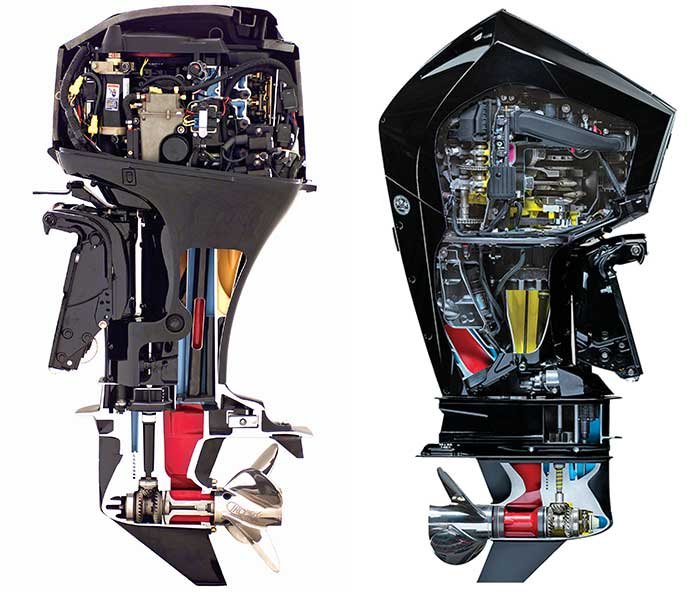
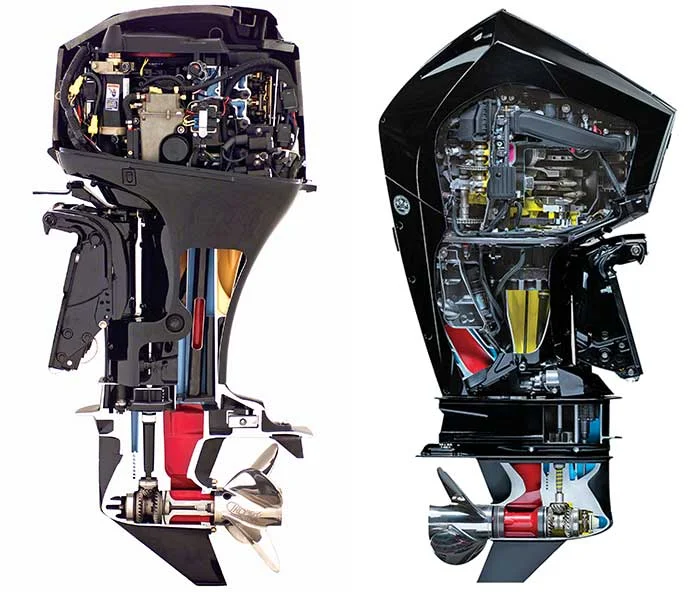
“Boat engine” is a broader term than “outboard motor,” and it’s worth being precise about what you’re actually shopping for before you start comparing options. Inboard, sterndrive, and outboard configurations all fall under “boat engines,” and each one suits a different kind of hull, use case, and maintenance reality. Most of the recreational and fishing boats we deal with day to day run outboards, so that’s where we’ll spend most of this guide — but it’s worth understanding the bigger picture first so you know why outboards have become the dominant choice for the vast majority of boats under 35 feet.
We’re a marine engine dealer, not a general boat shop, and at S.H Continental Marine outboards are what we know best. When people ask us about the best boat engines for their specific setup, the answer almost always starts with figuring out which propulsion type actually fits the boat, then narrowing down within that category based on horsepower, hull type, and how the boat gets used.
Outboard, Inboard, or Sterndrive: The First Decision
Before comparing specific engines, it’s worth understanding why the propulsion type itself matters so much:
- Outboard engines mount on the transom, are self-contained units, and can be tilted out of the water for storage, trailering, and shallow-water operation. They dominate the recreational, fishing, and pontoon boat market because they’re easier to service, lighter for a given horsepower, and simpler to replace or upgrade than the alternatives.
- Sterndrive (inboard/outboard) engines mount inside the hull with a drive unit extending through the transom. They offer a lower center of gravity and can provide a smoother ride at speed, which is why they remain popular on ski boats and larger cruisers, though they’re more complex to service than an outboard.
- Inboard engines sit entirely inside the hull with a fixed shaft and propeller. They’re common on larger cruisers, sailboats, and specialized applications like wakeboard boats where the engine’s low, centered weight improves wake shape.
For the overwhelming majority of boats under about 30 feet — fishing boats, pontoons, bay boats, runabouts, and small cruisers — outboards have become the default, and for good reason: modern four-stroke outboards close most of the performance gap that used to favor sterndrives, while remaining significantly easier and cheaper to maintain.
What Makes a Boat Engine “Best” — It’s Not Just Horsepower
When people ask us about the best boat engines, they’re usually thinking in terms of horsepower and top speed. Those matter, but they’re only part of the picture. The engines that earn a genuine “best” reputation combine several things at once:
- Power appropriate to the hull — not maxed out, not underpowered, but matched to what the boat was designed to carry.
- Fuel efficiency that keeps operating costs reasonable across a season of regular use.
- Corrosion resistance suited to your actual water conditions, fresh or salt.
- Serviceability — parts availability and a dealer network that can actually work on the engine when it needs attention.
- A manufacturer track record built on years, ideally decades, of the same core engineering being refined rather than reinvented.
An engine that scores well across all five of those categories is a genuinely strong choice, almost regardless of brand. One that only wins on horsepower and price is usually cutting corners somewhere else.
Best Boat Engines by Size Class
Here’s how we’d break down “best boat engines” by the horsepower range most recreational boats actually need, based on what we see perform well across thousands of installations:
| Boat Type | Typical HP Range | What Matters Most |
|---|---|---|
| Small jon boats, dinghies | 8-25 HP | Weight, portability, simple reliability |
| Aluminum fishing boats | 40-90 HP | Fuel economy, light weight for easy planing |
| Pontoons | 90-150 HP | Thrust for a wide, flat hull carrying passengers |
| Bay boats, center consoles | 90-200 HP | Balance of speed, range, and fuel efficiency |
| Offshore center consoles | 150-300+ HP (often twin/triple) | Reliability at high hours, redundancy, saltwater durability |
Within each of these ranges, the manufacturers with the strongest reputations — Yamaha, Honda, and Mercury among outboards — consistently show up as the safest choice, because their engineering has been refined across exactly these size classes for decades.
A Closer Look at a Few Standout Engines
The Yamaha 90 HP F90LB sits right in the sweet spot for aluminum fishing boats and smaller bay boats — a 1.8L four-cylinder four-stroke, roughly 353 pounds, with EFI and Yamaha’s corrosion-resistant construction. It’s the kind of engine that shows up repeatedly in “best boat engines” conversations for this size class because it doesn’t try to be everything; it does one job — mid-range recreational and fishing use — extremely well.
For larger, heavier hulls like pontoons carrying a full load of passengers, stepping up to a bigger four-cylinder or moving into V6 territory makes more sense, since thrust and low-speed control matter more than outright top speed on that kind of boat. And for smaller tenders or auxiliary power on a sailboat, something like the Yamaha 9.9 HP T9.9LPHB High Thrust model punches well above its horsepower number thanks to a purpose-built lower unit and propeller. The Yamaha 90 HP F90XB and the more compact Yamaha 8 HP F8SMHB round out the range of engines we point customers toward most often, depending on hull size.
Two-Stroke, Four-Stroke, and Why It Still Comes Up
Even though four-strokes now dominate new engine sales, the two-stroke vs. four-stroke question still comes up constantly when people are comparing boat engines, especially when a used two-stroke is priced attractively. Four-strokes generally win on fuel economy, noise, emissions, and long-term reliability, thanks to a separate monitored oil system rather than mixed or injected oil in the fuel. Two-strokes remain lighter for a given horsepower and mechanically simpler in some respects, which still appeals to a smaller segment of buyers, particularly for smaller portable applications where weight is the top priority.
For most boaters comparing best boat engines for a new or near-new purchase today, four-stroke is the practical default — it’s what the vast majority of manufacturer R&D budget has gone toward for the last two decades, and it shows in the reliability numbers.
Matching Engine to Hull: Why This Matters More Than Brand
We can’t stress this enough: the best boat engine for your neighbor’s identical-looking boat might be the wrong choice for yours, depending on how you actually load and use it. A pontoon that regularly carries eight passengers and a full cooler needs meaningfully more thrust than the same model pontoon used mostly for solo evening cruises. A bay boat used for long offshore runs needs different fuel range and reliability margins than one that mostly stays in protected inshore water.
Before locking in a specific engine, be honest about:
- Typical passenger and gear load, not the boat’s rated maximum
- How far offshore or from a marina you typically operate
- Whether you’re in salt, brackish, or fresh water most of the time
- How many hours per year you realistically expect to put on the engine
Those four answers narrow down “best boat engines” from a huge generic list to a short, specific one that actually applies to you.
Repowering an Older Boat: A Different Kind of “Best”
A large share of the “best boat engines” questions we get aren’t from people buying a brand-new boat — they’re from owners repowering a hull that’s still structurally solid but has an engine that’s aged out. Repowering changes the calculation a bit from a fresh build:
First, you’re constrained by what your existing transom and rigging can support without expensive modification — matching shaft length and mounting pattern to your current setup usually makes more sense than chasing a slightly different configuration that requires transom work. Second, repowering is often the moment to correct a mismatch from the original build; if the prior owner underpowered or overpowered the boat, this is your chance to right-size it based on years of firsthand experience with how the hull actually handles. Third, weight matters even more on a repower than a new build, since older hulls sometimes have transoms that weren’t engineered for today’s heavier four-stroke options — a marine surveyor or rigger can confirm your transom rating before you commit to a specific engine.
We handle a steady stream of repower conversations, and the short version of our advice is almost always the same: match shaft length precisely, stay within or near your existing horsepower rating unless you’ve had the transom inspected, and lean toward a well-supported four-stroke from an established manufacturer so parts and service aren’t a struggle for the next decade.
Maintenance Costs: The Part of “Best” That Shows Up Later
Purchase price is the number everyone focuses on, but the total cost of owning a boat engine over five or ten years often tells a different story. Outboards generally have lower routine maintenance costs than sterndrives or inboards, since there’s no separate outdrive or shaft seal system to maintain, and most service items — oil, filters, impellers, anodes — are straightforward and widely available for major outboard brands.
Sterndrives add outdrive maintenance (bellows, gimbal bearings, u-joints) on top of standard engine service, which increases both the complexity and the cost of keeping the boat running well. Inboards, while often very durable, can be more expensive to access for routine service depending on the boat’s layout, since the engine compartment isn’t as easily reachable as a transom-mounted outboard.
If long-term cost of ownership is a real factor in your decision — and for most recreational boaters, it should be — outboards typically come out ahead, which is a big part of why they’ve become the default choice across so much of the market.
What About Diesel?
Diesel boat engines show up mostly on larger cruisers, commercial vessels, and sailboats, where their fuel efficiency at low RPM and long service life at high hours justify the higher upfront cost and heavier weight. For the recreational and fishing boat range most of our customers fall into — generally under 30 feet — gasoline four-stroke outboards remain the more practical and cost-effective choice. Diesel becomes worth considering mainly once you’re looking at larger inboard-powered cruisers where the math on fuel efficiency over thousands of hours starts to favor it. The National Marine Manufacturers Association publishes broader propulsion trend data if you want to see how the outboard vs. inboard vs. diesel split has shifted industry-wide over the past decade.
Signs an Engine Isn’t Actually Right for Your Boat
Even a genuinely well-built engine can be the wrong choice if it’s mismatched to the hull. A few signs worth watching for during a sea trial or shortly after a repower:
- Slow time to plane. If the boat struggles to get up on plane with a reasonable load, the engine may be underpowered for the hull, or the propeller pitch is wrong for the setup.
- Excessive bow rise before planing. This can indicate too much horsepower or an incorrect propeller, causing the boat to fight itself before settling onto plane.
- Poor fuel economy relative to the engine’s rated efficiency. If a modern EFI four-stroke is burning noticeably more fuel than its spec sheet suggests, check propeller selection and trim settings before assuming something’s wrong with the engine itself.
- Excessive vibration at cruising speed. Beyond normal engine feel, persistent vibration often points to propeller damage, incorrect mounting height, or in rarer cases, an engine that’s simply too large or small for the hull’s designed power range.
Most of these issues are fixable through propeller changes, trim adjustment, or mounting height correction rather than requiring a different engine entirely — but they’re worth diagnosing early rather than assuming the “best” engine choice was automatically wrong.
Comparing Options Across Our Inventory
Because we carry outboards across the full horsepower spectrum — from 8 HP portables through big four-cylinder and V6 offshore power — we’re able to walk customers through side-by-side comparisons within their actual size class rather than across the entire market, which is where a lot of “best boat engines” confusion comes from in the first place. Comparing a 9.9 HP portable against a 300 HP offshore V6 doesn’t tell you anything useful; comparing three or four 90-115 HP four-strokes against each other, for your specific hull, does.
If you already know your target horsepower range, filtering our inventory to that range and comparing weight, fuel delivery system, and warranty terms side by side is usually enough to make a confident decision without needing to weigh dozens of unrelated options.
The Value of Buying From Someone Who Rigs What They Sell
A lot of online engine shopping treats the purchase as the finish line, but rigging — mounting, propeller selection, control setup, and initial break-in — is where a genuinely good engine either performs the way it’s supposed to or underdelivers because something wasn’t matched correctly. We handle both the sale and, where needed, guidance on rigging and installation, which is part of why we push customers to talk through their specific boat rather than just picking a horsepower number off a chart.
You can browse our full range of outboard motors for sale, filtered by horsepower and shaft length, or get in touch and describe your boat and how you use it — we’ll walk you through which engine actually fits rather than just the biggest one in your budget.
Frequently Asked Questions
What is the best type of boat engine — inboard, sterndrive, or outboard?
For most boats under 30 feet, outboards offer the best combination of serviceability, weight, and modern fuel efficiency. Sterndrives and inboards still make sense for specific applications like wakeboard boats and larger cruisers where a low center of gravity or specific wake characteristics matter more.
How much horsepower do I need for my boat?
Check your boat’s capacity plate for the maximum rated horsepower and stay within it. Beyond that limit, the right horsepower depends on typical passenger load, hull weight, and how you use the boat — a fishing boat run mostly at trolling speed needs less top-end power than one used for long offshore runs.
Are four-stroke boat engines better than two-stroke?
For most modern buyers, yes — four-strokes offer better fuel economy, lower emissions, quieter operation, and generally stronger long-term reliability thanks to a separate, monitored oil system.
Which brand makes the best boat engines?
Yamaha, Honda, and Mercury are the most consistently recommended outboard brands across horsepower classes, each with decades of engineering refinement and strong service networks, though the specific best model still depends on your hull and use case.
The best boat engine isn’t a single model — it’s the one correctly matched to your hull, your typical load, and the water you actually run in. Get those three things right and almost any reputable manufacturer’s engine will serve you well for years.
Posts Widget
- 1

- 2

- 3
- 4


S.H Continental Marine
USA HERALD MAGAZINE INC
Our team is dedicated to providing exceptional customer service.
Email: info@shcontinentalmarine.com
Choose S.H Continental Marine
for your outboard engine needs and enjoy superior quality, exceptional customer service, and unbeatable prices.
