
Mercury Pro XS Outboard: 8 Best V8 200, 225 & 250 HP Models (2026)
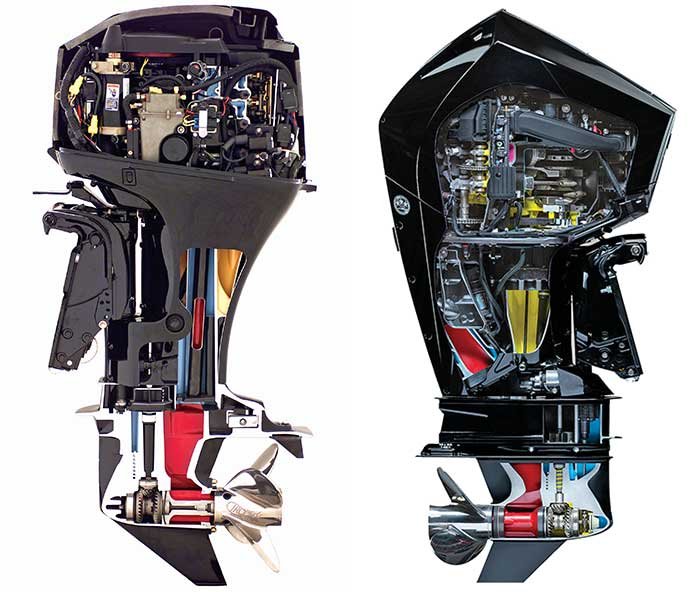
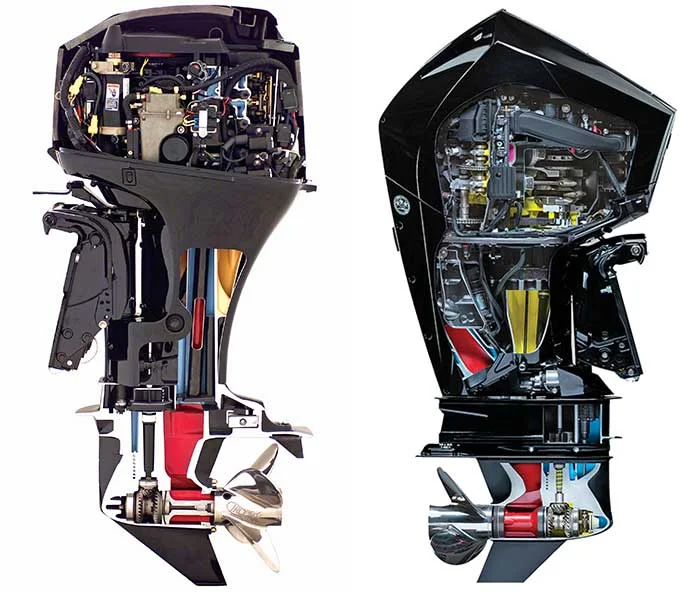
A Mercury Pro XS outboard is Mercury’s performance four-stroke for fishing boats. In the 200, 225 and 250 HP ratings it uses a 4.6-litre V8, weighs about 232 kg (511 lb) and runs at 5,600 to 6,200 rpm at full throttle. It’s tuned for fast holeshot and acceleration, comes with an 85-amp alternator for heavy electronics, and offers the TorqueMaster gearcase on 20-inch models. That makes it a common choice for bass boats, multi-species boats and inshore saltwater boats.
We sell eight new V8 Pro XS engines, priced from $20,240 to $25,845, and ship them worldwide with free delivery. This guide covers the specs, the difference between the 200, 225 and 250, what TorqueMaster and DTS mean, how Pro XS compares with Mercury’s FourStroke and Verado, and how it stacks up against Honda and Suzuki V6s. Go straight to the price list, or browse the Mercury 225 HP, 200 HP and 250 HP categories.
Table of Contents
Table of Contents

What Is a Mercury Pro XS Outboard?
Mercury sells three main families of large outboards. FourStroke is the all-rounder. Verado is the premium, quiet, smooth line. Pro XS is the performance line, aimed at anglers who want to get on plane fast and reach the fishing spot first.
The four-stroke Pro XS replaced the two-stroke OptiMax engines, which Mercury discontinued (BoatTEST: Mercury 4.6L V8 Pro XS review). If you’ve run an OptiMax, the Pro XS is its modern replacement.
Mercury lists the Pro XS family from 175 to 300 HP, built on a 3.4-litre V6 or a 4.6-litre V8. The 200, 225 and 250 HP models we sell all use the V8 (Mercury Marine: Pro XS 175–300hp).
Why Anglers Choose a Mercury Pro XS Outboard
- Big displacement. 4.6 litres from eight cylinders. BoatTEST lists it as the highest displacement in its class.
- Transient Spark. Mercury says it adjusts ignition timing on demand and “produces additional torque for faster hole shot and acceleration”.
- 85-amp alternator. Mercury quotes 20 amps net at idle and 85 amps at full throttle, enough for big sonar, trolling motor charging and livewell pumps.
- Idle Charge. It raises idle speed automatically to recharge low batteries.
- Adaptive Speed Control. Holds the rpm you set, regardless of load or conditions.
- Advanced Range Optimisation. Mercury says it improves cruise-speed fuel efficiency by adjusting fuel delivery automatically.
- TorqueMaster gearcase on 20-inch models, with a 1.75:1 ratio and a 1.25-inch prop shaft.
Mercury Pro XS Outboard Specifications (V8 200–250)
| Specification | Pro XS 200 | Pro XS 225 | Pro XS 250 |
|---|---|---|---|
| Engine | 4.6 L (279 cu in) V8, DOHC | ||
| Dry weight | 232 kg (511 lb), lightest model | ||
| Full-throttle rpm | 5,600–6,200 | ||
| Alternator | 85 A (1,071 W), with Idle Charge | ||
| Gear ratio | 1.85:1 (4.8 in gearcase) or 1.75:1 TorqueMaster | 1.75:1 | 1.75:1 |
| Shafts | 20 in (TorqueMaster) or 25 in (5.44 in gearcase) | ||
| Steering | Hydraulic standard; power steering or Big Tiller optional | ||
| Controls | Mechanical or DTS (digital throttle and shift) | ||
| Oil capacity | 6.6 L | ||
| Fuel | 87 octane recommended (BoatTEST) | ||
Sources: Brisbane Marine: 200–300hp V8 Pro XS specifications and BoatTEST. BoatTEST lists the 250 at 505 lb, so weights vary slightly between sources and model years.
Every Mercury Pro XS Outboard We Sell
All eight are new V8 engines. Prices are as listed in our store when this guide was written, so check each product page for the latest price, stock and model year.
| Model | HP | Shaft | Gearcase / controls | Price |
|---|---|---|---|---|
| 200L Pro XS TorqueMaster | 200 | 20 in | TorqueMaster, mechanical | $20,240 |
| 200XL Pro XS | 200 | 25 in | Mechanical | $20,500 |
| 200XL Pro XS DTS | 200 | 25 in | Digital throttle and shift | $21,675 |
| 225L Pro XS TorqueMaster | 225 | 20 in | TorqueMaster, mechanical | $21,750 |
| 225XL Pro XS | 225 | 25 in | Mechanical | $22,000 |
| 250L Pro XS TorqueMaster | 250 | 20 in | TorqueMaster, mechanical | $23,830 |
| 250XL Pro XS | 250 | 25 in | Mechanical | $24,800 |
| 250XL Pro XS DTS | 250 | 25 in | Digital throttle and shift | $25,845 |
On our prices, stepping from the 200 to the 225 adds about $1,500, and from the 225 to the 250 about $2,100 to $2,800. DTS adds about $1,000 to $1,200 over mechanical controls. Since all three share the same V8 and weight, the extra money buys power, not bulk.

200, 225 or 250: Which Mercury Pro XS Outboard?
Because the 200, 225 and 250 V8 Pro XS share the same 4.6-litre block and the same dry weight, the choice comes down to your boat’s rating, your budget and how you use the boat.
Pro XS 200
The entry point. Brisbane Marine lists it with a choice of a 4.8-inch gearcase (1.85:1) or the TorqueMaster (1.75:1) on 20-inch models. It suits smaller bass and multi-species boats rated for around 200 HP. Choose the 200L TorqueMaster, 200XL or 200XL DTS.
Pro XS 225
The middle ground, and often the best value. You get 25 extra horsepower from the same engine for about $1,500 more on our prices. Choose the 225L TorqueMaster for bass boats or the 225XL for 25-inch transoms on bay and inshore boats.
Pro XS 250
For boats rated for 250 HP and owners who want the most from the V8. Mercury’s own chart claims 12 to 15% more mid-range torque than a competitor’s 250 between 3,750 and 4,750 rpm, which is the maker’s comparison, not an independent test. Choose the 250L TorqueMaster, 250XL or 250XL DTS.
Never exceed the maximum horsepower on your boat’s capacity plate. The plate sets limits for horsepower, people and weight (Discover Boating on capacity plates). If your bass boat is rated for 225, the 250 isn’t an option however tempting it is.
What Is the TorqueMaster Gearcase?
TorqueMaster is a heavy-duty gearcase that Mercury fits on select 20-inch V8 Pro XS models. Mercury lists a 1.75:1 gear ratio and a 1.25-inch prop shaft. A lower (numerically smaller) ratio and a thicker shaft suit the big, high-pitch props used on fast bass boats.
In plain terms, if you run a 20-inch bass boat with a jack plate and a big stainless prop, a TorqueMaster Mercury Pro XS outboard is the version built for that job. All three of our 20-inch Pro XS models (the 200L, 225L and 250L) have it.
The 25-inch XL models use a 5.44-inch gearcase, according to Brisbane Marine, which suits bay boats, centre consoles and other boats with taller transoms.
Mechanical Controls or DTS?
Mechanical controls use cables between the helm and the engine. They’re simpler, cheaper and easy to service anywhere. If you’re repowering a boat with Mercury mechanical controls already fitted, you may be able to reuse them.
DTS (Digital Throttle and Shift) replaces the cables with electronic signals. Shifting is smoother and quieter, there’s no cable friction or adjustment, and it opens up features that depend on digital control. It costs about $1,000 to $1,200 more on our prices and needs DTS-compatible helm controls.
For a single-engine bass boat, mechanical is common and perfectly good. DTS makes more sense on boats where smooth, light shifting matters or where you want the digital features. Our hydraulic steering guide also covers the steering side.
L or XL: Choosing the Shaft Length
- L (20 inch): most bass boats and many multi-species boats, often with a jack plate. Comes with TorqueMaster in our range.
- XL (25 inch): bay boats, centre consoles and boats with taller transoms.
Measure from the top of the transom to the bottom of the hull, and allow for any jack plate or setback bracket. Getting this wrong causes ventilation or drag that you can’t fix later. See our guides to long shaft vs short shaft and cavitation plate height.
Pro XS vs FourStroke vs Verado
Mercury sells its 250 HP V8 in all three families, so it’s a good way to compare them on our prices:
| Engine | Example model | Our price | Best for |
|---|---|---|---|
| FourStroke 250 | 250 L FourStroke | $22,685 | All-round use, family and offshore boats |
| Pro XS 250 | 250L Pro XS TorqueMaster | $23,830 | Bass and multi-species boats, fast holeshot |
| Verado 250 | Verado 250 L | $26,125 | Quiet, smooth premium running |
A Mercury Pro XS outboard costs a little more than the equivalent FourStroke and noticeably less than a Verado on our prices. You’re paying for the performance tuning, Transient Spark and the TorqueMaster gearcase. If you don’t need fast acceleration and you mostly cruise, the FourStroke 250 is good value. If quiet running and refinement matter most, look at Verado.
Read our Mercury 250 hp outboard guide, Mercury 200hp guide, Mercury 300 hp guide and Mercury Verado guide for the full picture.

Mercury Pro XS Outboard vs Honda and Suzuki 225s
Here’s how the 225 Pro XS compares with other 225s we sell:
| Model | Engine | Our price |
|---|---|---|
| Mercury 225L Pro XS TorqueMaster | 4.6 L V8 | $21,750 |
| Mercury 225XL Pro XS | 4.6 L V8 | $22,000 |
| Honda BF225DLRA | 3,583 cc V6 | $17,925 |
| Honda BF225DXRA | 3,583 cc V6 | $17,995 |
| Suzuki DF225TX5 | 3,614 cc V6 | $17,565 |
| Suzuki DF225TXZW5 (counter-rotating) | 3,614 cc V6 | $18,235 |
The Mercury Pro XS outboard costs about $3,800 to $4,400 more than the Honda and Suzuki 225s on our prices. What you get is a V8 with about 1,000 cc more displacement, an 85-amp alternator, TorqueMaster on the 20-inch model and performance tuning aimed at fishing boats. The Honda and Suzuki V6s are proven, efficient engines and the better buy if you don’t need that performance edge.
Displacement figures for the Honda and Suzuki come from our product pages. For more on those engines, see our Honda 225 HP buying guide, Suzuki 200 hp guide, Suzuki 250 hp guide and the comparisons Mercury vs Suzuki, Honda vs Mercury and Yamaha vs Mercury.
Which Boats Suit a Mercury Pro XS Outboard?
Bass boats
The classic home. A 19 to 21-foot bass boat rated for 200 to 250 HP, a jack plate, a stainless prop and a lot of electronics. The 20-inch TorqueMaster models are built for this, and the 85-amp alternator helps keep big sonar and batteries charged. Our outboard motors for fishing guide has more.
Multi-species boats
Deep-V aluminium and fibreglass boats used for walleye, pike and bass. Often 20 or 25 inches, often with a kicker. A Pro XS 200 or 225 is a good match, and the alternator helps power a trolling motor charger and livewells. Pair it with a kicker such as the Mercury 15 ProKicker or Mercury 9.9. See our kicker motor guide.
Bay boats and inshore saltwater boats
Shallow-draft fibreglass boats with 25-inch transoms. The XL models suit these. Saltwater means extra care with flushing and anodes, as covered below. See our saltwater outboard guide.
Centre consoles and runabouts
A Mercury Pro XS outboard works here too, but if you mostly cruise with family, the FourStroke 250 or a Verado may suit you better.
Mercury Pro XS Outboard Features Explained
Transient Spark
When you push the throttle hard, the engine control module briefly adjusts ignition timing to produce extra torque. Mercury says this gives “faster hole shot and acceleration”. On a bass boat, that’s the difference between a boat that squats and one that pops onto plane.
Adaptive Speed Control
Set an rpm and the engine holds it, Mercury says, even as load or conditions change. Turning, climbing a wave or running into wind won’t drag the revs down the way they would on a simple throttle setting.
Advanced Range Optimisation
At cruise speed, the engine adjusts fuel delivery automatically to use less. Mercury doesn’t publish a percentage figure on its page, so we won’t quote one. The practical effect is better range at the speeds you run most.
85-amp alternator and Idle Charge
Fishing boats carry a lot of power-hungry kit: big sonar screens, livewell pumps, lights and sometimes trolling-motor charging. Mercury lists 20 amps net at idle and 85 amps at full throttle. Idle Charge raises idle rpm automatically when batteries are low.
SmartCraft and Engine Guardian
Brisbane Marine lists SmartCraft digital compatibility and SmartCraft Engine Guardian, which monitors engine sensors and can reduce power to protect the engine if something goes wrong.
Easy daily checks
BoatTEST lists an easy oil check and fill and a handle for removing the cowl. Small details, but they make daily checks quicker.

Three Real Set-Ups for a Mercury Pro XS Outboard
These are typical matches, not performance promises. Always check your boat’s capacity plate.
A 20-foot fibreglass bass boat rated for 225 HP
Jack plate, stainless prop, two anglers, two big sonar units and a 36-volt trolling motor. The 225L Pro XS TorqueMaster is the natural fit. The 85-amp alternator helps keep cranking and accessory batteries topped up.
A 19-foot multi-species boat rated for 200 HP
A 25-inch transom, walleye trolling with a kicker, and big lakes. The 200XL Pro XS gives strong acceleration without the cost of a 250. Add the 15 ProKicker for trolling.
A 22-foot bay boat rated for 250 HP
Shallow saltwater flats, a 25-inch transom and long runs. The 250XL Pro XS DTS gives smooth digital shifting. If budget matters more than DTS, the 250XL with mechanical controls saves about $1,000.
Fitting a Mercury Pro XS Outboard
A 500 lb V8 is a professional installation. A Mercury dealer or marine technician should rig it, set the height, connect controls, steering and gauges, and prop it on a water test.
Things to discuss with the installer:
- Transom strength and any repairs needed before hanging a heavy V8.
- Mounting height and jack plate settings, especially on bass boats.
- Controls: reusing existing Mercury mechanical controls, or fitting new mechanical or DTS controls.
- Steering: hydraulic is standard per Brisbane Marine; power steering is optional.
- Gauges: SmartCraft gauges or a compatible display.
- Battery capacity and cables for the 85-amp alternator.
- Propping to reach 5,600 to 6,200 rpm at full throttle with a normal load.
Our how to install an outboard motor guide explains the process.
Propping a Mercury Pro XS Outboard
Correct propping matters more on a performance engine. With your normal load aboard, the engine should reach 5,600 to 6,200 rpm at full throttle, the range Brisbane Marine lists for the V8 Pro XS.
- Below 5,600 rpm: too much pitch. Drop a size.
- Above 6,200 rpm: too little pitch. Go up a size.
- Bass boats: stainless props are the norm, often chosen with jack plate height in mind. A dealer water test is worth the cost.
Our propeller guide and gear ratio guide explain how pitch and gearing work.
Break-In and Maintenance
Follow the owner’s manual and service schedule. On a Mercury Pro XS outboard, the main jobs are:
- Break-in: vary the throttle and avoid long full-throttle runs early on. See our break-in guide.
- Engine oil and filter. Brisbane Marine lists 6.6 litres of oil capacity.
- Gearcase oil, checked for water or metal. See our lower unit oil guide.
- Water pump impeller, especially in sandy or shallow water.
- Fuel filters, spark plugs and anodes.
- Power trim fluid and steering checks.
Our maintenance checklist, winterizing guide, compression test guide and troubleshooting guide cover the details.
Saltwater or Freshwater Use
A Mercury Pro XS outboard runs in both. After every saltwater trip, flush it with fresh water, rinse the outside, and check the anodes regularly. Tilt it up when moored so the gearcase isn’t sitting in salt water. In fresh water, watch for sand and silt wearing the water pump, particularly on shallow-running bass boats.
Pro XS 225 or 250: Is the Upgrade Worth It?
It’s an obvious question, because the two engines look identical on the spec sheet apart from power.
The case for the 250. Same block, same weight, 25 more horsepower. If your boat is rated for 250 and you run tournaments, cover big water or carry a heavy load, the extra power helps at the top end and when you need to accelerate out of a hole. Mercury’s mid-range torque claim is made for the 250.
The case for the 225. It costs about $2,100 to $2,800 less on our prices. Many 20-foot bass boats are rated for 225 or 250, and a correctly propped 225 is a very quick boat. If you mostly fish local lakes, the difference you’d feel day to day is small.
The deciding factor is your boat’s maximum horsepower. If it’s rated for 225, that settles it. If it’s rated for 250, buy the 250 if you’ll use it and the budget allows. Otherwise the 225 Mercury Pro XS outboard is the better value.

Bass Boat Set-Up Tips for a Mercury Pro XS Outboard
A performance engine only performs if it’s set up properly. These are the areas to get right with your installer:
- Jack plate height. Raising the engine reduces drag and can add speed, but too high and the prop loses grip and the water pickups starve. Raise it in small steps and watch the water pressure gauge.
- Setback. A setback bracket moves the prop into cleaner water behind the hull. It changes how the boat handles, so adjust trim and height after fitting one.
- Prop choice. Bass boat props are usually stainless, with pitch chosen for your boat, load and jack plate height. Aim for 5,600 to 6,200 rpm at full throttle.
- Trim. Run with the bow trimmed down out of the hole, then trim up gradually once on plane. Too much trim causes porpoising.
- Weight distribution. Batteries, fuel and gear all change how the boat sits. Keep heavy items where the boat builder intended.
Our power trim and tilt guide and trim and tilt how-to cover trimming in more detail.
Running Costs of a Mercury Pro XS Outboard
Running costs vary a lot by country, fuel price and how hard you run the boat, so we won’t invent figures. These are the main costs to plan for:
- Fuel. A 225 HP V8 burns a lot at full throttle. Advanced Range Optimisation helps at cruise, and holding a sensible cruise speed saves far more fuel than running flat out.
- Servicing. Oil and filter, gear oil, impeller, plugs, fuel filters and anodes on Mercury’s schedule. A V8 holds 6.6 litres of oil, according to Brisbane Marine.
- Props. Stainless props are expensive. Repair or replace as needed after strikes.
- Batteries. Heavy electronics use batteries hard, even with an 85-amp alternator.
- Winter storage in cold climates. See our winterizing guide.
Our fuel-efficient outboard motors guide has more ways to stretch a tank.
Repowering an Older Boat With a Pro XS
A common reason to buy a Mercury Pro XS outboard is to replace a tired OptiMax or older four-stroke. A few things to check before you order:
- Horsepower and weight limits. Read the capacity plate. Modern four-strokes are often heavier than the two-strokes they replace.
- Transom condition. Old transoms can be soft. Fix any rot before hanging a 500 lb engine.
- Controls. Older Mercury mechanical controls may or may not be compatible. Ask us or your dealer.
- Gauges. You’ll likely want SmartCraft-compatible gauges to see the engine’s data.
- Wiring and batteries. Check cable size and battery capacity for the new charging system.
- Fuel system. Old fuel lines, filters and water separators should be checked or replaced.
Send us your boat’s make, model, year and current engine, and we’ll tell you which Mercury Pro XS outboard fits and what else you’ll likely need.

Safety and the Rules That Apply
The capacity plate sets the maximum horsepower, people and weight (Discover Boating). A 200 to 250 HP boat is fast, so wear the kill-switch lanyard every time the engine runs, and make sure everyone aboard wears a lifejacket at speed. Licence, registration and speed rules vary between countries and individual waters, so check what applies where you boat.
Questions to Ask Before Buying
- Which shaft length and gearcase does my boat need?
- Can I reuse my existing controls and gauges?
- Is a prop included?
- Who will install and service it near me?
- What warranty applies in my country? See our warranty guide.
- What import duties apply?
When Your Engine Arrives
- Inspect the crate before you sign, and note any damage on the delivery paperwork.
- Check the model code against your order: horsepower, shaft, gearcase and controls.
- Keep the crate until the engine has been checked.
- Record the serial number for warranty and servicing.
- Have it installed and water-tested by a qualified technician.

How to Read a Mercury Pro XS Spec Sheet
Different sellers list slightly different numbers for the same engine. Here’s how to make sense of them:
- Weight. Brisbane Marine lists 232 kg (511 lb) for the lightest V8 Pro XS; BoatTEST lists 505 lb for the 250. Shaft length, gearcase and model year all change the figure slightly.
- V6 or V8. Mercury builds Pro XS on both. If a listing says 3.4 litres, it’s a V6; 4.6 litres is the V8. Every Pro XS on this page is a V8.
- Gear ratio. 1.75:1 applies to TorqueMaster and the 225/250 generally. The 200 can also come with a 4.8-inch gearcase at 1.85:1.
- Alternator. 85 amps is the full-throttle figure; Mercury quotes 20 amps net at idle.
- Max rpm. BoatTEST quotes 6,200 rpm maximum; Brisbane Marine gives a 5,600 to 6,200 rpm operating range.
- DTS. A “DTS” model needs digital controls at the helm, not cables.
If anything on a Mercury Pro XS outboard listing isn’t clear, ask us before you order.
Pairing a Kicker With a Pro XS
Running a 225 HP V8 at trolling speed for hours isn’t ideal, so many multi-species and Great Lakes-style boats add a small kicker. The kicker handles slow trolling, and the Mercury Pro XS outboard gets you to the fishing grounds fast. It also gives you a way home if the main engine has a problem.
Mercury’s ProKicker models are built for this, with high-thrust props and power tilt. Look at the 15EXLHPT ProKicker or the 9.9EXLHPT ProKicker, and read our best outboard motors for trolling guide.
What Else to Budget For
- Controls: mechanical or DTS, unless your existing Mercury controls can be reused.
- Steering: hydraulic is standard; check whether your boat’s system is compatible.
- A stainless propeller sized for your boat. Our product pages and Mercury don’t promise one is included, so check before you order.
- Gauges or display for SmartCraft data.
- Batteries and heavy cables.
- Professional installation and a water test.
Our hidden costs guide walks through each item, and our guide to financing an outboard motor may help with a purchase this size.
New or Used: Pro XS or an Old OptiMax?
Used OptiMax two-strokes are cheap compared with a new four-stroke. We list one, a used Mercury 225hp OptiMax XL, for $6,450. That’s a big saving. But remember that the OptiMax line has been discontinued and replaced by the four-stroke Pro XS, according to BoatTEST. With any used engine, check the hours, service history and compression, and look at the gearcase oil.
A new Mercury Pro XS outboard gives you a factory warranty, current technology and no unknown history. Our 2-stroke vs 4-stroke guide, used Mercury guide and used outboard engines page help you weigh it up.
When a Mercury Pro XS Outboard Isn’t the Right Choice
- You mostly cruise with family. A FourStroke or Verado may suit you better, and the FourStroke costs less.
- Your boat is rated under 200 HP. Look at lower power ratings. See our Mercury 115hp guide.
- You want twin or triple engines on a big offshore boat. Talk to us about the right model and rotation.
- Price is the main concern. The Honda and Suzuki 225s cost several thousand dollars less on our prices.
Common Mistakes When Buying a Mercury Pro XS Outboard
- Exceeding the capacity plate because the 250 shares the 225’s weight.
- Wrong shaft length, especially with a jack plate.
- Forgetting controls and steering costs.
- Not budgeting for a stainless prop and a water test.
- Choosing DTS without DTS-compatible controls.
- Undersizing batteries for an 85-amp charging system and heavy electronics.
Mercury Pro XS Outboard Pros and Cons
What’s good:
- 4.6-litre V8, the highest displacement in its class per BoatTEST.
- Performance tuning for fast holeshot and acceleration.
- 85-amp alternator with Idle Charge.
- TorqueMaster gearcase on 20-inch models.
- Same weight across 200, 225 and 250.
- Mechanical or DTS controls.
What to weigh up:
- Costs several thousand dollars more than Honda and Suzuki 225s on our prices.
- Costs more than Mercury’s own FourStroke 250.
- At about 500 lb, it’s heavy for smaller transoms.
- Controls, prop and rigging add to the cost.
A Simple Buying Walkthrough
- Read the capacity plate for the maximum horsepower and engine weight.
- Choose the power: 200, 225 or 250.
- Measure the transom for L (20 in) or XL (25 in).
- Choose controls: mechanical or DTS.
- Add up extras: controls, steering, prop, gauges, batteries, installation.
- Order or ask us. Send us your boat’s make, model, length and rating and we’ll confirm the right Mercury Pro XS outboard.
Buying a Mercury Pro XS Outboard From Us
Every Mercury Pro XS outboard on this page is new and for sale in our store. Our shipping policy says orders normally ship within 1 to 6 business days with free delivery. You’ll get a tracking email when your engine leaves, and you can follow it on our order tracking page. Import duties and taxes depend on your country, so check with your customs office before ordering.
Helpful reading:
- Outboard motors worldwide shipping
- Cost of shipping an outboard motor internationally
- Outboard motors with warranty
- How to spot genuine Mercury engines
- Our guide to buying Mercury outboards
Need help choosing? Contact us. You can also browse all Mercury outboard motors, the full shop, or read our refund and returns policy.
Mercury Pro XS Outboard FAQ
How much does a Mercury Pro XS outboard cost?
In our store, the V8 Pro XS range runs from $20,240 for the 200L TorqueMaster to $25,845 for the 250XL DTS.
How much does a Mercury Pro XS 225 weigh?
Brisbane Marine lists 232 kg (511 lb) for the lightest V8 Pro XS. BoatTEST lists the 250 at 505 lb.
Is the Pro XS a V6 or a V8?
Mercury builds Pro XS on both a 3.4-litre V6 and a 4.6-litre V8. The 200, 225 and 250 models we sell are V8s.
What is the difference between Pro XS and FourStroke?
Pro XS is tuned for performance, with Transient Spark for faster holeshot and the TorqueMaster gearcase on 20-inch models. FourStroke is Mercury’s all-round line and costs a little less.
What is TorqueMaster?
A heavy-duty gearcase on select 20-inch V8 Pro XS models, with a 1.75:1 ratio and a 1.25-inch prop shaft, according to Mercury.
Does the Pro XS replace the OptiMax?
Yes. BoatTEST reports that the four-stroke Pro XS replaced the discontinued two-stroke OptiMax series.
What alternator does it have?
Mercury quotes 20 amps net at idle and 85 amps at full throttle, with Idle Charge.
What fuel does it use?
BoatTEST lists 87 octane as recommended. Check your owner’s manual for your model.
What is the full-throttle rpm range?
5,600 to 6,200 rpm, according to Brisbane Marine.
Should I choose mechanical controls or DTS?
Mechanical is simpler and cheaper. DTS gives smoother digital shifting and costs about $1,000 to $1,200 more on our prices.
Is the Mercury Pro XS outboard good for saltwater?
Yes, with proper care: flush it after every trip and check the anodes regularly.
Do you ship a Mercury Pro XS outboard worldwide?
Yes. We ship worldwide with free delivery, and orders normally ship within 1 to 6 business days.
Can I put a Mercury Pro XS outboard on an aluminium boat?
Yes, if the boat is rated for the horsepower and the engine weight. Many larger aluminium multi-species boats run 200 to 250 HP engines.
Does the Mercury Pro XS outboard have power steering?
Hydraulic steering is standard, and power steering is optional, according to Brisbane Marine.
Is there a tiller version?
Brisbane Marine lists a Big Tiller option for the 200, 225 and 250. All the Pro XS engines we sell are remote-control models.
What is the difference between the 225L and 225XL Pro XS?
Shaft length and gearcase. The 225L has a 20-inch shaft with the TorqueMaster gearcase, suited to bass boats. The 225XL has a 25-inch shaft for taller transoms on bay, inshore and multi-species boats.
Is the Mercury Pro XS outboard loud?
We haven’t measured noise levels ourselves. Pro XS is Mercury’s performance line, while Verado is the line Mercury aims at quiet, smooth running, so if low noise is your priority, compare the two before you buy.
Does a Mercury Pro XS outboard come with a warranty?
Mercury says the range is backed by its factory warranties. Terms vary by country and by how the engine is used, so read our warranty guide or ask us before you buy.
Can I run twin Pro XS engines?
Mercury lists counter-rotation only for the Pro XS 300 V8 among the 200 to 300 range, according to Brisbane Marine. For twin installations, talk to us about the right models.
Sources and References
Posts Widget
- 1

- 2

- 3

- 4


S.H Continental Marine
USA HERALD MAGAZINE INC
Our team is dedicated to providing exceptional customer service.
Email: info@shcontinentalmarine.com
Choose S.H Continental Marine
for your outboard engine needs and enjoy superior quality, exceptional customer service, and unbeatable prices.
