Mercury Portable Outboard: 14 Best 2.5 to 6 HP Models (2026)
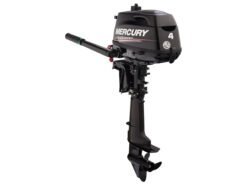
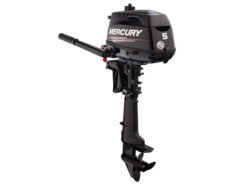
A Mercury portable outboard is one of Mercury’s small single-cylinder four-strokes, from 2.5 to 6 HP, light enough to carry to the boat and clamp onto the transom by hand. The 2.5 and 3.5 HP use an 85 cc engine and weigh about 18 to 19 kg (41 to 43 lb). The 4, 5 and 6 HP use a 123 cc engine and weigh about 26 kg (57 to 59 lb). All have a built-in fuel tank and a tiller handle. They suit dinghies, inflatables, canoes, small tenders and sailboats.
We sell 14 new Mercury portable outboard models, from $995 for the 2.5MH up to $1,950 for the 6MLH, and ship them worldwide with free delivery. This guide compares every size, explains the key differences (weight, reverse gear, shaft length and fuel options), and helps you pick the right one for your boat. Jump to the price list or browse all Mercury outboard motors.
Table of Contents
Table of Contents

What Counts as a Mercury Portable Outboard?
“Portable” isn’t an official size class, but in practice it means an engine one person can carry and clamp on. For Mercury, that’s the single-cylinder FourStroke range: 2.5, 3.5, 4, 5 and 6 HP. Mercury’s 8 and 9.9 HP are two-cylinder engines that weigh around 90 lb or more, which is a two-person lift for most people, so we cover them separately in our Mercury 8 and Mercury 9.9 guides.
Within the portable range there are really two families:
- 2.5 and 3.5 HP: an 85 cc engine, about 18 kg. The lightest Mercury engines you can buy.
- 4, 5 and 6 HP: a 123 cc engine, about 26 kg. More power and more features, but noticeably heavier.
Figures are from Brisbane Marine’s Mercury spec table (Brisbane Marine: Mercury FourStroke 2.5–20hp specifications).
Mercury Portable Outboard Specifications Compared
| Spec | 2.5 HP | 3.5 HP | 4 HP | 5 HP | 6 HP |
|---|---|---|---|---|---|
| Engine | 85 cc single | 85 cc single | 123 cc single | 123 cc single | 123 cc single |
| Dry weight (lightest) | 18 kg | 18 kg | 26 kg | 26 kg | 26 kg |
| Gear ratio | 2.15:1 | 2.15:1 | 2.15:1 | 2.15:1 | 2.15:1 |
| Full-throttle rpm | 4,500–5,500 | 5,000–6,000 | 4,500–5,500 | 4,500–5,500 | 5,000–6,000 |
| Built-in tank | Yes | 1.1 L | 1.1 L | 1.1 L | 1.1 L |
| External tank option | — | — | Yes | Yes | Yes |
| Trim positions | 4 | 4 | 6 | 6 | 6 |
| Shafts | 15 in | 15, 20 in | 15, 20 in | 15, 20, 25 in* | 15, 20 in |
Source: Brisbane Marine. *The 25-inch option on the 5 HP refers to models in our store, such as the 5MXLH. Defender lists the 2026 3.5 HP at 41 to 43 lb and the 2026 6 HP at 57 to 59 lb, with a 2.15:1 gear ratio and a three-year warranty (Defender: Mercury 3.5 HP (2026), Defender: Mercury 6 HP (2026)).
A note on reverse gear
Brisbane Marine lists the 2.5 and 3.5 HP as forward and neutral only, while the 4, 5 and 6 HP have forward, neutral and reverse. Defender’s 2026 listing for the 3.5 HP shows forward, neutral and reverse. Models differ between years and markets, so if reverse matters to you on a 2.5 or 3.5, ask us to confirm before ordering. On engines without reverse, you turn the whole engine around to back up.
Every Mercury Portable Outboard We Sell
All 14 are new, manual-start tiller engines. Prices are as listed in our store when this guide was written, so check each product page for the latest price and stock.
| Model | HP | Shaft | Notes | Price |
|---|---|---|---|---|
| 2.5MH | 2.5 | 15 in | Lightest Mercury | $995 |
| 3.5MH | 3.5 | 15 in | Same weight as 2.5 | $1,160 |
| 3.5MLH | 3.5 | 20 in | Long shaft | $1,185 |
| 4MH | 4 | 15 in | 123 cc, reverse gear | $1,535 |
| 4MLH | 4 | 20 in | Long shaft | $1,555 |
| 5MH-LPG | 5 | 15 in | Propane | $1,695 |
| 5MLH-LPG | 5 | 20 in | Propane | $1,725 |
| 5MH | 5 | 15 in | Petrol | $1,735 |
| 5MLHA Sail Power | 5 | 20 in | Thrust prop, charging | $1,755 |
| 5MLHA-LPG Sail Power | 5 | 20 in | Propane, Sail Power | $1,790 |
| 5MXLHA-LPG Sail Power | 5 | 25 in | Propane, Sail Power | $1,820 |
| 5MXLH | 5 | 25 in | Petrol, extra-long shaft | $1,929 |
| 6MH | 6 | 15 in | Most powerful single | $1,930 |
| 6MLH | 6 | 20 in | Long shaft | $1,950 |
Code guide: M = manual start, H = tiller, L = 20-inch shaft, XL = 25-inch shaft, A = with alternator (Sail Power), LPG = propane.

Which Mercury Portable Outboard Should You Buy?
Mercury 2.5 HP: the lightest option
At about 18 kg and $995 on our prices, the 2.5MH is the cheapest and lightest Mercury portable outboard. It’s ideal for a small inflatable tender, a light dinghy or a canoe where you just need to get from A to B. Brisbane Marine lists it with a 15-inch shaft only.
Mercury 3.5 HP: more push, same weight
The 3.5MH and 3.5MLH share the 2.5’s 85 cc engine and weight but run at higher rpm for more power. For about $165 more than the 2.5, you get an extra horsepower and a 20-inch shaft option. For most tender owners, the 3.5 is the better buy of the two.
Mercury 4 HP: the step into the bigger family
The 4MH and 4MLH move to the 123 cc engine, with reverse gear, six trim positions and the option of an external fuel tank. They’re about 8 kg heavier than the 3.5. Pick the 4 if you want reverse and room to grow, but don’t need much power.
Mercury 5 HP: the most choice
The 5 HP comes in more versions than any other Mercury portable outboard: petrol, propane, Sail Power and three shaft lengths. Mercury says the propane version runs about six hours at full throttle on a 20 lb tank. Our Mercury 5 hp outboard guide covers every version in detail.
Mercury 6 HP: the most powerful single
The 6MH and 6MLH use the same 123 cc engine and weight as the 4 and 5, but run to a higher rpm range for the most power in the single-cylinder family. Brisbane Marine highlights the integral tank with an external fuel shut-off valve, which can connect to a remote tank for longer range.
The jump in weight is between the 3.5 (18 kg) and the 4 (26 kg). If carrying is your main concern, stay at 3.5 HP or below. If you want reverse and more power, the 4 to 6 HP engines all weigh about the same, so choose on power and price.
Mercury Portable Outboard vs Yamaha, Suzuki, Tohatsu and Honda
We sell small portables from all the major brands. Here’s how they compare on our prices:
| Size | Mercury | Yamaha | Suzuki | Tohatsu |
|---|---|---|---|---|
| 2.5 HP | 2.5MH $995 | F2.5SMHB $1,265 | DF2.5S5 $820 | MFS2.5CS $1,183 |
| 3.5 HP | 3.5MH $1,160 | — | — | MFS3.5CS $1,025 |
| 4 HP | 4MH $1,535 | F4SMHA $1,295 | DF4AS5 $1,560 | MFS4DDS $1,500 |
| 5 HP | 5MH $1,735 | — | — | MFS5DS $1,600 |
| 6 HP | 6MH $1,930 | F6SMHA $1,750 | DF6AS5 $1,790 | MFS6DWS $1,720 |
Honda’s 5 HP, the BF5DHSHNA, is $1,573 on our prices.
A few things stand out. The Mercury 2.5 is cheaper than the Yamaha and Tohatsu 2.5s here, though the Suzuki is cheaper still. At 4 to 6 HP, a Mercury portable outboard tends to cost a little more than the Yamaha and Tohatsu equivalents. What Mercury offers that others don’t in our range: a propane 5 HP at a lower price than Tohatsu’s propane version, and Sail Power models.
Germany’s YACHT magazine noted that the Mercury 5 HP is almost identical in construction to Tohatsu’s 5 HP (YACHT: 5 hp outboard test, Mercury F5MLH). Shared designs are common in small outboards, so dealer support near you is often the best tie-breaker.
For brand-specific guides, see Yamaha portable outboards, portable Suzuki outboards, portable vs fixed Honda outboards, Suzuki 2.5hp and Yamaha 2.5hp.
Which Boat Suits Which Mercury Portable Outboard?
Small inflatable tenders (2.3 to 2.9 m)
A 2.5 or 3.5 HP is usually enough, and the low weight matters because you’ll lift it onto the yacht’s rail. Check the tender’s maximum horsepower and engine weight. See our guide to outboard motors for dinghies.
Larger inflatables and RIBs (3 to 3.5 m)
A 4 to 6 HP gives more push with three or four people. Most need the 15-inch shaft. See our inflatable boat motors guide.
Canoes and square-stern boats
Check the rating carefully, as many square-stern canoes take only a few horsepower. A 2.5 or 3.5 HP is the usual fit. See our outboard motors for canoes guide.
Small aluminium boats and jon boats
A 4 to 6 HP Mercury portable outboard gives a steady displacement speed on a 10 to 12-foot boat. If you want to plane, look at an 8, 9.9 or 15. See our jon boat outboard guide.
Small sailboats
A 4 to 6 HP on a 20-inch shaft, or the 5 HP Sail Power on 20 or 25 inches. Sail Power adds a high-thrust prop and charging. Our outboards for sailboats guide explains sizing.
Kayaks
Most kayaks aren’t designed for a petrol outboard. If yours is, check the maker’s limits. Many kayak anglers use electric motors instead. See our outboards for kayaks and electric kayak motor guides.
Who Buys a Mercury Portable Outboard?
Cruising sailors
A yacht tender needs an engine you can lift onto the rail every evening. A light 3.5 HP Mercury portable outboard is the usual answer, with a 5 or 6 HP for bigger tenders that carry the whole crew.
Anglers with small boats
On a small aluminium boat or canoe, a 4 to 6 HP gives a steady trolling and cruising speed without the weight or cost of a bigger engine.
Campers and travellers
People who carry an inflatable on a roof rack or in a camper van want something that fits in the boot. The 2.5 and 3.5 HP at around 18 kg are easy to load. The propane 5 HP can share a gas bottle with a camp stove.
Holiday homes and lakes
An engine that sits unused for weeks needs to start reliably. A simple four-stroke Mercury portable outboard, stored properly, is a good fit. Propane avoids stale petrol altogether.
Clubs and rescue boats
Sailing clubs use small outboards on support dinghies and safety boats. Manual start, simple controls and low weight suit boats used by many different people.

Mercury Portable Outboard Features Explained
Through-prop exhaust
Brisbane Marine highlights through-prop exhaust on the 4 and 5 HP for quieter running. Exhaust goes out under the water rather than into the air near your ears.
Shallow-water trim
All five sizes have a 16-degree shallow-water trim range, according to Brisbane Marine. You can tilt the engine partly up and keep running slowly over sand or weed. The 4, 5 and 6 HP have six trim positions; the 2.5 and 3.5 have four.
Tilt
Defender lists a 73-degree tilt range on the 2026 3.5 HP, so you can lift the prop clear of the water when beaching or sailing.
Integral fuel tank with shut-off
Brisbane Marine notes the 6 HP’s integral tank has an external fuel shut-off valve, and it can connect to a remote tank. A shut-off helps stop fuel leaking when you carry or store the engine.
Water cooling with a thermostat
Defender lists water cooling with a thermostat on the 3.5 HP. A thermostat helps the engine warm up and run at a steady temperature.
Propeller
Defender lists a three-blade plastic prop, 7 3/8 x 6 inches, as standard on the 3.5 HP, and an 8 3/8 x 8-inch prop on the 6 HP. Plastic props are light and cheap to replace if you hit something.
How to Read a Mercury Portable Outboard Listing
Different sellers list different numbers for the same engine. Here’s why:
- Weight. Brisbane Marine quotes the lightest version in kilograms (18 kg or 26 kg). Defender quotes a range in pounds (41 to 43 lb for the 3.5; 57 to 59 lb for the 6). Shaft length and options make the difference.
- Reverse. Sources differ on the 2.5 and 3.5, as explained above.
- Charging. Most portables don’t charge a battery. Sail Power models do, and Defender lists a small alternator on the 2026 6 HP.
- Tank. “Integral” or “built-in” means the small tank under the cowl. An external tank is usually extra.
If anything on a Mercury portable outboard listing isn’t clear, ask us before you order.

Transporting a Portable in a Car, Van or Camper
- Close the fuel tap and vent, or run the engine dry before a long drive.
- Lay it on the correct side, as shown in the owner’s manual. Lay it the wrong way and oil can run into the cylinder or air intake.
- Use a tray or old blanket to catch any drips.
- Secure it so it can’t slide under braking.
- Carry propane bottles upright and ventilated, and follow local rules.
Running Costs
A Mercury portable outboard is cheap to run, but costs vary with local fuel prices and how often you use it. Plan for:
- Fuel, which is modest for engines this small.
- Oil changes, which are quick and need little oil.
- A spare prop and spark plug.
- An impeller every few seasons, depending on use.
- Fuel stabiliser if the engine sits.
Our hidden costs guide and fuel-efficient outboards guide cover more.
Questions to Ask Before Buying
- How far will I carry it, and how often?
- Does it need reverse?
- Petrol or propane?
- Do I need to charge a battery?
- What warranty applies in my country? See our warranty guide.
- Who services Mercury engines near me?
We’re happy to answer any of these before you order a Mercury portable outboard.
Choosing the Right Shaft Length
Measure from the top of the transom straight down to the bottom of the hull.
- 15 inches: most inflatables, small dinghies and canoes.
- 20 inches: most small aluminium boats and many sailboat brackets.
- 25 inches: sailboats with high transoms or brackets. In our range, that’s the 5 HP models with XL in the name.
On a sailboat, allow extra length because the stern lifts in waves. Our guides to long shaft vs short shaft and cavitation plate height explain how to measure.
Fuel: Built-In Tank, External Tank or Propane
Every Mercury portable outboard has a small built-in tank of around 1.1 litres, according to Brisbane Marine and Defender. That’s enough for short tender runs with nothing else to carry. For longer trips:
- 4, 5 and 6 HP can connect to an external tank. Brisbane Marine lists a 12-litre tank as an option.
- 2.5 and 3.5 HP rely on the built-in tank, so carry a small fuel can for longer runs.
- The 5 HP propane models run on a 20 lb propane bottle. Mercury says that gives about six hours at full throttle (Mercury Marine: FourStroke Propane 5hp). Our propane outboard motor guide explains the pros and cons.
Carrying a Mercury Portable Outboard
Weight is the whole point of a portable, so it’s worth being realistic:
- 18 kg (2.5 and 3.5 HP): most adults can carry it a reasonable distance and lift it onto a transom alone.
- 26 kg (4, 5 and 6 HP): manageable for short carries, but lifting it over a yacht’s rail into a moving tender is awkward for one person.
Tips:
- Close the fuel vent and tap before you move it.
- Lay it down only on the side the owner’s manual shows, or oil can run where it shouldn’t.
- Use a lanyard or safety line when passing it between boats.
- A simple engine trolley or stand makes storage easier.
Our lightweight outboard motors guide compares carry weights across brands.
Three Real Set-Ups for a Mercury Portable Outboard
These are typical matches, not performance promises. Check your boat’s rating and transom first.
A 2.6-metre roll-up tender for a cruising yacht
Lifted on and off every day by one person. The 3.5MH keeps the weight at about 18 kg and gives enough push for two people and shopping.
A 3.3-metre RIB used for diving and beach trips
Three people, gear and a short transom. The 6MH gives the most power in the portable range, and reverse helps when manoeuvring around rocks and moorings.
A 22-foot sailboat on a bracket
Thrust into wind and a way to top up a small battery. The 5MLHA Sail Power or the propane 5MXLHA-LPG on a 25-inch shaft fits, depending on the bracket height.

Fitting a Portable Outboard
- Check the transom or bracket is solid and rated for the weight.
- Centre the engine and set the height so the anti-ventilation plate sits about level with the bottom of the hull.
- Tighten the clamp screws firmly, then recheck after a short run.
- Attach a safety line so you can’t lose the engine overboard.
- Add oil if the engine ships dry, as the manual instructs.
- Fill the tank or connect the external tank or propane bottle.
- Start in neutral with the kill-switch lanyard attached, and check the cooling-water stream.
Our how to install an outboard motor guide has more.
Looking After a Mercury Portable Outboard
Small engines are simple, but they’re often the ones that get neglected. Follow the owner’s manual, and pay attention to:
- Break-in: vary the throttle early on. See our break-in guide.
- Engine oil changes at Mercury’s intervals.
- Gearcase oil, checked for water. See our lower unit oil guide.
- Spark plug checks.
- Water pump impeller, especially if you run in sand.
- Fuel. Old petrol is the most common reason small outboards won’t start. Run the carburettor dry or drain it as the manual explains before storage, or use a stabiliser.
Our maintenance checklist, winterizing guide and troubleshooting guide cover the rest.
Saltwater Use
Every Mercury portable outboard can be used in salt water. After each trip, run it in a bucket or barrel of fresh water to flush the cooling system, rinse the outside, and check the anode. Store it upright, out of the weather. See our saltwater outboard guide.
New or Used Portable?
Used portables are cheap, and we list a few, such as a used Suzuki 2.5hp and a used Yamaha 2.5hp on our used outboard engines page. The risk with used small engines is a carburettor clogged by old fuel. Ask how it was stored, check that it pumps cooling water, and look at the gear oil. Older two-strokes need oil mixed with fuel. Our 2-stroke vs 4-stroke guide explains the difference. A new Mercury portable outboard comes with a factory warranty: Defender lists three years on the 2026 models in the US.
When a Mercury Portable Outboard Isn’t the Right Choice
- You want to plane a small boat. Look at the Mercury 15 or Mercury 20.
- You need electric start or battery charging. Look at the Mercury 8 or the 5 HP Sail Power.
- You need a trolling kicker for a big boat. See our Mercury ProKicker guide.
- You want silent, zero-emission running. See our electric outboard motors guide.
Common Mistakes When Buying a Portable Outboard
- Buying more power than the boat is rated for.
- Choosing the 4, 5 or 6 when weight matters most. The 2.5 and 3.5 are about 8 kg lighter.
- A short shaft on a sailboat.
- Assuming every model has reverse. Check the 2.5 and 3.5.
- Leaving fuel in the engine for months.
- No safety line when moving the engine between boats.
Mercury Portable Outboard Pros and Cons
What’s good:
- Light, simple single-cylinder four-strokes.
- Built-in fuel tanks on every model.
- A wide range: 2.5 to 6 HP, three shaft lengths, propane and Sail Power.
- The 2.5 HP is cheaper than Yamaha’s and Tohatsu’s on our prices.
- Mercury dealer support in many countries.
What to weigh up:
- 4 to 6 HP models cost a little more than some rivals.
- Manual start only.
- Reverse may not be available on every 2.5 and 3.5.
- Big weight jump from 3.5 to 4 HP.
A Simple Buying Walkthrough
- Read the boat’s rating for maximum horsepower and engine weight (Discover Boating on capacity plates).
- Decide how much weight you can carry. 18 kg or 26 kg?
- Choose the power within that weight class.
- Measure the transom for 15, 20 or 25 inches.
- Choose the fuel: petrol or propane (5 HP only).
- Order or ask us. Send us your boat type, length and rating.
Safety and the Rules That Apply
Even a small engine needs care. Wear a lifejacket, especially when climbing between a yacht and its tender, and attach the kill-switch lanyard. Some lakes and waterways limit engine power or ban petrol engines, and registration rules vary between countries. Check local rules before you buy.
When Your Engine Arrives
- Check the box before you sign, and note any damage on the delivery paperwork.
- Check the model code: horsepower, shaft length and fuel type.
- Look the engine over for damage.
- Keep the packaging until everything checks out, in case you need our refund and returns policy.
- Record the serial number for warranty and servicing.
- Add oil if the manual says it ships dry, then read the break-in section.
Buying a Mercury Portable Outboard From Us
Every Mercury portable outboard on this page is new and for sale in our store. Our shipping policy says orders normally ship within 1 to 6 business days with free delivery. You’ll get a tracking email when your engine leaves, and you can follow it on our order tracking page. Import duties and taxes depend on your country, so check with your customs office before ordering. Propane equipment may have extra shipping or import rules in some countries.
Helpful reading:
- Outboard motors worldwide shipping
- Cost of shipping an outboard motor internationally
- Outboard motors with warranty
- How to spot genuine Mercury engines
- Our guide to buying Mercury outboards
Need help choosing? Contact us. You can also browse the Mercury 5 HP category, all Mercury outboard motors or the full shop.
Mercury Portable Outboard FAQ
What is the lightest Mercury portable outboard?
The 2.5 and 3.5 HP, at about 18 kg according to Brisbane Marine. Defender lists the 2026 3.5 HP at 41 to 43 lb.
How much does a Mercury portable outboard cost?
In our store, prices run from $995 for the 2.5MH to $1,950 for the 6MLH.
Do Mercury portable outboards have reverse?
The 4, 5 and 6 HP do. Brisbane Marine lists the 2.5 and 3.5 as forward and neutral only, though Defender’s 2026 3.5 listing shows reverse. Ask us to confirm for the model you want.
Do they have a built-in fuel tank?
Yes. Each has a small built-in tank of about 1.1 litres. The 4, 5 and 6 HP can also connect to an external tank.
Which is better, the 2.5 or the 3.5?
They share the same engine and weight. The 3.5 gives more power for about $165 more on our prices, and offers a 20-inch shaft.
Is there a propane Mercury portable outboard?
Yes, the 5 HP. Mercury says it runs about six hours at full throttle on a 20 lb tank.
Can a portable outboard charge a battery?
The 5 HP Sail Power models have a 4-amp alternator. Defender also lists a 4-amp alternator for the 2026 6 HP, so check the specification of the unit you buy.
What’s the best Mercury portable outboard for a sailboat?
The 5 HP Sail Power, on a 20 or 25-inch shaft, for its thrust prop and charging.
Can I use one in salt water?
Yes. Flush it with fresh water after each trip.
Do you ship Mercury portable outboards worldwide?
Yes. We ship worldwide with free delivery, and orders normally ship within 1 to 6 business days.
Can one person carry a Mercury portable outboard?
The 2.5 and 3.5 HP, at about 18 kg, are easy for most adults. The 4, 5 and 6 HP, at about 26 kg, are manageable for short carries but awkward to pass between boats alone.
Is a Mercury portable outboard two-stroke or four-stroke?
All current Mercury portables are four-strokes, so there’s no oil to mix with the fuel.
Which Mercury portable outboard is best for an inflatable?
For small roll-up tenders, the 2.5 or 3.5 HP. For larger inflatables and RIBs carrying three or four people, the 5 or 6 HP. Always check the boat’s maximum horsepower and engine weight.
Does a Mercury portable outboard need a battery?
No. They’re all manual (pull) start.
Sources and References
Posts Widget
-
1
-
2

-
3

-
4


S.H Continental Marine
USA HERALD MAGAZINE INC
Our team is dedicated to providing exceptional customer service.
Email: info@shcontinentalmarine.com
Choose S.H Continental Marine
for your outboard engine needs and enjoy superior quality, exceptional customer service, and unbeatable prices.