
Outboard Boat Engines: Full Specs, Top Brands & Where to Buy Worldwide
Most people searching for outboard boat engines already know roughly what they want — they just need to find a reliable source for the right engine at a fair price, with delivery they can actually count on. That’s where this guide comes in.
At SH Continental Marine, we supply new outboard boat engines to buyers around the world. Yamaha. Tohatsu. Full horsepower range from small portables to high-output offshore motors. In this guide, we’ll cover the types of outboard boat engines available, what specs you need to match to your specific boat, and how the buying process works when you order from us.
Why Outboard Boat Engines Dominate the Market
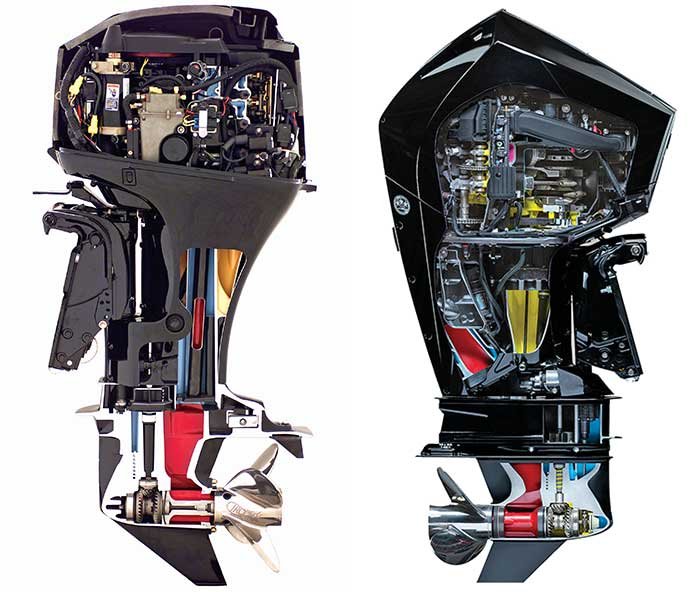
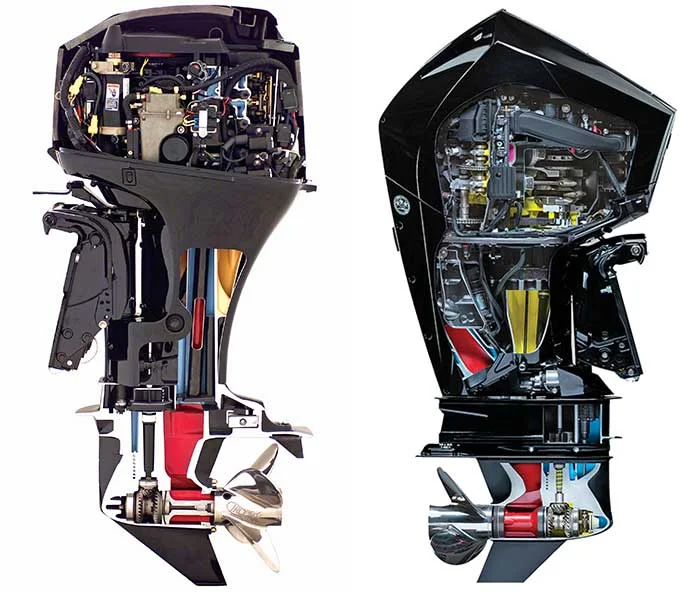
Walk any marina in the world and you’ll see the same thing: outboard boat engines. Not inboards, not stern drives — outboards. There are real reasons this setup has won out across recreational and commercial boating:
- Serviceability — You can remove an outboard from the boat for major service, or swap it out entirely. Try doing that with an inboard.
- Shallow water capability — Outboard boat engines tilt up. You can run through skinny water that would destroy an inboard outdrive or fixed propeller.
- Space efficiency — Moving the engine to the transom frees up interior space. That’s cockpit room, storage, livewells — real usable boat space.
- Fuel economy — Modern 4-stroke outboard boat engines are genuinely efficient. The technology has improved dramatically over the past two decades.
- Multiple engine options — Running two or three outboards gives you redundancy, better handling, and serious power without a repower nightmare.
For most applications under 40 feet, outboard boat engines are simply the practical choice. The market reflects that — outboard sales consistently outpace inboard and stern-drive across the global marine market.
Types of Outboard Boat Engines
Not all outboard boat engines are the same. The major categories you’ll encounter when shopping:
Portable Outboard Boat Engines (2.5 HP – 20 HP)
These are designed to be physically carried. They’re lighter (typically under 35 kg), have built-in or small external fuel tanks, and are intended for tenders, inflatables, small aluminum fishing boats, and as kicker motors on larger vessels. Manual pull-start is common in this range, though some models offer electric start.
We stock several popular portable outboard boat engines, including:
- Yamaha 8 HP F8SMHB — Short shaft, manual start, lightweight build at around 28 kg
- Yamaha 8 HP F8LMHB — Long shaft version, same reliable engine platform
- Yamaha 9.9 HP T9.9XPB — High-thrust design for sailboat auxiliary and heavy tender use
- Yamaha 9.9 HP T9.9XWHB — Electric start, power tilt, ideal for regular daily use
Mid-Range Outboard Boat Engines (25 HP – 75 HP)
This is the sweet spot for most recreational boaters. These outboard boat engines power aluminum fishing boats, fiberglass bay boats, pontoons, and dual-console family boats in the 16-to-22-foot range. You get real speed and capability without spending inboard money.
Key models in our mid-range inventory:
- Yamaha 60 HP F60JB — Inline 4-cylinder 4-stroke, 996cc displacement, remote control with electric start. One of our best-selling outboard boat engines in the mid-range class.
- Yamaha 60 HP F60LB — Long-shaft version, same proven powerhead
- Yamaha 60 HP T60LB — High-thrust configuration for larger tenders and sailboat auxiliary
- Yamaha 70 HP F70LA — Lightweight 4-cylinder design, excellent power-to-weight ratio for 18-20 foot boats
- Yamaha 75 HP F75LB — Robust all-rounder for heavier mid-range boats
High-Output Outboard Boat Engines (90 HP – 300 HP+)
These are serious engines for serious boats. Larger center consoles, offshore fishing boats, express cruisers, and high-performance hulls in the 22-to-40-foot range. Multiple engine setups are common at this power level — twin or triple outboard configurations are standard on offshore boats.
Our most popular high-output outboard boat engines:
- Yamaha 90 HP F90JB — Inline 4-cylinder 4-stroke, 1596cc displacement, electric start, power trim and tilt
- Yamaha 90 HP F90LB — Long-shaft variant, strong output for 20-22 foot boats
- Yamaha 90 HP F90XB — Extra-long shaft, ideal for high-transom fishing boats
- Yamaha 90 HP VF90LA V MAX SHO — Performance-oriented design with Yamaha’s V MAX SHO technology. Exceptional acceleration, ideal for performance fishing applications
- Yamaha 90 HP F90LB — Well-proven workhorse for commercial and heavy recreational use
Detailed Specifications: What Each Number Means
When you’re evaluating outboard boat engines, the spec sheet is your map. Here’s a plain-English guide to the key figures:
Engine Type
Almost all modern outboard boat engines in our inventory are 4-stroke. They run on regular unleaded gasoline, don’t require oil mixing, and meet current emissions standards. Quieter and more fuel-efficient than equivalent 2-stroke designs.
Cylinder Configuration
Smaller outboard boat engines (under 25 HP) are typically single or twin cylinder. Mid-range (40-75 HP) are usually inline 3 or 4 cylinder. High-output models (115 HP and above) are often V4 or V6 configurations. More cylinders means smoother power delivery and better balance at high RPM.
Displacement
Total swept volume of all cylinders combined, measured in cc or liters. The Yamaha F60, for example, displaces 996cc. The Yamaha F90 displaces 1596cc. Larger displacement means more potential torque — important for moving heavy boats or pulling water skiers and wakeboarders.
Full Throttle RPM Range
This is the RPM band where the engine produces its rated horsepower. For most modern 4-stroke outboard boat engines, this is between 5000 and 6300 RPM. Your propeller selection affects where in this band you actually operate at full throttle.
Shaft Length Options
This must match your boat’s transom height. The three standard options for outboard boat engines are:
- Short (S) — 15″ for most aluminum fishing boats and small fiberglass hulls
- Long (L) — 20″ for most center consoles, pontoons, and mid-size fiberglass boats
- Extra Long (X) — 25″ for high-transom offshore boats and some larger pontoons
Getting the wrong shaft length is an expensive mistake. Measure your transom height from the bottom of the mounting bracket location to the waterline, and match it to the standard shaft lengths above.
Weight
Engine weight affects boat trim (balance), handling, and performance — especially on smaller boats. Check that your boat’s transom rating can handle the engine’s weight. The Yamaha 60 HP F60 weighs approximately 129 kg. The Yamaha 90 HP F90 weighs approximately 160 kg. Larger and heavier outboard boat engines require properly rated transom brackets and mounting hardware.
Electric Start vs. Tiller Control Outboard Boat Engines
This is a common question from buyers who are spec-ing an engine for a specific application:
Remote control with electric start is standard on most outboard boat engines above 25 HP. The throttle and gear shift are controlled from the helm via a remote box and cables. The engine is started with a key or button at the helm.
Tiller control means you steer and control the throttle directly from the motor arm. More common on smaller outboard boat engines (under 20 HP) and some commercial applications where simplicity and directness are valued over cockpit ergonomics.
Some models are available in both configurations. If you’re not sure which is right for your setup, tell us about your boat and intended use — we can help.
Tohatsu Outboard Boat Engines — A Strong Alternative to Yamaha
Yamaha gets most of the attention in outboard discussions, but Tohatsu outboard boat engines deserve serious consideration — especially for buyers who want quality without paying the premium brand premium.
Tohatsu manufactures outboard boat engines that some other brands sell under their own names. Their engineering is solid, their warranty program (5 years on recreational models) is one of the best in the market, and their engines consistently rank among the lightest in their HP class.
Read our full guide to Tohatsu outboard motors for a complete breakdown of their lineup from 2.5 HP to 250 HP.
For buyers shopping boat engines for sale and comparing brands, Tohatsu is worth putting on the list before you make a final decision.
Outboard Boat Engine Break-In Period
New outboard boat engines require a break-in period. This is not optional — it’s how the engine’s moving parts seat properly and how you get maximum long-term reliability out of the engine.
General break-in guidelines for most 4-stroke outboard boat engines:
- First 10 hours: Vary engine speed frequently. Avoid sustained wide-open throttle. Avoid sustained idle. Change up the RPM regularly.
- First 20 hours: Gradually increase maximum throttle use. The engine can handle more, but don’t go to WOT for sustained periods yet.
- After 20 hours: Normal operation. Change the engine oil after the first 20 hours — break-in oil contains metal particles from initial wear and should come out.
Following the break-in procedure is free. Skipping it can cost you in long-term performance. Most manufacturer warranties also assume the break-in procedure was followed.
Outboard Boat Engine Reliability — What You Can Expect
Modern outboard boat engines from reputable manufacturers are genuinely reliable when properly maintained. What does that mean in practice?
A well-maintained Yamaha or Tohatsu outboard should deliver 1,500 to 2,000+ hours of reliable service. On a boat used 200 hours per year, that’s 7-10 years of use before you’re looking at a major rebuild or replacement. Many owners report well beyond that with rigorous maintenance.
The engines that fail prematurely are almost always the result of deferred maintenance, overheating events (often from a failed water pump impeller), impact damage to the lower unit, or water intrusion from improper storage. None of these are inherent engine problems — they’re operator or maintenance failures.
Buy a quality outboard boat engine from a reputable dealer, follow the maintenance schedule, flush after saltwater use, and store properly. The engine will reward that treatment.
How to Order Outboard Boat Engines From SH Continental Marine
Our ordering process is designed to be straightforward for buyers anywhere in the world:
- Browse or contact us — Check our online inventory or reach out with the specific engine you need
- Confirm the right specification — Tell us your boat type, size, weight, intended use, and transom height. We’ll confirm the right HP and shaft length.
- Get a shipping quote — We’ll confirm shipping costs and logistics to your location. We handle freight documentation for most international destinations.
- Order and delivery — Once confirmed, we process your order and ship. Typical lead times vary by destination and engine availability.
We ship outboard boat engines to customers across Europe, North America, South America, Asia, Africa, the Middle East, and the Pacific Islands. If you’re in a location where authorized dealers are scarce or pricing is unreasonably high, buying directly through us is a solid option.
For further reading on marine engine standards, certification, and safety, the United States Coast Guard publishes comprehensive guidance on recreational vessel and engine safety standards, and the ICOMIA covers international marine industry standards. Both are worth reviewing if you’re navigating import requirements for outboard boat engines in your region.
Questions? Contact us directly. We’re here to help you find the right engine, not to upsell you on something bigger than you need.
Posts Widget
- 1
- 2

- 3

- 4


S.H Continental Marine
USA HERALD MAGAZINE INC
Our team is dedicated to providing exceptional customer service.
Email: info@shcontinentalmarine.com
Choose S.H Continental Marine
for your outboard engine needs and enjoy superior quality, exceptional customer service, and unbeatable prices.
