Sterndrive vs Outboard Engine: Which One Actually Fits Your Boat

This question comes up constantly from buyers repowering an older boat, and it’s a fair one, because sterndrive and outboard propulsion solve the same basic problem in genuinely different ways. A sterndrive, also called an inboard/outboard or I/O, mounts the engine inside the hull and sends power out through a drive unit on the transom. An outboard mounts the whole engine, powerhead and all, on the outside of the transom. Both get a boat moving. How they get there, what they cost to own, and what they’re actually good at differ enough that the sterndrive vs outboard engine decision is worth working through properly rather than defaulting to whatever the boat came with.
We sell outboard engines, so we have a stake in this comparison, but we’d rather give you a straight answer than a sales pitch, including the cases where a sterndrive genuinely makes more sense. Here’s the real breakdown.
In this guide:
How Each System Actually Works
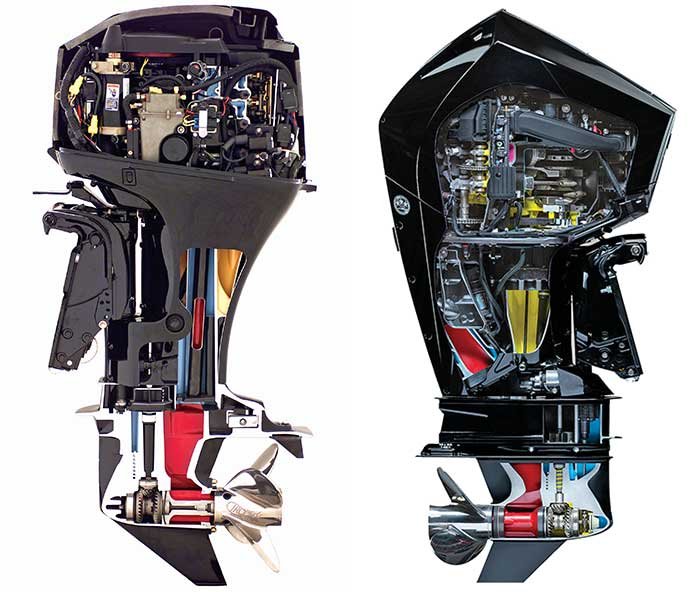
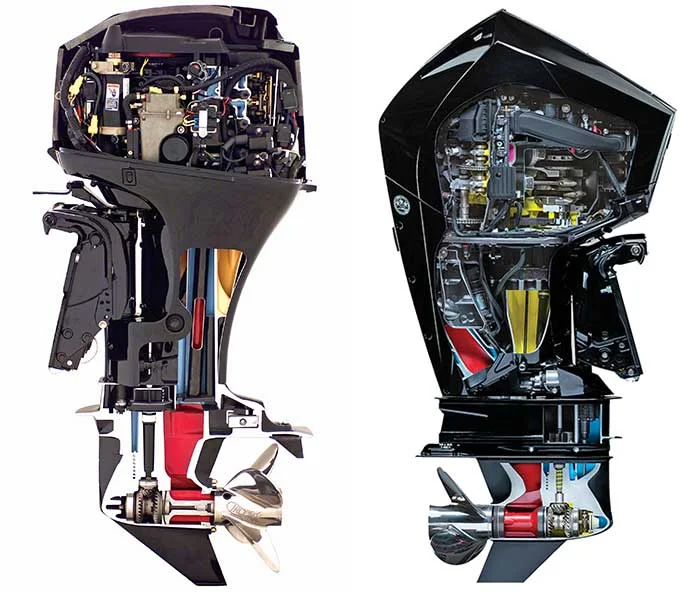
A sterndrive engine, as Discover Boating explains in its propulsion comparison guide, sits inside the boat, usually a gasoline V6 or V8 automotive-derived block, connected to a drive unit that passes through the transom below the waterline. The drive unit itself looks similar to an outboard’s lower unit and handles steering and trim, but the engine, exhaust manifolds, and most of the mechanical components stay inside the hull under a cover or in an engine bay.
An outboard engine is a complete, self-contained unit, powerhead, midsection, and lower unit, mounted entirely outside the transom. There’s no engine inside the boat at all. Everything from the spark plugs to the propeller shaft lives in one external housing that tilts up out of the water and swings for steering.
That single structural difference, engine inside the hull versus engine outside the hull, is the root of every other difference on this list. It drives weight distribution, maintenance access, corrosion exposure, and even how the boat is laid out.
Performance and Handling
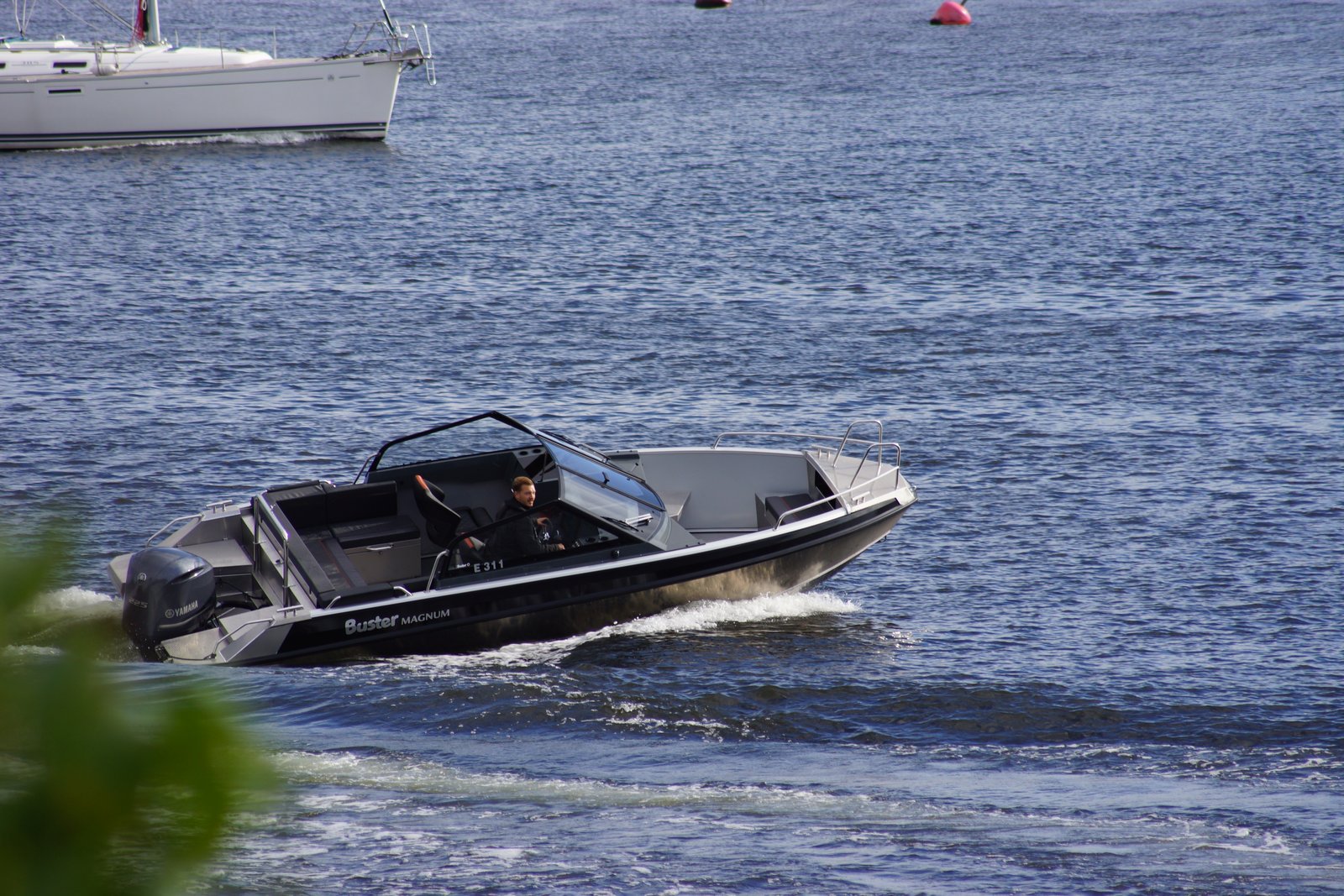
Outboards have gotten dramatically lighter and more powerful over the last fifteen years, and modern four-stroke outboards now match or beat comparable sterndrives on power-to-weight in most horsepower classes. Because the outboard’s weight sits at the very back of the boat rather than distributed through the hull, outboard-powered boats tend to have a drier ride in a head sea and better hole shot, since the engine’s weight isn’t pulling the bow down mid-hull.
Sterndrives generally deliver a slightly smoother, quieter ride at cruise, since the engine noise stays inside the hull rather than right behind the helm, and the weight distributed more toward the boat’s center can feel more stable at rest, particularly on boats designed around that balance. For wakeboard and ski boats specifically, sterndrive remains the dominant choice because the inboard-style weight placement and wake shape it produces are exactly what that sport wants, something a transom-mounted outboard can’t replicate as cleanly.
Maintenance and Access
This is where outboards win decisively for most owners. Every service point on an outboard, the powerhead, the water pump, the fuel system, sits in the open, accessible by tilting the cowl up. There’s no engine bay to climb into, no bilge to work around, and most routine maintenance takes a fraction of the time it takes on a sterndrive.
Sterndrive maintenance means working inside the engine bay, often in a cramped, hot space with limited access to some components, and the drive unit itself (the outdrive) requires its own separate service schedule on top of the inboard engine’s maintenance, effectively doubling some of the routine work. Fluid changes, especially, are more involved on a sterndrive since you’re managing engine oil, outdrive gear oil, and often power steering fluid as separate systems rather than the outboard’s more consolidated setup.
Weight, Cabin Space, and Layout
Removing the engine from inside the hull is the single biggest space advantage outboards offer. Boats designed around outboard power free up the entire aft section of the hull for storage, seating, swim platforms, or cabin space that a sterndrive boat has to dedicate to the engine bay instead. This is a major reason the market has shifted toward outboard power even on larger boats that would have been sterndrive-only a decade ago, since builders can offer more usable interior volume on the same length hull.
On the flip side, a sterndrive’s weight sits lower and more centrally in the hull, which some builders and owners still prefer for how it affects a boat’s motion in certain sea conditions, particularly on deep-V hulls built specifically around that weight distribution.
Reliability and Corrosion Exposure
Outboards spend their entire working life outside the boat, exposed to weather and, in saltwater use, direct spray on every external surface. Modern outboards are built for exactly this with marine-grade coatings, sacrificial anodes, and sealed electrical connections, and the tradeoff is that any corrosion issues are visible and easy to inspect since nothing is hidden inside the hull.
Sterndrives face a different corrosion profile. The engine itself sits protected inside the hull, away from direct spray, but the drive unit passes through the transom below the waterline and deals with the same saltwater exposure an outboard’s lower unit does, while the raw water cooling system running through the inboard engine creates its own corrosion and scale risk over time that outboards, with simpler cooling paths, generally don’t face to the same degree.
Cost to Buy and Cost to Own
Upfront pricing is genuinely close between a comparable sterndrive and outboard package in most horsepower ranges, so don’t expect a dramatic difference in purchase price alone. Where the cost picture diverges is ownership. Outboards, particularly in a twin or repower scenario, are simpler to swap, simpler to service, and typically cheaper to have serviced by a shop, since labor time for common jobs runs lower without an engine bay to work in.
Sterndrive repowers, when the inboard engine reaches the end of its life, are a bigger job than swapping an outboard, often requiring engine bay removal and reinstallation that outboards skip entirely since the whole engine simply unbolts from the transom. That labor difference adds up over the life of a boat, especially for owners who keep a boat long enough to face at least one major repower.
Resale Value
The market has moved decisively toward outboard power over the last decade, and that shift shows up directly in resale value. Comparable used boats with outboard power generally hold value better and sell faster than sterndrive-powered boats of the same age and condition, simply because buyer demand has shifted that direction across nearly every hull size and category. This isn’t a universal rule, wake and ski boats being the clearest exception, but for center consoles, bowriders, and cruisers, outboard power is increasingly the buyer’s default expectation.
Which One Actually Fits Your Boat
If you’re comparing sterndrive vs outboard engine options for a repower rather than a new boat purchase, the honest starting point is your hull. Many sterndrive boats can be converted to outboard power, but it’s a real project involving transom modification, not a simple engine swap, and it only makes financial sense on boats worth investing in long term. If your boat was designed and built around sterndrive propulsion, converting is possible but should be costed out carefully against just replacing the sterndrive engine itself.
For new purchases, wake and ski-specific boats remain a strong case for sterndrive given the wake shape and weight distribution that sport wants. Center consoles, bay boats, pontoons, and most family cruisers are increasingly outboard territory, both for the practical maintenance and space advantages and because that’s where manufacturers are putting their engineering focus and where resale demand sits.
Outboard Engines We Stock
If you’ve landed on outboard power, we carry engines across the full horsepower spectrum for repowers and new builds alike. For boats moving up from a mid-size sterndrive, our Mercury Verado 300HP CXL and Verado 350HP CXL offer power comparable to a small-block sterndrive V8 in a much lighter, transom-mounted package. For twin-engine conversions from a single large sterndrive, we regularly help buyers work out matched pairs, a setup we cover in detail in our guide on twin outboard motor setups.
Every engine we sell is graded, compression tested, and listed with honest hour and condition information, and we ship worldwide with export documentation handled for you. If you already know you want outboard power, our guide on outboard shaft length and our breakdown of power trim and tilt will help you spec the right engine for your transom. If you’re weighing a sterndrive-to-outboard conversion, send us your boat’s specs and current sterndrive horsepower and we’ll help you figure out what a comparable outboard repower actually looks like.
Hull Design and Why Retrofits Are Rarely Simple
One thing that gets lost in the sterndrive vs outboard engine debate is that modern hulls are increasingly engineered around one propulsion type from the start, not adapted after the fact. A hull designed for sterndrive power has its running surfaces and weight distribution planned around an engine sitting mid-boat. A hull designed for outboard power plans around the weight sitting entirely on the transom. Swapping propulsion types on an existing hull doesn’t just mean unbolting one system and bolting on another, it can meaningfully change how the boat rides, especially at speed or in a following sea.
This is part of why naval architects and boat builders treat the propulsion decision as a day-one design choice rather than a late-stage option, and it’s also why a sterndrive-to-outboard conversion, while mechanically possible on many hulls, is a genuine engineering project best handled by a yard experienced with that specific conversion rather than a weekend DIY job. If you’re seriously considering a conversion, get a marine surveyor or the original builder’s input on whether your specific hull was ever engineered with an outboard-power version, since that tells you a great deal about how well the conversion will actually perform once finished.
Breaking Down the Real Numbers
When buyers ask us to put actual figures on the sterndrive vs outboard engine comparison, here’s the honest picture. A new sterndrive package in the 300 to 350 horsepower range, engine plus outdrive, typically lands in a similar ballpark to a comparable single outboard of the same horsepower, so purchase price alone rarely decides this for most buyers. The real cost differences show up over the ownership period, not at the checkout counter.
Annual maintenance on a sterndrive typically runs higher once you account for engine oil changes, outdrive gear oil, impeller service on both the raw water intake and sometimes a secondary cooling loop, and the added labor time of accessing components inside an engine bay. Outboard maintenance costs are lower on a like-for-like basis mostly because of labor time. A shop can service an accessible outboard powerhead faster than they can work through a cramped sterndrive engine bay, and that labor rate difference compounds every service visit over a decade of ownership.
The other cost that catches sterndrive owners off guard is major service intervals. According to BoatUS’s sterndrive engine study guide, outdrive bellows and gimbal bearing replacement, a job most sterndrive owners eventually face, is a labor-intensive job that can run into four figures depending on the boat and drive type. Outboards don’t have an equivalent job on the same time horizon, since there’s no drive shaft passing through the transom to seal and maintain.
Real Scenarios: How Buyers Actually Decide
A family upgrading from a 21-foot sterndrive bowrider to a similar-size boat for weekend lake use almost always lands on outboard power today, both for the maintenance simplicity and because most new boats in that size and price range are built outboard-first now, with sterndrive versions becoming harder to find new.
A dedicated wakeboard boat buyer, on the other hand, is choosing sterndrive on purpose. The wake shape a properly ballasted sterndrive produces is still the standard the sport is built around, and that buyer isn’t weighing maintenance costs the same way, they’re optimizing for a specific performance characteristic outboard power doesn’t replicate as well.
An offshore fishing boat owner repowering an aging sterndrive almost always converts to outboard or replaces with an outboard-powered boat outright, since the maintenance access, corrosion handling, and weight-forward hull designs modern offshore boats use are built around outboard propulsion from the ground up. Trying to retrofit that hull design with sterndrive power backward doesn’t happen in practice.
FAQs
Is an outboard or sterndrive more reliable long term?
Both are reliable with proper maintenance. Outboards offer easier inspection and simpler service since everything is externally accessible, while sterndrives require more involved maintenance across separate engine and outdrive systems.
Can I convert a sterndrive boat to outboard power?
Often yes, but it requires transom modification and is a real project, not a simple swap. It makes the most financial sense on boats worth a long-term investment.
Which is faster, sterndrive or outboard?
Modern outboards generally match or exceed comparable sterndrives on power-to-weight, often delivering better hole shot and top speed in equivalent horsepower classes.
Why do wake and ski boats still use sterndrives?
The weight distribution and wake shape a sterndrive produces are specifically suited to wakeboarding and skiing, an advantage outboards don’t replicate as cleanly for that sport.
Does sterndrive or outboard hold resale value better?
Outboard-powered boats generally hold value better and sell faster in most categories, reflecting a broader market shift toward outboard propulsion over the past decade.
Is sterndrive maintenance really more expensive than outboard maintenance?
Generally yes. Sterndrives manage separate engine and outdrive service schedules with less accessible components, which typically means more labor time and cost per service visit compared to an outboard.
Whether you’re repowering a sterndrive boat with outboard power or simply comparing options for a new build, we stock a wide range of outboard engines with real specs, honest condition grading, and worldwide shipping. Send us your boat’s details and current setup and we’ll help you find the right fit.
Expert Tips
Specifications only tell part of the story. Two engines with the same horsepower can feel quite different on the same boat because of displacement, gearing, weight and propeller choice. If you can, talk to owners of similar boats and ask how their engines perform with a typical load.
Think about the next ten years, not just the purchase. Parts availability, service support near where you keep the boat and the cost of routine maintenance all add up over the life of an engine, and often matter more than a small difference in price.
Key Points to Remember
- Compare engines like for like: horsepower, weight, shaft length and displacement.
- All major brands build reliable outboards; dealer and parts support where you boat matters most.
- Check that controls and gauges are compatible with your boat, especially when repowering.
- Fuel economy at cruising speed matters more than the top-speed figure.
- Warranty terms vary by brand and region, so check the details for your location.
- Consider resale value and how easy the engine will be to service in future.
Practical Checklist
Use this quick checklist to put the advice in this article into practice:
- Confirm your boat’s maximum horsepower and engine weight
- Measure transom height to choose the shaft length
- Decide between tiller and remote, and mechanical or digital controls
- Check propeller options for your hull
- Find out where the nearest service support is
- Budget for rigging, controls and installation, not just the engine
More Questions Answered
Which outboard brand is the most reliable?
Yamaha, Suzuki, Mercury, Honda and Tohatsu all build dependable engines. Maintenance and local service support usually matter more than the badge.
Can I mix brands on a twin installation?
It is possible but not recommended, because controls, gauges and engine synchronisation work best with matching engines.
Does a bigger engine use more fuel?
Not always. A larger engine working at part throttle can be as economical as a smaller one working hard, especially on heavier boats.
Outboards to Consider
If you are shopping for an engine after reading this guide, these models are a good place to start. Each listing has full specifications, the model code explained and buying advice.
- Yamaha 90 HP F90XB
- Suzuki DF175ATXW5
- Mercury Verado 300HP L WH
- Honda 200 HP BF200DXCRA
- Tohatsu 5 HP MFS5DLPGSPROUL Sail Pro
- Torqeedo Travel 1103CS
Related Guides
- Reliable Outboard Motors: What Actually Makes One Last
- Best Online Boat Motor Store: What Actually Separates One From the Rest (2026)
- Buying Used Boat Motors: What Actually Separates a Good Deal From a Bad One
- Fishing Boat Motors: Picking the Right One for How You Actually Fish
- Marine Equipment Suppliers: How to Find One You Can Actually Trust
- Boat Engine Suppliers: How to Choose One You Can Actually Trust
Next Steps
Browse the full outboard shop. Read our shipping policy for delivery details, and contact us if you would like help choosing the right engine for your boat.
Posts Widget
-
1
-
2

-
3

-
4


S.H Continental Marine
USA HERALD MAGAZINE INC
Our team is dedicated to providing exceptional customer service.
Email: info@shcontinentalmarine.com
Choose S.H Continental Marine
for your outboard engine needs and enjoy superior quality, exceptional customer service, and unbeatable prices.