Mercury Command Thrust: 11 Best Outboards for Heavy Boats (2026)
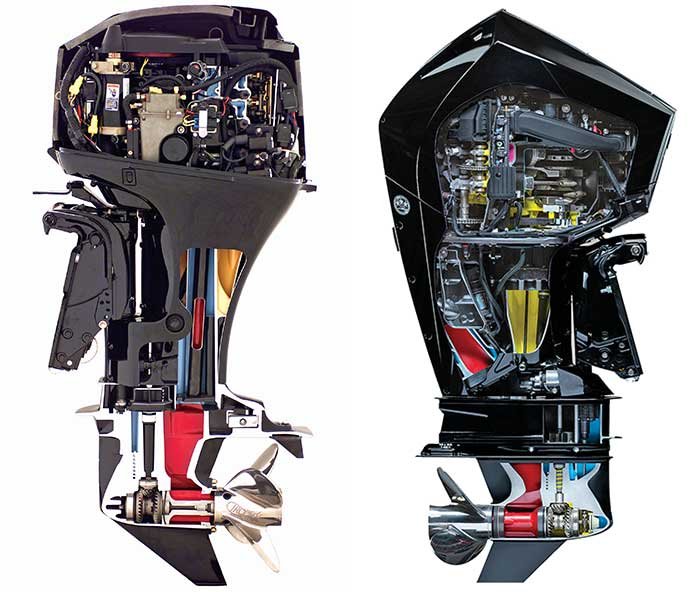
Mercury Command Thrust is a heavier-duty gearcase that Mercury fits to selected FourStroke outboards. It sits lower in the water and turns a bigger propeller than the standard gearcase. Mercury says that lifts heavy boats onto the plane more easily, holds them there at lower speeds and improves control. On the 40 to 60 HP range, Mercury lists gear shafts up to 33% larger and a prop with 20% more blade area. It’s built for pontoons, workboats, heavy aluminium boats, sailboats and trolling kickers.
We sell 11 new Mercury Command Thrust outboards, from the 9.9 HP to the 50 HP, priced from $3,030 to $7,605, and ship them worldwide with free delivery. This guide explains what Command Thrust actually does, when it’s worth choosing, which models we stock, and how it compares with Yamaha High Thrust and Honda Power Thrust. Jump to the price list.
Table of Contents
Table of Contents

What Is Mercury Command Thrust?
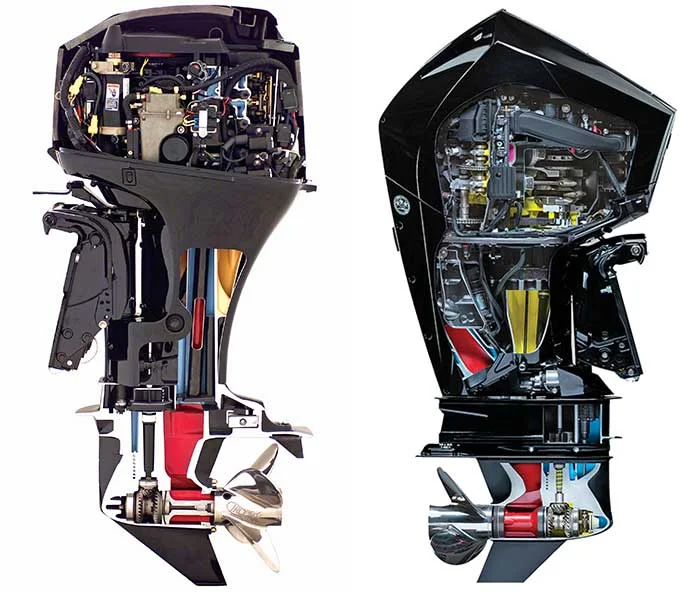
Every outboard turns its propeller through a gearcase at the bottom of the engine. A standard gearcase is designed for a good balance of speed and efficiency on typical boats. A Command Thrust gearcase is built for boats that are heavy for their power.
Mercury describes it in a few ways:
- It’s a “taller, heavier-duty gearcase” with gear shafts “up to 33% larger” than standard, paired with a propeller that has “20% more surface area” (Mercury Marine: 40–60hp FourStroke).
- It “swings a bigger prop deeper in the water” for better thrust and control on heavier boats (Mercury Marine: FourStroke 9.9–60hp Command Thrust).
- Its gearcase is designed to “sit lower in the water and turn larger props”, lifting heavy boats onto the plane more easily and holding them at lower speeds (Mercury Marine: SeaPro 40–60hp).
In plain terms: a bigger, slower-turning prop takes a larger “bite” of water. That gives more push at low and mid speeds, which is what heavy boats need.
How Command Thrust Changes the Gearing
Command Thrust gearcases usually use a lower gear ratio (a higher number) than standard. Trade-a-Boat reported a 2.38:1 ratio for the Command Thrust option on Mercury’s FourStroke 90 and 115, against 2.07:1 for the standard gearcase (Trade-a-Boat: Mercury Command Thrust gearcase). Ratios differ across horsepower ratings, but the idea is the same: more reduction means the prop turns more slowly with more torque, which suits a bigger prop.
Trade-a-Boat’s reviewer found the Command Thrust 115 planed faster than the standard engine on the same model of boat and praised its “extra bite and manoeuvrability”, while noting it would suit heavier hulls. That review covered larger engines than most we stock, but the principle carries across. Our outboard gear ratio guide explains gearing in more detail.
When Is Mercury Command Thrust Worth It?
Choose Command Thrust if your boat is:
- A pontoon. Two or three tubes push a lot of water and carry a lot of weight.
- A workboat or commercial boat that carries heavy loads.
- A heavy aluminium or fibreglass fishing boat that struggles to plane with a full load.
- A sailboat needing thrust at displacement speeds.
- A big boat needing a trolling kicker. Mercury’s ProKickers all use Command Thrust.
Stick with a standard gearcase if your boat is light, planes easily and you care most about top speed. Mercury says its SeaPro Command Thrust gearcase helps heavy boats plane without affecting top speed, but on a light runabout or RIB you’d be paying in weight for thrust you don’t need.
Every Mercury Command Thrust Outboard We Sell
All 11 are new engines. Prices are as listed in our store when this guide was written, so check each product page for the latest price, stock and model year.
| Model | HP | Start | Steering | Shaft | Price |
|---|---|---|---|---|---|
| 9.9MLH-CT | 9.9 | Manual | Tiller | 20 in | $3,030 |
| 9.9MXLH-CT | 9.9 | Manual | Tiller | 25 in | $3,115 |
| 9.9ELH-CT | 9.9 | Electric | Tiller | 20 in | $3,300 |
| 9.9EXLH-CT | 9.9 | Electric | Tiller | 25 in | $3,390 |
| 9.9ELHPT-CT-PK (ProKicker) | 9.9 | Electric | Tiller | 20 in | $3,665 |
| 9.9EXLHPT-CT-PK (ProKicker) | 9.9 | Electric | Tiller | 25 in | $3,745 |
| 15ELHPT-CT-PK (ProKicker) | 15 | Electric | Tiller | 20 in | $4,070 |
| 15EXLHPT-CT-PK (ProKicker) | 15 | Electric | Tiller | 25 in | $4,190 |
| 50ELPT Command Thrust | 50 | Electric | Remote | 20 in | $7,220 |
| 40ELHPT Command Thrust SeaPro | 40 | Electric | Tiller | 20 in | $7,265 |
| 50ELHPT Command Thrust | 50 | Electric | Tiller | 20 in | $7,605 |
Our product pages note that the powerhead on the non-ProKicker 9.9 CT models varies by version, and that the 40 SeaPro may use either a 747 cc three-cylinder or a 995 cc four-cylinder. Ask us to confirm the engine of any unit before you order.
Mercury Command Thrust by Size
9.9 HP Command Thrust
The smallest Mercury Command Thrust engines suit sailboats, small heavy workboats, heavy jon boats and kickers. The manual 9.9MLH-CT and 9.9MXLH-CT are the simplest. The electric 9.9ELH-CT and 9.9EXLH-CT add push-button starting. On a sailboat, the 25-inch versions keep the bigger prop in the water when the stern lifts. See our Mercury 9.9 hp outboard guide.
9.9 and 15 HP ProKicker
ProKickers combine Command Thrust with a high-thrust four-blade prop and power tilt, for trolling beside a bigger main engine. Mercury describes the 15 ProKicker as built for “precise low-speed trolling presentations”. Our Mercury ProKicker guide covers them in depth.
40 HP Command Thrust SeaPro
The 40ELHPT Command Thrust SeaPro is a tiller engine for heavy workboats and fishing boats. Mercury says its SeaPro gearcase is “commercially validated” and built to “make easy work of moving heavy loads”. See our Mercury 40 hp outboard guide.
50 HP Command Thrust
The 50ELPT Command Thrust (remote) and 50ELHPT Command Thrust (tiller) are the pontoon and workboat engines in our range. Mercury lists 121 kg for the Command Thrust 50, against 114 kg for the lightest standard 50. See our Mercury 50 hp outboard guide.
Command Thrust vs Standard: Price and Weight
| Comparison | Standard | Command Thrust |
|---|---|---|
| 9.9 HP electric tiller, 20 in | 9.9ELH $3,230 | 9.9ELH-CT $3,300 |
| 9.9 HP manual tiller, 20 in | 9.9MLH $2,885 | 9.9MLH-CT $3,030 |
| 50 HP remote power trim | 50ELPT $7,405 | 50ELPT CT $7,220 |
| 50 HP tiller power trim | 50ELHPT $7,600 | 50ELHPT CT $7,605 |
On our prices, Command Thrust adds very little, or nothing at all: $70 to $145 on the 9.9s, $5 on the 50 tiller, and the 50 remote CT is currently cheaper than the standard version. That price gap may change, so check the product pages.
Weight is the bigger trade-off. Mercury’s table shows the Command Thrust 50 about 7 kg heavier than the lightest standard 50. On a pontoon or workboat that hardly matters. On a light boat it’s extra weight at the stern for thrust you may not need.
Mercury Command Thrust vs Yamaha High Thrust and Honda Power Thrust
Yamaha and Honda make their own heavy-duty, big-prop versions. Here’s how they compare on our prices:
| Size | Mercury Command Thrust | Yamaha High Thrust | Honda Power Thrust |
|---|---|---|---|
| 9.9 class | 9.9ELH-CT $3,300 | T9.9LPHB $3,605 | BFP10D3LHT $3,385 |
| 15 class | 15ELHPT-CT-PK $4,070 | — | BFP15D3XHT $3,880 |
| 25 class | — | T25XWTC2 $4,465 | — |
| 50 class | 50ELPT CT $7,220 | T50LB $7,800 | — |
| 60 class | — | T60LB $9,000 | BFP60A1LRT $7,285 |
On our prices, the Mercury Command Thrust 50 is cheaper than Yamaha’s T50, and the 9.9 CT costs less than both the Yamaha T9.9 and Honda’s 9.9 Power Thrust. Engines aren’t identical across brands, so compare shaft lengths, start type and features, not just price.
For more on the alternatives, read our Yamaha High Thrust explained and Yamaha High Thrust for heavy-duty performance guides, plus Yamaha vs Mercury and Honda vs Mercury.

Mercury Command Thrust on a Pontoon
Pontoons are the boats Command Thrust suits best. The tubes push a lot of water, and a deck full of people adds a lot of weight. A bigger prop grips better and moves that weight more easily at the low and mid-range speeds pontoons usually run.
- Small pontoons: a 50 HP Mercury Command Thrust, such as the remote 50ELPT CT, is a sensible starting point if the pontoon is rated for it.
- Larger or heavily loaded pontoons: look at 60 HP and above.
- Always check the capacity plate for maximum horsepower (Discover Boating on capacity plates).
Our outboard motors for pontoons guide covers sizing, and we have brand-specific guides on Yamaha pontoon outboards, the best Yamaha outboard for pontoons and Suzuki outboards for pontoons.
Mercury Command Thrust on a Sailboat
Sailboats are heavy for their size and run at displacement speeds, so speed doesn’t matter. Thrust does. A 9.9 Command Thrust on a 25-inch shaft, such as the 9.9EXLH-CT, pushes a mid-size sailboat into wind and waves better than a standard prop sized for planing boats. The longer shaft keeps the bigger prop in the water when the stern lifts. See our outboards for sailboats guide.
How a Bigger Prop Makes More Thrust
It helps to understand why a Mercury Command Thrust gearcase works. A propeller pushes the boat by throwing water backwards. There are two ways to throw more water: spin a small prop faster, or spin a bigger prop slower.
A small, fast prop suits light boats that want speed. On a heavy boat, though, a small prop can slip. It spins quickly but doesn’t grip enough water to move the weight, especially when getting on the plane. A bigger prop turning more slowly grips more water with each turn. That’s more push at low and mid speeds, which is when a heavy boat needs it most.
To turn a bigger prop, the gearcase needs more reduction and stronger parts. That’s what Command Thrust provides: a taller, heavier-duty gearcase with larger gear shafts, built to swing a prop with more blade area. Mercury puts the extra blade area at 20% on the 40–60 range.
Who Should Buy a Mercury Command Thrust Outboard?
Pontoon owners
The most common buyer. Pontoons are heavy, push a lot of water and often carry a lot of people. A Mercury Command Thrust engine helps them get moving and hold speed.
Workboat and commercial operators
Fishing skiffs, ferries, survey boats and utility boats carry heavy loads every day. Mercury says its SeaPro gearcase is commercially validated for this kind of work.
Sailors
Mid-size sailboats need thrust at displacement speeds. A 9.9 Command Thrust on a long shaft gives better push than a standard 9.9 propped for planing boats.
Anglers who troll
Kickers spend their lives pushing heavy boats slowly, which is exactly what Command Thrust is for. That’s why every Mercury ProKicker uses it.
Owners of heavy fishing boats
Deep-V aluminium and fibreglass boats loaded with fuel, gear and people can struggle to plane on a standard gearcase. Command Thrust helps.

Tiller or Remote?
Tiller Mercury Command Thrust engines suit workboats and fishing boats where the operator sits or stands at the stern. All our 9.9 and 15 CT models are tillers, as are the 40 SeaPro and the 50ELHPT CT.
Remote suits pontoons and console boats. In our range, that’s the 50ELPT Command Thrust. Budget for controls, cables and steering if your boat doesn’t already have them. See our hydraulic steering guide.
Manual or Electric Start?
On the 9.9 Command Thrust, you can choose. Manual start (the MLH-CT and MXLH-CT) saves about $270 on our prices and needs no battery. Electric start (the ELH-CT and EXLH-CT) is easier if you start the engine often or already carry a battery. All the ProKickers and the 40 and 50 Command Thrust engines are electric start. Our electric vs manual start guide compares the two.
Choosing the Right Shaft Length
A taller gearcase makes mounting height and shaft length more important. Measure from the top of the transom (or bracket) to the bottom of the hull.
- 20 inches suits most pontoons, aluminium boats and transom-mounted kickers.
- 25 inches suits sailboats, bigger fibreglass boats and kicker brackets.
Our long shaft vs short shaft guide explains how to measure.
How to Read a Mercury Command Thrust Listing
- “CT” or “Command Thrust” in the name means the heavy-duty gearcase.
- “CT-PK” means a ProKicker, which adds the thrust prop, power tilt and kicker straps.
- “SeaPro” is Mercury’s line aimed at heavy and commercial use.
- Powerhead. Our 9.9 CT listings note that the powerhead varies by version, and the 40 SeaPro may be a three or four-cylinder engine. Confirm with us.
- Weight. Command Thrust adds a few kilograms over standard.
If anything on a Mercury Command Thrust listing isn’t clear, ask us before you order.

New or Used Command Thrust?
Used Command Thrust engines often come off pontoons and workboats, which means they may have worked hard. Check the hours, service records and compression, and look at the gear oil for water or metal. Check the prop for damage, and confirm it’s the right prop for the gearcase. Our used Mercury guide, compression test guide and used outboard engines page help. A new Mercury Command Thrust engine gives you a factory warranty and no unknown history.
Questions to Ask Before Buying
- Is my boat heavy enough to benefit?
- Which prop does the engine come with, and which suits my boat?
- Which powerhead does this unit use?
- Tiller or remote, and do I need controls?
- What warranty applies in my country? See our warranty guide.
We’re happy to answer any of these before you order a Mercury Command Thrust outboard.
Standard vs Command Thrust at a Glance
| Feature | Standard gearcase | Mercury Command Thrust |
|---|---|---|
| Best for | Light boats that plane easily | Pontoons, workboats, sailboats, heavy loads, kickers |
| Prop size | Standard | Larger, more blade area |
| Gearcase | Standard | Taller, heavier-duty, sits lower |
| Gear reduction | Less | More (e.g. 2.38:1 vs 2.07:1 on the FourStroke 90/115, per Trade-a-Boat) |
| Weight | Lighter | A few kg heavier (121 vs 114 kg on the 50, per Mercury) |
| Price in our store | Similar | Similar, sometimes lower |
Common Misunderstandings About Command Thrust
- “It adds horsepower.” No. A Mercury Command Thrust engine has the same horsepower rating as the standard version. It changes how that power reaches the water.
- “It’s only for commercial boats.” No. Pontoons, sailboats and family fishing boats benefit too.
- “It always makes a boat slower.” Mercury says its SeaPro Command Thrust gearcase helps heavy boats plane without affecting top speed. On light boats, a standard gearcase is usually the better match anyway.
- “Any prop will do.” No. Command Thrust is designed for larger props. Use one made for the gearcase.
- “It’s much more expensive.” Not in our store at the moment. The price difference is small or zero.
Setting Up a Pontoon With Command Thrust
- Check the pontoon’s maximum horsepower on the capacity plate.
- Confirm transom height on the motor pod. Most pontoons take a 20-inch shaft.
- Plan the rigging: controls, cables, steering, gauges and battery.
- Choose a prop suited to your pontoon and typical load, with dealer advice.
- Set the mounting height and water-test with a normal load.
- Check full-throttle rpm is within the range in the owner’s manual, and adjust the prop if not.
Done properly, a Mercury Command Thrust engine is one of the simplest ways to make a heavy pontoon feel less sluggish.
Three Real Set-Ups for a Mercury Command Thrust Outboard
These are typical matches, not performance promises. Check your boat’s capacity plate first.
An 18-foot family pontoon on a lake
Six to eight people, a cooler and slow cruising. The remote 50ELPT Command Thrust gives power trim and the bigger prop. If you often run a full deck or tow a tube, consider more power.
A 5-metre aluminium workboat
Heavy gear, frequent stops and a tiller. The 40ELHPT Command Thrust SeaPro or the 50ELHPT Command Thrust suit the job, depending on the boat’s rating.
A 26-foot sailboat on a bracket
Motoring into wind and tide in and out of harbour. The 9.9EXLH-CT on a 25-inch shaft gives electric start and the thrust prop. The manual 9.9MXLH-CT saves money if you don’t need electric start.

Mercury Command Thrust for Workboats: The SeaPro Angle
Our 40 HP Command Thrust is a SeaPro, Mercury’s line for hard-working boats. On its SeaPro 40–60 page, Mercury lists several features aimed at owners who run their engines every day:
- A no-spill oil change system, an easy-access fuel filter and colour-coded maintenance points.
- An optional tiller that can be reversed for left or right-handed use and adjusted for angle.
- SmartCraft features such as Troll Control and Active Trim.
- Optimisation for 87 octane fuel.
- Corrosion resistance from proprietary alloys, durable coatings and a freshwater flush system.
Mercury doesn’t tie every one of these to every SeaPro model, so confirm the exact features of the unit you’re buying. For a working boat, the combination of a Mercury Command Thrust gearcase and simple servicing is a strong reason to look at the 40ELHPT Command Thrust SeaPro.
Mercury Command Thrust on Heavy Fishing Boats
A lot of fishing boats end up heavier than their builders planned: extra batteries, livewells, a kicker, fuel and three or four anglers. On a standard gearcase, that weight can mean a slow, nose-high climb onto the plane.
Trade-a-Boat’s reviewer found that Mercury’s Command Thrust 115 planed faster than the standard engine on the same model of boat. That was a bigger engine than most we stock, but the principle holds at 40 and 50 HP too. If your boat is regularly loaded heavily, a Mercury Command Thrust engine can make it easier to get up and running. See our outboard motors for fishing guide.
Fuel Use on Heavy Boats
We can’t quote fuel figures for Command Thrust versus standard, because Mercury doesn’t publish them in a form we can cite. The general principle is worth knowing, though: a heavy boat that struggles to plane, or runs nose-high just below planing speed, wastes fuel. Anything that helps it plane cleanly and cruise efficiently is likely to help. Correct propping and loading matter as much as the gearcase. Our fuel-efficient outboard motors guide has practical tips.

Using a Mercury Command Thrust Engine as a Kicker
A kicker spends hours pushing a big boat at walking pace. That’s the job a Command Thrust gearcase is built for. You have two routes in our range:
- ProKicker: Command Thrust plus a high-thrust four-blade prop, power tilt and kicker straps. Choose the 9.9 or 15 ProKicker.
- Standard 9.9 CT: Command Thrust with manual tilt, for about $355 to $635 less than a 9.9 ProKicker on our prices. Fine if you can easily reach the kicker to tilt it.
Our kicker motor guide and best outboard motors for trolling guide cover setting up a kicker.
More Guides for Heavy-Boat Owners
- Sizing: selecting the correct horsepower and choosing the right outboard.
- Trim and handling: power trim and tilt and using trim and tilt.
- Other Mercury guides: Mercury 60hp, Mercury 115hp and Mercury 15.
- Brands: Mercury vs Suzuki and best outboard motor brands.
- Salt water: best outboards for saltwater use.
Where Command Thrust Sits in Mercury’s Range
Mercury offers Command Thrust across a wide spread of its FourStroke engines. Its own product family page covers the 9.9 to 60 HP Command Thrust models, and Trade-a-Boat reported Command Thrust as an option on the FourStroke 90 and 115. Our store currently stocks Mercury Command Thrust engines from 9.9 to 50 HP. If you need a bigger Command Thrust engine, contact us and we’ll check what we can supply.
Command Thrust and Shallow Water
A taller gearcase sits deeper in the water, so a Mercury Command Thrust engine draws a little more than the standard version. On most pontoons and workboats that makes no practical difference. If you regularly run in very shallow water, use power tilt or trim to lift the engine when the bottom comes up, or consider a jet for rocky rivers. Our Mercury jet outboard guide explains when a jet makes more sense.
Spares to Carry on a Working Boat
- A spare propeller sized for the Command Thrust gearcase, plus the nut and hardware
- Spare spark plugs and a kill-switch lanyard
- A spare fuel filter
- Basic tools to clear fishing line or rope from the prop shaft
- Gear oil for top-ups
On a workboat, a spare prop matters more with Command Thrust because the larger props it uses may not be stocked everywhere, especially in remote areas.
Propping a Command Thrust Engine
A Command Thrust gearcase is designed for a larger-diameter prop. Fitting the right one is what makes it work. With your normal load aboard, the engine should still reach its rated full-throttle rpm range, as listed in the owner’s manual.
- Revs too low at full throttle: too much pitch, or too much load. Drop the pitch.
- Revs too high: too little pitch. Go up a size.
- Pontoons: props designed for pontoons and heavy boats are available. A dealer can advise on the right one.
Don’t fit a standard gearcase’s prop to a Command Thrust engine, or the other way around. They’re sized for different gearcases. Our propeller guide covers the basics.
Mounting Height
Because a Command Thrust gearcase is taller and sits lower, mounting height needs attention. Start with the anti-ventilation plate roughly level with the bottom of the hull, then adjust after a water test. On pontoons, follow the boat builder’s guidance. Our cavitation plate guide and installation guide explain the process.
Maintenance
A Mercury Command Thrust gearcase needs the same care as a standard one, and it’s worth being thorough on heavily loaded boats:
- Gearcase oil changes on schedule, checked for water or metal. See our lower unit oil guide.
- Prop inspection for damage and fishing line around the shaft.
- Water pump impeller on schedule.
- Anodes, especially in salt water.
- Freshwater flush after saltwater trips. Mercury mentions a freshwater flush system on its SeaPro 40–60.
Our maintenance checklist, winterizing guide, break-in guide and troubleshooting guide cover the rest.
When Command Thrust Isn’t the Right Choice
- Light runabouts and RIBs that plane easily. A standard gearcase is usually the better match.
- Very shallow water. A taller gearcase sits deeper. For rocky or very shallow rivers, look at our Mercury jet outboard guide.
- Portable tenders. A small single-cylinder engine is lighter. See our Mercury portable outboard guide.
- Fast bass boats. They need a different kind of gearcase. See our Mercury Pro XS guide.
Common Mistakes
- Using the wrong prop for the gearcase.
- Mounting the engine too low, adding drag.
- Choosing standard on a heavy pontoon to save a little money.
- Choosing Command Thrust on a light boat and adding weight for no gain.
- Not confirming the powerhead on 9.9 CT or 40 SeaPro listings.
Mercury Command Thrust Pros and Cons
What’s good:
- A bigger prop that grips better on heavy boats.
- Heavier-duty gearcase, with gear shafts up to 33% larger on the 40–60 range per Mercury.
- Easier planing and better control at low speeds with a load.
- Little or no price premium on our current prices.
- Available from 9.9 to 50 HP in our range, including ProKickers.
What to weigh up:
- A few kilos heavier than the standard version.
- Sits deeper, which matters in very shallow water.
- Of little benefit on light boats.
A Simple Buying Walkthrough
- Is your boat heavy for its power? Pontoon, workboat, sailboat or loaded fishing boat: Command Thrust.
- Read the capacity plate for maximum horsepower and weight.
- Choose the horsepower: 9.9, 15 (ProKicker), 40 or 50.
- Choose tiller or remote, manual or electric start.
- Measure the transom for 20 or 25 inches.
- Order or ask us. Send us your boat’s make, length, type and typical load.
Before You Order: A Quick Checklist
- Boat type and typical load
- Maximum horsepower and engine weight
- Transom height
- Tiller or remote
- Main engine or kicker
- Prop for a Command Thrust gearcase
Safety and the Rules That Apply
Your boat’s capacity plate sets the maximum horsepower, people and weight. Heavy loads are exactly when it matters most. Wear lifejackets and the kill-switch lanyard. Licence and registration rules vary between countries and waters, so check local requirements.
When Your Engine Arrives
- Inspect the packaging before you sign, and note any damage on the delivery paperwork.
- Check the model code includes CT (Command Thrust).
- Look the engine and gearcase over for damage.
- Keep the packaging until everything checks out, in case you need our refund and returns policy.
- Record the serial number for warranty and servicing.
- Read the break-in section of the manual before first start.
Buying a Mercury Command Thrust Outboard From Us
Every Mercury Command Thrust engine on this page is new and for sale in our store. Our shipping policy says orders normally ship within 1 to 6 business days with free delivery. You’ll get a tracking email when your engine leaves, and you can follow it on our order tracking page. Import duties and taxes depend on your country, so check with your customs office before ordering.
Helpful reading:
- Outboard motors worldwide shipping
- Cost of shipping an outboard motor internationally
- Outboard motors with warranty
- How to spot genuine Mercury engines
- Our guide to buying Mercury outboards
- Can you finance an outboard motor?
Need help choosing? Contact us. You can also browse the Mercury 9.9 HP, Mercury 40 HP and Mercury 50 HP categories, all Mercury outboard motors or the full shop.
Mercury Command Thrust FAQ
What is Mercury Command Thrust?
A taller, heavier-duty gearcase that turns a bigger propeller, built for heavy boats such as pontoons and workboats.
What does CT mean on a Mercury outboard?
CT stands for Command Thrust in Mercury model codes, for example 9.9ELH-CT.
Is Command Thrust good for pontoons?
Yes. Pontoons are among the boats it’s designed for, because they’re heavy and push a lot of water.
Is Command Thrust slower than standard?
Mercury says its SeaPro Command Thrust gearcase helps heavy boats plane without affecting top speed. On light boats, a standard gearcase is usually the better match.
How much heavier is Command Thrust?
Mercury lists 121 kg for the Command Thrust 50, against 114 kg for the lightest standard 50.
What gear ratio does Command Thrust use?
It varies by model. Trade-a-Boat reported 2.38:1 for the Command Thrust FourStroke 90 and 115, against 2.07:1 standard.
Is a ProKicker a Command Thrust engine?
Yes. Our ProKickers use the Command Thrust gearcase, plus a high-thrust four-blade prop and power tilt.
Does Command Thrust cost more?
On our current prices, very little or nothing. Check the product pages for the latest prices.
Can I use a Mercury Command Thrust engine in salt water?
Yes. Flush it with fresh water after each trip and check the anodes.
Do you ship Mercury Command Thrust outboards worldwide?
Yes. We ship worldwide with free delivery, and orders normally ship within 1 to 6 business days.
Which Mercury Command Thrust outboard is best for a sailboat?
A 9.9 Command Thrust on a 25-inch shaft, such as the 9.9EXLH-CT, suits most mid-size sailboats. Check your bracket height and the boat’s rating.
Is Mercury Command Thrust the same as Yamaha High Thrust?
They’re different brands’ answers to the same need: a heavier-duty gearcase and bigger prop for heavy boats. Compare the specific engines rather than assuming they’re identical.
Can I add Command Thrust to my existing engine?
Converting a gearcase is a job for a Mercury dealer, and it isn’t possible or cost-effective on every engine. Buying a Command Thrust model is usually simpler.
Does a Mercury Command Thrust engine have more horsepower?
No. It has the same rating as the standard version. The difference is the gearcase and prop.
What size Mercury Command Thrust engine does a pontoon need?
It depends on the pontoon’s size, rating and load. In our range, the 50 HP Command Thrust suits smaller pontoons. Larger or heavily loaded pontoons usually need 60 HP or more.
Sources and References
Posts Widget
-
1
-
2
-
3

-
4


S.H Continental Marine
USA HERALD MAGAZINE INC
Our team is dedicated to providing exceptional customer service.
Email: info@shcontinentalmarine.com
Choose S.H Continental Marine
for your outboard engine needs and enjoy superior quality, exceptional customer service, and unbeatable prices.