
Mercury 30 HP Outboard: 6 Best EFI Models for Sale (2026)

A Mercury 30 hp outboard is a three-cylinder, 500 cc EFI four-stroke that weighs about 151 to 154 lb dry for the 20-inch tiller. That’s light for a 30. It’s built for 14 to 16-foot aluminium boats, RIBs, skiffs and small console boats that need a bit more push than a 25. You can get it with tiller or remote steering, manual or electric start, and gas-assist tilt or power trim.
We stock six versions of the Mercury 30 hp outboard, from $5,300 to $6,100, and ship them worldwide. This guide covers the specs, how it stacks up against other 30s, which version fits which boat, and what to check before you buy. Jump to the full price list or browse the Mercury 30 HP category.
Table of Contents
Table of Contents

Why Choose a Mercury 30 HP Outboard?
Thirty horsepower is the size people step up to when a 25 feels a little short with a full load. A Mercury 30 hp outboard gives you that extra margin while staying light enough for small transoms.
Weight is the headline. Powerboat & RIB reported that the current Mercury 30 weighs 64 kg and called it the lightest 30 hp engine in production. The same report said the range is 16% lighter than Mercury’s previous 526 cc three-cylinder 25 and 30 HP models (Powerboat & RIB on Mercury’s lightweight 25 and 30hp outboards). For comparison, it listed Suzuki’s three-cylinder DF30 at 71 kg.
Mercury also says the 25 and 30 are “faster, lighter and quieter than previous generations” (Wired2Fish on the Mercury 25 and 30hp launch). That’s Mercury’s own claim, but the weight saving is real and easy to check on the spec sheet.
Other things you get with a current Mercury 30 hp outboard:
- SmartCraft on electric-start models. Powerboat & RIB reported that electric-start 25 and 30 HP models connect to SmartCraft gauges and the VesselView app for the first time.
- Troll Control. According to the same report, it adjusts trolling speed in 10 rpm steps, which is handy for slow fishing.
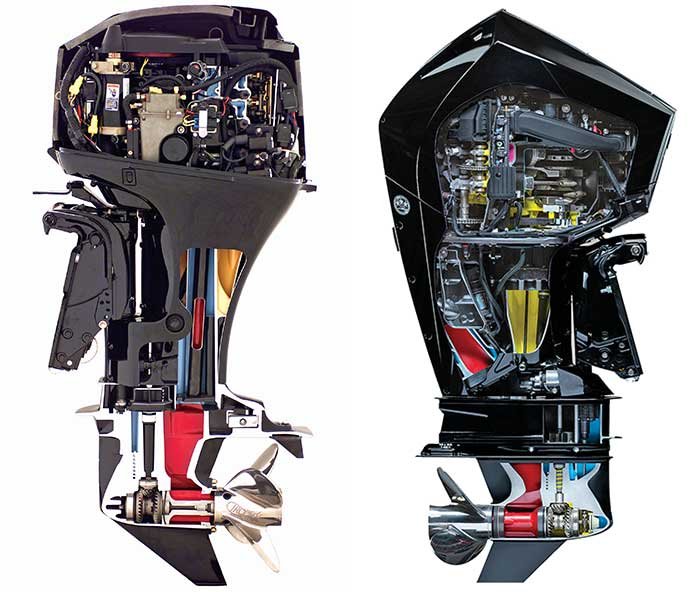
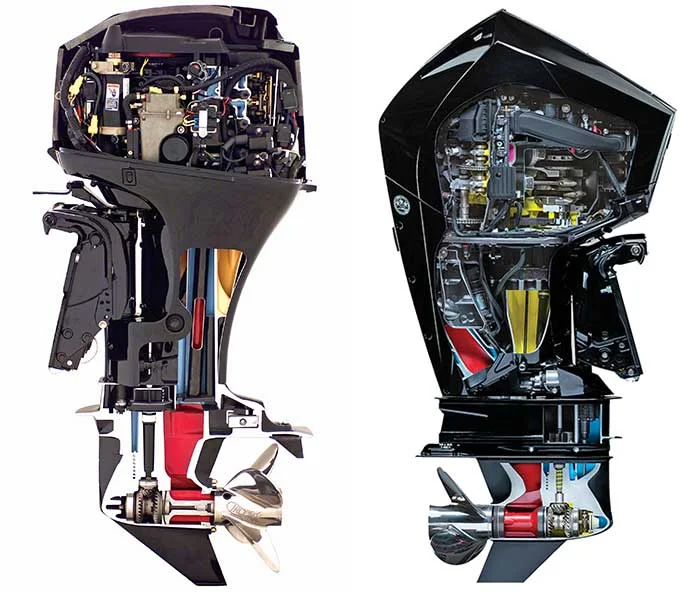
- Easier servicing. A drip tray under the oil filter catches spills, and the fuel filter can be drained without tools.
- Battery-free EFI on manual-start models. Mercury says manual-start engines run without a cranking battery (NauticExpo listing for the Mercury 25/30 EFI).
Mercury 30 HP Outboard Specifications
Here are the published specs for the current 500 cc Mercury 30 hp outboard.
| Specification | Mercury 30 EFI |
|---|---|
| Engine | 500 cc (30.5 cu in) inline 3, four-stroke, SOHC |
| Bore x stroke | 61 x 60 mm |
| Fuel system | EFI |
| Dry weight | 151–154 lb (20-inch tiller); 64 kg reported for the lightest 30 |
| Gear ratio | 2.17:1 |
| Full-throttle rpm | 5,800–6,200 |
| Alternator | 12 V, 17 A, 204 W |
| Starting | Manual or electric |
| Steering | Tiller or remote |
| Trim | Manual / gas assist, or power trim and tilt |
| Fuel tank supplied | 6.6 gal (25 L) external |
Sources: Defender: Mercury 30 HP tiller (2025) specifications, NauticExpo: Mercury 25/30 EFI and Powerboat & RIB.
Older Mercury 30s used a larger 526 cc three-cylinder engine, and some earlier ones were bigger still. Our product pages note that displacement depends on model year. If that matters for your boat, ask us to confirm the model year and engine of a particular unit before you order.
The Six Versions of the Mercury 30 HP Outboard
Manual-start tiller with gas-assist tilt
The simplest and cheapest Mercury 30 hp outboard. No battery, no starter motor and no power trim. A gas strut helps you tilt the engine up by hand. Pick the 15-inch 30MHGA ($5,300) for RIBs and boats with a short transom, or the 20-inch 30MLHGA ($5,350) for most aluminium boats.
Electric-start tiller with gas-assist tilt
The 30ELHGA ($5,700) adds turn-key starting and SmartCraft compatibility. You’ll need a battery, but the 17-amp alternator keeps it charged and runs a fish finder and lights.
Electric-start tiller with power trim
The 30ELHPT ($6,100) is the top tiller model. Power trim lets you raise the engine with a button for shallow water and beaching, and trim it while running for a better ride.

Remote control with gas-assist tilt
The 30ELGA ($5,700) is a remote Mercury 30 hp outboard for side-console boats. You steer with a wheel and use a throttle and shift lever. Tilting is by hand with gas assist.
Remote control with power trim
The 30ELPT ($6,100) is the remote model most people choose for a console boat. Power trim makes launching, beaching and trimming much easier from the helm.
How to Read Mercury 30 HP Outboard Model Codes
- M = manual start. E = electric start.
- No shaft letter = 15-inch shaft. L = 20-inch shaft.
- H = tiller handle. No H = remote control.
- GA = gas-assist tilt.
- PT = power trim and tilt.
So “30ELHPT” is electric start, 20-inch shaft, tiller, power trim. “30ELGA” is electric start, 20-inch shaft, remote, gas-assist tilt.
Every Mercury 30 HP Outboard We Sell
All six are new engines. Prices are as listed in our store at the time of writing. Check each product page for current stock and price.
| Model | Start | Steering | Tilt / trim | Shaft | Price |
|---|---|---|---|---|---|
| 30MHGA | Manual | Tiller | Gas assist | 15 in | $5,300 |
| 30MLHGA | Manual | Tiller | Gas assist | 20 in | $5,350 |
| 30ELHGA | Electric | Tiller | Gas assist | 20 in | $5,700 |
| 30ELGA | Electric | Remote | Gas assist | 20 in | $5,700 |
| 30ELHPT | Electric | Tiller | Power trim | 20 in | $6,100 |
| 30ELPT | Electric | Remote | Power trim | 20 in | $6,100 |
The price steps are simple. Electric start adds $350 over the 20-inch manual tiller. Power trim adds another $400 over gas-assist tilt. Tiller and remote versions cost the same, but remote models need controls, cables and steering if your boat doesn’t already have them.

Which Mercury 30 HP Outboard Fits Your Boat?
12 to 14-foot aluminium boats and jon boats
Check the capacity plate first. Many small boats are rated for 25 HP or less. If yours takes 30, the manual 30MLHGA keeps weight and cost down. Our guide to outboard motors for jon boats has more.
14 to 16-foot tiller fishing boats
This is where a Mercury 30 hp outboard makes the most sense. The 30ELHGA or 30ELHPT give you electric start for a fish finder battery and enough power to plane two people with gear. Powerboat & RIB noted Mercury pitches its FourStroke 25 and 30 at planing boats up to 16 feet. See our outboard motors for fishing guide.
Side-console boats
Go remote with the 30ELPT, or the 30ELGA if you’re happy to tilt by hand.
RIBs and inflatables
Light weight makes the Mercury 30 hp outboard a good RIB engine. Many RIBs need the 15-inch 30MHGA, so measure the transom. Also check the maximum engine weight on the plate. See our inflatable boat motors and outboard motors for dinghies guides.
Small pontoons
A 30 can push a small, lightly loaded pontoon, but it’ll work hard. For family pontoons, a Mercury 40 or 50 is usually a better match. Our pontoon outboard guide explains why.
Mercury 30 HP Outboard vs Yamaha, Suzuki, Tohatsu and Honda 30s
We sell 30 HP engines from all five brands. Here’s how our prices line up:
| Model | Our price | Notes |
|---|---|---|
| Mercury 30ELHGA | $5,700 | Tiller, electric start, 3-cyl 500 cc |
| Mercury 30ELPT | $6,100 | Remote, power trim |
| Yamaha F30LEHA | $5,225 | Tiller, electric start |
| Yamaha F30LA | $5,225 | 20 in |
| Suzuki DF30ATL5 | $5,090 | 20 in, remote |
| Suzuki DF30ATHL5 | $5,160 | 20 in, tiller |
| Tohatsu MFS30DS | $4,550 | 15 in |
| Tohatsu MFS30DEFL | $4,880 | 20 in, electric start |
| Honda BF30D3LRT | $4,900 | 20 in, remote |
On price, the Mercury 30 hp outboard sits at the top of the class. What it offers in return is the lowest weight. Powerboat & RIB listed the Mercury 30 at 64 kg against 71 kg for Suzuki’s DF30, and Yamaha uses a smaller two-cylinder design for its 25. You also get SmartCraft on electric-start models and the widest spread of tiller and remote versions in our 30 HP range.
If cost is the deciding factor, Tohatsu and Honda are hard to beat. In the end, buy the brand your local mechanic services. Read our Tohatsu 30hp guide, Yamaha 30hp guide and Honda 30 HP guide, plus Mercury vs Suzuki, Yamaha vs Mercury and Honda vs Mercury.
Mercury 25 vs 30 vs 40: Which Size?
| Engine | Electric tiller | Remote power trim | Weight guide |
|---|---|---|---|
| Mercury 25 | 25ELH $4,755 | — | Same 500 cc block, from about 132 lb |
| Mercury 30 | 30ELHGA $5,700 | 30ELPT $6,100 | About 151–154 lb (20 in tiller) |
| Mercury 40 | 40ELHGA $6,815 | 40ELPT $6,853 | Over 220 lb |
The 25 and 30 share the same 500 cc three-cylinder block, according to the NauticExpo listing. So a Mercury 30 hp outboard isn’t much heavier than a 25, but it gives you more top end. A 40 is a big jump in weight and price.
- Choose the 25 if your boat is rated for 25 or you want the lowest cost. See our Mercury 25 hp outboard guide or the 25ELHGA Jet for shallow rivers.
- Choose the 30 if the boat is rated for 30 or more and you often carry two or three people with gear.
- Choose the 40 for 16 to 18-foot boats, heavier loads or small pontoons. Read our Mercury 40 hp outboard guide.
Never go over the maximum horsepower on your capacity plate. Discover Boating explains that the plate sets the limits for horsepower, people and weight (Discover Boating on capacity plates). Our guide on how to select the correct horsepower helps with the rest.

Tiller or Remote?
Tiller is simpler and cheaper to fit. You steer from the back of the boat, there’s no console or cables, and the whole floor stays free for fishing. Most 14 to 16-foot open boats run a tiller Mercury 30 hp outboard.
Remote lets you drive from a console with a wheel. It’s drier and more comfortable on longer runs. The engine costs the same, but you’ll need a control box, cables, a key switch, a harness and steering if the boat doesn’t already have them.
If you’re replacing an old engine, match the existing set-up unless you want to change how you use the boat. Our how to choose the right outboard motor guide covers the decision in more depth.
Manual or Electric Start?
A three-cylinder 30 is easy enough to pull-start for most people, so a manual Mercury 30 hp outboard is a real option. It saves $350 and needs no battery, and Mercury says manual-start models run the EFI without a battery.
Electric start makes sense if you’ll run electronics, start the engine many times a day, or simply want turn-key starting. It’s also the only way to get SmartCraft data and power trim on this engine. Our electric start vs manual start guide compares the two.
Gas-Assist Tilt or Power Trim?
Gas-assist tilt uses a strut to help you lift the engine by hand. At around 150 lb, a Mercury 30 hp outboard is manageable this way, and you save $400.
Power trim moves the engine with a button, including while you’re under way. You can trim the bow up for speed in calm water and down for a softer ride in chop. It also makes launching and beaching much easier. Read our power trim and tilt guide and how to use trim and tilt.
Choosing the Right Shaft Length
Measure from the top of the transom straight down to the bottom of the hull. Around 15 inches calls for a short shaft (no letter). Around 20 inches calls for the L. Most aluminium fishing boats need 20 inches. Many RIBs and small tenders need 15.
The wrong shaft causes ventilation or extra drag, and you can’t fix it later without changing the engine. Our guides to long shaft vs short shaft and cavitation plate height show how to measure.
Three Real Set-Ups for a Mercury 30 HP Outboard
These are typical matches, not promises of performance. Check your own boat’s plate and transom.
A 14-foot open aluminium boat for one or two anglers
A 20-inch transom, a fish finder and a small battery. The 30ELHGA gives electric start and charging without the cost of power trim. Troll Control helps when you’re working a drift line.
A 4-metre RIB used as a tender
A 15-inch transom and a weight limit to respect. The manual 30MHGA keeps the weight down and needs no battery.
A 16-foot side-console boat for a small family
A wheel, a small windscreen and up to four people. The remote 30ELPT with power trim is the right fit, as long as the boat is rated for 30 HP. If you often carry four adults, look at a 40.
Fitting a Mercury 30 HP Outboard
A Mercury 30 hp outboard is light enough to fit with two people and a simple hoist, but it should still be bolted through the transom. A marine technician is the safe choice, especially for remote rigging. If you’re doing it yourself:
- Check the transom for soft spots or cracks.
- Set the height so the anti-ventilation plate sits roughly level with the bottom of the hull.
- Bolt it through with marine hardware and sealant.
- Rig the controls and steering on remote models.
- Connect fuel and battery, and check oil levels.
- Start it in neutral with the kill-switch lanyard attached and check for cooling water flow.
- Water-test and prop it to reach 5,800 to 6,200 rpm at full throttle with a normal load.
See our how to install an outboard motor guide for the details.
Propping a Mercury 30 HP Outboard
Defender lists a full-throttle range of 5,800 to 6,200 rpm and a 2.17:1 gear ratio. With your usual load aboard, the engine should land in that range.
- Below 5,800 rpm: too much pitch. Go down a size.
- Above 6,200 rpm: too little pitch. Go up a size.
- Slow to plane with a heavy load: try a lower pitch, or consider a 40.
Our propeller guide and gear ratio guide explain how pitch and ratio work together.
Break-In and Maintenance
Follow the owner’s manual schedule. The key jobs on a Mercury 30 hp outboard are:
- Break-in: vary the throttle and avoid long full-throttle runs at first. See our break-in guide.
- Engine oil and filter at Mercury’s intervals. The drip tray under the filter makes this cleaner.
- Gearcase oil, checked for water or metal. See our lower unit oil guide.
- Fuel filter draining, which needs no tools on this engine.
- Water pump impeller checks, especially if you beach in sand.
- Spark plugs and anodes as scheduled.
Our maintenance checklist, winterizing guide, compression test guide and troubleshooting guide cover the rest.
Saltwater or Freshwater Use
A Mercury 30 hp outboard works in both. In salt water, flush the engine with fresh water after every trip, rinse the outside, check the anodes often and tilt the engine up when moored. In fresh water, watch for sand and silt wearing the impeller. Our saltwater outboard guide has more tips.
Getting the Best Fuel Economy
- Cruise below full throttle. Fuel use rises sharply in the last part of the throttle range.
- Trim correctly once on the plane.
- Prop it right so it reaches its rated rpm.
- Keep the hull clean and spread the load evenly.
- Service on time. Old plugs and dirty filters waste fuel.
See our fuel-efficient outboard motors guide.
Mercury 30 HP Outboard Features Explained
Spec sheets list features in a line or two. Here’s what each one means once you’re on the water.
Electronic fuel injection (EFI)
Every current Mercury 30 hp outboard uses EFI instead of a carburettor. The engine’s computer meters fuel to suit conditions, so cold starts are easier and there’s no choke to fiddle with. EFI engines also tend to cope better with fuel that has sat for a while, though fresh, clean fuel is still the best habit. If you’ve owned an old carburetted outboard, easier starting is usually the first difference you notice.
SmartCraft and the VesselView app
Powerboat & RIB reported that electric-start 25 and 30 HP models can connect to Mercury’s SmartCraft system for the first time. In plain terms, the engine can send data such as rpm, engine hours and warnings to compatible gauges or to Mercury’s VesselView app. That helps with service timing and with spotting problems early. Ask us which parts you’d need, because the app link may need extra hardware.
Troll Control
Troll Control lets you set and fine-tune trolling speed in 10 rpm steps, according to the same report. For anglers working a lure at a steady speed, that’s far easier than nudging the throttle by hand. It’s one reason a Mercury 30 hp outboard suits small boats that troll as well as run.
Battery-free starting on manual models
Mercury says the manual-start models run their EFI without a battery. That matters on tenders and RIBs, where a battery adds weight and is one more thing that can go flat. Pull the cord and the engine powers its own fuel system.
Service-friendly design
The drip tray under the oil filter and the tool-free fuel filter drain sound like small details. They make routine servicing quicker and cleaner, which makes it more likely to get done on time. That’s good news for owners who do their own oil changes.
Charging output
Defender lists a 17-amp alternator on electric-start models. That’s enough to keep the starting battery topped up and to run a fish finder, navigation lights and a small bilge pump. If you plan to add a lot of electronics, talk to us about battery size.
Where a Mercury 30 HP Outboard Works Best
Lakes and reservoirs
On sheltered inland water, a Mercury 30 hp outboard gets a light aluminium boat on the plane quickly and keeps fuel use low at cruise. Most lake anglers choose a tiller with electric start, so they can run electronics and start the engine many times a day without effort.
Rivers
On rivers, current and shallow bars are the challenges. Power trim helps you lift the engine over shallows. If the water is regularly too shallow for a propeller, a jet is the better tool. We don’t list a 30 HP jet, but the 25ELHGA Jet ($6,340) and 35ELPT Jet ($7,500) cover that need. Jets give up some speed and efficiency compared with a prop engine.
Coastal bays and estuaries
Salt water is fine for a Mercury 30 hp outboard as long as you flush it after each trip and keep an eye on the anodes. A 20-inch shaft and power trim suit most small coastal boats. Keep to sheltered water: a 30 HP boat isn’t built for open-ocean conditions.
Tenders for bigger boats
Yacht and cruiser owners often want a tender that planes with two or three people. The light weight of the Mercury 30 makes it easier on davits and lifting gear than heavier 30s. The manual 15-inch 30MHGA is the usual pick here. Always check the davit’s load limit.
Work and hire boats
Small work boats and hire fleets need engines that start easily and are simple to service. EFI, the drainable fuel filter and the oil drip tray all help. Mercury also offers a SeaPro version of the 25 for commercial use, according to Powerboat & RIB. Ask us if you need a heavy-duty variant.
When Your Mercury 30 HP Outboard Arrives
A little care on delivery day saves trouble later.
- Inspect the packaging before you sign, and note any visible damage on the delivery paperwork.
- Check the model code on the engine and box against your order: shaft length, start type and trim.
- Look over the engine for scuffs, cracked covers or bent parts.
- Keep the packaging until you’ve checked everything, in case a return is needed under our refund and returns policy.
- Store the paperwork, including the serial number, for warranty and servicing.
- Read the owner’s manual before first start, especially the oil and break-in sections.
If anything doesn’t look right, contact us straight away with photos.
Trailering and Storing a Mercury 30 HP Outboard
When trailering, support the engine so the transom isn’t taking every bump. A transom saver or the engine’s own tilt support, used as the manual describes, does the job. Don’t trailer long distances with the engine fully down near the road.
For storage between trips, run the fuel system as the manual recommends, flush salt out, and leave the engine tilted down so water drains from the gearcase. For winter storage, fog the engine, change the gearcase oil and use a fuel stabiliser. Our winterizing guide walks through each step.
What Else to Budget For
- Remote rigging (30ELGA and 30ELPT): control box, cables, key switch, harness and gauges, unless your boat already has compatible Mercury controls.
- Steering for remote models. Cable steering is usually enough on a 30. See our hydraulic steering guide if you want a lighter feel.
- Battery and cables for electric-start models.
- A spare propeller.
- Fuel line and tank. Defender lists a 6.6-gallon (25 L) external tank with the tiller model, but check what comes with your unit.
- Installation and a water test.
Our hidden costs guide walks through all of these.
New or Used Mercury 30?
Used Mercury 30s are easy to find, but many are older carburetted models or two-strokes. Before you buy used:
- Confirm the year and engine type. Our 2-stroke vs 4-stroke guide explains the difference.
- Ask for service records.
- Run a compression test and check the gearcase oil.
- Look for corrosion, especially on saltwater engines.
A new Mercury 30 hp outboard gives you the current 500 cc EFI engine with no unknown history. If you’d still like to compare, see our used Mercury outboard guide and used outboard engines.
When a Mercury 30 HP Outboard Isn’t the Right Choice
- Your boat is rated under 30 HP. Look at the Mercury 20 or 25. Try the 20ELH ($4,060) or our Mercury 25 guide.
- You need to carry it by hand. At about 150 lb, it’s not a portable engine. See our portable outboard motors and lightweight outboard motors guides.
- You need a trolling motor for a bigger boat. A 9.9 kicker is a better fit. See our Mercury 9.9 hp outboard guide and kicker motor guide.
- You often carry heavy loads. Step up to a Mercury 40 or the 50ELPT.
- You want zero emissions. Look at our electric outboard motors guide.
Common Mistakes When Buying a Mercury 30 HP Outboard
- Not measuring the transom. The 15-inch 30MHGA is the only short-shaft model in our range.
- Ignoring the capacity plate. Some 14-foot boats are rated for only 25 HP.
- Forgetting remote rigging costs on the 30ELGA and 30ELPT.
- Buying manual start, then adding electronics. If you’ll run a fish finder, electric start is the easier route.
- Not confirming the model year. Displacement and weight vary between generations, so ask if it matters to you.
Mercury 30 HP Outboard Pros and Cons
What’s good:
- Light for its class. The reported 64 kg figure undercuts the Suzuki DF30 by several kilos.
- A smooth three-cylinder engine with EFI and easy starting.
- Six versions in our store, covering tiller, remote, manual, electric, gas-assist and power trim.
- SmartCraft data and Troll Control on electric-start models.
- Manual-start models need no battery to run.
- Simple routine servicing, with a drip tray and tool-free fuel filter drain.
- Mercury’s large dealer network makes parts and service easier to find in many countries.
What to weigh up:
- On our prices, it costs more than comparable Tohatsu, Honda and Suzuki 30s.
- Only one short-shaft model (the 30MHGA) in our range.
- Remote models add rigging costs if your boat isn’t already set up.
- Model years vary, so confirm the exact engine if displacement or weight matters to you.
A Simple Buying Walkthrough
If you’re unsure where to start, follow these steps in order:
- Read your capacity plate. Note the maximum horsepower and weight. If it says 30 HP or more, a Mercury 30 hp outboard is an option.
- Measure the transom. Around 15 inches means the 30MHGA. Around 20 inches opens up the other five models.
- Decide on steering. Open boat without a console: tiller. Console with a wheel: remote.
- Decide on starting. Want electronics or turn-key ease: electric. Want the lowest cost and weight: manual.
- Decide on trim. Beaching, shallow water or rough water: power trim. Light boat on calm water: gas assist is fine.
- Add up extras. Battery, controls, steering, prop and installation.
- Order or ask us. Pick the model from the Mercury 30 HP category, or send us your boat details for a recommendation.
Most buyers end up with one of three choices: the 30ELHPT for a tiller fishing boat, the 30ELPT for a console boat, or the 30MHGA for a RIB or tender.
Before You Order: A Quick Checklist
- Maximum horsepower and engine weight on the capacity plate
- Transom height: 15 or 20 inches
- Tiller or remote steering
- Manual or electric start
- Gas-assist tilt or power trim
- Existing controls and gauges (remote models)
- Who will service it near you
Send us your answers and we’ll help you choose the right Mercury 30 hp outboard.

Mercury 30 HP Outboard Generations Explained
If you’re comparing a new engine with a used one, or matching parts, it helps to know that the Mercury 30 has changed over the years.
- Older two-strokes. Mercury built 30 HP two-stroke engines for many years. They’re light and simple, but they burn oil with the fuel. Our 2-stroke vs 4-stroke guide explains the trade-offs.
- Earlier four-strokes. Before the current engine, Mercury’s 25 and 30 FourStrokes used a 526 cc three-cylinder engine, according to Powerboat & RIB.
- Current 500 cc EFI. The latest Mercury 30 hp outboard uses a 500 cc three-cylinder engine. Powerboat & RIB reported that it is 16% lighter than the previous 526 cc models.
Because older and newer engines differ, parts such as props, covers and rigging parts aren’t always interchangeable. Give us the serial number of your old engine if you want to reuse parts.
Fuel, Oil and Everyday Running
A Mercury 30 hp outboard runs on regular unleaded petrol. The minimum octane and the maximum ethanol blend are listed in the owner’s manual, so check it for your model year. Use Mercury-approved four-stroke engine oil of the grade the manual specifies, and gear oil made for outboard gearcases.
A few everyday habits keep the engine happy:
- Let it idle for a short time after starting before you open the throttle.
- Check for a steady stream of cooling water from the tell-tale every time you start.
- Don’t run it out of water, even for a few seconds.
- Use a fuel/water separator if your fuel quality is uncertain.
- Keep a spare kill-switch lanyard, plugs and a prop nut aboard.
Safety and the Rules That Apply
Whatever engine you choose, the boat’s capacity plate sets the limits. It shows the maximum horsepower, people and total weight the boat is built to carry (Discover Boating). Going over it can make a boat unstable and may break local rules or void insurance.
Always wear the kill-switch lanyard when the engine is running. Rules on licences, registration and safety gear vary between countries and even between regions, so check what applies where you boat before your first trip.
Questions to Ask Before Buying Any 30 HP Outboard
- Who will service it? A nearby Mercury technician makes ownership far easier.
- What’s the warranty, and how do I claim it? Read our warranty guide.
- Is it new, and what model year? Ask for confirmation if the year matters to you.
- What comes in the box? Prop, fuel tank, controls and cables vary between models.
- How long will delivery take, and how will I track it?
- What import costs apply in my country? Check with your customs office.
We’re happy to answer any of these before you order a Mercury 30 hp outboard.
Buying a Mercury 30 HP Outboard From Us
Every Mercury 30 hp outboard on this page is new and listed for sale in our store. Our shipping policy says orders normally ship within 1 to 6 business days with free delivery. You’ll get a tracking email when your engine leaves, and you can follow it on our order tracking page. Import duties and taxes vary by country, so check with your local customs office before ordering.
Helpful reading before you buy:
- Outboard motors worldwide shipping
- Cost of shipping an outboard motor internationally
- Outboard motors with warranty
- Can you finance an outboard motor?
- How to spot genuine Mercury engines
- Our guide to buying Mercury outboards
Not sure which version suits you? Contact us with your boat’s make, length, transom height and horsepower rating. You can also browse the Mercury 30 HP range, all Mercury outboard motors or the full shop. Returns are covered by our refund and returns policy.
Mercury 30 HP Outboard FAQ
How much does a Mercury 30 hp outboard cost?
In our store, new prices run from $5,300 for the manual 30MHGA to $6,100 for the power-trim 30ELHPT and 30ELPT.
How much does a Mercury 30 hp outboard weigh?
Defender lists 151 to 154 lb dry for the 20-inch tiller. Powerboat & RIB reported 64 kg for the lightest current Mercury 30.
How many cylinders does it have?
The current model is a 500 cc inline three-cylinder four-stroke with EFI.
Is the Mercury 30 the same engine as the 25?
Both use the same 500 cc three-cylinder block. The 30 is tuned for more power.
What size boat suits a Mercury 30 hp outboard?
Usually 14 to 16-foot aluminium boats, RIBs and small side-console boats rated for 30 HP or more. Always check the capacity plate.
Does the manual-start model need a battery?
No. Mercury says the manual-start EFI models run without a battery.
What is the full-throttle rpm range?
5,800 to 6,200 rpm, according to Defender’s spec listing.
Is power trim worth $400 extra?
For most owners, yes. It improves the ride and makes launching and beaching easier. On a light tiller boat, gas-assist tilt is fine if you want to save money.
Can I use a Mercury 30 hp outboard in salt water?
Yes. Flush it with fresh water after each trip and check the anodes regularly.
Do you ship a Mercury 30 hp outboard worldwide?
Yes. We ship worldwide with free delivery, and orders normally ship within 1 to 6 business days.
Which Mercury 30 hp outboard is best for fishing?
For an open tiller boat, the 30ELHPT with power trim or the 30ELHGA if you want to save $400. For a console fishing boat, the 30ELPT.
Is there a Mercury 30 hp jet outboard?
We don’t list a 30 HP jet. For shallow rivers, look at the 25ELHGA Jet or the 35ELPT Jet in our Mercury range.
Can a Mercury 30 hp outboard push a pontoon?
Only a small, lightly loaded one. For most pontoons, a 40 or 50 HP is a better match.
Sources and References
Posts Widget
- 1

- 2

- 3

- 4


S.H Continental Marine
USA HERALD MAGAZINE INC
Our team is dedicated to providing exceptional customer service.
Email: info@shcontinentalmarine.com
Choose S.H Continental Marine
for your outboard engine needs and enjoy superior quality, exceptional customer service, and unbeatable prices.
