
Yamaha 30HP Outboard Motor: Full Specs, Prices & Worldwide Shipping

The Yamaha 30hp outboard motor sits at a genuinely useful crossroads in the lineup. It’s the smallest engine Yamaha builds with electronic fuel injection, which means you get car-like starting and a noticeably smoother throttle response than the carbureted engines just below it, but it’s still light and simple enough to bolt onto an aluminum jon boat or a small pontoon without needing a heavy-duty transom. We keep the Yamaha F30 in stock in both tiller and remote-control configurations, and this guide covers the real numbers behind the engine and which version actually fits your boat.
In this guide:
- What the Yamaha 30hp Outboard Motor Actually Is
- Full Specifications
- Tiller vs Remote: F30LEHA and F30LA
- Yamaha 30HP Units We Have In Stock
- What Boats This Engine Actually Fits
- Fuel Economy and Real-World Range
- How It Compares to Suzuki and Honda’s 30hp Class
- Maintenance You Can’t Skip
- Worldwide Shipping
- What Affects Pricing on a Yamaha 30hp Outboard
- Matching the 30hp to Your Boat
- What to Check Before Buying One Used
- FAQs
What the Yamaha 30hp Outboard Motor Actually Is
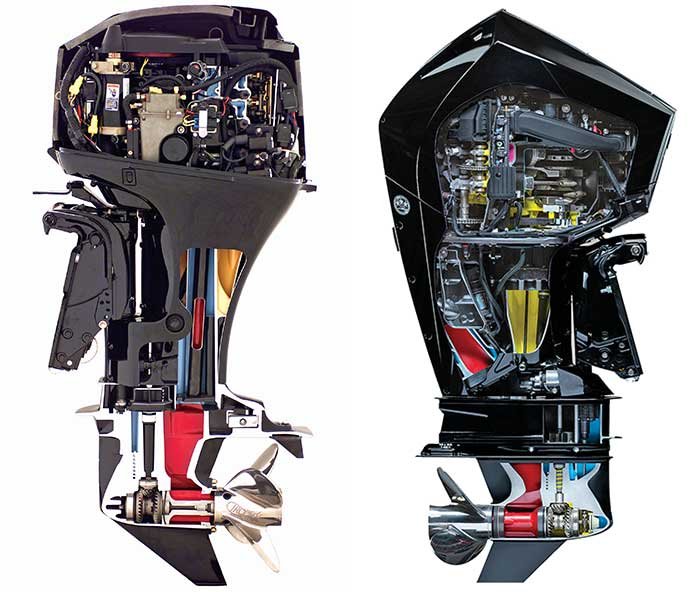
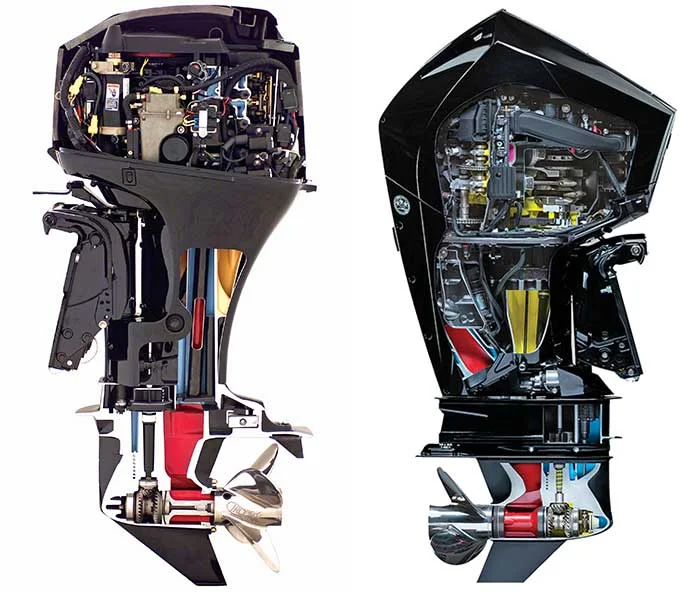
The Yamaha 30hp outboard motor is built around a 747cc, three-cylinder, SOHC four-stroke block with electronic fuel injection, sitting right at the bottom of Yamaha’s midrange family. That three-cylinder layout is the real story here, since it delivers a noticeably smoother idle and power delivery than the single and twin-cylinder engines further down the lineup, without the added weight and cost of a four-cylinder block.
Electronic fuel injection at this horsepower class is genuinely a bigger deal than it sounds. It means the Yamaha 30hp outboard motor starts reliably regardless of temperature, doesn’t need choking or priming, and holds a steadier idle than a carbureted engine of similar size. Yamaha calls their version of this feature PrimeStart, and in practice it just means turning the key and having the engine fire immediately, the same way you’d expect a car to start.
The engine also carries Yamaha’s Y-COP system as standard, a car-style remote immobilizer that prevents the engine from starting without the paired transmitter nearby, which is a genuinely useful anti-theft feature on an outboard that’s easy to physically remove from a transom if someone’s determined enough to try.
Full Specifications
Here’s the full spec sheet for the current Yamaha F30.
| Spec | Detail |
|---|---|
| Engine Type | Inline 3-cylinder, SOHC, 4-stroke |
| Displacement | 747 cc |
| Bore x Stroke | 65mm x 75mm |
| Prop Shaft Horsepower | 30hp @ 5,500 rpm |
| Full Throttle RPM Range | 5,000 – 6,000 rpm |
| Fuel Induction | Electronic Fuel Injection (EFI), 3 injectors |
| Gear Ratio | 2.00:1 |
| Alternator Output | 17 Amps |
| Ignition | CDI |
| Lubrication | Wet Sump |
| Starting System | Electric |
| Recommended Fuel | Regular unleaded, minimum 87 octane |
| Recommended Fuel Filtration | Yamaha 10-Micron Fuel/Water Separating Filter |
| Shaft Length | 20 inch (long) |
| Weight (Remote, F30LA) | 214 lbs |
| Weight (Tiller, F30LEHA) | 223 lbs |
| Degree of Tilt | 65° – 66° |
| Degree of Trim | -3° through +20° |
| Warranty | 3 years |
The 17 amp alternator is worth noting because it’s genuinely enough output to run basic electronics, a bilge pump, and small livewell aerators simultaneously, which matters for anyone rigging a fishing-focused aluminum boat around this engine rather than just powering it.
Tiller vs Remote: F30LEHA and F30LA
The F30LEHA is the tiller version, built for small boats where the operator sits at the back and steers directly with the engine’s own handle, common on jon boats and smaller aluminum fishing rigs. It carries a Variable Trolling RPM Switch option through Yamaha’s Multi-Function Tiller Handle, letting you fine-tune trolling speed in small 50-rpm increments, which serious anglers genuinely use and appreciate.
The F30LA is the remote mechanical version, designed for boats with a proper helm station and steering wheel, more common on small pontoons and center consoles built around a console rather than a simple bench seat. Both share the identical 747cc powerhead, so the choice comes down entirely to how your boat is rigged rather than any difference in performance.
Yamaha 30HP Units We Have In Stock
We currently carry the Yamaha 30 HP F30LEHA tiller version and the Yamaha 30 HP F30LA remote mechanical version, both on the standard 20 inch long shaft that covers the vast majority of boats in this class. Both units are run-tested and inspected before listing.
If your boat has a helm and wheel steering already installed, the F30LA is almost always the right call. If you’re rigging a simple tiller-steered jon boat or aluminum skiff, the F30LEHA is the one to order. Tell us your setup and we’ll confirm before you commit.
What Boats This Engine Actually Fits
Aluminum fishing boats and jon boats in the 14 to 16 foot range are the classic application for this engine, giving enough power to get up on plane quickly with two anglers and gear aboard without the weight of a larger midrange engine. Small skiffs and inflatables in a similar size range also run well on a 30hp, particularly for buyers who want EFI’s reliable starting without stepping up to a heavier four-cylinder engine.
Small pontoons in the 18 to 20 foot range occasionally spec a 30hp as an economical option for casual lake cruising where top speed matters less than steady, efficient power, though most pontoon buyers in that size range lean toward the T-series high-thrust engines in Yamaha’s lineup instead. Sailboats in the 26 to 30 foot range sometimes use a 30hp as auxiliary power on larger keelboats needing more push than the 9.9hp class delivers.
We also see this engine specced fairly often as a repower option on older aluminum boats originally rigged with a carbureted engine of similar output, since the weight and mounting bolt pattern typically transfer over with minimal rigging changes, while the jump to EFI starting and smoother running makes the swap feel like a bigger upgrade than the horsepower number alone suggests.
Fuel Economy and Real-World Range
The switch to electronic fuel injection at this horsepower class delivers a genuine, measurable fuel economy improvement over the carbureted engines below it in Yamaha’s lineup, since EFI meters fuel far more precisely across the rpm range than a carburetor can. Owners running this engine on a 15 to 16 foot aluminum boat typically report cruise burns in the 2 to 3 gallon per hour range at a comfortable mid-range throttle, stretching a modest fuel tank considerably further than you’d expect from 30 horsepower.
The recommended 10-micron fuel/water separating filter is worth actually installing rather than skipping, particularly if you’re running this engine in a market where fuel quality is inconsistent, since EFI injectors are less forgiving of contaminated fuel than a simple carburetor jet.
How It Compares to Suzuki and Honda’s 30hp Class
Suzuki’s DF30A and Honda’s BF30 are the direct competitors buyers cross-shop against the Yamaha 30hp outboard motor, and all three run EFI at this displacement now, so the gap that used to separate carbureted and injected engines in this class has mostly closed. Where Yamaha still holds an edge is the Y-COP immobilizer system, which neither Suzuki nor Honda offers standard at this power level, and the Variable Trolling RPM Switch option on the tiller version, which serious trollers specifically request.
Suzuki’s DF30A runs a four-cylinder layout rather than Yamaha’s three, which some owners find marginally smoother but which also adds a bit of weight and complexity for a modest displacement gain. Honda’s BF30 leans on its long-standing reputation for exceptionally quiet, refined running, which is a genuine strength if noise matters more to you than any other single factor. All three are dependable choices, and the decision usually comes down to dealer support in your specific market and small feature preferences rather than any dramatic performance gap.
Weight is one area worth comparing directly rather than taking on faith. Suzuki’s four-cylinder DF30A typically runs a bit heavier than Yamaha’s three-cylinder F30 for the added cylinder, though the gap is modest, usually under 15 lbs depending on exact configuration. On a boat this size, that difference rarely changes handling in any way you’d notice on the water, but it can matter slightly for trailer tongue weight on smaller aluminum boats where every pound at the stern counts.
Resale is another factor worth weighing beyond the spec sheet. Yamaha’s global dealer footprint tends to hold value a little better on the used market across most regions, which is worth factoring in if you expect to sell the boat or repower again within a handful of years.
Maintenance You Can’t Skip
The Yamaha 30hp outboard motor needs oil changes every 100 hours or annually, using Yamalube 4M or an equivalent marine four-stroke oil, and this interval matters more on an EFI engine than a carbureted one since the fuel system’s tighter tolerances are less forgiving of degraded lubrication. The fuel/water separating filter should be checked and replaced on schedule too, since a clogged or contaminated filter is one of the more common causes of rough running on EFI outboards in this class.
Anode inspection at every service protects the powerhead and lower unit from galvanic corrosion, particularly important in saltwater use, and the water pump impeller should be replaced roughly every two to three years or 300 hours to prevent overheating. Lower unit oil should be checked for milky discoloration at every service, since a compromised seal here is a much more expensive repair to catch late than early.
Worldwide Shipping
We ship the Yamaha 30hp outboard motor worldwide by air or ocean freight, with proper crating and full export documentation handled on our end. We provide a complete landed cost quote, including freight and any applicable destination duties, before you commit to purchase. For more detail on how the process works across our full range, see our outboard motors worldwide shipping guide.
At around 215 to 225 lbs, this engine sits in a manageable middle ground for freight, cheaper to ship than a full V6 midrange unit but requiring the same careful crating as any electronically fuel-injected engine to protect the EFI components during transit.
What Affects Pricing on a Yamaha 30hp Outboard
Steering configuration, tiller versus remote mechanical, is the main variable affecting price, with the tiller F30LEHA typically running slightly higher due to the added Multi-Function Tiller Handle hardware. Beyond that, condition and hours drive most of the price difference between listings, and we disclose hour meter readings and any cosmetic wear directly on the product page.
Compared to carbureted engines in a similar power range, the Yamaha 30hp outboard motor commands a modest premium for the EFI system, which most buyers consider worthwhile given the reliability and starting improvement it delivers.
Matching the 30hp to Your Boat
Check your hull’s rated maximum horsepower on the capacity plate before ordering, and remember that 30hp is often close to the maximum rating on smaller 14 to 16 foot aluminum boats, so confirm you’re within spec rather than pushing right up against the limit. The American Boat and Yacht Council publishes the standards most builders follow when setting that capacity rating, if you want the background on where the number comes from. The standard 20 inch shaft covers the large majority of boats in this size class, but measure your transom height directly rather than assuming.
If you’re deciding between the F30LEHA tiller and F30LA remote, the honest answer is that it depends entirely on how your boat is already rigged. Retrofitting wheel steering onto a boat that currently has none is a bigger project than most buyers expect, so match the engine to your existing setup rather than the other way around unless you’re planning a full re-rig anyway.
What to Check Before Buying One Used
Used units in this class are common, and the engine’s overall reliability reputation makes buying used a genuinely reasonable option, but we still run a full inspection on every trade-in. Compression across all three cylinders comes first, checked cold and compared cylinder to cylinder, since an even spread matters as much as the absolute numbers.
Because this engine runs EFI rather than a carburetor, we also check the fuel system specifically for signs of injector trouble, since a rough idle or hesitation under load on a used EFI engine often points there rather than anywhere else. We check the Y-COP immobilizer function too, since a used unit missing its transmitter fob is a real inconvenience worth knowing about before you buy, and we verify the lower unit oil and water pump condition on every unit before it’s listed.
FAQs
Does the Yamaha 30hp outboard motor have fuel injection?
Yes, it’s the smallest engine in Yamaha’s lineup with electronic fuel injection, giving it more reliable starting than the carbureted engines below it.
How much does a Yamaha 30hp outboard motor weigh?
214 lbs for the remote mechanical F30LA, 223 lbs for the tiller F30LEHA.
What’s the difference between the F30LA and F30LEHA?
The F30LA is remote mechanical control for boats with a wheel and helm station. The F30LEHA is tiller control for boats steered directly from the engine.
What shaft length does the Yamaha 30hp outboard motor come in?
20 inch long shaft, which fits the majority of boats in this size class.
What fuel does the Yamaha 30hp outboard motor need?
Regular unleaded gasoline, minimum 87 octane, with a 10-micron fuel/water separating filter recommended.
Do you ship the Yamaha 30hp outboard motor internationally?
Yes, worldwide by air or ocean freight, with full export documentation and a landed cost quote provided before purchase.
What is the Y-COP system on this engine?
A remote-control immobilizer, similar to a car alarm, that prevents the engine starting without the paired transmitter present.
How often does the Yamaha 30hp outboard motor need service?
An oil change every 100 hours or annually, fuel filter checks on schedule, and a water pump impeller replacement every two to three years.
We keep Yamaha 30hp outboard motors in stock in both tiller and remote configurations, tested and ready to ship worldwide. Tell us how your boat is rigged and we’ll confirm the right unit and get you a same-day quote.
Expert Tips
Before you commit, write down how you really use the boat: how many people you carry, how far you go, and whether you need to plane quickly or cruise slowly. That picture makes it much easier to choose the right horsepower, shaft length, controls and propeller, and avoids paying for features you will not use.
Read the model code on any listing carefully. Letters in the code usually describe shaft length, starting method, steering, trim and rotation, and two engines that look identical in photos can be set up quite differently. If anything is unclear, ask before you order.
Key Points to Remember
- Start with your boat’s capacity plate: never exceed the rated horsepower or weight.
- Match the shaft length to your transom height.
- Choose tiller or remote steering, and manual or electric start, to suit how you use the boat.
- Read the model code carefully; it tells you shaft length, controls, rotation and colour.
- Budget for the full package: controls, gauges, propeller, battery and rigging.
- Confirm exactly what is included with the engine before you order.
Practical Checklist
Use this quick checklist to put the advice in this article into practice:
- Check the capacity plate for maximum horsepower and weight
- Measure transom height from the top of the transom to the bottom of the hull
- Decide on steering, starting and trim requirements
- Compare model codes and specifications
- Ask what is included: propeller, controls, fuel tank, cables
- Inspect the crate on delivery and note any damage before signing
More Questions Answered
What shaft length do I need?
Measure from the top of the transom to the bottom of the hull on the centreline: about 15 inches suits a short shaft, 20 a long shaft, 25 an extra-long shaft and 30 an ultra-long shaft.
Should I buy new or used?
New engines give you a known history and full manufacturer support. A well-documented used engine can save money, but check hours, compression and service records carefully.
How much power do I really need?
Most owners choose an engine at 75 to 100 percent of the boat’s rated maximum, which usually gives the best balance of performance, economy and resale value.
Yamaha 30 HP Outboards to Consider
If you are shopping for an engine after reading this guide, these models are a good place to start. Each listing has full specifications, the model code explained and buying advice.
Related Guides
- Yamaha 425HP Outboard Motor: Full V8 Specs, Prices & Worldwide Shipping
- Yamaha 200HP Outboard Motor: Specs, Prices & Worldwide Shipping
- Yamaha 115HP Outboard Motor: Specs, Prices & Worldwide Shipping
- Yamaha 2.5HP Outboard Motor: Full Specs, Prices & Worldwide Shipping
- Yamaha 85HP Outboard Motor: Specs, Prices & Worldwide Shipping
- Yamaha 60HP Outboard Motor: Specs, Prices & Worldwide Shipping
Next Steps
Browse Yamaha 30 HP outboards, Yamaha range or the full outboard shop. Read our shipping policy for delivery details, and contact us if you would like help choosing the right engine for your boat.
Posts Widget
- 1

- 2
- 3
- 4


S.H Continental Marine
USA HERALD MAGAZINE INC
Our team is dedicated to providing exceptional customer service.
Email: info@shcontinentalmarine.com
Choose S.H Continental Marine
for your outboard engine needs and enjoy superior quality, exceptional customer service, and unbeatable prices.
