
Mercury 50 HP Outboard: 4 Best EFI & Command Thrust Models (2026)

A Mercury 50 hp outboard is a 995 cc four-cylinder EFI four-stroke that weighs from about 114 kg (251 lb) and runs at 5,500 to 6,000 rpm at full throttle. It comes as a tiller or remote engine, every version has power trim, and Command Thrust models add a heavier gearcase and a bigger prop for pontoons and loaded boats. It’s a common choice for 15 to 18-foot aluminium boats, runabouts, small pontoons and work boats.
We sell four new versions of the Mercury 50 hp outboard, priced from $7,220 to $7,605, and ship them worldwide with free delivery. This guide covers the specs, the difference between standard and Command Thrust, real test figures, how it compares with the Yamaha, Suzuki and Honda 50s, and which version fits your boat. Go straight to the price list or browse the Mercury 50 HP category.
Table of Contents
Table of Contents

Why Buy a Mercury 50 HP Outboard?
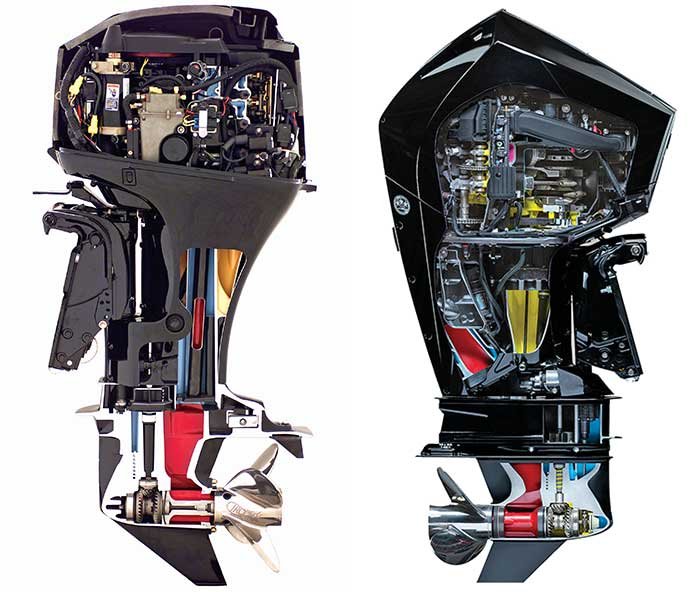
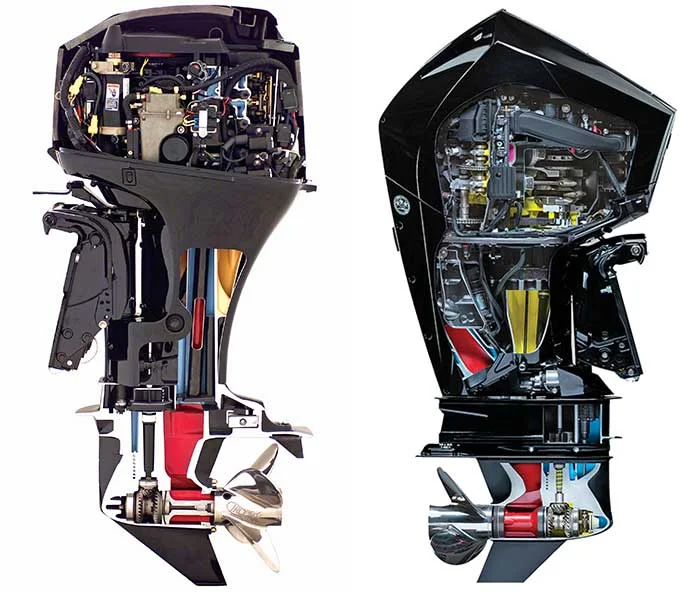
Fifty horsepower is where outboards stop being portable and start being proper boat engines. A Mercury 50 hp outboard is built on the same 995 cc four-cylinder block as Mercury’s 60, which gives it more displacement than many engines its size. Mercury says the long-stroke design delivers “more low-end torque” and smooth, quiet running (Mercury Marine: 40–60hp FourStroke).
Here’s what else you get:
- EFI. Mercury says fuel injection gives reliable starts, quicker throttle response and better protection against poor-quality fuel.
- An 18-amp alternator. Enough for a battery, a fish finder, lights and a bilge pump, per Mercury’s spec table.
- SmartCraft. Engine data can show on SmartCraft gauges, or on a phone with the optional VesselView Mobile.
- Troll Control. Mercury says you can set trolling speed as low as 700 rpm in 10 rpm steps from the gauge or tiller.
- Power trim on every version. All four models we sell have it.
- Command Thrust option. A taller, heavier gearcase with gear shafts up to 33% larger and a prop with 20% more blade area, according to Mercury.
Mercury 50 HP Outboard Specifications
| Specification | Mercury 50 EFI |
|---|---|
| Engine | 995 cc (60.7 cu in) inline 4-cylinder, SOHC four-stroke |
| Bore x stroke | 65 x 75 mm |
| Fuel system | EFI |
| Dry weight | From 114 kg (251 lb); Command Thrust from 121 kg (267 lb) |
| Gear ratio (standard) | 1.83:1 |
| Full-throttle rpm | 5,500–6,000 |
| Alternator | 18 A, 226 W |
| Shaft | 20 in |
| Trim and tilt | Power trim and tilt, 70° tilt range |
| Steering | Tiller or remote |
| SmartCraft | Yes |
| Factory warranty | 3 years (Defender, US) |
Sources: Mercury Marine 40–60hp spec table and Defender: Mercury 50 HP tiller (2026). Defender lists the 2026 tiller at 248 lb dry. Weights differ slightly between sellers and model years, so treat them as a guide. A fuel tank and prop may not be included, so check before you order.
How to Read Mercury 50 HP Outboard Model Codes
- E = electric start.
- L = 20-inch (long) shaft.
- H = tiller handle. No H = remote control.
- PT = power trim and tilt.
- Command Thrust (CT) = larger, heavier-duty gearcase that turns a bigger prop.
So a “50ELHPT” is electric start, 20-inch shaft, tiller, power trim. A “50ELPT Command Thrust” is electric start, 20-inch shaft, remote, power trim, with the bigger gearcase.
Every Mercury 50 HP Outboard We Sell
All four are new engines with electric start, a 20-inch shaft and power trim. Prices are as listed in our store when this guide was written, so check each product page for the latest price and stock.
| Model | Steering | Gearcase | Best for | Price |
|---|---|---|---|---|
| 50ELPT Command Thrust | Remote | Command Thrust | Pontoons, heavy console boats | $7,220 |
| 50ELPT | Remote | Standard | Runabouts, console fishing boats | $7,405 |
| 50ELHPT | Tiller | Standard | Open aluminium fishing boats | $7,600 |
| 50ELHPT Command Thrust | Tiller | Command Thrust | Heavy tiller boats, work boats | $7,605 |
At the time of writing, the remote Command Thrust model is actually our lowest-priced Mercury 50 hp outboard. Prices change, so it’s worth checking the product pages. The tiller models cost a little more than the remotes, but remember that a remote engine needs controls, cables and steering if your boat doesn’t already have them.

Standard or Command Thrust?
This is the biggest decision when choosing a Mercury 50 hp outboard.
Command Thrust uses a taller, heavier-duty gearcase. Mercury says its gear shafts are up to 33% larger than standard, and it turns a propeller with 20% more surface area. The result, according to Mercury, is better manoeuvring and more lift on larger, heavier boats. It adds weight: Mercury’s table lists 121 kg for the Command Thrust model against 114 kg for the lightest standard 50.
The standard gearcase is lighter and suits boats that plane easily: aluminium runabouts, light fishing boats and RIBs. It usually gives a bit more top speed on a light hull.
A simple rule:
- Pontoon, heavy boat, workboat or lots of people and gear: Command Thrust.
- Light aluminium boat, runabout or RIB: standard.
If you’re unsure, tell us your boat’s make, length and typical load and we’ll help you choose.
Tiller or Remote?
Tiller suits open aluminium boats where you sit at the stern. There’s no console, wheel or cables to buy, and the floor stays clear for fishing. Mercury describes its 40–115 hp tiller as “the most intuitive tiller on the market”, which is the maker’s own claim. Choose the 50ELHPT or the 50ELHPT Command Thrust.
Remote suits boats with a console and wheel: runabouts, centre consoles and pontoons. It’s drier and more comfortable on longer runs. Choose the 50ELPT or the 50ELPT Command Thrust. Our hydraulic steering guide covers steering options.
If you’re replacing an old engine, match what the boat already has unless you want to change how you use it.
Which Mercury 50 HP Outboard Fits Your Boat?
15 to 17-foot open aluminium boats
The classic tiller Mercury 50 hp outboard boat. The 50ELHPT gives plenty of power for two or three anglers and gear. Trade-a-Boat’s reviewer rated the 50 as good value for alloy boats up to about 4.7 metres.
16 to 18-foot runabouts and side consoles
Go remote with the 50ELPT. On a heavier hull or one that carries the family, the Command Thrust version helps it get on the plane.
Pontoons
A 50 is a good size for small to mid-size pontoons. Go Command Thrust: the 50ELPT Command Thrust is made for this. For big, heavily loaded pontoons, look at a 60 or more. Our outboard motors for pontoons guide explains how to size it.
RIBs
A 4.5 to 5-metre RIB rated for 50 HP is a good match for a remote standard 50. Check the maximum engine weight, because at 250 lb or more it’s a heavy engine for a soft transom. See our inflatable boat motors guide.
Work boats
Heavy loads, frequent stops and starts, and lots of hours. A Command Thrust Mercury 50 hp outboard with tiller or remote suits workboats, ferries and fishing skiffs that carry weight.
What a Mercury 50 HP Outboard Can Do on the Water
Trade-a-Boat tested the Mercury EFI 50 on a 4.55-metre aluminium runabout with two adults aboard, a total displacement of 680 kg and a 13-inch alloy prop. These are their averaged figures from two runs (Trade-a-Boat: Mercury F50 engine review):
| RPM | Condition | Speed | Fuel use |
|---|---|---|---|
| 750 | Trolling | 2.1 knots (3.9 km/h) | 0.7 L/h |
| 3,300 | Clean plane | 12.9 knots (24.0 km/h) | 5.9 L/h |
| 4,000 | Cruise | 18.0 knots (33.4 km/h) | 7.3 L/h |
| 5,000 | Fast cruise | 25.9 knots (48.0 km/h) | 10.6 L/h |
| 5,800 | Full throttle | 30.7 knots (56.9 km/h) | 17.5 L/h |
What stands out:
- It planes early. A clean plane at 3,300 rpm means the boat isn’t plowing at low speed.
- The cruise sweet spot is around 4,000 rpm. At that speed, the engine used 7.3 L/h, well under half its full-throttle fuel burn. The reviewer found 4,000 rpm the most efficient cruise.
- Full throttle costs a lot of fuel. Going from 5,000 to 5,800 rpm added under 5 knots but used 65% more fuel.
- It trolls cheaply. 0.7 L/h at 750 rpm.
The reviewer also noted a strong holeshot, good reverse thrust and a quiet ride at speed. Keep in mind this is an older review, done on one boat with one load and prop. Your numbers will differ, but it’s a fair picture of what a Mercury 50 hp outboard does on a light aluminium boat.
Mercury 50 HP Outboard vs Yamaha, Suzuki and Honda 50s
Here’s how 50 HP engines compare on our prices:
| Model | Our price |
|---|---|
| Mercury 50ELPT Command Thrust | $7,220 |
| Mercury 50ELPT | $7,405 |
| Mercury 50ELHPT | $7,600 |
| Yamaha F50LB | $6,935 |
| Yamaha T50LB (High Thrust) | $7,800 |
| Suzuki DF50ATL5 | $5,641 |
| Suzuki DF50AVTL5 | $5,921 |
| Honda BF50D4LRTA | $6,255 |
| Honda BF50D4XRTA | $6,500 |
On our prices, a Mercury 50 hp outboard costs more than the Suzuki and Honda 50s and a bit more than the standard Yamaha F50. The Mercury Command Thrust is cheaper than Yamaha’s T50 High Thrust, though.
What you’re paying for with the Mercury:
- 995 cc displacement, shared with Mercury’s 60.
- An 18-amp alternator for electronics.
- SmartCraft and Troll Control in 10 rpm steps.
- Four versions: tiller or remote, standard or Command Thrust.
If price comes first, the Suzuki DF50 is hard to beat. In the end, the best engine is the one your local mechanic can service. For more, see our Honda 50hp guide, Honda 50 HP buying guide, and the brand comparisons Mercury vs Suzuki, Yamaha vs Mercury and Honda vs Mercury.

Mercury 40 vs 50 vs 60: Which Size?
| Engine | Engine | Lightest dry weight | Our remote PT price |
|---|---|---|---|
| Mercury 40 | 747 cc 3-cylinder | 106 kg | 40ELPT $6,853 |
| Mercury 50 | 995 cc 4-cylinder | 114 kg | 50ELPT $7,405 |
| Mercury 60 | 995 cc 4-cylinder | 114 kg | See our Mercury 60hp guide |
Engine sizes and weights are from Mercury’s 40–60hp spec table. The 50 and 60 share the same four-cylinder block and the same lightest weight, so the 60 adds power without adding much weight. The 40 is lighter and cheaper.
- Choose the 40 if your boat is rated for 40 or you want to save weight and money. See our Mercury 40 hp outboard guide.
- Choose a Mercury 50 hp outboard for 15 to 18-foot boats and smaller pontoons rated for 50.
- Choose the 60 if the boat is rated for it and you carry heavy loads.
Never go over the maximum horsepower on your capacity plate. The plate sets limits for horsepower, people and weight (Discover Boating on capacity plates). Our guide on selecting the correct horsepower helps with the rest.
Mercury 50 HP Outboard Features Explained
995 cc four-cylinder engine
Many 50 HP outboards use smaller engines worked harder. Mercury uses a 995 cc block with a long piston stroke. In plain terms, bigger displacement gives more pulling power at low and mid rpm. That’s what gets a heavy boat out of the water, and it’s what Trade-a-Boat’s reviewer noticed when he described midrange torque as better than expected.
Electronic fuel injection
EFI meters fuel precisely for the conditions. You get easy starts, a steady idle and quick throttle response. Mercury also says EFI helps protect against problems from lower-quality fuel, which matters if you buy fuel in remote places.
SmartCraft and VesselView Mobile
A Mercury 50 hp outboard can send engine data to SmartCraft digital gauges, or to your phone with the optional VesselView Mobile. You see rpm, fuel use, engine hours and alerts. That makes servicing easier to plan and helps you find your most efficient cruising speed.
Troll Control
Mercury says Troll Control holds trolling rpm as low as 700 and adjusts it in 10 rpm steps, which it calls five times more precise than the 50 rpm steps of competitors. For anglers who troll, that’s a real advantage, since it lets you fine-tune lure speed without a kicker.
18-amp alternator
Enough charging for a starting battery and the usual electronics: chartplotter, sounder, lights, bilge pump and a radio.
Power trim and tilt
Every Mercury 50 hp outboard we sell has power trim. You can trim the bow up for speed and economy in flat water, or down for a softer ride in chop. Defender lists a 70-degree tilt range for lifting the engine clear for beaching and trailering. Our guides to power trim and tilt and using trim and tilt explain how to get the most from it.
Three Real Set-Ups for a Mercury 50 HP Outboard
These are typical matches, not performance promises. Always check your own boat’s plate and transom.
A 4.5-metre tiller aluminium boat for estuary fishing
Two or three anglers, a sounder, a cooler and a 20-inch transom. The 50ELHPT is the obvious fit. Troll Control lets you work lures slowly without a second engine. This is close to the boat Trade-a-Boat tested on.
A 20-foot family pontoon
Up to eight people on a lake, plenty of drag from the tubes and lots of slow cruising. The 50ELPT Command Thrust turns a bigger prop that grips better with a heavy load. Check the pontoon’s maximum horsepower first. If you often carry a full load or tow a tube, step up to a 60 or more.
A 5-metre centre-console work skiff
Daily use, heavy gear and frequent stops. The 50ELHPT Command Thrust or the remote Command Thrust version both suit the job. The heavier gearcase is built for the strain of pushing weight all day.

Fitting a Mercury 50 HP Outboard
At around 250 lb, a Mercury 50 hp outboard is bolted through the transom, not clamped on. Most owners have a marine technician fit it, and that’s the sensible route, especially for remote models with controls, cables and gauges. If you’re doing it yourself:
- Check the transom for soft spots or rot around old bolt holes. A weak transom is dangerous with an engine this heavy.
- Set the height so the anti-ventilation plate sits roughly level with the bottom of the hull. Fine-tune after a water test.
- Bolt it through with marine hardware and sealant, using a hoist.
- Rig controls and steering on remote models.
- Connect the battery and fuel, and check oil levels.
- Start it in neutral with the kill-switch lanyard on, and check for cooling water.
- Water-test and prop it to reach 5,500 to 6,000 rpm at full throttle with a normal load.
Our how to install an outboard motor guide has more detail.
Propping a Mercury 50 HP Outboard
Defender’s spec lists the prop as optional on the 2026 tiller, so you may need to buy one. With your usual load aboard, the engine should reach 5,500 to 6,000 rpm at full throttle.
- Below 5,500 rpm: too much pitch. Drop a size.
- Above 6,000 rpm: too little pitch. Go up a size.
- Heavy boat slow to plane: lower pitch, or Command Thrust.
Mercury offers its Spitfire X7 stainless prop for the 40–60 range in pitches from 13 to 21 inches. Stainless props cost more than aluminium but hold their shape better. Our propeller guide and gear ratio guide explain the trade-offs.
Getting the Best Fuel Economy From a Mercury 50
- Cruise around 4,000 rpm. In Trade-a-Boat’s test, that used 7.3 L/h against 17.5 L/h flat out.
- Use SmartCraft to watch fuel flow and find your boat’s sweet spot.
- Trim the bow up a little once on the plane in calm water.
- Get the prop right so the engine reaches its rated rpm.
- Keep the hull clean and the load spread evenly.
Our fuel-efficient outboard motors guide has more.
Putting a Mercury 50 HP Outboard on a Pontoon
Pontoons are one of the most common homes for a 50, and also where buyers most often under-power. Two tubes push a lot of water, and a full deck of people adds a lot of weight. Some practical points:
- Check the pontoon’s maximum horsepower first. It’s on the capacity plate.
- Choose Command Thrust. The bigger prop grips better with a heavy load. That’s what Mercury designed it for.
- Expect relaxed cruising, not speed. A Mercury 50 hp outboard on a pontoon is for lake cruising, fishing and swimming trips, not towing skiers.
- Think about your typical load. If you often carry a full deck or tow a tube, a 60 or more will feel far less strained, because it won’t be working near its limit all the time.
Our outboard motors for pontoons guide covers sizing, and we also have brand-specific guides: best Yamaha outboard for pontoon boats, Yamaha pontoon outboard motors and Suzuki outboards for pontoons.
Should You Stretch to a 60?
Because Mercury’s 50 and 60 share the same 995 cc block and the same lightest dry weight, the 60 is worth a look if your boat is rated for it. Here are the 60s we stock from other brands, for reference:
| Model | Our price |
|---|---|
| Suzuki DF60ATL5 | $6,300 |
| Tohatsu MFS60AETL | $6,775 |
| Honda BF60A1LRT | $7,000 |
| Yamaha F60LB | $8,600 |
The case for staying with a Mercury 50 hp outboard: your boat is rated for 50, you want Command Thrust at a lower price, or you mostly cruise at modest speeds. The case for a 60: you carry heavy loads, run a larger pontoon or want a little more top speed. Read our Mercury 60hp, Suzuki 60hp, Tohatsu 60hp and Yamaha 60hp guides, or our 40hp vs 60hp comparison.

Rigging a Remote Mercury 50
If you’re buying the 50ELPT or 50ELPT Command Thrust for a console boat, the engine is only part of the job. A remote Mercury 50 hp outboard needs:
- A control box for throttle and shift, mounted at the helm.
- Throttle and shift cables measured to length.
- A key switch and wiring harness to connect the helm to the engine.
- Steering: mechanical cable or hydraulic.
- Gauges, ideally SmartCraft, so you get the engine data and Troll Control.
If your boat already has Mercury controls from a previous engine, some parts may be reusable. Give us the details of your current set-up and we’ll tell you what’s likely needed. A tiller Mercury 50 skips all of this, which is a big reason tillers stay popular on fishing boats.

Trailering and Storing
When trailering, use a transom saver or support the engine as the owner’s manual describes, so the transom isn’t taking every bump. Tilt it up enough for road clearance, but don’t leave the weight hanging on the tilt alone over long distances.
Between trips, flush out salt and leave the engine tilted down so water drains from the gearcase. For winter storage, follow our winterizing guide: stabilise the fuel, change the gear oil, fog the engine and keep the battery charged.
How to Read a Mercury 50 Spec Sheet
Different sellers list slightly different figures for the same engine. Here’s how to make sense of them.
- Weight. Mercury’s table gives 114 kg for the lightest 50, Defender lists the 2026 tiller at 248 lb, and Trade-a-Boat quoted 112 kg for the model it tested. Model year, steering and gearcase all change the figure. Command Thrust adds roughly 7 kg.
- Displacement. You’ll see 995 cc, 60.7 cu in and 60.8 cu in. They’re the same engine; the small difference is rounding.
- Alternator. Mercury’s 40–60 table lists 18 amps. Some dealer pages show lower figures that may refer to other configurations, so go by Mercury’s own number or ask us.
- Gear ratio. 1.83:1 applies to the standard gearcase. Command Thrust uses a different, heavier-duty gearcase built for bigger props.
- Full-throttle rpm. 5,500 to 6,000 rpm is a target for propping, not a speed promise.
- What’s included. Some listings include a prop and tank; others don’t. Defender lists both as not included on the 2026 tiller.
If anything on a Mercury 50 hp outboard listing isn’t clear, ask us before you order.
Break-In and Maintenance
Follow the owner’s manual. The main jobs on a Mercury 50 hp outboard:
- Break-in: vary the throttle and avoid long full-throttle runs early on. See our break-in guide.
- Engine oil and filter at Mercury’s intervals.
- Gearcase oil, checked for water or metal. Command Thrust gearcases need the same care. See our lower unit oil guide.
- Water pump impeller inspection, more often in sandy water.
- Fuel filter, spark plugs and anodes on schedule.
- Power trim fluid level checks.
SmartCraft engine hours make it easy to track service intervals. Our maintenance checklist, winterizing guide, compression test guide and troubleshooting guide cover the rest.
Saltwater or Freshwater Use
Trade-a-Boat’s reviewer pointed to saltwater corrosion resistance as one of the 50’s strengths. Even so, salt needs care. Flush the engine with fresh water after every trip, rinse the outside, check the anodes and tilt it up when moored. In fresh water, watch for sand and silt wearing the impeller. Our saltwater outboard guide has more.
What Else to Budget For
- Remote rigging on the 50ELPT models: control box, cables, key switch, harness and gauges, unless your boat already has compatible Mercury controls.
- Steering. Mechanical cable steering works on many boats, but hydraulic gives a lighter feel.
- A propeller, if one isn’t supplied with your unit.
- A fuel tank and line. Defender notes the fuel tank isn’t included.
- A marine battery and cables.
- Installation and a water test by a marine technician.
Our hidden costs guide walks through each item. A tiller Mercury 50 hp outboard avoids most rigging costs.
New or Used Mercury 50?
Used Mercury 50s are common, but many are older carburetted or two-stroke engines. Before buying used, confirm the year and engine type, ask for service records, run a compression test and check the gear oil. Our 2-stroke vs 4-stroke guide and used Mercury guide explain what to look for. A new Mercury 50 hp outboard gives you the current EFI engine and a factory warranty. You can also browse our used outboard engines.
When a Mercury 50 HP Outboard Isn’t the Right Choice
- Your boat is rated under 50 HP. Look at the Mercury 40 or Mercury 30.
- You need something portable. At around 250 lb, it isn’t. See the Mercury 20 or Mercury 25.
- You run a big pontoon or tow watersports. A 60, 90 or Mercury 115 will work less hard.
- You only need trolling power. A kicker such as the Mercury 15 ProKicker or Mercury 9.9 is cheaper. See our kicker motor guide.
Common Mistakes When Buying a Mercury 50 HP Outboard
- Choosing the wrong gearcase. Standard on a heavy pontoon, or Command Thrust on a light runabout.
- Forgetting rigging costs on remote models.
- Ignoring weight. Around 250 lb is too heavy for some small transoms, even when the horsepower rating allows it.
- Not budgeting for a prop.
- Exceeding the capacity plate.
Mercury 50 HP Outboard Pros and Cons
What’s good:
- 995 cc four-cylinder for strong low and mid-range pull.
- Power trim on every version we sell.
- Command Thrust option for heavy boats.
- SmartCraft and Troll Control in 10 rpm steps.
- An 18-amp alternator.
- Shares its block with the Mercury 60.
What to weigh up:
- Costs more than the Suzuki and Honda 50s on our prices.
- Heavier than three-cylinder 40s.
- Prop and fuel tank may be extra.
A Simple Buying Walkthrough
- Read the capacity plate. If it allows 50 HP, a Mercury 50 hp outboard is an option.
- Check the maximum engine weight on smaller boats and RIBs.
- Choose steering: open boat, tiller; console, remote.
- Choose the gearcase: heavy boat, Command Thrust; light boat, standard.
- Add up extras: prop, tank, battery, rigging, installation.
- Order or ask us: pick from the Mercury 50 HP category, or send us your boat details.
Safety and the Rules That Apply
The capacity plate sets the maximum horsepower, people and weight your boat is built for (Discover Boating). Going over it affects stability and may break local rules or void insurance. With a 50 HP engine, weight matters too: check the maximum engine weight on smaller hulls.
Always wear the kill-switch lanyard when the engine is running, especially on a tiller boat. Licence and registration rules vary between countries and regions, and some require a licence at this power level. Check what applies where you boat.
Questions to Ask Before Buying Any 50 HP Outboard
- Who will service it near me?
- What warranty applies in my country? Read our warranty guide.
- Is it new, and what model year?
- Is a prop included? A fuel tank?
- Do my existing controls work with it?
- How long will delivery take, and what import costs apply?
Before You Order: A Quick Checklist
- Maximum horsepower and engine weight on the capacity plate
- Transom height (all our Mercury 50s have a 20-inch shaft)
- Tiller or remote steering
- Standard or Command Thrust gearcase
- Existing controls, steering and gauges
- Propeller and fuel tank
- Who will install and service it
Send us your answers and we’ll help you pick the right Mercury 50 hp outboard.
When Your Engine Arrives
- Inspect the crate before you sign, and note any damage on the delivery paperwork.
- Check the model code against your order: steering and gearcase.
- Look the engine over for damage.
- Keep the packaging until everything checks out, in case you need our refund and returns policy.
- Record the serial number for warranty and servicing.
- Read the break-in section of the manual before first start.
Buying a Mercury 50 HP Outboard From Us
Every Mercury 50 hp outboard on this page is new and for sale in our store. Our shipping policy says orders normally ship within 1 to 6 business days with free delivery. You’ll get a tracking email when your engine leaves, and you can follow it on our order tracking page. Import duties and taxes depend on your country, so check with your local customs office before ordering.
Helpful reading:
- Outboard motors worldwide shipping
- Cost of shipping an outboard motor internationally
- Can you finance an outboard motor?
- How to spot genuine Mercury engines
- Our guide to buying Mercury outboards
Not sure which version to choose? Contact us with your boat’s make, length, typical load and horsepower rating. You can also browse the Mercury 50 HP range, the Mercury 40 HP range, all Mercury outboard motors or the full shop.
Mercury 50 HP Outboard FAQ
How much does a Mercury 50 hp outboard cost?
In our store, new prices run from $7,220 for the 50ELPT Command Thrust to $7,605 for the 50ELHPT Command Thrust.
How much does a Mercury 50 hp outboard weigh?
Mercury lists 114 kg (251 lb) for the lightest 50 and 121 kg for Command Thrust. Defender lists the 2026 tiller at 248 lb.
How many cylinders does it have?
Four. It’s a 995 cc inline four-cylinder four-stroke.
Is the Mercury 50 the same engine as the 60?
Both use the 995 cc four-cylinder block, according to Mercury. The 60 makes more power.
What is Command Thrust?
A taller, heavier-duty gearcase with larger gear shafts that turns a prop with more blade area. It’s built for pontoons and heavy boats.
How fast will a Mercury 50 go?
It depends on the boat. In Trade-a-Boat’s test on a 4.55-metre aluminium runabout with two adults, it reached 30.7 knots at 5,800 rpm.
How much fuel does a Mercury 50 hp outboard use?
In that same test: 0.7 L/h trolling, 7.3 L/h at a 4,000 rpm cruise and 17.5 L/h at full throttle.
What is the full-throttle rpm range?
5,500 to 6,000 rpm.
Does it have power trim?
Yes. All four Mercury 50s we sell have power trim and tilt.
Tiller or remote?
Tiller for open boats without a console, remote for consoles and pontoons.
Can I use a Mercury 50 hp outboard in salt water?
Yes. Flush it with fresh water after each trip and check the anodes regularly.
Is a propeller included?
Defender lists the prop as optional on the 2026 tiller. Check the product page or ask us before ordering.
Do you ship a Mercury 50 hp outboard worldwide?
Yes. We ship worldwide with free delivery, and orders normally ship within 1 to 6 business days.
Is a Mercury 50 hp outboard enough for a pontoon?
For small to mid-size pontoons with moderate loads, yes, especially the Command Thrust version. For large pontoons or towing, look at a 60 or more.
What does Troll Control do?
It holds a steady trolling speed, as low as 700 rpm according to Mercury, and adjusts it in 10 rpm steps from the gauge or tiller.
Can I reuse my old Mercury controls?
Sometimes. It depends on the age and type of your controls and harness. Send us the details and we’ll check.
Is the Mercury 50 good for fishing?
Yes. The tiller 50ELHPT suits open aluminium fishing boats, and Troll Control helps you hold a slow, steady trolling speed without a kicker.
What shaft length do I need?
All four Mercury 50s we sell have a 20-inch shaft, which suits most 15 to 18-foot boats and pontoons. Measure your transom to confirm.
What warranty does a Mercury 50 hp outboard have?
Defender lists a three-year factory warranty in the US, and Mercury advertises extended cover in some markets. Terms vary by country, so read our warranty guide or ask us.
Can a Mercury 50 tow a water-skier?
On a light runabout it may pull a child or a tube, but it isn’t a ski engine. For regular watersports, look at 90 HP and up.
Sources and References
Posts Widget
- 1

- 2

- 3

- 4


S.H Continental Marine
USA HERALD MAGAZINE INC
Our team is dedicated to providing exceptional customer service.
Email: info@shcontinentalmarine.com
Choose S.H Continental Marine
for your outboard engine needs and enjoy superior quality, exceptional customer service, and unbeatable prices.
