
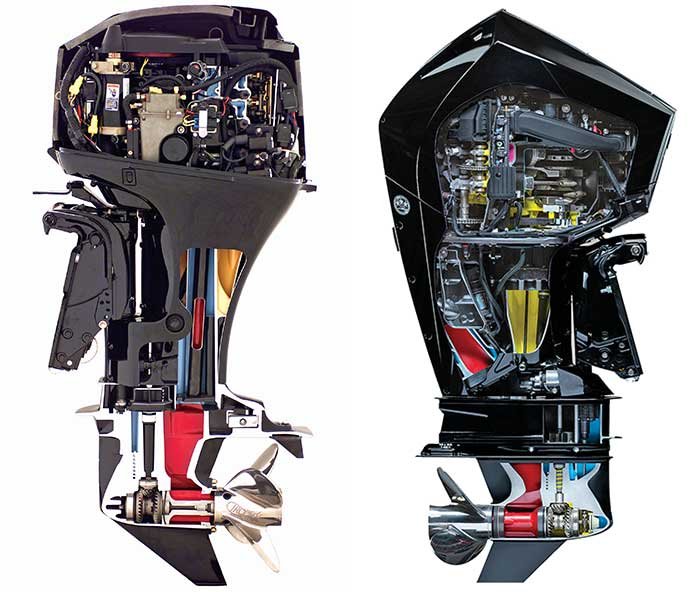
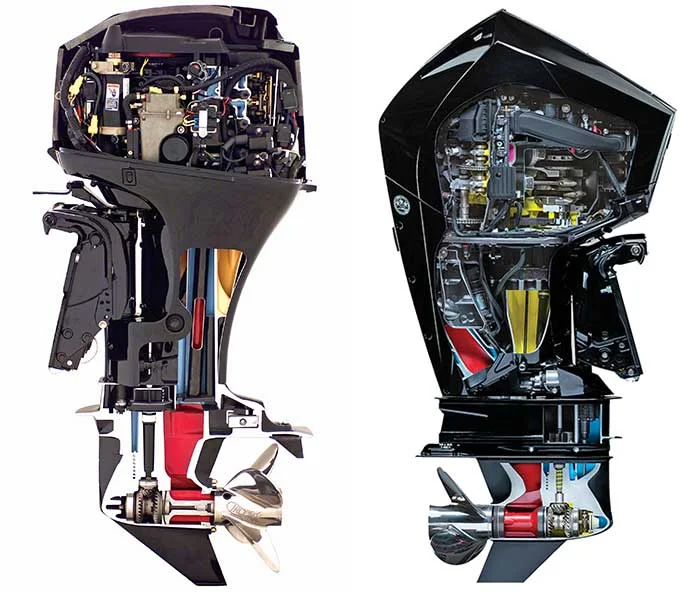
Mercury Jet Outboard: 7 Best Jet 25-40 Models for Shallow Water

A Mercury jet outboard is a Mercury four-stroke powerhead that drives a water-jet pump instead of a propeller. Nothing hangs below the hull except a short intake, so the boat can run in very shallow, rocky or weedy water where a prop would strike bottom. Mercury builds jets rated at 25, 35 and 40 HP, with EFI, a stainless steel impeller and tiller or remote steering. They’re made for shallow rivers, flats, marshes and creeks.
We sell seven new Mercury jet outboard models, priced from $6,100 to $7,500, and ship them worldwide with free delivery. This guide explains how a jet works, what you give up compared with a prop, which Mercury jet suits your boat, and how they compare with Yamaha and Tohatsu jets. Jump to the price list, or see our Mercury 25 and Mercury 40 guides for the prop versions.
Table of Contents
Table of Contents

How a Mercury Jet Outboard Works
A jet outboard is a standard outboard with a jet pump fitted where the propeller gearcase would normally be. The pump draws water in through an intake grate near the bottom of the boat and pushes it out the back at high speed. That stream of water pushes the boat forward.
The Pennsylvania Fish and Boat Commission explains it simply: “An outboard jet is simply a standard outboard with an aftermarket jet pump bolted to where the prop unit sits” (Pennsylvania Fish and Boat Commission: inboard vs outboard jets). Mercury’s own jets are factory-built rather than aftermarket conversions.
Because the intake sits close to the hull, a jet boat can run in remarkably shallow water. The same guide says jet craft “will run in less than 6 inches of water”, and calls jets “hands down the safest way to traverse shallow, rocky rivers in a power craft”.
What You Give Up With a Jet
Jets aren’t free. Before you buy a Mercury jet outboard, understand the trade-offs:
- Less effective power. On an outboard jet, the water is turned 180 degrees before it leaves the pump. The Pennsylvania guide puts the result at about “a 30% loss in horsepower”. Yamaha rates its own jets at the pump for this reason: its 40 Jet “produces 30 hp at the pump” (Yamaha Outboards: Jet Drive).
- Higher fuel use for the speed. Losing power through the pump means burning more fuel to go the same speed as a prop engine.
- Intake damage. The intake is often the lowest point of the boat. The Pennsylvania guide notes bent grill bars are a common repair after contact with rocks.
- Different handling. Jets steer by directing the water stream, so you need some throttle to steer well. Take time to learn it before running tight rivers.
- More frequent checks. Weed, sand and gravel get drawn into the intake, so the grate and impeller need regular attention.
If your water is mostly deep enough for a prop, a prop engine will be faster and cheaper to run. Our jet drive vs propeller guide goes into this in more depth.
Who Needs a Mercury Jet Outboard?
- River anglers who run shallow riffles, gravel bars and rocky runs.
- Duck hunters working marshes and flooded timber.
- Flats and estuary fishers who need to cross very shallow water.
- Search, rescue and survey crews working in shallow rivers.
- Remote property owners who rely on rivers for access.
Mercury describes its jets as built for “shallow flats, marshes and rivers” (Mercury Marine: Jet 25–40hp).
Mercury Jet Outboard Features
- EFI. Mercury says its jets give “surefire starting in all weather conditions” and instant throttle response.
- Stainless steel impeller. Mercury says it “withstands harsh, abrasive debris that can be drawn through the pump”.
- Charging. Mercury lists a 17-amp alternator on the Jet 25 and 18 amps on the Jet 35 and 40.
- Powerheads. Mercury says the Jet 25 uses an inline-3 powerhead and refers to an inline-4 powerhead for the larger jets.
- Tiller or remote steering, depending on the model.
Every Mercury Jet Outboard We Sell
All seven are new. Prices are as listed in our store when this guide was written, so check each product page for the latest price and stock. Some listings ask you to confirm the powerhead or shaft, so contact us if you need those details before ordering.
| Model | Start | Steering | Tilt / trim | Price |
|---|---|---|---|---|
| 25MLHGA Jet | Manual | Tiller | Gas assist | $6,100 |
| Mercury Jet 25 | Confirm configuration with us | $6,215 | ||
| 25 HP Jet EFI 526cc L3 | 526 cc three-cylinder; confirm configuration | $6,340 | ||
| 25ELHGA Jet | Electric | Tiller | Gas assist | $6,340 |
| 40ELPT Jet | Electric | Remote | Power trim | $6,510 |
| 25ELPT Jet | Electric | Remote | Power trim | $6,600 |
| 35ELPT Jet | Electric | Remote | Power trim | $7,500 |
One thing stands out: at the time of writing, our 40ELPT Jet is priced below the 25ELPT and 35ELPT Jets. Prices change, so check the product pages, but if your boat is rated for it, the 40 currently gives the most power for the money in our Mercury jet outboard range.

Mercury Jet Outboard Model Codes
- M = manual start. E = electric start.
- L = long shaft. Check transom height with us, because jet mounting height is critical.
- H = tiller handle. No H = remote control.
- GA = gas-assist tilt.
- PT = power trim and tilt.
Jet 25, 35 or 40?
Mercury Jet 25
The lightest and simplest Mercury jet outboard, built on an inline-3 powerhead according to Mercury. It suits small aluminium jon boats and river boats with one or two people. The manual 25MLHGA Jet and electric 25ELHGA Jet are tillers, and the 25ELPT Jet is a remote with power trim.
Mercury Jet 35
A step up for heavier boats or more people. The 35ELPT Jet is a remote, power-trim engine. It’s our most expensive Mercury jet at the moment, so compare it with the 40 before buying.
Mercury Jet 40
The most powerful jet in our Mercury range. The 40ELPT Jet suits 16 to 18-foot river boats carrying two or three people and gear. Our Mercury 40 hp outboard guide covers the 40 range in detail.
Remember the jet power loss. Because a jet delivers less thrust than a prop engine with the same rating, many owners choose more horsepower than they would with a prop. But you must stay within the maximum horsepower on your boat’s capacity plate (Discover Boating on capacity plates), so check it first.
Tiller or Remote?
Tiller jets suit small river boats where you sit at the stern and need quick, direct steering. They’re simpler and cheaper to rig. Choose the 25MLHGA or 25ELHGA Jet.
Remote jets suit boats with a side console. You get power trim and a seat further forward, which helps balance and visibility on fast rivers. Choose the 25ELPT, 35ELPT or 40ELPT Jet. Budget for controls, cables and steering if your boat doesn’t already have them.
Mercury Jet Outboard vs Yamaha and Tohatsu Jets
| Model | Our price |
|---|---|
| Mercury 25ELHGA Jet | $6,340 |
| Mercury 40ELPT Jet | $6,510 |
| Tohatsu 25 Jet MFS25AJETETL | $7,500 |
| Yamaha Jet Drive 30HP | $5,500 |
| Yamaha F30LA Jet Drive | $5,830 |
| Yamaha F40JEHA | $6,800 |
| Yamaha F40JEA | $6,995 |
| Yamaha F60LB with jet pump | $9,115 |
On our prices, the Mercury 40ELPT Jet is cheaper than both Yamaha 40 jets, and the Mercury 25 jets are cheaper than the Tohatsu 25 jet. The Yamaha 30 jets are the cheapest jets we sell.
Ratings aren’t always like-for-like. Yamaha says its 40 Jet produces 30 HP at the pump, so compare how each brand rates its jets before you choose on horsepower alone. Then go with the brand your local mechanic knows. Our Yamaha jet drive outboards guide covers the Yamaha range, and our Yamaha vs Mercury comparison covers the brands.
Where a Mercury Jet Outboard Earns Its Keep
Jets make sense wherever the bottom comes up to meet you. Typical examples around the world include:
- Braided gravel rivers, where channels shift every flood and the depth changes from metres to centimetres in a boat length.
- Rocky mountain rivers and rapids, where a prop strike can end a trip.
- Tidal flats and estuaries, where you need to cross sand at low water.
- Marshes, swamps and flooded forest, where stumps and roots hide under the surface.
- Shallow reservoirs that drop in dry seasons, exposing bars and old roads.
On water like this, a Mercury jet outboard lets you reach places a prop boat simply can’t. Yamaha describes the same idea, saying a jet lets you go “off-road” without the possibility of breaking a blade on rocks.
Learning to Run a River Safely
A jet gives you access, but the river still sets the rules. A few habits experienced river boaters follow:
- Run new water slowly first, ideally with someone who knows it.
- Read the surface. Smooth “V” shapes pointing downstream usually mark the deeper channel. Riffles and standing waves often mean shallow gravel or rocks.
- Keep momentum in the shallows. A planing boat draws less water.
- Plan your exit before committing to a tight channel.
- Know the water level. A river that was easy last month may be very different after rain or in a drought.
These are general river-boating habits, not a substitute for local knowledge or training. Treat a Mercury jet outboard as a tool for access, not a licence to take risks.
Is a Mercury Jet Outboard Worth It?
If your water is regularly too shallow or rocky for a prop, yes. A jet lets you use water that’s otherwise closed to you, and it saves the props and gearcases you’d otherwise wreck. The trade-offs are real: less effective power, higher fuel use and more maintenance on the pump.
If your water is mostly deep, no. A prop engine will be faster, cheaper to run and simpler to own. Compare our Mercury 25 and Mercury 40 guides first.
If you’re in between, think about the trips you most want to make. If the best water is shallow, a Mercury jet outboard is usually the engine that gets you there.
Choosing the Right Boat for a Mercury Jet Outboard
A Mercury jet outboard works best on a hull designed for it. The ideal river boat is:
- Flat-bottomed or a shallow V, so it rides high and gives the intake clean water.
- Aluminium, which shrugs off rock strikes better than fibreglass.
- Light for its length, because a jet loses power compared with a prop.
- Fitted with a clean, flat area ahead of the intake, so air bubbles from strakes or rivets don’t starve the pump.
Many owners buy a purpose-built jet boat. If you’re converting a prop boat, talk to us or a dealer first, because hull shape and transom height make a big difference to how a Mercury jet outboard performs. Our outboard motors for jon boats guide covers suitable hulls.
Three Real Set-Ups for a Mercury Jet Outboard
These are typical matches, not performance promises. Always check your boat’s capacity plate.
A 14-foot aluminium jon boat on a shallow trout river
One or two anglers, gravel bars and riffles. The tiller 25ELHGA Jet gives electric start and direct steering. If you never carry a battery, the manual 25MLHGA Jet saves money.
A 16-foot side-console river boat
Two or three people, coolers and camping gear for multi-day trips. The remote 40ELPT Jet gives power trim and the most thrust in our Mercury range, at a lower price than the 35 right now.
A 15-foot duck boat in a marsh
Weed, mud and very shallow water before dawn. A remote 25ELPT Jet with power trim lets you adjust the engine angle as the water changes. Expect to clear the intake grate often in heavy weed.
Mounting Height: The Most Important Jet Set-Up Step
On a prop engine, mounting height is about efficiency. On a jet, it decides whether the engine works at all.
- Too high and the intake sucks air. The pump cavitates, revs climb and thrust disappears.
- Too low and the intake drags, adding resistance and making the boat sit deeper.
The usual starting point is to set the front of the intake roughly level with, or just below, the bottom of the hull, then adjust after a water test. Follow the owner’s manual for your exact model, and have a dealer set it up if you’re not confident. Our how to install an outboard motor guide and cavitation plate guide explain the basics.
The Pennsylvania guide also notes that after a jet cavitates, the outboard has to be throttled down to reload the pump. If you feel the engine rev without pushing, ease off, let the pump fill, then accelerate again.
Driving a Jet Boat: Things That Feel Different
- Steering needs thrust. With the throttle closed, a jet steers poorly. Keep a little power on when manoeuvring.
- Read the water. Shallow doesn’t mean safe. Rocks still damage the intake.
- Stay on plane in the shallows. A planing jet boat draws far less water than one that’s coming off plane.
- Don’t suck up gravel. Avoid idling in very shallow gravel, as the pump can draw stones in.
- Reverse is different. Jets reverse by deflecting the water stream. Practise in open water first.
Always wear a lifejacket. The Pennsylvania guide advises: “Operate within safe speeds, and always wear a life jacket.”
Maintaining a Mercury Jet Outboard
On a Mercury jet outboard, the powerhead needs the same care as any Mercury four-stroke: oil and filter, plugs, fuel filters and anodes on schedule. The jet pump adds a few jobs:
- Clear the intake grate of weed and debris, often during a trip in weedy water.
- Check the grate bars for bends after rock contact.
- Check impeller clearance. Gravel wears the impeller and liner. Mercury uses a stainless impeller for durability, but clearance still opens up over time and costs thrust.
- Grease the pump bearing as the manual specifies.
- Flush after salt or muddy water.
Our maintenance checklist, winterizing guide and troubleshooting guide cover the powerhead side.
Jet vs Prop: What the Power Loss Means in Practice
Here’s a rough way to think about it, using the Pennsylvania guide’s figure of about 30% loss. This is an estimate for illustration, not a Mercury specification.
- A 40 HP-rated jet losing about 30% would deliver thrust closer to what a prop engine of roughly 28 HP gives.
- A 25 HP-rated jet would deliver thrust closer to a prop engine of roughly 17 or 18 HP.
Brands rate their jets differently, though. Yamaha, for example, quotes horsepower at the pump. So use this as a sense check, not a precise comparison. The practical point: if you’re used to a 25 HP prop engine and want similar performance as a jet, you may need to look at a 35 or 40 Mercury jet outboard, provided your boat is rated for it.
Jet or Prop Mercury: Price Comparison
Here’s what the jet premium looks like in our store:
| Engine | Prop version | Jet version |
|---|---|---|
| 25 HP electric tiller | 25ELH $4,755 | 25ELHGA Jet $6,340 |
| 25 HP manual tiller | 25MLH $4,210 | 25MLHGA Jet $6,100 |
| 40 HP remote power trim | 40ELPT $6,853 | 40ELPT Jet $6,510 |
For the 25, the jet costs roughly $1,600 to $1,900 more than the prop version on our prices. For the 40, the jet is currently cheaper than the prop 40ELPT, which is unusual and may change. Check the product pages before ordering. Note that the prop and jet versions above aren’t identical in every detail, such as tilt type.
Shallow-Water Alternatives to a Jet
Not every shallow-water boater needs a Mercury jet outboard. If your water is shallow but not rocky, a prop engine with the right features may be enough, and it’ll be faster and more efficient.
- Power tilt or trim lets you lift the prop as the bottom comes up. Look at the Mercury 20ELHPT or 40ELHPT. See our power trim and tilt guide.
- Shallow-water drive settings on smaller tillers let you run slowly with the engine partly tilted.
- A jack plate raises the engine on bigger boats.
If you regularly hit rock and gravel, though, nothing protects a prop like a jet. That’s the job a Mercury jet outboard does best.
How to Read a Mercury Jet Listing
Jet listings can be confusing, and some of ours ask you to confirm details. Here’s why:
- Powerhead. Mercury says the Jet 25 uses an inline-3 and refers to an inline-4 for larger jets. One of our listings, the 25 HP Jet EFI 526cc L3, states a 526 cc three-cylinder. Model years differ, so ask us to confirm the powerhead of any unit.
- Rating. Brands don’t all rate jets the same way, as explained above.
- Shaft and mounting. Jets mount differently from prop engines, so transom height matters more than the shaft letter alone suggests.
- Configuration. The Mercury Jet 25 listing doesn’t specify start and steering type, so confirm it before you order.
If anything on a Mercury jet outboard listing isn’t clear, ask us. We’d rather answer a question than ship the wrong engine.
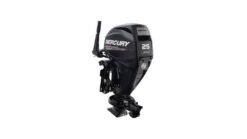
Rigging a Remote Mercury Jet
The 25ELPT, 35ELPT and 40ELPT Jets are remote-control engines. To run one, you’ll need:
- a control box for throttle and shift
- throttle and shift cables measured to length
- a key switch and wiring harness
- a steering system (cable or hydraulic)
- gauges, plus a battery and cables
Existing Mercury controls may be reusable, depending on their age. Our hydraulic steering guide covers steering choices. A tiller jet avoids all of this.
Spares to Carry on a River Trip
Rivers are often far from help. With a Mercury jet outboard, a small spares kit is worth carrying:
- spare spark plugs and a plug spanner
- a kill-switch lanyard
- tools to clear and straighten intake grate bars
- impeller shims, if your model uses them, and the tools to adjust clearance
- a spare fuel filter
- extra fuel, given the higher fuel use
- a paddle or push pole, a throw rope and a first-aid kit
Storing and Winterizing a Jet
Winterize the powerhead as you would any Mercury four-stroke: stabilise the fuel, change the oil and gear lube, and fog it if the manual says to. For the pump, clean out sand and weed, grease the bearing as specified, and let the housing drain fully so trapped water can’t freeze and crack anything. Our winterizing guide and break-in guide cover the powerhead side.
Questions to Ask Before Buying a Jet
- Is my water really too shallow or rocky for a prop?
- Is my hull suitable for a jet?
- Who can set the mounting height and service the pump near me?
- Which powerhead does this unit use?
- What warranty applies in my country? See our warranty guide.
- Can I finance it? See our financing guide.

Fuel Use and Range
Expect a Mercury jet outboard to use more fuel than a prop engine of the same rating for the same speed. That follows from the power lost in the pump. Mercury doesn’t publish fuel figures for its jets that we can cite, so plan with a margin:
- Carry more fuel than you would with a prop engine, especially on remote rivers.
- Cruise below full throttle once on plane.
- Keep the impeller clearance right. A worn impeller wastes fuel.
- Keep the boat light. Every extra kilo costs more on a jet.
Our fuel-efficient outboard motors guide has more general tips.
What Else to Budget For
- Controls, cables and steering for remote jets.
- A marine battery for electric-start models.
- A fuel tank and line, if not supplied.
- Spare intake grate parts and impeller shims, for remote trips.
- Professional set-up and a water test, especially for mounting height.
Our hidden costs guide walks through the rest.
New or Used Mercury Jet?
Used jets have often lived hard lives on rocky rivers. Check the intake grate for bent bars, look at the impeller for chips and wear, ask how much running was done in gravel, and check the powerhead’s service history and compression. Older jets may be carburetted or two-strokes. Our 2-stroke vs 4-stroke guide and used Mercury guide help. A new Mercury jet outboard gives you a fresh impeller and powerhead and a factory warranty. You can also browse our used outboard engines.
When a Mercury Jet Outboard Isn’t the Right Choice
- Your water is usually deep enough for a prop. A prop engine is faster and more economical. See the prop Mercury 25, Mercury 30 or Mercury 40.
- You mostly cross open water. Jets don’t handle big waves as well as a deep-V boat with a prop.
- Your water is shallow but sandy and weed-free. Power trim and a shallow-water tilt setting on a prop engine may be enough.
- You need a trolling engine. A kicker such as the Mercury 15 ProKicker is better at slow speed. See our kicker motor guide.
Common Mistakes When Buying a Mercury Jet Outboard
- Expecting prop-engine speed. Remember the roughly 30% loss through the pump.
- Wrong mounting height. This is the biggest cause of poor jet performance.
- Using an unsuitable hull. Strakes, rivets and a deep V ahead of the intake can starve the pump.
- Ignoring the capacity plate when sizing up for the power loss.
- Not carrying spares on remote rivers.
Mercury Jet Outboard Pros and Cons
What’s good:
- Runs in very shallow water with nothing hanging below the hull.
- Stainless steel impeller built for abrasive debris.
- EFI starting and a 17 to 18-amp alternator.
- Tiller and remote versions.
- Mercury 40 jet currently cheaper than Yamaha 40 jets on our prices.
What to weigh up:
- Less effective thrust and higher fuel use than a prop.
- Intake and impeller need regular attention.
- Handling takes practice.
- Mounting height must be set carefully.
A Simple Buying Walkthrough
- Be sure you need a jet. Is your water regularly too shallow or rocky for a prop?
- Read the capacity plate for maximum horsepower and engine weight.
- Choose the power: Jet 25, 35 or 40.
- Choose steering: tiller or remote.
- Check the hull and transom with us before ordering.
- Add up extras: controls, battery, spares, set-up.
- Order or ask us. Send us your boat’s make, length, hull type and rating.
Before You Order: A Quick Checklist
- Maximum horsepower and engine weight on the capacity plate
- Hull type and transom height
- Tiller or remote
- Manual or electric start
- Gas-assist tilt or power trim
- Who will set the mounting height
Send us your answers and we’ll help you choose the right Mercury jet outboard.
Common Jet Problems and Their Usual Causes
Most jet troubles trace back to the pump rather than the powerhead. These are general patterns, so check the owner’s manual or a dealer for your model:
- Engine revs but the boat won’t push: the pump is sucking air. Common causes are mounting the engine too high, running too much trim, or turbulent water from the hull ahead of the intake.
- Gradual loss of thrust over months: often worn impeller clearance from sand and gravel. Adjusting or replacing it usually restores performance.
- Sudden loss of thrust: weed or debris blocking the intake grate. Stop, tilt the engine and clear it.
- New vibration: a chipped or bent impeller, or debris caught in the pump.
- Overheating warning: blocked water intake. Check for weed, mud or a plastic bag.
Our troubleshooting guide covers powerhead problems on any Mercury jet outboard.
A Pre-Trip Checklist for a Jet Boat
- Check engine oil and fuel, and carry extra fuel.
- Look at the intake grate for weed, debris or bent bars.
- Check the battery is charged on electric-start models.
- Pack the spares kit, lifejackets and a throw rope.
- Check river levels and weather.
- Tell someone your route and return time.
- Start the engine and confirm cooling water flow before leaving the ramp.
Safety and the Rules That Apply
The capacity plate sets the maximum horsepower, people and weight (Discover Boating). Shallow, fast rivers are demanding, so wear a lifejacket, carry a throw rope, tell someone your route, and wear the kill-switch lanyard. Rules on registration, licences and engine use on rivers vary between countries and individual waterways, so check what applies where you boat.
When Your Engine Arrives
- Inspect the crate before you sign, and note any damage on the delivery paperwork.
- Check the model code against your order.
- Check the intake grate and pump housing for transport damage.
- Keep the packaging until everything checks out, in case you need our refund and returns policy.
- Record the serial number for warranty and servicing.
- Have the mounting height set and water-tested.
More Guides for Jet and River Boaters
If you’re still deciding, these guides cover the questions that usually come next:
- Choosing an engine: outboard motors for fishing, electric vs manual start, long vs short shaft and lightweight outboards.
- Brands: Mercury vs Suzuki, Honda vs Mercury and best outboard motor brands.
- Other Mercury sizes: Mercury 20, Mercury 30, Mercury 50 and Mercury Pro XS.
- Owning one: trim and tilt, lower unit oil, compression testing, maintenance and saltwater use.
And if you’d rather talk it through, we’re happy to help you pick the right Mercury jet outboard for your river.
Buying a Mercury Jet Outboard From Us
Every Mercury jet outboard on this page is new and for sale in our store. Our shipping policy says orders normally ship within 1 to 6 business days with free delivery. You’ll get a tracking email when your engine leaves, and you can follow it on our order tracking page. Import duties and taxes depend on your country, so check with your customs office before ordering.
Helpful reading:
- Outboard motors worldwide shipping
- Cost of shipping an outboard motor internationally
- Outboard motors with warranty
- How to spot genuine Mercury engines
- Our guide to buying Mercury outboards
Need help choosing? Contact us. You can also browse all Mercury outboard motors, the Mercury 25 HP and Mercury 40 HP categories, or the full shop.
Mercury Jet Outboard FAQ
How much does a Mercury jet outboard cost?
In our store, new Mercury jets run from $6,100 for the 25MLHGA Jet to $7,500 for the 35ELPT Jet.
How shallow can a jet boat run?
The Pennsylvania Fish and Boat Commission says jet craft will run in less than 6 inches of water. Actual depth depends on the boat, load and speed.
How much power does a jet lose?
The same guide puts the loss on outboard jets at about 30%. Yamaha rates its 40 Jet at 30 HP at the pump.
What Mercury jet sizes are there?
Mercury lists Jet 25, Jet 35 and Jet 40. We sell all three sizes.
Does a Mercury jet outboard have a propeller?
No. A stainless steel impeller inside the pump housing does the work.
Is a jet faster than a prop?
No. For the same rating, a prop engine is usually faster and more economical. A jet’s advantage is shallow water.
Can I steer a jet with the throttle off?
Not well. Jets steer by directing the water stream, so keep some throttle on when manoeuvring.
What maintenance does the jet pump need?
Clear the intake grate, check the bars for bends, check impeller clearance and grease the pump bearing as the manual specifies.
Can I use a Mercury jet outboard in salt water?
Yes, but flush it with fresh water after every trip.
Is the 40 jet better value than the 35?
At current prices in our store, the 40ELPT Jet costs less than the 35ELPT Jet. Check the product pages for the latest prices.
Do you ship a Mercury jet outboard worldwide?
Yes. We ship worldwide with free delivery, and orders normally ship within 1 to 6 business days.
Is a Mercury jet outboard good for a jon boat?
Yes. Flat-bottomed aluminium jon boats are among the best hulls for a jet, as long as the boat is rated for the horsepower.
Can I convert my prop Mercury to a jet?
Aftermarket jet conversions exist, but a factory Mercury jet outboard is designed and supported as a complete unit. Ask us before attempting a conversion.
Does a Mercury jet outboard have reverse?
Yes. Jets reverse by deflecting the water stream forward. Practise in open water before you rely on it.
Will a jet suck up rocks?
It can draw in small gravel, especially at idle in very shallow water. The intake grate keeps larger stones out, and Mercury’s stainless impeller is built for abrasive debris.
Sources and References
Posts Widget
- 1

- 2

- 3

- 4


S.H Continental Marine
USA HERALD MAGAZINE INC
Our team is dedicated to providing exceptional customer service.
Email: info@shcontinentalmarine.com
Choose S.H Continental Marine
for your outboard engine needs and enjoy superior quality, exceptional customer service, and unbeatable prices.
