
Suzuki 25 HP Outboard: 10 Best DF25A Models for Sale (2026)
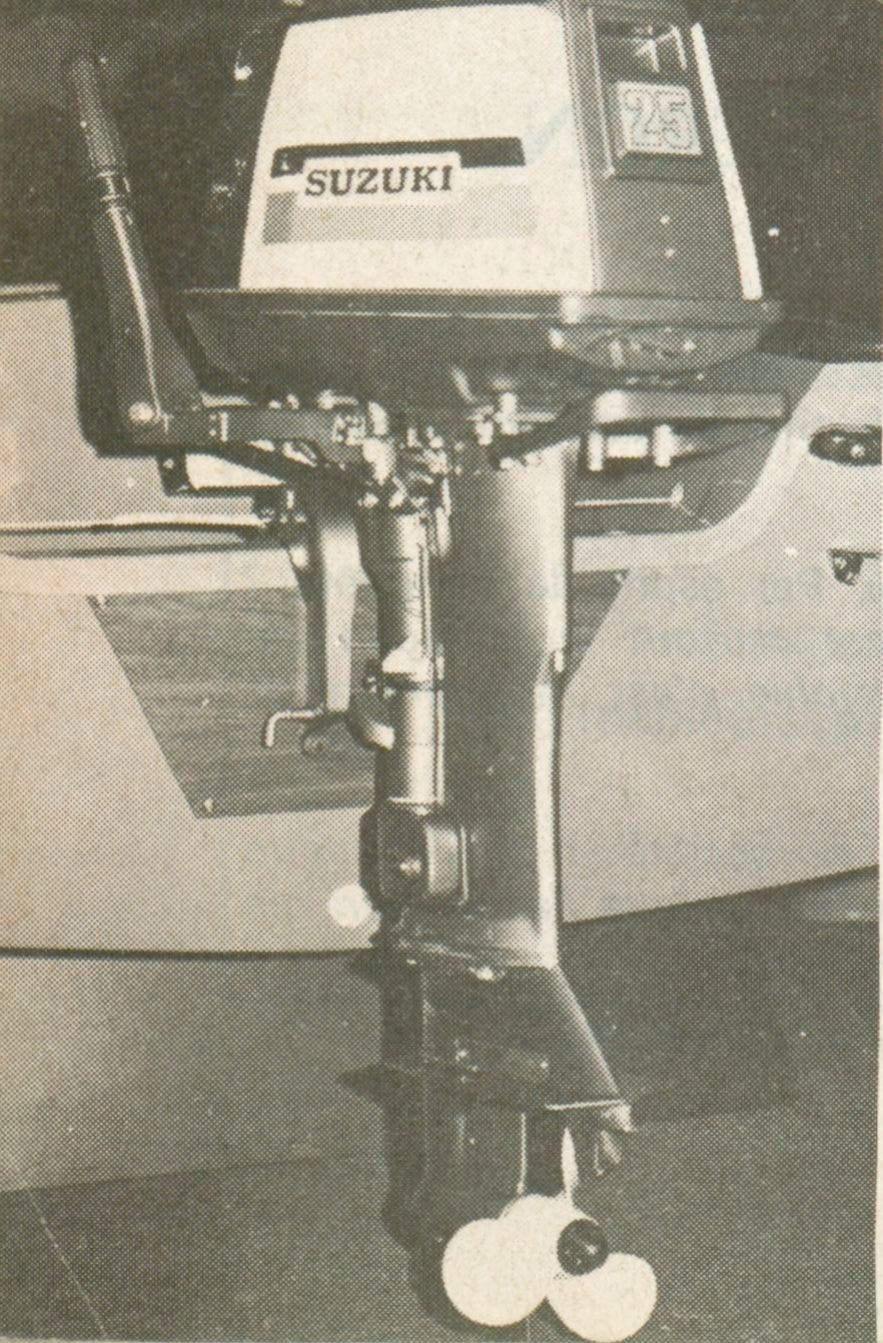
A Suzuki 25 hp outboard, the DF25A, is a 489 cc three-cylinder four-stroke with battery-less electronic fuel injection and Suzuki’s Lean Burn control. The manual-start tiller weighs about 136 lb (62 kg), and Suzuki calls it the lightest four-stroke in the 25 HP class. It turns 5,000 to 6,000 rpm at full throttle through a 2.09:1 gearbox, and comes as a tiller or remote engine with manual or electric start, manual or power tilt, 15 or 20-inch shafts, and black or white paint.
We sell ten new Suzuki 25 hp outboard models, priced from $3,840 to $4,580, and ship them worldwide with free delivery. This guide covers the specs, what each model code means, which version fits your boat, and how the DF25A stacks up against the Mercury, Yamaha, Honda and Tohatsu 25s. Skip straight to the price list or browse the Suzuki 25 HP category.
Table of Contents
Table of Contents

Why Choose a Suzuki 25 HP Outboard?
Twenty-five horsepower is the size where a small boat stops feeling small. It will plane a 14 to 16-foot aluminium boat or a mid-size inflatable with two or three people aboard, and it still clamps onto a transom without a hoist. Here’s what sets the Suzuki apart:
- Three cylinders. Most 25s are twins. Suzuki uses a 489 cc triple, which it shares with the DF30A (Suzuki Marine USA: DF25A). Three cylinders generally run with less vibration than two, and the extra displacement gives the engine some torque in hand.
- Battery-less EFI. On manual-start models the fuel injection runs without a battery. There’s no choke and no carburettor to gum up over winter.
- Lean Burn. Suzuki says its Lean Burn system predicts fuel needs and leans the mixture where it can, improving economy across the rev range. Real numbers depend on your boat, load and conditions.
- Light for a triple. Suzuki describes the DF25A as “the lightest outboard available in the 18.4kW (25PS) four-stroke outboard class” on its spec page. That’s the maker’s claim, and we haven’t weighed rivals ourselves.
- Plenty of versions. Ten models in our store, from the basic pull-start DF25AS5 to white remote engines with power tilt.
Suzuki 25 HP Outboard Specifications
These figures come from Suzuki Marine USA’s DF25A page. Where our product listings repeat them, they match.
| Specification | Suzuki DF25A |
|---|---|
| Engine | 489 cc (29.8 cu in) inline 3-cylinder, SOHC 4-valve |
| Bore x stroke | 2.80 x 2.68 in |
| Fuel system | EFI with Lean Burn (battery-less on manual-start models) |
| Ignition | Digital CDI |
| Full-throttle range | 5,000 to 6,000 rpm |
| Gear ratio | 2.09:1 |
| Weight | 136.6 lb (manual, 15″), 143 lb (electric, 15″), 163 lb (electric tiller, power trim and tilt, 20″) |
| Charging | 12V 14A |
| Engine oil | 1.5 L |
| Tilt positions | 5 (power trim and tilt available) |
| Standard prop | 3 x 9.25 x 10 in |
| Steering | Tiller or remote |
| Shaft lengths | 15 in (S) and 20 in (L) |
One oddity: the page’s title text mentions “20 hp”, but the spec table itself lists the DF25A as a 25 HP engine. We’ve gone with the table. If you want a deeper look at what’s inside the block, our guide to Suzuki four-stroke outboards explains the design in plain terms.
How to Read Suzuki 25 HP Outboard Model Codes
Every Suzuki 25 hp outboard code starts with DF25A. The letters after that tell you how it’s built:
- S on its own at the end: manual (pull) start, tiller steering, 15-inch shaft.
- E: electric start.
- T: power tilt (with electric start).
- H: tiller handle. A T model without H is a remote-control engine.
- S or L before the 5: shaft length, 15 inches (S) or 20 inches (L).
- W: white paint. No W means black.
- 5: the model-year or series suffix Suzuki uses on current engines.
So a DF25ATHLW5 is a white, tiller-steered, power-tilt Suzuki 25 with a 20-inch shaft. For the full system across the range, see understanding Suzuki outboard model numbers.

Every Suzuki 25 HP Outboard We Sell
Here’s the full range with current prices. Each name links to the product page, where you can check stock and order. All ten ship free worldwide.
| Model | Start | Steering | Tilt | Shaft | Colour | Price |
|---|---|---|---|---|---|---|
| DF25AS5 | Manual | Tiller | Manual | 15″ | Black | $3,840 |
| DF25AES5 | Electric | Tiller | Manual | 15″ | Black | $4,160 |
| DF25ATS5 | Electric | Remote | Power | 15″ | Black | $4,390 |
| DF25ATL5 | Electric | Remote | Power | 20″ | Black | $4,440 |
| DF25ATHS5 | Electric | Tiller | Power | 15″ | Black | $4,460 |
| DF25ATHL5 | Electric | Tiller | Power | 20″ | Black | $4,480 |
| DF25ATSW5 | Electric | Remote | Power | 15″ | White | $4,480 |
| DF25ATLW5 | Electric | Remote | Power | 20″ | White | $4,530 |
| DF25ATHSW5 | Electric | Tiller | Power | 15″ | White | $4,560 |
| DF25ATHLW5 | Electric | Tiller | Power | 20″ | White | $4,580 |
A few patterns stand out. Electric start adds $320 over the pull-start model. Going from a 15-inch to a 20-inch shaft costs only $20 to $50. White paint adds $90 to $100. And the remote engines are $70 to $80 cheaper than the matching power-tilt tillers, because they don’t carry the tiller handle. You’ll still need controls, cables and steering for a remote engine, so check the product page for what’s in the box and budget for the rest.

Which Suzuki 25 HP Outboard Should You Choose?
Three questions settle which Suzuki 25 hp outboard you need: how you’ll steer, how you’ll start it, and how tall your transom is.
The budget pick: DF25AS5
The DF25AS5 is the lightest and cheapest Suzuki 25 hp outboard. Pull start, manual tilt, 15-inch shaft, and no battery needed to run the EFI. It suits inflatables, small dinghies and anyone who wants the simplest engine that still has fuel injection. Suzuki says its Easy Start recoil needs less pull strength than a conventional system.
The easy-start tiller: DF25AES5
The DF25AES5 adds a starter motor for $320 more. If you fish, troll or stop and start a lot, the key is worth it. You’ll need a battery on board, and the 14 amp charging output will keep it topped up while you run.
The all-rounder: DF25ATHL5
The DF25ATHL5 is the one we’d point most jon boat and small aluminium boat owners towards. Tiller steering, electric start, power tilt, and a 20-inch shaft to suit most small-boat transoms. Power tilt matters more than people expect on a 163 lb engine. Lifting it by hand in a shallow river gets old quickly.
For a console boat: DF25ATL5 or DF25ATS5
If your boat has a steering wheel, choose a remote model. The DF25ATL5 (20-inch) fits most small centre-console and side-console hulls, while the DF25ATS5 (15-inch) suits RIBs and smaller console boats with short transoms. Our guide to steering for outboard motors covers the cable versus hydraulic choice.
For a white or grey hull: the W models
The DF25ATHLW5, DF25ATHSW5, DF25ATLW5 and DF25ATSW5 are mechanically the same as their black twins. White is purely a looks choice, often picked for sailboat tenders, white RIBs and fibreglass skiffs.

Suzuki 25 HP Outboard vs Mercury, Yamaha, Honda and Tohatsu
Every major brand builds a 25, and they’re all decent engines. The differences are in cylinder count, weight, features and price. Here’s how the entry Suzuki 25 hp outboard compares with other tiller models in our store on price:
| Brand and model | Type | Our price |
|---|---|---|
| Tohatsu MFS25DS | Manual start tiller, 15″ | $3,280 |
| Suzuki DF25AS5 | Manual start tiller, 15″ | $3,840 |
| Honda BF25D3SHG | Tiller, 15″ | $4,000 |
| Mercury 25MH EFI | Manual start tiller, 15″ | $4,185 |
| Yamaha T25XWTC2 | High Thrust remote | $4,465 |
Going up the range, the Mercury 25ELHPT with electric start and power trim sits at $5,345, about $865 more than the Suzuki DF25ATHL5. Tohatsu’s electric-start long-shaft MFS25DEFL is $4,550, and Honda’s BF25D3LRT is $4,500.
Cylinders and weight
Suzuki and Mercury both use three-cylinder engines at this size. Our Mercury jet listing describes its 25 as a 526 cc three-cylinder EFI. Yamaha’s F25 is a twin. When Powerboat & RIB reviewed Mercury’s 25 and 30 launch, it listed Yamaha’s two-cylinder engine at 432 cc and 56 kg, against Suzuki’s 490 cc triple (Powerboat & RIB). So the Yamaha twin is lighter on paper, while the triples trade a little weight for smoothness and torque. Weight figures vary by shaft length and options, so compare like with like.
Which brand should you pick?
Pick the Suzuki 25 hp outboard if you want a triple at a lower price than the Mercury, and battery-less EFI on the pull-start model. Pick the Tohatsu if the lowest price matters most. Pick Mercury or Honda if your local dealer network for service is strongest with those brands. Dealer support where you boat often matters more than small spec differences. Our head-to-head guides go deeper: Suzuki vs Mercury, Suzuki vs Yamaha and Suzuki vs Honda. If you’re leaning towards Mercury, read our Mercury 25 hp outboard buying guide too.

Suzuki 20 vs 25 vs 30: Which Size Do You Need?
Suzuki’s small engines come in close steps, so it’s worth knowing what each jump gets you.
| DF20A | DF25A | DF30A | |
|---|---|---|---|
| Engine | 327 cc twin | 489 cc triple | 489 cc triple |
| Lightest weight | 97 lb | 136.6 lb | See Suzuki spec sheet |
| Our starting price | $3,185 | $3,840 | $5,090 |
The jump from 20 to 25 is bigger than five horsepower suggests. You move from a two-cylinder engine to a three-cylinder with about 50% more displacement. You also add roughly 40 lb. If you carry the motor by hand to a dinghy, the Suzuki 20 hp outboard is easier to live with. If it stays on the boat, the 25 is the stronger engine for the money.
From 25 to 30, the block stays the same, so you’re paying for extra power from the same displacement. Our Suzuki 30 HP models start at $5,090 for the DF30ATL5, which is $650 more than the DF25ATL5. Choose the 30 if your boat’s capacity plate allows it and you regularly carry three or more people. Check your plate first. Discover Boating explains how capacity plates work, and our Suzuki outboard horsepower guide covers sizing in more detail.
Suzuki 25 HP Outboard Features Explained
Battery-less electronic fuel injection
Suzuki calls the DF25A the “world’s first 25 HP outboard motor designed with Lean Burn and Battery-Less Electronic Fuel Injection”. In practice, the pull-start models generate enough power from the first pull to run the injection system. You don’t need a battery, there’s no choke to fiddle with, and you avoid the gummed-up carburettor problems that plague older small outboards left with old fuel.
Lean Burn control
The ECU watches engine conditions and leans out the fuel mixture at cruising speeds. Suzuki markets this as one of the reasons its engines use less fuel (Global Suzuki). We explain how it works in how Suzuki Lean Burn technology works, and why Suzuki has built a reputation for economy in why Suzuki outboards are known for fuel efficiency.
Off-center crankshaft
Suzuki offsets the crankshaft from the cylinder centre line. According to Suzuki, this reduces the sideways pressure of the pistons on the cylinder walls, which cuts friction. Less friction means a little more of the fuel’s energy reaches the propeller.
Easy Start recoil
Pulling a three-cylinder engine over by hand can be hard work. Suzuki’s Easy Start system on the DF25A is designed to require less pull strength than a standard recoil. If you’re choosing between manual and electric start, our guide to electric start vs manual start outboards lays out the trade-offs.
14 amp charging
Both the manual and electric models list a 12V 14A charging output. That’s enough to run a fish finder, navigation lights and a small bilge pump, and to keep a starting battery charged on long runs.
Power trim and tilt
The T models raise and lower the engine at the push of a button. You can also trim the bow up or down while running, which helps the boat get on the plane and run level. Read more in our power trim and tilt guide. Manual-tilt models have five tilt pin positions to set the running angle.

Which Boats Suit a Suzuki 25 HP Outboard?
Always start with your boat’s capacity plate. If it says 25 HP or more, these are the boats where a Suzuki 25 tends to make sense:
- Aluminium fishing boats, 14 to 16 feet. The classic match. A tiller DF25ATHL5 suits most of them. See our outboard motors for jon boats guide.
- Inflatables and RIBs. Mid-size inflatables rated for 25 HP usually need a 15-inch shaft. The DF25AS5 or DF25ATS5 are the common picks. See Suzuki outboards for inflatable boats.
- Small pontoons. A 25 can push a small, lightly loaded pontoon at a gentle pace, but it won’t be quick. Our Suzuki outboard for pontoon guide explains when to size up.
- Yacht tenders. Bigger tenders that see open water benefit from 25 HP. If the motor must be lifted onto a rail, though, consider whether the weight is manageable. Our outboard motors for dinghies guide covers lighter options.
- Skiffs and small fibreglass boats. Light skiffs often plane easily with a 25.
Choosing the Right Shaft Length
Measure your transom from the top edge, where the clamp sits, straight down to the bottom of the hull. Around 15 inches means a short shaft (S). Around 20 inches means a long shaft (L). The anti-ventilation plate should sit close to the bottom of the hull once the engine is mounted. Too high and the prop draws air. Too low and you add drag.
Our guides to long shaft vs short shaft outboards and the outboard cavitation plate walk you through the measurement. If you’re not sure, send us your transom height and we’ll help you pick.
Three Real Set-Ups for a Suzuki 25 HP Outboard
Set-up 1: 14-foot aluminium fishing boat
A DF25ATHL5 with a battery in a box, a portable fuel tank and a fish finder wired to the charging circuit. You get electric start for quick restarts between spots and power tilt for beaching and shallow water.
Set-up 2: 3.8 m RIB
A DF25ATS5 with a small console and cable steering. The 15-inch shaft suits most RIB transoms, and a remote engine frees the crew to sit forward and keep the bow down.
Set-up 3: Budget inflatable
A DF25AS5 and a fuel tank. No battery, no wiring, nothing to go flat. This is the simplest Suzuki 25 hp outboard set-up and the least expensive.
Fitting a Suzuki 25 HP Outboard
A tiller Suzuki 25 hp outboard clamps onto the transom with its built-in screw clamps. At 136 to 163 lb, though, the engine is too heavy for one person to lift onto a boat safely. Use two people, an engine hoist or a sturdy stand. Centre the engine on the transom, tighten the clamps evenly, and through-bolt it if your boat and engine allow. A transom-mounted engine can loosen with vibration, so check the clamps after the first run.
Remote models need a control box, throttle and shift cables, a steering system and wiring. If you haven’t rigged an outboard before, a local marine mechanic can do it in a few hours. Our step-by-step guide on how to install an outboard motor covers both tiller and remote installs.
Propping a Suzuki 25 HP Outboard
Suzuki lists a standard 3-blade prop of 9.25 x 10 inches, with pitches from 7 to 11 inches available. The goal is simple: with your normal load aboard, the engine should reach somewhere between 5,000 and 6,000 rpm at full throttle.
- If it won’t reach 5,000 rpm, the prop has too much pitch. Drop an inch or two.
- If it goes over 6,000 rpm, the pitch is too low. Go up.
- Heavy loads or a pontoon often need a lower pitch. A light, fast skiff may want more.
Each inch of pitch usually changes full-throttle rpm by roughly 150 to 200 rpm, though it varies by boat. For more on prop choice, read our outboard motor propellers guide, and our outboard gear ratio guide explains how the 2.09:1 reduction fits in.
Maintaining a Suzuki 25 HP Outboard
Follow the break-in procedure in your owner’s manual first. Our outboard break-in guide explains why it matters. After that, routine care is straightforward:
- Engine oil. The Suzuki 25 hp outboard holds 1.5 litres. Change it at the interval in the manual, and at least once a season. Here’s how to change Suzuki outboard oil.
- Gear oil. Check for water or metal flakes, and change it as the manual specifies. See our lower unit oil guide.
- Water pump impeller. Watch the tell-tale stream every time you start. Read our Suzuki impeller guide for signs of wear.
- Spark plugs. Three plugs on the triple. Check them at service time. See Suzuki outboard spark plugs.
- Fuel. Use fresh fuel and a water-separating filter. EFI is less fussy than a carburettor, but old fuel still causes problems.
For the full schedule, see our Suzuki outboard maintenance guide and Suzuki outboard service checklist. At the end of the season, follow our steps to winterize a Suzuki outboard. If it ever refuses to start, try our Suzuki outboard won’t start troubleshooting list.
Using a Suzuki 25 HP Outboard in Salt Water
The Suzuki 25 hp outboard is built for both fresh and salt water. Salt still attacks any engine that’s neglected, so a few habits make a big difference:
- Flush the engine with fresh water after every saltwater trip.
- Check and replace the sacrificial anodes when they’re about half worn.
- Rinse the outside, especially around the clamp brackets and tilt mechanism.
- Spray exposed metal with a corrosion inhibitor now and then.
More detail is in our Suzuki outboards in salt water guide. If you boat on lakes and rivers, the freshwater guide covers the different concerns there.

What Else to Budget For
The engine price isn’t the whole cost. Depending on your boat and what you already own, you may also need:
- A fuel tank and fuel line, if they aren’t included with your model.
- A marine battery and battery box for electric-start and power-tilt models.
- Controls, cables and steering for remote models.
- A different propeller if the standard one doesn’t suit your load.
- Installation labour, if you’re not fitting it yourself.
- Registration, insurance and safety gear where your country requires them.
Our article on the hidden costs of buying an outboard goes through each one. If you’d rather spread the cost, see whether you can finance an outboard motor.
Quick Match: Which Suzuki 25 HP Outboard for Which Boat?
| Your boat | Best-fit model | Why |
|---|---|---|
| Inflatable, 15″ transom | DF25AS5 | Lightest, no battery needed |
| RIB with a console | DF25ATS5 or DF25ATSW5 | Remote steering, short shaft |
| Jon boat or tiller fishing boat | DF25ATHL5 | Power tilt, 20″ shaft |
| Small console fishing boat | DF25ATL5 | Remote, 20″ shaft |
| Sailboat tender, white hull | DF25ATHSW5 | White tiller, power tilt, 15″ shaft |
| Fibreglass skiff, white | DF25ATLW5 or DF25ATHLW5 | White, 20″ shaft |
Treat this as a starting point. Your transom height and capacity plate always win over a general rule.
Who Buys a Suzuki 25 HP Outboard?
The Suzuki 25 hp outboard tends to suit a few kinds of owner. Anglers with a 14 to 16-foot aluminium boat want enough power to reach distant spots quickly, plus electric start for the day of stop-and-go fishing. RIB owners want a light, smooth engine that gets a loaded boat on the plane without the weight of a 40. Yacht owners with a larger tender want something stronger than a 9.9 or 15 for longer runs to shore. And people replacing a tired old two-stroke want fuel injection and quieter running without moving to a bigger, heavier engine class.
If one of those sounds like you, the Suzuki 25 hp outboard is worth a close look. If you mainly paddle around a small lake, or you need to carry the engine any distance, a smaller motor will probably make you happier.
Tiller or Remote: Living With Each
A tiller Suzuki 25 hp outboard keeps the boat simple. There’s no console, no cables to route and nothing to rig, and the whole cockpit stays open for fishing. The catch is that you sit at the back, which pushes the stern down and can make it harder to get on the plane with a light crew. Moving a passenger forward helps.
A remote Suzuki 25 hp outboard lets you sit further forward and steer with a wheel. That improves weight balance and is more comfortable on longer runs or in chop. It costs more to rig and adds weight up front, but on a RIB or console boat it’s usually the better choice. If your boat was built with a console, go remote. If it has bench seats and an open floor, go tiller.
Running Costs and Fuel Economy
A Suzuki 25 hp outboard burns more fuel at full throttle than at cruise, like any engine. The best way to save fuel is to find the throttle setting where the boat sits comfortably on the plane and hold it there, rather than running flat out. Lean Burn control works hardest at those steady cruising speeds.
Other habits help too: keep the hull clean, don’t overload the boat, trim the engine so the bow isn’t pushing water, and use a prop that lets the engine reach its rated rpm. We don’t publish fuel-burn figures for the DF25A because real numbers depend so much on the boat and load. Our fuel-efficient outboard motors guide has more tips.
Spares to Carry
A small kit covers most problems on the water:
- A spare set of three spark plugs and a plug spanner.
- A spare propeller, or at least a spare prop nut, washer and cotter pin.
- A spare kill-cord lanyard.
- Fuel filter and a short length of fuel line.
- Basic tools, cable ties and electrical tape.
- Paddles or oars, in case the engine stops completely.
Replacing an Old 25 HP Two-Stroke
Plenty of boats still run older two-stroke 25s. Swapping to a four-stroke Suzuki 25 hp outboard means no oil mixing, quieter running and fuel injection instead of a carburettor. It also means more weight on the transom, so check that the boat still sits level with your usual load. Your old controls and cables may not fit a new remote engine, so budget for new ones if you’re upgrading a console boat. Our guides to 2-stroke vs 4-stroke outboards and switching to Suzuki outboards cover the move in more detail.
Questions to Ask Before Buying a Suzuki 25 HP Outboard
- What does my capacity plate allow, in horsepower and engine weight?
- How tall is my transom: closer to 15 or 20 inches?
- Does my boat have a console and steering, or will I steer with a tiller?
- Will I lift the engine on and off, or will it stay on the boat?
- Do I need electric start for fishing or frequent restarts?
- Do I have a battery, fuel tank and the right fuel line already?
- Will I mostly boat in salt water or fresh water?
If you can answer these, you can pick the right Suzuki 25 hp outboard from the table above in a couple of minutes.
A Quick Pre-Trip Check
Before each outing with your Suzuki 25 hp outboard, take two minutes to check the engine oil level, fuel level and fuel line connections, the battery on electric models, the prop for damage, and that the clamps or bolts are tight. Once it’s running, look for a steady stream from the cooling tell-tale. Attach the kill cord before you leave the dock.
More Guides for Suzuki Owners
If you’re comparing sizes or planning ahead, these guides help: Suzuki outboard comparison, small Suzuki outboard motors, how long Suzuki outboards last, common Suzuki outboard problems, Suzuki warning lights and our top Suzuki outboards for budget buyers. Smaller engines are covered in our Suzuki 9.9 hp outboard guide.
New or Used Suzuki 25 HP Outboard?
A used Suzuki 25 hp outboard can be good value, but you’re buying its history along with it. You can’t always tell how it was run, stored or flushed. A new engine has no hidden history, and you get the current battery-less EFI design. Older DF25 engines may differ from the DF25A in features, so check what you’re getting.
If you go used, ask for service records, run a compression test, and check the serial number. Our guides to used Suzuki outboards and used vs new Suzuki outboards help you weigh it up.
When a Suzuki 25 HP Outboard Isn’t the Right Choice
- You carry the motor by hand a lot. At 136 lb and up, it’s a two-person lift. A lighter 15 or 20 is kinder to your back. See our portable Suzuki outboard guide.
- Your boat is rated for less. Never exceed the capacity plate.
- You need a kicker. Most kicker brackets need a 25-inch shaft, which our DF25A range doesn’t include. A 9.9 is the usual size. See Suzuki trolling outboards.
- You run a heavy pontoon or carry big loads. A 40 or more will be far more relaxed. See our Suzuki 40 hp outboard guide.
- You only putter on a small lake with speed limits. An electric outboard or a small petrol engine might suit you better.
Common Mistakes When Buying a Suzuki 25 HP Outboard
- Guessing the shaft length. Measure the transom. A wrong shaft is the most common and most avoidable mistake.
- Buying a tiller for a console boat, or the reverse. Check whether your boat has steering and controls already.
- Skipping power tilt to save money. On a 150 lb-plus engine, hand-tilting in shallow water is hard work.
- Forgetting the battery. Electric-start and power-tilt models need one.
- Ignoring the capacity plate. Overpowering a boat is unsafe and can void insurance.
- Not planning the prop. If your boat is heavy or light, you may need a different pitch.
Suzuki 25 HP Outboard Pros and Cons
Pros
- Three-cylinder engine at a price below Mercury’s equivalent models in our store.
- Battery-less EFI on manual-start models, with no choke and no carburettor.
- Lean Burn control aimed at better fuel economy.
- 14 amp charging output for electronics.
- Ten versions, including white models and remote and tiller power-tilt options.
Cons
- Heavier than the twin-cylinder Suzuki 20, and heavier than Yamaha’s twin 25 on the figures we’ve seen.
- No 25-inch shaft option in our range.
- Tohatsu’s 25 is cheaper if price is your only concern.
- Remote models need extra parts to rig.
A Simple Buying Walkthrough
- Read your capacity plate. Confirm the boat is rated for at least 25 HP and check the engine weight limit.
- Measure the transom. About 15 inches means S, about 20 inches means L.
- Decide on steering. Tiller (H in the code) or remote (no H).
- Decide on starting and tilt. Pull start and manual tilt keep it simple. Electric start and power tilt make life easier.
- Pick a colour. Black or white (W).
- Order from the product page. Every model in our Suzuki 25 HP range links to checkout.
Safety and the Rules That Apply
Rules for registering boats and engines, licensing and carrying safety gear vary from country to country, and sometimes by state or region. Check your local requirements before your first trip. Whatever the rules, wear a lifejacket, use the kill-cord lanyard every time you run the engine, carry a way to call for help, and tell someone where you’re going. A 25 HP engine can move a small boat quickly, so treat it with respect.
When Your Engine Arrives
Inspect the crate before you sign for it, and note any damage on the delivery receipt. Unpack the engine, check that the model code on the label matches your order, and read the owner’s manual before you start it. Add oil only if the manual says the engine ships dry. Then fit it, run it on muffs or in a test tank, and follow the break-in schedule. You can track your delivery on our order tracking page.
Buying a Suzuki 25 HP Outboard From Us
S.H Continental Marine sells new outboards to buyers worldwide. Here’s what you get when you order a Suzuki 25 hp outboard from us:
- Free delivery worldwide. Orders normally ship within 1 to 6 business days, and you’ll get a tracking email. See our shipping policy and worldwide shipping guide.
- All ten DF25A versions in one place, so you can match the exact configuration your boat needs.
- Help before you buy. If you’re unsure about shaft length, steering or sizing, contact us with your boat details.
- Clear policies. Read our refund and returns policy before you order.
You’ll find more on buying Suzuki engines in our guides to buying Suzuki outboard motors, genuine Suzuki engines and the best place to buy Suzuki outboards online. Or browse every Suzuki outboard motor in the shop.
Suzuki 25 HP Outboard FAQ
How much does a Suzuki 25 hp outboard cost?
In our store, from $3,840 for the pull-start DF25AS5 to $4,580 for the white DF25ATHLW5, with free worldwide delivery.
How much does a Suzuki 25 hp outboard weigh?
Suzuki lists 136.6 lb (about 62 kg) for the manual 15-inch model, 143 lb for the electric 15-inch, and 163 lb for the electric tiller with power trim and tilt on a 20-inch shaft.
Is the Suzuki DF25A two or three cylinders?
Three. It’s a 489 cc inline triple.
Does a Suzuki 25 hp outboard need a battery?
Not on the manual-start models. The EFI runs without one. Electric-start and power-tilt models need a battery.
Is the Suzuki 25 hp outboard fuel injected?
Yes. Every DF25A uses electronic fuel injection with Lean Burn control.
What is the gear ratio?
2.09:1.
What rpm should a Suzuki 25 hp outboard reach at full throttle?
Between 5,000 and 6,000 rpm. Choose a prop pitch that puts it in that range with your usual load.
How much oil does it take?
1.5 litres of engine oil, according to Suzuki’s specs.
Is there a remote Suzuki 25?
Yes. The DF25ATS5, DF25ATL5, DF25ATSW5 and DF25ATLW5 are remote models with power tilt.
Is the Suzuki 25 hp outboard the same engine as the Suzuki 30?
They share the same 489 cc three-cylinder block, according to Suzuki’s specifications.
Can I use a Suzuki 25 hp outboard on an inflatable?
Yes, if the boat is rated for 25 HP. Most inflatables need the 15-inch shaft.
Can I use it in salt water?
Yes. Flush it with fresh water after every trip and keep an eye on the anodes.
Do you ship the Suzuki 25 hp outboard worldwide?
Yes. Delivery is free, and orders normally ship within 1 to 6 business days.
Which Suzuki 25 hp outboard is best for a jon boat?
Most jon boats have a 20-inch transom, so the DF25ATHL5 tiller with power tilt is the usual choice.
Does the Suzuki 25 hp outboard have reverse?
Yes. Forward, neutral and reverse.
Sources and References
Posts Widget
- 1

- 2

- 3

- 4


S.H Continental Marine
USA HERALD MAGAZINE INC
Our team is dedicated to providing exceptional customer service.
Email: info@shcontinentalmarine.com
Choose S.H Continental Marine
for your outboard engine needs and enjoy superior quality, exceptional customer service, and unbeatable prices.
